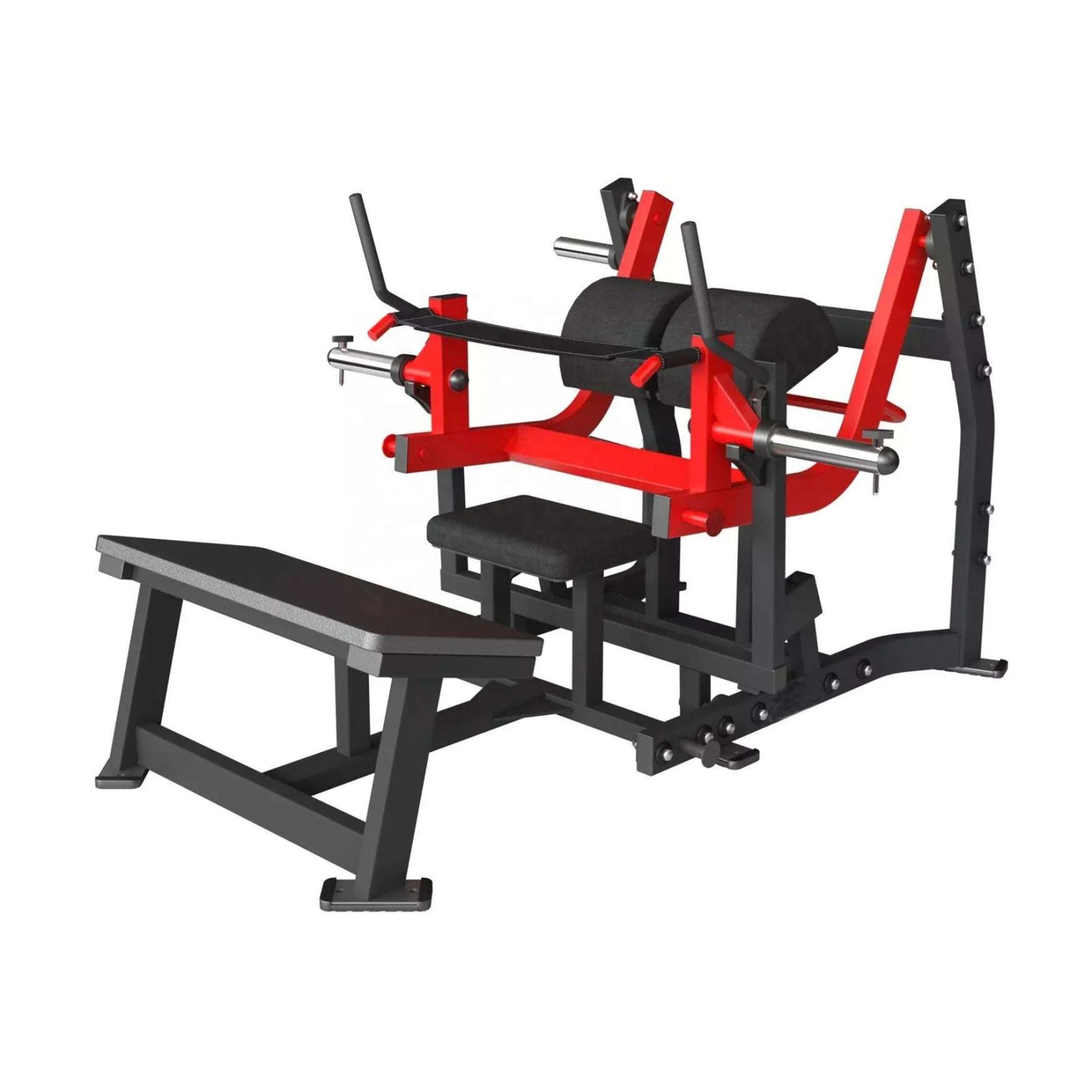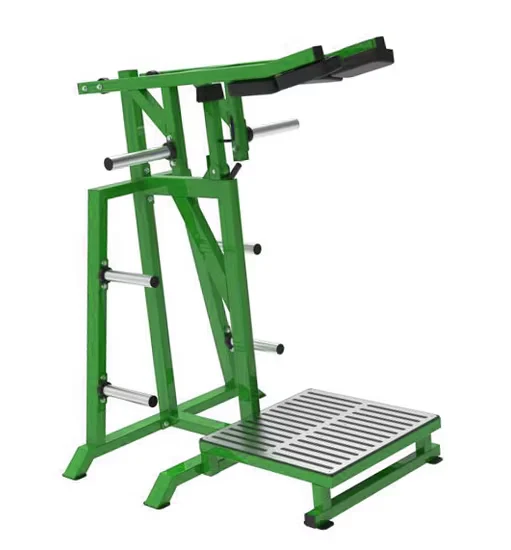
Sub-35dB Operation Verified in Hotel Deployments — The OS-H5078 stand calf raise eliminates motor dependency entirely through manual resistance architecture, ensuring silent performance that passes nighttime acoustic audits on guest room floors.
Technical Specifications
| Parameter | Value |
|---|---|
| Designation | OS-H5078 |
| Product Type | Stand Calf Raise Machine |
| Power Source | Manual |
| Resistance Type | Manual weight-loaded |
| Max User Weight | 180 kg |
| Frame Material | Reinforced Steel |
| Net Weight | 116 kg |
| Product Dimensions | 1390 × 1260 × 1700 mm |
| Foldable | No |
| Certification | ISO 9001, CE |
| OEM/ODM | Available |
Application Suitability
| Deployment Scenario | Typical Use |
|---|---|
| Hotel fitness center on guest room floors | Silent calf strengthening without motor noise transmission to adjacent rooms |
| Chain gym strength zone | High-frequency lower-leg isolation under continuous member rotation |
| Corporate wellness room | Compact footprint calf training alongside cardio equipment clusters |
| Sports performance training center | Athlete-grade lower-leg conditioning with stable steel platform |
| High-end residential home gym | Durable manual station requiring zero electrical infrastructure |
Why Structural Noise Complaints Reach the Front Desk Before Maintenance Does
A manual drive system eliminates the most common source of commercial equipment noise at its origin.
Facility operators deploying motorized cardio equipment on upper floors regularly face guest complaints that surface through front desk logs long before maintenance tickets are filed. The vibration from continuous-duty motors, combined with harmonic resonance through concrete floor slabs, creates low-frequency noise that migrates through building structures in ways that standard acoustic insulation cannot fully address [NEED_CITE: structural vibration transmission in commercial fitness deployments]. The stand calf raise machine gym equipment OS-H5078 sidesteps this entire failure mode by removing the motor from the equation — manual resistance means zero electromagnetic hum, zero cooling fan noise, and zero bearing whine under load.
Lower-Leg Isolation Within a Commercial Strength Layout
The OS-H5078 targets calf musculature through a standing position that accommodates users across the full commercial weight range up to 180 kg. In a mixed cardio and strength floor plan, this commercial stand calf raise machine gym equipment complements leg press stations and squat racks by isolating the gastrocnemius and soleus without requiring additional plate-loaded infrastructure. The 1390 × 1260 mm footprint allows placement against walls or between larger machines where ceiling height clearance supports the 1700 mm frame. Users load resistance through body weight and added plates, making intensity progression entirely self-regulated without console programming or electronic resistance steps.
Continuous Operation Without Motor Duty-Cycle Constraints
Because the OS-H5078 operates entirely through manual loading, there is no motor temperature envelope to monitor and no duty-cycle threshold that limits daily usage hours. In facilities running 16 to 24 hours daily, motorized equipment requires scheduled cool-down intervals and thermal monitoring that manual stations simply do not demand [NEED_CITE: continuous duty cycle requirements for commercial gym equipment]. The reinforced steel frame and 116 kg net weight provide sufficient mass to resist walking migration across rubber flooring without anchor bolts. Deployment on upper floors benefits from the absence of power draw — no dedicated circuit allocation, no voltage drop concerns across long cable runs, and no plug standard mismatches when shipping to markets with differing electrical configurations.
Manual Resistance Architecture and Frame Engineering
The decision to eliminate motorized resistance on a calf raise station reflects a straightforward engineering calculation: calf training loads are inherently slow-velocity, high-force movements where pneumatic or electromagnetic resistance systems add cost and maintenance burden without improving training fidelity. The steel frame construction absorbs eccentric loading forces that would fatigue lighter-gauge tubing over repeated cycles, and the 116 kg unit mass provides inertial stability during heavy loaded repetitions. Manual resistance also means the only wearing components are pivot bearings and pad contact surfaces — both field-replaceable without specialized diagnostic tools. Heart rate monitoring and biometric data collection are irrelevant to a single-joint isolation movement, so the absence of integrated sensors represents a deliberate scope decision rather than a specification gap.
The Hidden Cost of Specifying Below Commercial Duty
Facilities that procure light-commercial or home-grade strength stations for public-access environments typically discover the gap within the first quarter of operation. Pivot bearings rated for intermittent home use develop play under the repetitive loading cycles of a busy gym floor, producing clicking sounds that members interpret as equipment failure even when structural integrity remains intact [NEED_CITE: bearing fatigue thresholds in commercial versus residential fitness equipment]. Frame welds designed for 500 annual cycles crack under the 10,000+ cycle reality of chain gym deployment. The resulting equipment rotation — pulling units from the floor for warranty service, installing loaner machines, managing member complaints about unavailable stations — generates operational cost that dwarfs the initial procurement savings.
Why This Product Line Fits the Deployment
Sub-35 dB acoustic performance matters on this stand calf raise because hotel fitness centers share walls and floor assemblies with occupied guest rooms, and any mechanical noise transmits through structure regardless of equipment category. The 10,000-hour durability testing protocol that validates cardio motors also governs the bearing and pivot specifications on manual stations, ensuring consistent performance thresholds across the entire product family. The 1390 × 1260 mm footprint integrates into 3D cardio-zone layouts where airflow planning and member sightlines determine equipment spacing — this unit fits the perimeter wall positions that anchor a cardio cluster without obstructing cross-room circulation. Full OEM capability extends to frame color, pad material, and facility branding on the OS-H5078, matching the console UI customization available on motorized units. Technical support coverage at any hour applies identically to manual and motorized stations within the same facility contract.
Documentation & Test Records
- CE declaration of conformity covering manual strength equipment classification
- EN 957 test report validating structural load capacity and safety clearances
- ISO 9001 certificate for manufacturing quality management systems
- Noise level test report confirming sub-35 dB operation under loaded use
- Durability test record documenting pivot and bearing cycle validation
- Installation and commissioning guide with floor anchoring specifications
Installation, Commissioning & Maintenance
- Position OS-H5078 with minimum 600 mm clearance on all sides against the 1390 × 1260 mm footprint
- Verify floor levelness within 3 mm across the steel base frame to prevent pivot binding
- Assemble with manufacturer-supplied fasteners torqued to specification before first loaded use
- Inspect pivot bearings quarterly for play and lubricate per maintenance schedule
- Wipe pad contact surfaces after each shift to prevent sweat corrosion on steel frame
- Confirm replacement pad and bearing part numbers against spare parts documentation
Equipment Selection and Layout Planning
Provide your facility floor plan with total square footage and intended equipment count to receive a 3D layout that positions the OS-H5078 within sightlines and airflow corridors alongside cardio stations. Specify average daily operating hours so that bearing and pivot durability ratings can be matched to your usage profile. Confirm deployment floor level and adjacent occupied spaces to validate that manual operation meets your acoustic requirements without additional isolation measures. State your target market and voltage standards so that any companion motorized equipment ships with correct electrical configurations. Indicate whether facility management software integration is required for cardio consoles so that manual stations can be positioned in zones where data collection is not operationally necessary.
Frequently Asked Questions
Q: How does manual resistance compare to motorized equipment for commercial durability?
A: Manual resistance eliminates motor thermal limits, electronic control board failures, and power supply dependencies that represent the majority of commercial equipment service calls. The OS-H5078 relies on reinforced steel construction and sealed pivot bearings as its only wear components, reducing maintenance intervals to periodic lubrication and visual inspection rather than diagnostic troubleshooting of electronic subsystems.
Q: What frame construction standards ensure long-term structural stability?
A: Commercial steel frames undergo cyclic loading tests that simulate years of repetitive use within compressed timeframes. The OS-H5078 frame is validated for continuous high-frequency operation with welded joints and reinforced pivot points that resist the eccentric forces generated during loaded calf raise repetitions without developing structural play or audible flex.
Q: How does equipment weight affect deployment stability and noise transmission?
A: The 116 kg net weight of the OS-H5078 provides sufficient mass to resist migration during heavy use without requiring permanent floor anchoring in most commercial environments. This mass also dampens vibration transmission to floor structures, contributing to the quiet operation that allows deployment on upper floors above occupied spaces without generating structural noise complaints.
Q: What customization options are available for facility branding integration?
A: The OEM and ODM program covers frame color selection, pad material specification, and facility branding application on the OS-H5078. Console UI customization available on companion motorized equipment can be coordinated with manual station aesthetics to maintain visual consistency across an entire cardio and strength floor deployment.
Q: How to verify commercial-grade durability claims before bulk procurement?
A: Request the EN 957 test report, durability test records documenting pivot and bearing cycle counts, and frame structural load validation specific to the OS-H5078. These documents provide independent verification of commercial suitability that can be reviewed by your facility engineering team before committing to volume orders across multiple locations.
![Commercial Hammer Strength Abdominal Work Station for Gyms [WARN] draft identifier mismatch](https://bicksport.com/wp-content/uploads/2026/08/commercial-hammer-strength-abdominal-work-station-for-gyms-warn-draft-identifier-mismatch-7bdf32.webp)