
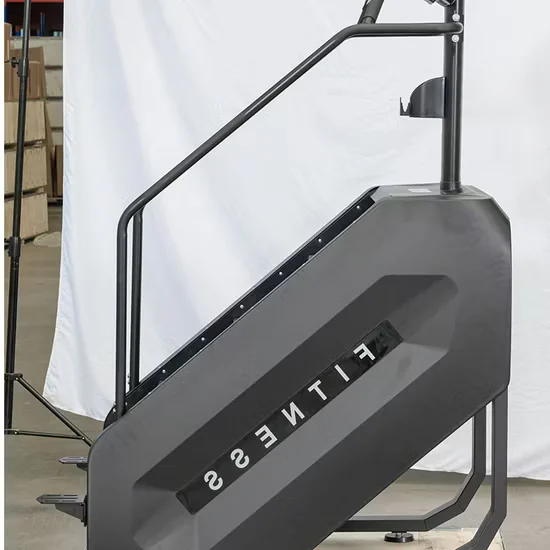
Acoustic Engineering — Sub-35dB operation verified across hotel deployments where stair climbers share floor assemblies with occupied guest rooms below.
Technical Specifications
| Parameter | Value |
|---|---|
| Designation | SQ1017 |
| Product Type | Stair Climber |
| Function | Electric |
| Drive Type | Motor Drive |
| Running Velocity | 15 steps/Minute — 164 steps/Minute |
| Step Area | 560 x 235 x 220 mm |
| Console Type (OSD) | Time, Climb, Calories, Steps, Heart Rate |
| Power Requirement | AC220V±10% / AC110V±10% |
| Product Dimensions | 1450 x 820 x 2080 mm |
| Net Weight | 148 kg |
| Material | Steel Pipe + PP Plastic |
| Folded | Unfolded |
| Certification | CE |
| Customized | Yes (logo, color, console UI, specification) |
Application Suitability
| Deployment Scenario | Typical Use |
|---|---|
| Hotel fitness center on guest room floors | 24-hour quiet access for guests without disturbing adjacent rooms |
| Chain gym cardio zone | High-frequency continuous operation across peak and off-peak hours |
| Corporate wellness room | Staff training before and after shifts with minimal maintenance overhead |
| High-end residential home gym | Compact vertical cardio for multi-story private residences |
| Sports performance training center | Athlete conditioning with step-rate tracking and heart rate monitoring |
Why Motor Burnout Reaches the Maintenance Log Before the Quarterly Review
Continuous-duty rating determines whether a motor survives 16-hour facility days, not peak horsepower figures on a brochure.
Facility managers routinely spec stair climbers by peak output, then face motor replacements within the first year when units run through back-to-back class schedules. The gap between peak rating and continuous-duty rating is where most commercial stair climber motor drive electric units fail in public facilities [NEED_CITE: motor duty cycle classification for continuous commercial operation]. Light-duty motors tolerate intermittent home use but overheat under the sustained load profiles typical of gym cardio zones and hotel fitness centers.
Vertical Cardio Positioning Within the Facility Layout
This stair climber covers sustained stepping motion at variable cadence from 15 to 164 steps per minute, complementing treadmills and ellipticals already present in most commercial stair climber motor drive electric cardio zones. The 1450 x 820 mm footprint fits standard lane widths, allowing deployment against walls or between parallel equipment rows with adequate lateral clearance. Users up to the commercial weight range can train through low-intensity steady-state or high-intensity interval formats. The OSD console tracks time, climb count, calories, steps, and heart rate during sessions.
Continuous Operation Requirements and Deployment Constraints
Facilities running cardio equipment for 12 or more hours daily need motor systems rated for continuous duty cycles rather than intermittent use profiles [NEED_CITE: EN 957 requirements for commercial cardio equipment]. Sub-35dB acoustic performance allows placement on upper hotel floors and shared residential levels without triggering noise complaints from occupied spaces below. The 2080 mm height demands ceiling clearance verification before positioning, particularly in converted basement fitness rooms. Dual-voltage capability across AC220V and AC110V eliminates plug-standard surprises at destination ports, though dedicated circuits prevent voltage sag during peak occupancy periods.
Motor Drive Mechanics and Step Rate Bandwidth
Motor-drive systems deliver consistent resistance across the full 15–164 steps per minute range, unlike friction-based alternatives that lose tension uniformity at higher cadences. The 560 x 235 x 220 mm step area accommodates varied foot placements during sustained climbing intervals. Steel pipe and PP plastic construction provides structural rigidity at 148 kg net weight, reducing chassis resonance that amplifies operational noise on hard flooring. Heart rate monitoring through the console supports effort-based programming without requiring external chest strap pairing.
The Hidden Cost of Underspecifying Drive Components
Purchasing decisions based solely on upfront cost frequently lead to motor replacements within months when units face continuous public facility demands. Noise complaints from guests or residents force entire cardio zones offline for equipment swaps, generating revenue loss far exceeding initial savings [NEED_CITE: commercial cardio equipment replacement frequency in hospitality settings]. Voltage mismatches discovered only after container arrival create weeks of deployment delay. Console systems that cannot export usage data leave facility operators blind to utilization patterns and maintenance scheduling triggers.
Why This Product Line Earns Repeat Facility Contracts
Every unit undergoes acoustic verification against the sub-35dB threshold before leaving the testing bay, a standard drawn from real hotel deployment feedback. Motors and bearings complete 10,000-hour continuous operation testing that simulates years of gym-class throughput. The six-series cardio family means a facility sources stair climbers alongside treadmills and ellipticals from a single engineering platform. OEM customization extends to console UI, allowing branded interfaces for hotel and chain gym deployments. Free 3D cardio-zone layout planning accounts for the SQ1017’s 1450 x 820 mm footprint, member flow sightlines, and HVAC airflow requirements around the 2080 mm frame height. Technical support responds on a 24/7 basis across time zones.
Documentation & Test Records
- CE declaration of conformity covering electrical safety and electromagnetic compatibility
- EN 957 test report validating structural and mechanical requirements
- ISO 9001 certificate for manufacturing quality management systems
- Noise level test report confirming sub-35dB acoustic output
- Motor specification sheet detailing continuous-duty rating and thermal limits
- Console technical documentation with data interface descriptions
Installation, Commissioning & Maintenance
- Verify 1450 x 820 mm footprint with minimum 600 mm rear clearance for step mechanism travel
- Level the steel frame on vibration-damping pads to prevent resonance transfer to floor assemblies
- Connect to a dedicated AC220V or AC110V circuit matching destination market standards
- Run initial calibration cycle across full 15–164 steps per minute range before member access
- Inspect motor drive belt tension and step rail lubrication at scheduled intervals per usage volume
- Configure OSD console heart rate sensors and verify step-count accuracy during commissioning
Planning Your Cardio Zone Specification
Submit your cardio area square footage and planned unit count to receive a 3D layout incorporating sightlines and airflow around the 2080 mm frame height. Specify expected daily run-time hours so motor duty-cycle matching aligns with your facility’s occupancy pattern. Identify deployment floor levels and adjacent occupied spaces to confirm acoustic requirements. State target market voltage standards and whether console data integration with facility management software is needed.
Frequently Asked Questions
Q: What is the difference between motor continuous-duty rating and peak rating for stair climbers?
A: Peak rating measures maximum output over very short bursts, while continuous-duty rating reflects what the motor sustains over hours of non-stop operation. Facilities running equipment 12 or more hours daily must spec by continuous duty to avoid thermal shutdown and premature motor failure during peak member traffic.
Q: How does sub-35dB noise level affect deployment in hotels and residential buildings?
A: Noise below 35 dB registers as quiet background ambiance, allowing stair climbers on guest room floors or shared residential levels without generating complaints from adjacent occupied spaces. This acoustic threshold eliminates the need for isolated mechanical rooms and expands viable placement options.
Q: Can the OSD console track workout data for facility management purposes?
A: The console records time, climb count, calories, steps, and heart rate during each session. Facilities requiring integration with member apps or building management systems should confirm data interface specifications during the scoping phase to ensure compatibility with existing software platforms.
Q: What voltage and plug standards are available for different export markets?
A: Dual-voltage support covers AC220V±10% and AC110V±10%, accommodating most international markets. Plug configuration and power cord standards should be confirmed before production to match destination country requirements and avoid adapter dependencies on site.
Q: How does the 10,000-hour durability testing translate to real-world facility uptime?
A: Testing motors, frames, and bearings for 10,000 continuous hours simulates years of high-frequency commercial use. This validation process identifies wear points before units reach facility floors, reducing unplanned maintenance events and extending service intervals under demanding operational schedules.
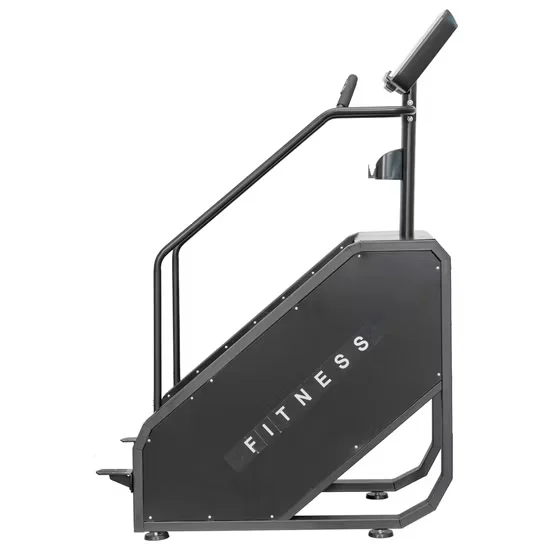
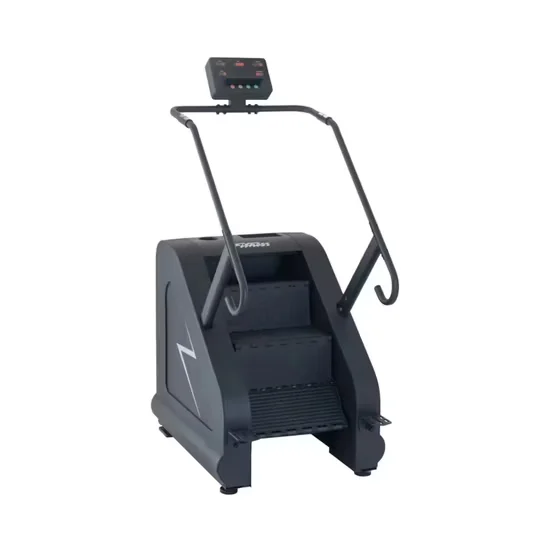
![Smart Adjustable Commercial Electric Stair Climber Stepping Machine for Home and Gym Use [WARN] draft identifier mismatch](https://bicksport.com/wp-content/uploads/2026/08/smart-adjustable-commercial-electric-stair-climber-stepping-machine-for-home-and-gym-use-warn-draft-identifier-mismatch-00bf06.webp)
![Commercial Stair Climber Electric Stepper Machine Cardio Strength Training [WARN] draft identifier mismatch](https://bicksport.com/wp-content/uploads/2026/08/commercial-stair-climber-electric-stepper-machine-cardio-strength-training-warn-draft-identifier-mismatch-da697b.webp)