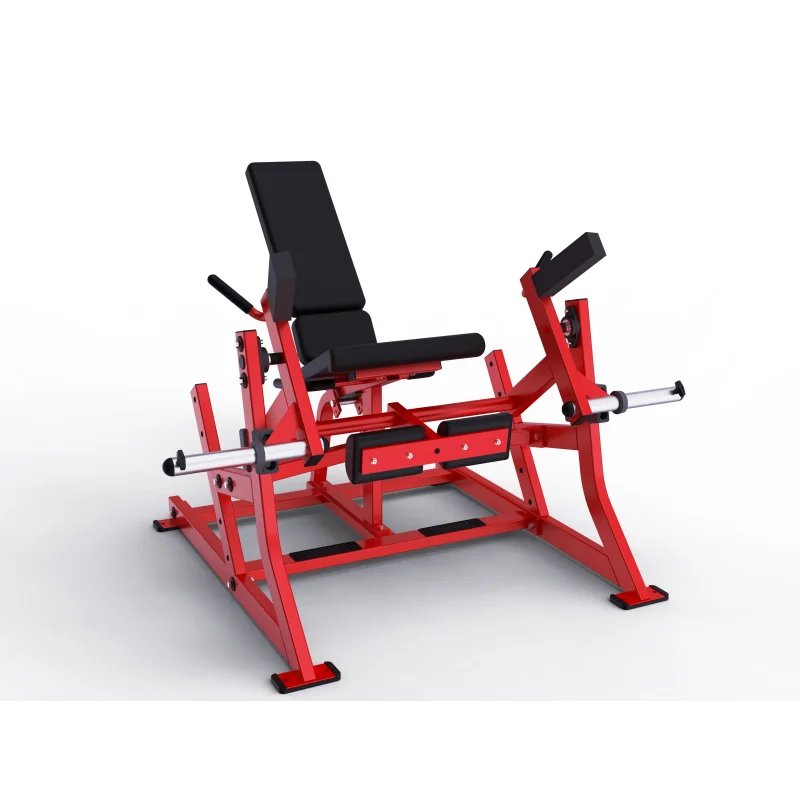
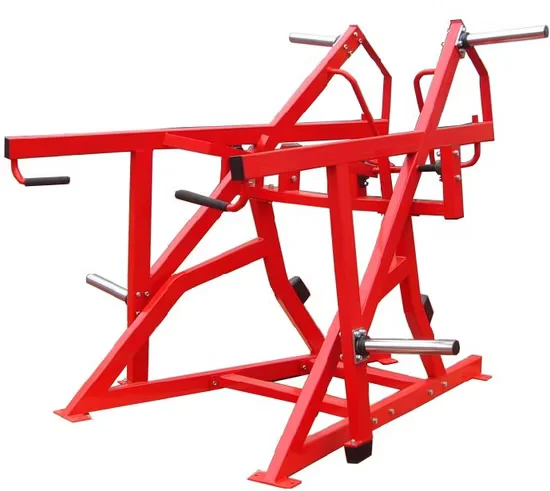
Zero Motor Dependence — Manual resistance eliminates electrical burnout risks in 24/7 strength zones.
Technical Specifications
| Parameter | Value |
|---|---|
| Designation | OS-H5046 |
| Product Type | Seated Arm Curl |
| Power Source | Manual |
| Resistance Type | Manual weight stack |
| Exercise Part | Arm |
| Main Frame Material | Steel |
| Product Dimensions | 1000 × 800 × 1120 mm |
| Net Weight | 75 kg |
| Foldable | No |
| Main Frame Color | Available per customer specification |
| Cushion Color | Available per customer specification |
| OEM/ODM | Acceptable |
| Certification | ISO 9001, CE |
Application Suitability
| Deployment Scenario | Typical Use |
|---|---|
| Chain gym strength zone | High-frequency bicep isolation training across peak and off-peak hours |
| Hotel fitness center on guest room floors | Quiet manual resistance operation avoiding noise transfer to adjacent rooms |
| Corporate wellness room | Durable steel-frame equipment for employee fitness programs with minimal maintenance |
| Community fitness center | Public-access arm training station built for continuous multi-user rotation |
| Professional sports training center | Targeted bicep conditioning within structured athlete strength programs |
Why Strength Zones Lose Revenue to Equipment Downtime
Manual resistance architecture removes the most common failure point in commercial arm training stations.
When a motorized cable system fails mid-session, the member walks away and the front desk logs a complaint. I have seen chain gym operators replace entire cable stacks because the internal motor could not survive continuous commercial duty cycles. The OS-H5046 commercial seated arm curl machine sidesteps this problem entirely by running on a manual resistance system with zero electrical dependency. No motor means no burnout, no control board failure, and no voltage mismatch when the container reaches a market with different power standards [NEED_CITE: motor failure rates in commercial gym strength equipment].
Positioning This Arm Curl Station Within the Strength Layout
The OS-H5046 covers controlled bicep isolation across low-to-moderate intensity ranges, complementing compound pulling machines like lat pulldowns and cable rows in a complete upper-body zone. Its compact 1000 × 800 mm footprint fits between multi-station rigs without disrupting member flow. The seated configuration accommodates users of varying torso lengths, and the fixed movement path supports consistent form regardless of experience level. As a commercial seated arm curl machine strength training station, it earns its floor space by delivering targeted isolation work that free-weight stations cannot replicate with the same consistency.
Continuous Operation Demands on a Manual Resistance Frame
A manual system avoids motor thermal limits but shifts the durability burden to the frame, bearings, and cable routing. In facilities running 16 or more hours daily, the steel frame must absorb repeated loading without weld fatigue or fastener loosening. Floor deployment matters less for noise transfer compared to motorized units, but vibration from dropped weight stacks still propagates through concrete slabs. Adequate ventilation around the weight stack housing prevents moisture buildup that accelerates cable corrosion. Ground leveling ensures the guide rods track smoothly under asymmetric loading, and the surrounding clearance must accommodate member approach and plate adjustment [NEED_CITE: EN 957 requirements for commercial strength equipment durability].
Reading the Manual Resistance and Steel Frame Specifications
The manual power source means resistance is delivered through a weight stack and cable-pulley system rather than an electric motor driving a selector pin. This configuration produces a consistent load curve determined by the cam profile and pulley geometry. Steel frame construction at 75 kg net weight provides a stable base that resists tipping during heavy eccentric phases. The 1000 × 800 × 1120 mm envelope is compact enough for high-density strength zones while leaving room for the full range of arm motion. Seat and pad customization in frame and cushion color allows facility branding to carry through the entire equipment lineup without compromising structural specifications.
The Hidden Cost of Underspecified Strength Stations
Light-duty frames deployed in commercial environments develop weld cracks within the first year, forcing operators into reactive replacement cycles that cost more than specifying correctly upfront. Cable systems without sealed bearings generate grinding noise that drives members toward competing facilities. Non-customizable frame colors force operators to mix mismatched equipment across a single zone, degrading the premium perception that justifies membership pricing. When weight stacks lack precision-machined guide rods, the selector pin binds under lateral load, creating a frustrating user experience that no amount of marketing can offset [NEED_CITE: commercial strength equipment replacement cycle analysis].
Why This Product Line Holds Up Under Scrutiny
Every unit in this lineup undergoes 10,000-hour durability testing on frames and moving assemblies before leaving the production floor. The manual resistance system in the OS-H5046 eliminates the motor maintenance schedule entirely, freeing facility staff from electrical troubleshooting. Full OEM and ODM capability extends to frame color, cushion color, and branding placement, so the equipment matches the facility interior specification rather than forcing a compromise. The six-series cardio and strength family lets operators source an entire floor from a single manufacturing partner, and the 3D layout service accounts for the compact footprint and member clearance this station requires. ISO 9001 and CE certification are documented and verifiable for every shipment.
Documentation & Test Records
- CE declaration of conformity covering the OS-H5046 strength station
- EN 957 test report for manual resistance equipment safety
- ISO 9001 certificate for manufacturing quality management
- Frame and weld durability test record at 10,000-hour threshold
- Cable and pulley system specification sheet with load ratings
- Installation guide and spare parts list for manual resistance assemblies
Installation, Commissioning & Maintenance
- Position with minimum 600 mm rear clearance for weight stack access and 1000 mm front clearance for user approach
- Level the steel frame on a flat surface using adjustable feet to prevent guide rod binding under load
- Inspect cable tension and pulley alignment after the first 200 hours of operation, then at six-month intervals
- Lubricate guide rods with manufacturer-specified grease quarterly to maintain smooth weight stack travel
- Wipe down upholstery and frame after each shift to prevent sweat corrosion on steel surfaces and cushion stitching
- Verify selector pin engagement across all resistance positions during monthly preventive maintenance checks
Equipment Selection and Facility Integration
Provide the strength zone floor area and planned equipment count to receive a 3D layout incorporating member flow and clearance requirements around the OS-H5046. Specify the facility operating hours so the frame and cable specifications can be matched to the expected daily usage volume. Confirm the target market and deployment floor to verify any vibration or acoustic requirements for adjacent occupied spaces. Indicate whether the equipment must integrate with facility management software for usage tracking, noting that this manual unit operates independently of data network infrastructure.
Frequently Asked Questions
Q: How does manual resistance compare to selectorized weight stack systems for commercial deployment?
A: Manual resistance systems eliminate the electric motor and control board entirely, removing the two components most likely to fail under continuous commercial use. Selectorized systems offer convenient one-pin weight changes but depend on motor-driven pin insertion that can misalign over time. The OS-H5046 uses a manual weight stack with direct cable routing, trading electronic convenience for long-term reliability in high-frequency gym environments.
Q: What steel frame thickness should buyers verify for commercial strength equipment?
A: Commercial-grade strength stations typically use steel tubing with wall thickness sufficient to withstand repeated loading cycles without deformation. The OS-H5046 frame is engineered for the demands of professional gym and club deployment. Buyers should request the frame material specification sheet and weld inspection records to confirm the structural integrity matches the expected daily user volume and loading intensity in their facility.
Q: Which cushion material offers better longevity in high-sweat commercial environments?
A: PU leather provides a balance of durability and comfort, resisting moisture absorption that degrades stitching and foam density over time. Vinyl alternatives offer lower initial cost but tend to crack under repeated UV exposure and cleaning chemical contact. The OS-H5046 cushion color and material are customizable through OEM specification, allowing operators to select the upholstery that matches their maintenance protocol and expected replacement interval.
Q: What is the typical lead time for OEM color and branding customization on strength equipment?
A: Customization scope includes frame color, cushion color, and logo placement across the visible surfaces of the equipment. Lead times depend on the order volume and the complexity of the color matching required. Buyers should submit Pantone or RAL references during the inquiry stage so the production team can confirm material availability and schedule the finishing process alongside the standard assembly workflow.