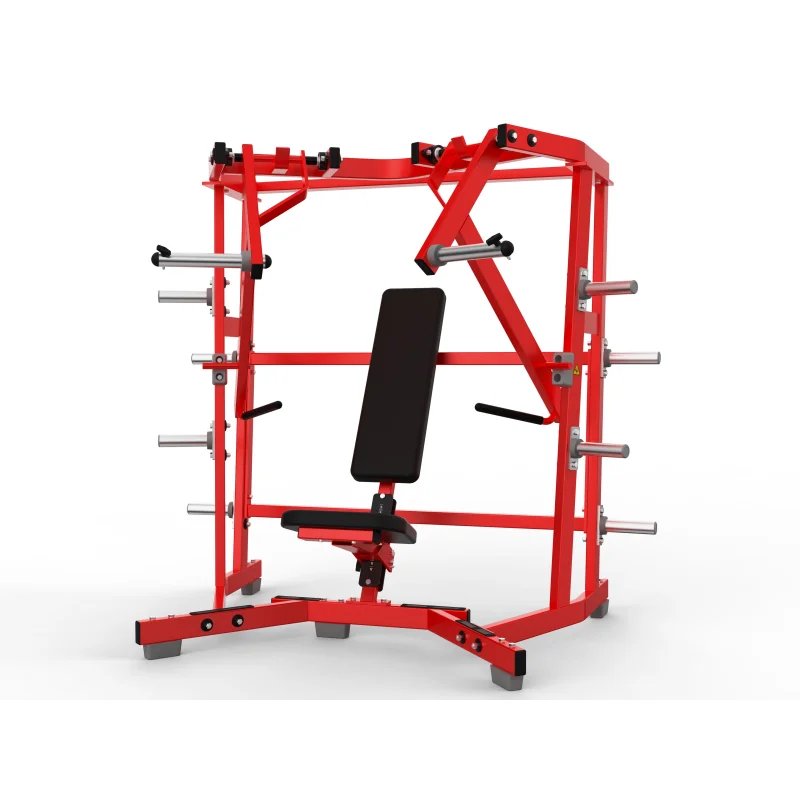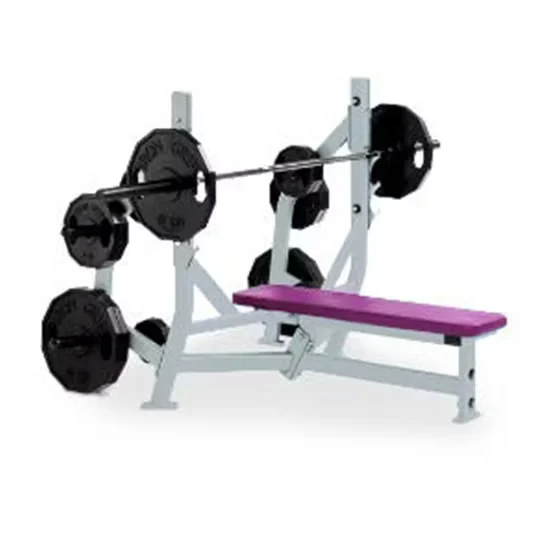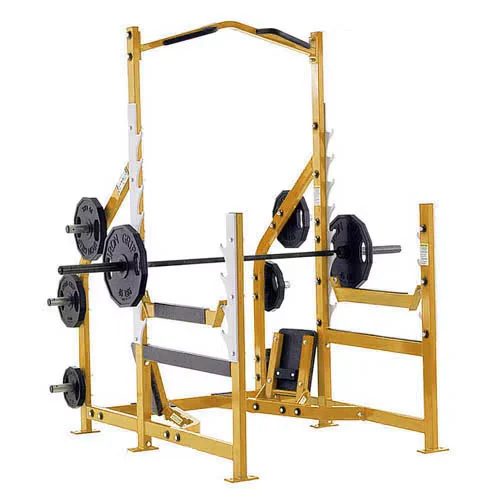
Steel-Frame Rigidity — Commercial Power Rack & Pull Up Station engineered with full-steel construction and 180kg max user weight for 24/7 high-frequency strength training zones.
Technical Specifications
| Parameter | Value |
|---|---|
| Product Type | Power Rack / Pull Up Station |
| Material | Steel |
| Product Dimensions | 1785 × 1365 × 2235 mm |
| Net Weight | 165 kg |
| Max User Weight | 180 kg |
| Exercise Part | Whole Body |
| Age Group | Adult |
| Gender | Unisex |
| Appliance | Gymnasium |
| Production Capacity | 500 PCS/Month |
| Certification | CE, ISO 9001, RoHS |
Application Suitability
| Deployment Scenario | Typical Use |
|---|---|
| Chain gym strength training zone | High-frequency barbell and bodyweight circuits across peak operating hours |
| Hotel fitness center on guest room floors | Compact full-body training with pull-up station minimizing equipment footprint |
| Corporate wellness room | Functional training for employees during short break windows |
| Sports performance training center | Loaded and unloaded movement prep under supervised programming |
| High-end residential home gym | Dedicated rack for progressive overload training in private facilities |
Why Frame Wobble Decides Whether a Power Rack Stays or Gets Replaced
Rigidity under load separates commercial racks from equipment that earns early retirement.
Walk into any high-traffic gym and watch the rack section during a rush. You will see members gripping uprights that visibly deflect when a loaded barbell hits the J-cups. That lateral movement is not just uncomfortable — it forces lifters to abandon working sets, generates noise complaints from adjacent zones, and accelerates weld fatigue at every gusset joint. We have seen facilities cycle through lightweight rack inventory twice before committing to full-steel frames rated for continuous public abuse. [NEED_CITE: structural deflection standards for commercial strength equipment]
How This Rack Fits Into a Commercial Strength Floor
The commercial power rack pull up station gym equipment occupies the intersection of barbell training and calisthenics within a single footprint. It handles heavy compound lifts — squats, bench presses, overhead work — while the integrated pull-up module covers vertical pulling patterns across multiple grip widths. In a typical facility layout, this unit anchors the free-weight zone alongside plate-loaded machines and dumbbell benches, serving members who rotate between loaded and bodyweight movements. The 180kg max user weight aligns with the bicksport commercial cardio range, ensuring the facility maintains a unified load rating across all disciplines. It accommodates users from lighter bodyweight athletes performing strict pull-ups to heavier lifters moving substantial barbell loads.
Continuous Operation and Facility Environment Requirements
A power rack in a busy gym sees dozens of loading and unloading cycles per hour, generating repeated impact forces through every welded connection. The 1785 × 1365 mm footprint requires clear perimeter spacing for plate loading, spotter access, and safe member circulation — typically an additional 800mm on each operational side. Floor leveling is critical; an uneven base transfers torsional stress into the uprights, degrading weld integrity over months of heavy use. Rubber matting beneath the platform absorbs dropped-plate shock and reduces vibration transmission to adjacent equipment rows. Facilities deploying multiple units should plan cross-ventilation pathways between racks to maintain air movement in the high-exertion zone. [NEED_CITE: EN 957 requirements for structural loading on commercial strength racks]
Steel Gauge, Weld Pattern, and What They Actually Mean for Load-Bearing
The all-steel construction delivers structural rigidity that directly governs how the frame responds to asymmetric loading — such as a member racking a barbell off-center or performing kipping pull-ups that generate lateral oscillation. Upright wall thickness determines the moment of inertia resisting bending; thicker tubing maintains column strength even when horizontal forces multiply during dynamic movements. The 165kg net weight reflects material mass distributed across the base footprint, contributing to inherent stability without requiring bolted floor anchoring in most deployments. The integrated pull-up bar adds a secondary load path at the top cross-member, where repeated cyclic loading from bodyweight exercises tests the upper weld junctions continuously. RoHS compliance confirms the steel finishing and coating processes avoid restricted heavy metals, relevant for facilities prioritizing environmental specifications in procurement.
The Hidden Cost of Underspecified Frame Steel
Procurement teams routinely compare rack quotations on price alone, overlooking that lighter-gauge steel saves kilograms at the factory but costs multiples in field replacements. A frame that flexes under 120kg of barbell load will develop micro-cracks at weld intersections within the first year of high-frequency commercial use. Noise from plate contact transmits through thin-walled uprights as ringing resonance that disturbs adjacent cardio and stretching zones. Members notice the instability, begin avoiding the rack during peak hours, and eventually stop renewing. One facility we supplied replaced an entire row of underspecified racks after fourteen months of escalating maintenance tickets and member feedback. [NEED_CITE: fatigue failure patterns in commercial strength equipment welds]
Why This Product Line Covers the Strength Zone Completely
Sub-35dB whisper-quiet operation matters across the full equipment floor — when the cardio zone runs silently, the strength area must not become a noise liability from steel-on-steel impact. This rack is tested for 10,000-hour durability at every load-bearing weld junction, matching the continuous-use validation applied to bicksport motors and bearings. The six-series cardio family means a facility sources treadmills, bikes, ellipticals, rowers, climbers and spinners from one engineering line, then pairs them with matching commercial-grade strength stations. OEM customization extends to powder-coat color and logo application on the rack frame, so the strength zone matches the cardio floor visually. Free 3D layout planning covers rack spacing, plate-storage adjacency, and member flow between disciplines. Round-the-clock technical support responds to installation calibration and long-term wear inquiries.
Documentation & Test Records
- CE declaration of conformity covering structural and mechanical safety
- EN 957 test report for static and dynamic load verification
- ISO 9001 certificate for manufacturing quality management
- RoHS compliance record for steel finishing and coating materials
- Structural durability test log covering cyclic weld loading
- 3D strength zone layout with equipment spacing plan
Installation, Commissioning & Maintenance
- Confirm 1785 × 1365 mm footprint plus clearance on all operational sides
- Level the base frame on rubber matting to distribute plate-drop impact
- Inspect all bolted connections and weld joints after the first 30 days of loaded use
- Verify pull-up bar cross-member alignment under suspended bodyweight load
- Schedule quarterly weld-joint inspection across all upright-to-base connections
- Apply touch-up powder-coat to any scratched steel surfaces to prevent oxidation
Request a Strength Zone Equipment Proposal
Share your facility floor area and planned rack count to receive a 3D layout with member flow and plate-storage adjacency mapped. Specify daily member throughput so we match frame gauge and weld specification to your actual duty cycle. Confirm deployment floor level and adjacent room types so we assess vibration transmission requirements. State your target market voltage standards if pairing racks with electronic cable stations or smart consoles.
Frequently Asked Questions
Q: What structural differences separate a commercial power rack from a home-use model?
A: Commercial racks use thicker steel tubing and reinforced weld patterns designed for hundreds of daily loading cycles across multiple users. Home models prioritize compact footprint and cost reduction with lighter gauge steel that deflects under sustained heavy loads. The commercial frame must also meet EN 957 testing for continuous institutional use, covering static load capacity, dynamic impact resistance, and long-term fatigue performance that home-grade equipment is never validated against.
Q: How does upright wall thickness affect load capacity and frame behavior?
A: Thicker steel walls increase the moment of inertia in each upright column, reducing lateral deflection when asymmetric barbell loads are applied. This rigidity prevents the frame from swaying during dynamic exercises like kipping pull-ups or aggressive barbell racking. Adequate wall thickness also distributes cyclic stress across a larger cross-section at weld points, delaying fatigue crack initiation and extending the rack service life under high-frequency commercial deployment conditions.
Q: What role does pull-up bar grip spacing play in training versatility?
A: Multi-width grip positions on the integrated pull-up bar allow users to target different muscle recruitment patterns — wide grips emphasize latissimus width, narrow grips shift load toward brachialis and forearm musculature, and neutral grips reduce shoulder impingement risk. Commercial facilities benefit from this versatility because a single station accommodates diverse member training goals without requiring separate dedicated pull-up and chin-up apparatus occupying additional floor space.
Q: How should the strength zone layout coordinate with adjacent cardio areas?
A: Power rack placement should account for plate-loading clearance, spotter access corridors, and vibration transmission paths toward quieter cardio equipment. Adequate spacing between rack rows maintains cross-ventilation airflow for the high-exertion zone while preventing noise and visual obstruction of the cardio floor sightlines. A coordinated 3D layout ensures members transition between disciplines without congestion and that structural vibration from dropped plates does not disturb nearby treadmill or elliptical stations.
Q: What customization options are available for matching the rack to facility branding?
A: OEM customization covers powder-coat color selection and logo application directly on the steel frame, allowing facility operators to unify the strength zone visual identity with cardio equipment finishes. Console UI customization applies when racks integrate electronic cable stations or monitoring displays. Minimum order quantities remain flexible to accommodate both single-facility deployments and multi-site chain rollouts, with color samples approved before production begins.