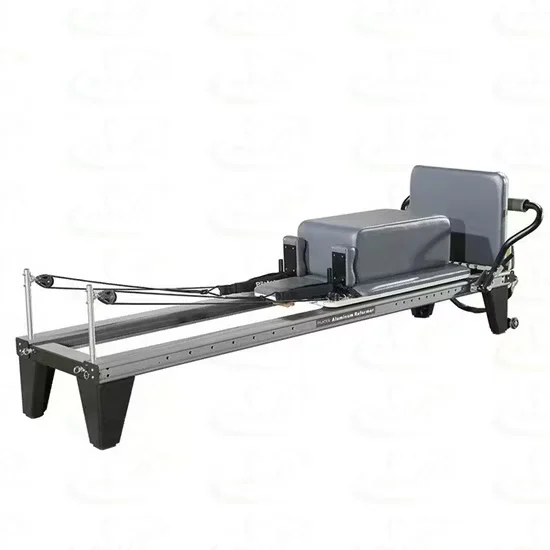
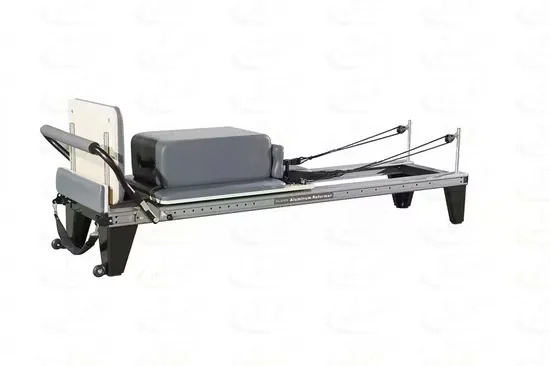
10,000-Hour Continuous Use — Components are validated through sustained high-frequency operation tests to endure the daily demands of commercial fitness facilities.
Technical Specifications
| Parameter | Value |
|---|---|
| Product Type | Pilates Reformer |
| Model | SRY-01 |
| Accessory | Long Box / Jump Board / Platform |
| Specification | 25207602050mm |
| Net Weight | 150kgs |
| Color | Solid Color |
| Logo | Customized Is Allowed |
| Warranty | 3 Years |
| Production Capacity | 80 Pieces/Month |
Application Suitability
| Deployment Scenario | Typical Use |
|---|---|
| hotel fitness center on guest room floors | Morning and evening Pilates sessions for guests seeking low-impact flexibility and core work |
| chain gym cardio zone | Complementing treadmill and elliptical areas with recovery-focused movement programming |
| corporate wellness room | Lunchtime and after-work group classes for employees managing desk-related posture issues |
| high-end residential home gym | Daily personal training routines in private multi-unit fitness facilities |
| sports performance training center | Athlete rehabilitation and mobility sessions guided by sports medicine professionals |
Why Sliding Rail Noise Reaches the Studio Floor Before Maintenance Does
Commercial Pilates environments demand hardware that performs silently through back-to-back class schedules.
Lightweight reformer frames and undersized pulleys generate noticeable squeaking and track vibration after a few hundred repetitions per day. In a studio running six or more classes daily, that acoustic disruption forces instructors to raise their voice, fatigues clients, and generates complaints that reach management before the maintenance team even opens a ticket [NEED_CITE: acoustic impact of carriage rail wear on group class experience]. Facility operators replacing equipment mid-lease cycle face unplanned capital outlay and scheduling gaps that erode member confidence.
Positioning Within a Full-Service Studio Layout
The commercial Pilates reformer Cadillac machine occupies the high-volume training segment, supporting classical and contemporary exercise sequences across mat-level, seated, and standing positions. It pairs naturally with lighter mat-work stations and complements dedicated Wunda Chair or Barrel units by covering the broadest single-footprint exercise range in the room. Deployment density suits studios scheduling three or more simultaneous sessions, and the 2520 mm length accommodates users across a wide height spectrum without compromising spring engagement range. The solid-color frame integrates into neutral or branded interior schemes, while the configurable accessory set — Long Box, Jump Board, Platform — eliminates the need to source separate attachments.
Continuous Operation and Deployment Environment Requirements
Studios scheduling six or more hours of daily classes require a reformer carriage that cycles smoothly without mid-session binding or pulley fatigue. The 150 kg net weight anchors the frame against lateral drift during Jump Board plyometrics and standing sequences, reducing the need for floor bolt-downs in leased spaces. Adequate clearance on all four sides — typically a minimum of 600 mm — lets instructors circulate and correct form without crowding adjacent stations [NEED_CITE: recommended clearance dimensions for group Pilates studio layouts]. Ventilation planning should account for the room-level heat load generated by multiple participants, as leather upholstery and spring tension degrade faster in stagnant, high-humidity air. Facilities on upper floors benefit from the heavy frame’s natural vibration dampening, preventing resonance transfer through lightweight floor assemblies to occupied spaces below.
Steel Frame Mass, Spring Fatigue, and Pulley Geometry
The 150 kg net weight reflects a fully welded steel chassis designed to resist the lateral and torsional forces generated during unilateral spring-loaded movements. Heavier frames suppress resonance that lighter aluminum constructions transmit into hardwood or laminate floors, keeping ambient noise lower during group classes. Spring selection determines resistance curve and longevity: nickel-plated music-wire springs resist fatigue corrosion and maintain consistent tension over thousands of compression cycles, whereas uncoated carbon-steel springs lose elasticity and develop audible creaking far sooner. Pulley diameter directly affects rope wrap angle and friction — larger pulleys reduce bend stress on cords, extending replacement intervals and keeping carriage travel smooth throughout the exercise range. The Long Box extends the contact surface for supine and prone sequences, the Jump Board converts the foot bar into a plyometric platform, and the Platform adds elevated standing work — together they cover the full classical repertoire without auxiliary equipment.
The Hidden Cost of Specifying Below Commercial Grade
Purchasing reformers rated for light residential use in a studio context leads to premature carriage wheel flat-spotting, spring tension drift, and leather bolster tearing within months. Instructors compensate for degraded equipment by modifying exercise progressions, which narrows programming options and erodes class quality. Noise from loose track fittings disrupts concentration in adjacent treatment rooms or yoga spaces, prompting tenant complaints in multi-use buildings [NEED_CITE: equipment downgrade impact on adjacent wellness space operations]. Studios that replace under-spec units mid-lease absorb double logistics cost, storage fees, and membership credit disputes — losses that far exceed the initial price differential of procuring commercial-grade hardware from the outset.
Why This Product Line Fits High-Frequency Studio Deployments
Every unit undergoes continuous-cycle durability verification on carriage rails, springs, and pulley bearings before leaving the factory, aligning with the 10,000-hour operational benchmark used across the broader commercial cardio range. The welded steel frame and 150 kg mass deliver the inertial stability needed for plyometric and standing sequences without supplemental anchoring. OEM customization extends to frame color, upholstery selection, and logo placement, letting chain operators maintain visual consistency across locations. When planning a studio layout, the free 3D floor plan service accounts for this reformer’s 2520 mm footprint, instructor circulation paths, and HVAC airflow to prevent dead-air zones around high-occupancy areas. Post-delivery, 24/7 technical support covers spring replacement guidance, carriage alignment troubleshooting, and firmware queries on any electronic accessory added later.
Documentation & Test Records
- CE declaration of conformity covering mechanical safety requirements
- EN 957 test report validating structural load and stability performance
- ISO 9001 certificate confirming manufacturing quality management system
- Spring fatigue test record documenting tension retention over cycle count
- Leather and upholstery abrasion resistance test documentation
- Carriage rail smoothness and noise measurement log
Installation, Commissioning & Maintenance
- Allocate 2520 mm length plus 600 mm clearance on each side for safe instructor access around this reformer.
- Verify level flooring; use vibration-dampening pads under all four feet to protect finished surfaces and suppress resonance.
- Inspect spring anchorage points and carriage wheel alignment after the first 200 operating hours, then quarterly.
- Wipe leather bolsters and upholstery with pH-neutral cleaner after each class to prevent salt-crystal abrasion.
- Lubricate rail contact surfaces with manufacturer-specified dry film lubricant at six-month intervals.
- Replace rope and cord assemblies when visible fraying reaches one-third of strand diameter.
Planning Your Studio Equipment Inquiry
Share your studio floor area and class schedule volume to receive a 3D layout incorporating this reformer’s footprint and required instructor clearance zones. Specify daily operating hours so spring and carriage durability ratings can be matched to your throughput. Indicate the floor level and adjacent room usage to confirm that the 150 kg frame mass meets vibration transfer thresholds. State any brand-color or logo customization requirements early to align production scheduling with your opening timeline.
Frequently Asked Questions
Q: What structural differences separate commercial reformers from home-use models?
A: Commercial reformers use fully welded steel frames exceeding 100 kg, heavy-duty carriage bearings, and nickel-plated springs tested for thousands of daily cycles. Home models rely on bolted joints, lighter materials, and lower cycle ratings. The weight and rigidity gap directly affects stability during dynamic exercises and long-term resistance consistency in high-throughput studios.
Q: How does the sliding rail system maintain smooth operation over time?
A: Precision-machined rails paired with sealed carriage bearings minimize friction and particulate ingress. Regular dry-film lubrication and periodic alignment checks keep travel consistent. Larger-diameter pulleys reduce cord bend stress, preventing the uneven resistance and audible grinding that signal premature wear in undersized rail assemblies.
Q: What training value do the Long Box, Jump Board, and Platform add?
A: The Long Box extends the contact surface for full-body supine and prone work. The Jump Board converts the foot bar into a spring-loaded plyometric surface. The Platform enables elevated standing sequences. Together they let a single reformer cover mat, jump, and standing repertoires, reducing the number of separate apparatus a studio must purchase.
Q: How should operators assess daily load capacity before purchasing?
A: Calculate total daily class hours, average class size, and average session length to estimate daily carriage cycles. Compare that figure against the manufacturer’s tested cycle rating. Studios running more than six hours of group classes daily need spring and rail components verified for continuous commercial duty rather than intermittent residential use.
Q: What customization dimensions are available for brand integration?
A: Frame color, upholstery material and color, and logo placement on the frame or bolster can all be specified. Customization scope covers visual branding without altering structural or mechanical parameters, ensuring the equipment retains its tested durability profile while matching the studio’s interior design language.
![Commercial Wooden Yoga Balance Board Training Equipment Senrui SRY-15 [WARN] draft identifier mismatch](https://bicksport.com/wp-content/uploads/2026/08/commercial-wooden-yoga-balance-board-training-equipment-senrui-sry-15-warn-draft-identifier-mismatch-a5cad9.webp)