
![Commercial Multi Function Smith Machine Power Rack Gym Equipment [WARN] draft identifier mismatch](https://bicksport.com/wp-content/uploads/2026/08/commercial-multi-function-smith-machine-power-rack-gym-equipment-warn-draft-identifier-mismatch-55d111.webp)
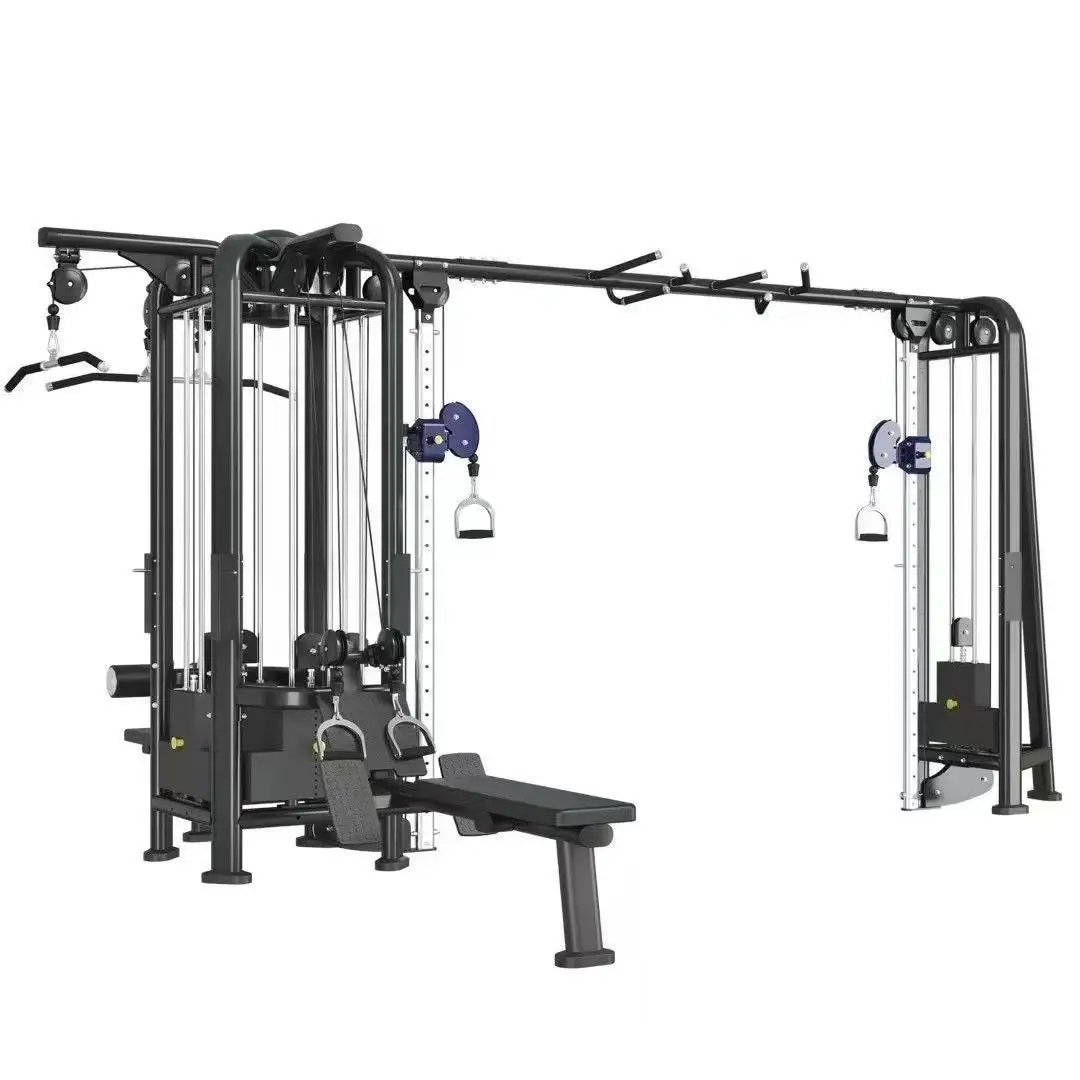
Structural Rigidity First — 3mm thick iron tubing maintains frame integrity across continuous multi-user strength training cycles in commercial environments.
Technical Specifications
| Parameter | Value |
|---|---|
| Product Type | Multi Function Smith Machine Power Rack |
| Designation | SR-3007 |
| Product Dimensions | 1800 × 2200 × 2200 mm |
| Material | Iron |
| Tube Thickness | 3 mm |
| Exercise Part | Arm |
| Age Group | Adult |
| Gender | Unisex |
| Color | Customized (available in multiple color options) |
| Certification | RoHS, ISO 9001, CE |
Application Suitability
| Deployment Scenario | Typical Use |
|---|---|
| chain gym cardio zone | Full-body strength circuits integrated alongside cardio stations for balanced training programs |
| corporate wellness room | Compact multi-station solution serving diverse employee populations with limited floor space |
| community fitness facility | Versatile training hub accommodating varied age groups and fitness levels |
| high-end residential home gym | Space-efficient strength solution consolidating multiple exercise modalities into one footprint |
Why Structural Frame Thickness Decides Equipment Lifespan in Commercial Settings
A 3mm iron tube wall carries load cycles that collapse thinner frames within months of public use.
Commercial gym operators discover too late that power racks assembled from 1.5mm or 2mm tubing develop hairline cracks at weld joints under repeated barbell loading and dynamic movements. Maintenance logs show frame failures clustering around attachment points where user force concentrates unpredictably [NEED_CITE: structural fatigue thresholds for commercial gym equipment frames]. The SR-3007 commercial multi function smith machine power rack gym installation eliminates this failure mode by specifying 3mm iron wall thickness throughout the primary load-bearing structure, addressing the root cause rather than patching symptoms with reinforcement brackets.
Positioning Within a Commercial Strength Training Layout
The SR-3007 commercial multi function smith machine power rack gym unit consolidates guided barbell movements and free-weight exercises into a single 1800 × 2200 mm footprint, reducing the total floor allocation needed for a full strength training zone. It complements cable crossover machines and plate-loaded stations by handling compound lifts with fixed vertical guide rails, letting users train safely without a spotter. The multi-function design accommodates arm-focused movements as well as lower-body and core exercises when configured with appropriate attachments. Its 2200 mm height clears standard commercial ceiling clearances while providing sufficient rail travel for tall users performing overhead presses.
Continuous Load Cycles and Facility Integration
A commercial multi function smith machine power rack gym environment demands frame rigidity that survives eight-hour peak usage windows with multiple users cycling through sets consecutively. The 3mm iron construction maintains dimensional stability under these conditions, preventing the lateral sway that causes guide rail binding and user discomfort [NEED_CITE: load distribution standards for commercial power rack installations]. Floor mounting requires level concrete subflooring with adequate embedment depth for anchor bolts. The iron frame’s mass contributes to inherent vibration damping, reducing transmitted noise to adjacent spaces compared to lighter aluminum-alloy alternatives. Facility managers should allocate clearance on all four sides to accommodate barbell travel and user movement patterns safely.
Iron Construction and Load-Bearing Engineering
Iron tubing at 3mm wall thickness delivers a stiffness-to-weight ratio appropriate for commercial multi function smith machine power rack gym deployments where the frame must resist both static loads from racked weight and dynamic forces from controlled repetitions. The Smith machine guide rails constrain barbell movement to a vertical plane, reducing stabilizer muscle demand and allowing users to focus on targeted muscle groups safely. Welded connections between the main uprights and cross-members distribute stress across broader surface areas, preventing the point-load failures that compromise bolted assemblies over time. The 1800 × 2200 × 2200 mm envelope provides a stable base-to-height ratio, resisting tip forces during uneven loading.
The Hidden Cost of Undersized Frame Specifications
Facilities that procure power racks with sub-3mm tubing frequently face premature frame deformation, requiring complete unit replacement rather than component-level repair [NEED_CITE: commercial equipment replacement frequency versus frame specification]. Guide rails on undersized frames develop misalignment that produces uneven resistance through the range of motion, generating user complaints and liability exposure. Color and finish degradation accelerates on thinner tubing because surface coatings lack the underlying rigidity to resist micro-flexing. Procurement decisions based solely on initial purchase price ignore the compound cost of downtime, member attrition, and emergency replacement logistics.
Why This Product Line Fits Commercial Deployment
Every SR-3007 unit undergoes the same 10,000-hour durability validation protocol applied across the full commercial cardio and strength catalog, ensuring consistent lifecycle expectations when mixed into a single facility order. The 1800 × 2200 mm footprint feeds directly into 3D layout planning alongside treadmill and elliptical placements, allowing ventilation corridors and member flow paths to be modeled before equipment arrives. OEM customization extends to frame color and branding elements, enabling facility operators to maintain visual identity across locations without structural compromises. Technical support covers installation commissioning and ongoing frame inspection protocols. Documentation packages include structural load test records specific to the 3mm tube specification.
Documentation & Test Records
- CE declaration of conformity covering the SR-3007 structural and safety requirements
- EN 957 test report validating load-bearing capacity and stability under commercial use
- ISO 9001 certificate confirming manufacturing quality management processes
- RoHS compliance documentation verifying material safety for indoor deployment
- Structural load test records specific to 3mm iron tube wall thickness
- Spare parts list with frame component and guide rail part numbers
Installation, Commissioning & Maintenance
- Verify ceiling height clearance exceeds 2200 mm plus safety margin before anchoring the 1800 × 2200 mm base frame
- Level concrete subfloor and install vibration-damping pads beneath each upright base plate
- Torque all anchor bolts to specification and re-check after the first 30 days of loading
- Lubricate guide rails at intervals specified in the commissioning guide to maintain smooth vertical travel
- Inspect weld joints quarterly for stress indicators, documenting findings per maintenance schedule
- Clean iron surfaces with pH-neutral solution to prevent sweat-induced corrosion in high-humidity environments
Equipment Selection and Deployment Inquiry
Provide your strength training zone dimensions and intended user volume to receive a 3D layout incorporating the SR-3007 commercial multi function smith machine power rack gym footprint with recommended clearances and member flow paths. Specify daily usage intensity and peak-hour user counts so duty-cycle expectations align with frame specification. Confirm local voltage standards and facility ceiling heights to validate dimensional compatibility before order confirmation. Indicate whether frame color and branding customization is required to match your facility identity standards.
Frequently Asked Questions
Q: How does 3mm tube thickness compare to standard commercial power racks?
A: Standard commercial racks often use 2mm or 2.5mm tubing to reduce manufacturing cost and shipping weight. The 3mm specification on the SR-3007 increases frame stiffness and resistance to weld-joint fatigue under repeated dynamic loading. This difference becomes measurable in high-traffic facilities where multiple users cycle through the equipment daily, as thinner tubes gradually develop lateral deflection that compromises guide rail alignment and user experience.
Q: What customization options are available for facility branding?
A: Frame color is fully customizable to match facility branding requirements, applied as a coating layer over the iron substrate without affecting structural performance. Logo placement and accent color configurations can be specified during the OEM scoping phase. Custom color orders follow the same production and testing workflow as standard units, ensuring durability standards remain consistent regardless of finish selection.
Q: How does multi-function design impact space efficiency in commercial settings?
A: Consolidating Smith machine guided lifts and power rack free-weight exercises into one 1800 × 2200 mm footprint eliminates the need for separate dedicated stations. This reduction in total equipment count frees floor area for additional cardio units or functional training zones. Facility operators serving diverse member populations benefit from offering multiple exercise modalities without proportional increases in square footage allocation.
Q: What maintenance protocols ensure long-term structural integrity?
A: Quarterly weld joint inspections and guide rail lubrication at manufacturer-specified intervals form the core maintenance routine. Anchor bolt re-torquing after initial settlement prevents frame shift under load. Surface cleaning with pH-neutral agents protects the iron finish from sweat corrosion. Documenting each inspection creates a lifecycle record that supports warranty claims and informs replacement planning for high-volume commercial deployments.
Q: How does iron construction compare to alternative materials for commercial use?
A: Iron provides higher density and inherent vibration damping compared to aluminum alloys, reducing transmitted noise during barbell loading and unloading. The material’s stiffness-to-cost ratio favors high-volume manufacturing at 3mm wall thickness without the price premium of steel alloys. For commercial gym environments where equipment weight is acceptable and noise control matters, iron construction delivers practical advantages in both performance and acoustic management.
![Multi Functional Smith Machine Power Rack with Dual Cable Crossover for Commercial Gyms [WARN] draft identifier mismatch](https://bicksport.com/wp-content/uploads/2026/08/multi-functional-smith-machine-power-rack-with-dual-cable-crossover-for-commercial-gyms-warn-draft-identifier-mismatch-0758ba.webp)