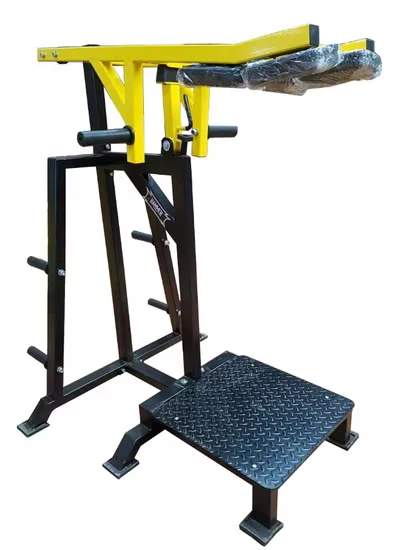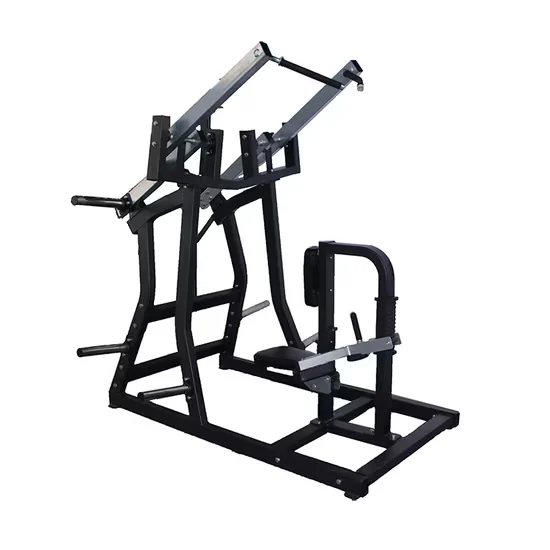
Structural Resonance Suppression — gusseted 145kg steel frame with sealed pivot bearings isolates vibration during high-repetition back training sets.
Technical Specifications
| Parameter | Value |
|---|---|
| Designation | OS-H5015 |
| Product Type | ISO-Lateral Strength Machine |
| Exercise Target | Back |
| Frame Material | Reinforced Steel |
| Product Dimensions | 1650 × 1100 × 2050 mm |
| Net Weight | 145 kg |
| Max User Weight | 180 kg |
| Resistance Configuration | Optional plate-loaded or selectorized |
| Pivot Bearings | Sealed |
| Color Options | Optional |
| Certification | CE, ISO 9001 |
| OEM Availability | Available |
| HS Code | 950691190 |
| Transport Package | Plywood Box |
| Production Capacity | 500 Units Per Month |
Application Suitability
| Deployment Scenario | Typical Use |
|---|---|
| Five-star hotel fitness center on guest room floors | Back training in quiet zones adjacent to occupied rooms, requiring minimal vibration transmission |
| International gym chain cardio and strength zones | High-frequency lat pulldown usage with minimal pivot bearing maintenance across thousands of weekly repetitions |
| Corporate wellness and community fitness center | Mixed-use strength areas where noise isolation prevents disruption to adjacent yoga or recovery spaces |
| High-end residential home gym | Space-efficient unilateral and bilateral back training with whisper-quiet operation suitable for shared walls |
| Professional sports training center | Biomechanically accurate lat engagement for athlete programming with independent arm loading |
Why Vibration Complaints Surface Before Bearings Show Wear
Sealed pivot bearings and precision-machined guide rods eliminate the metal-on-metal contact that generates noise long before mechanical failure is visible.
Strength equipment deployed near recovery zones or quiet studios often draws complaints not from failure but from resonance. When pivot bearings are inadequately sealed, the metallic clanking from weight stack guide rods transmits through flooring into adjacent spaces. Facility managers rarely discover the root cause until members report disruption or, in hotel environments, until the front desk logs noise complaints from rooms directly below the strength zone [NEED_CITE: vibration transmission through structural flooring in fitness facility deployments].
Positioning the Commercial ISO-Lateral Front Lat Pulldown in a Strength Layout
The OS-H5015 covers mid-to-high intensity back engagement through both bilateral and unilateral loading patterns, complementing cable crossovers and plate-loaded row stations in a complete strength circuit. Its independent arm mechanism accommodates users with shoulder mobility limitations who find fixed-bar pulldown geometry restrictive. Positioned along a wall or between functional rigs, this commercial ISO-lateral front lat pulldown fits naturally into moderate-density commercial layouts where equipment spacing must balance throughput with movement clearance for users up to 180 kg.
Operational Duty and Deployment Environment Requirements
Continuous high-frequency usage in gym chains demands sealed bearings that maintain smooth pivot action across thousands of daily repetitions without field lubrication [NEED_CITE: sealed bearing duty cycles in commercial strength equipment]. Noise transmission through structural flooring remains a critical factor for multi-story hotel deployments where the strength zone sits above occupied guest rooms. Adequate clearance around the 1650 × 1100 mm footprint ensures users can load and unload plates or adjust selectorized pins without congesting adjacent equipment. Level flooring with isolation pads further contains vibration before it propagates through the building structure.
Frame Mass and Bearing Specification Decoded
The 145 kg reinforced steel frame with gusseted joints serves a functional purpose beyond structural integrity: it dampens resonance under maximum load, preventing the harmonic vibration that lighter frames transmit into flooring during explosive pulling motions. Sealed pivot bearings separate the moving arm mechanism from the static frame, eliminating the grinding friction that unsealed bushings generate as they accumulate chalk dust and humidity over time. The optional plate-loaded or selectorized resistance configuration affects maintenance profiles differently — plate-loaded variants rely on guide rod alignment and sleeve condition, while selectorized units depend on pin engagement precision and stack friction [NEED_CITE: selectorized weight stack guide rod alignment tolerances].
The Hidden Cost of Specifying Below Commercial Grade
Frames under 120 kg often lack the mass to absorb resonance, transferring vibration through floor anchors into structural slabs — a problem invisible during installation but persistent once training begins. Unsealed pivot bearings in humid gym environments corrode within months, converting smooth articulation into audible grinding that members notice before maintenance teams do. Selectorized units with misaligned guide rods develop uneven stack friction, causing plates to hang or drop abruptly during release, which accelerates cable wear and generates impact noise.
Why This Product Line for Commercial Strength Deployments
Every OS-H5015 frame undergoes load-bearing verification and pivot bearing cycling tests to validate smooth operation under continuous commercial duty. The 1650 × 1100 mm footprint informs 3D strength zone layouts that account for plate-loading clearance, member sightlines, and traffic flow between stations. OEM customization extends to frame color and resistance configuration, allowing facility operators to align equipment visually with brand identity. Technical documentation covers bearing maintenance intervals and guide rod inspection procedures specific to each resistance variant.
Documentation & Test Records
- CE declaration of conformity for OS-H5015 strength machine
- EN 957 test report covering structural load and pivot durability
- ISO 9001 quality management certificate
- Pivot bearing cycling durability test record
- Frame weld inspection and load-bearing certification
- Selectorized guide rod alignment verification report
Installation, Commissioning & Maintenance
- Maintain 800 mm clearance on all sides for plate loading and user movement
- Install vibration isolation pads beneath frame feet on multi-story deployments
- Verify guide rod verticality and lubricate selectorized stack sleeves at commissioning
- Inspect sealed pivot bearings for play and re-grease per service interval schedule
- Check cable tension and pulley alignment monthly under high-frequency usage
Equipment Selection and Deployment Inquiry
Provide strength zone dimensions and planned equipment count to receive a 3D layout addressing member flow and clearance around the OS-H5015 footprint. Specify whether the deployment environment sits above occupied floors to confirm isolation pad requirements and flooring transmission thresholds. Indicate preferred resistance configuration — plate-loaded or selectorized — to align maintenance profiles with your facility’s service capacity and member usage patterns.
Frequently Asked Questions
Q: How does ISO-lateral arm design differ from a fixed-bar lat pulldown for back training?
A: Independent arm movement allows each side to follow a natural pulling arc, accommodating asymmetries in shoulder mobility and strength. Fixed-bar machines force both arms into a single plane, which can stress the shoulder joint during heavy loads. ISO-lateral configuration also enables unilateral loading for rehabilitation or corrective programming within a commercial strength zone.
Q: What maintenance do sealed pivot bearings require in humid gym environments?
A: Sealed bearings prevent moisture and chalk dust from entering the pivot mechanism, significantly extending service intervals compared to unsealed bushings. Periodic inspection for lateral play ensures the seal remains intact. In high-humidity coastal deployments, more frequent visual checks during routine maintenance help identify early seal degradation before noise develops.
Q: Should a commercial gym choose plate-loaded or selectorized resistance?
A: Plate-loaded configurations suit facilities with experienced members and dedicated strength zones, offering incremental loading flexibility. Selectorized units serve high-traffic environments where rapid weight changes improve throughput and reduce floor clutter from loose plates. Both options are engineered to the same 10,000-hour durability standard for continuous commercial duty cycles.
Q: What isolation measures prevent noise transmission through flooring on upper floors?
A: Vibration isolation pads beneath the frame feet decouple the 145 kg steel structure from the floor slab, absorbing resonance generated during heavy repetitions. Multi-story hotel deployments benefit from full rubber matting beneath the entire strength zone, preventing vibration from propagating through structural flooring into guest rooms below.
Q: How does frame weight affect stability during heavy lat pulldown sets?
A: The 145 kg reinforced steel frame with gusseted joints provides sufficient mass to resist tipping and flex under maximum load without requiring floor anchoring. Heavier frames also dampen harmonic resonance, preventing the vibration that lighter structures transmit into flooring and adjacent equipment during explosive pulling movements.
![Commercial Adjustable Bench Gym Equipment for Professional Gym and Club Use [WARN] draft identifier mismatch](https://bicksport.com/wp-content/uploads/2026/08/commercial-adjustable-bench-gym-equipment-for-professional-gym-and-club-use-warn-draft-identifier-mismatch-58d3ea.webp)