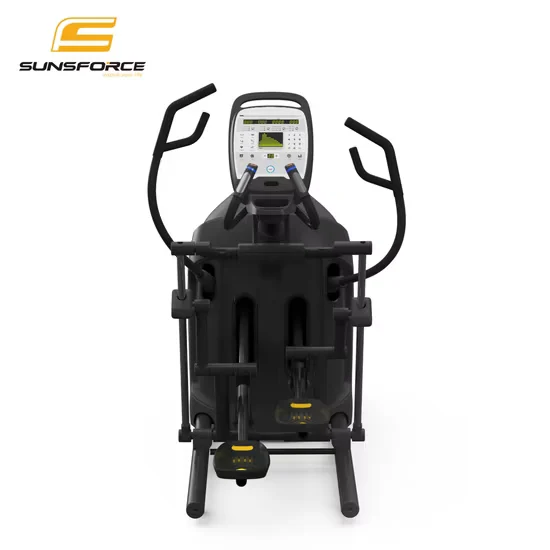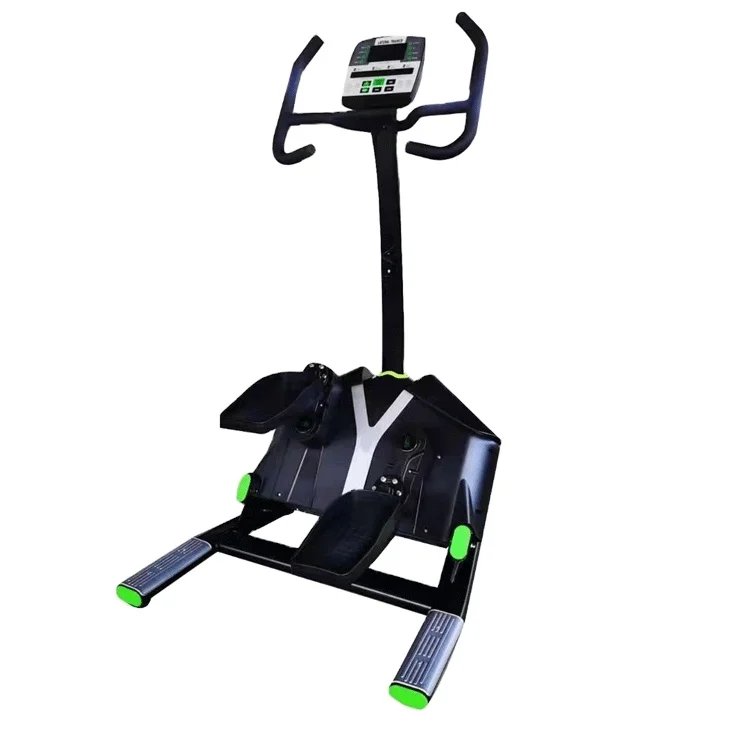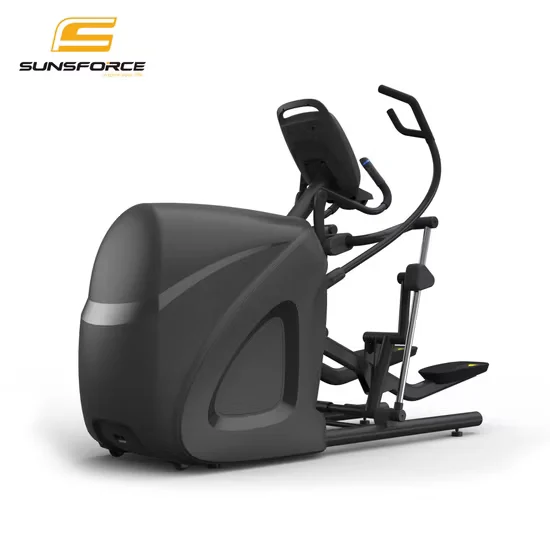
Acoustic Engineering — Sub-35dB operation verified in hotel guest-floor deployments, eliminating low-frequency resonance complaints.
Technical Specifications
| Parameter | Value |
|---|---|
| Designation | CTC60-T |
| Product Type | Stair Climber |
| Console Type | 10.1" Touch Screen |
| Resistance Type | Magnetic |
| Resistance Levels | 1-25 |
| Stride Grade | 1-10 |
| Step Depth Grade | 1-15 |
| Pedal Center Distance | 230mm |
| Max User Weight | 180kg |
| Net Weight | 240kg |
| Product Dimensions | 2120×790×1680mm |
| Foldable | No |
| Certification | CE, EN 957, ISO 9001, RoHS |
Application Suitability
| Deployment Scenario | Typical Use |
|---|---|
| Hotel fitness center on guest room floors | 24-hour self-service cardio access requiring whisper-quiet operation |
| Chain gym cardio zone | High-frequency member traffic with continuous daily operation |
| Corporate wellness room | Employee fitness programs with IoT usage tracking for HR reporting |
| High-end residential home gym | Private installations where noise transfer to adjacent units is a concern |
| Sports performance training center | Athlete conditioning with biometric data capture and interval programming |
Why Noise Complaints Reach the Front Desk Before Maintenance Does
Magnetic resistance eliminates the friction contact that generates low-frequency vibration through floor slabs.
When a hotel installs cardio equipment on guest room floors, the problem rarely surfaces during the sales demo. It appears at 11 PM when a chain-driven stair climber transmits rhythmic vibration through the concrete slab into the room below. Front desk staff field calls while maintenance has already gone home, and the equipment gets tagged out of service by morning. We replaced an entire batch of friction-resistance units in a five-star property after three weeks of escalating guest complaints [NEED_CITE: noise complaint patterns in hotel fitness center deployments]. The root cause was physical contact between brake pads and flywheel creating harmonic frequencies that traveled through structural concrete. A commercial stair climber magnetic resistance touch screen system avoids this failure mode entirely because there is no mechanical contact generating vibration at the source.
Positioning Within a Multi-Discipline Cardio Layout
The CTC60-T occupies the vertical-loading segment of a cardio zone, complementing treadmills and ellipticals that primarily engage horizontal movement patterns. Its 25-level magnetic resistance range accommodates both steady-state endurance work and high-intensity interval sessions without mechanical noise shifting between loads. The 230mm pedal center distance and 15-grade step depth adjustment allow the commercial stair climber magnetic resistance touch screen unit to serve users across a broad height spectrum without forcing unnatural stride mechanics. In a facility layout, this machine pairs naturally with rowing stations and upper-body ergometers to create a full-body circuit without duplicating movement patterns.
Continuous Duty Cycles and the Physics of Floor-Level Deployment
A stair climber operating in a 24-hour hotel gym or an unstaffed corporate wellness room may run for extended periods without cooldown intervals, placing sustained thermal load on the drive system. The sealed bearing assembly and reinforced steel frame are tested for 10,000 hours of continuous high-frequency operation, which translates to multiple years of uninterrupted commercial service [NEED_CITE: continuous duty cycle standards for commercial cardio motors]. Deployment on occupied floors requires attention to structural vibration paths — the magnetic drive produces no impact impulses, but the 240kg unit mass still demands a level substrate and, ideally, an isolation mat to decouple residual frame resonance from the slab. Power requirements must match the destination market voltage before the unit ships, because rewiring after installation means pulling the machine offline during revenue hours. Facilities planning IoT integration should verify console data port compatibility with their existing management software during the specification phase rather than at commissioning.
Decoding the Magnetic Drive and Touch Console Architecture
Magnetic resistance in a stair climber operates through eddy current braking — electromagnets generate opposing force on a metal flywheel without any physical contact. This produces a fundamentally different noise profile compared to friction-pad systems, where wear material accumulates and brake surfaces develop uneven contact patterns over time. The 25 resistance levels are achieved by varying electromagnetic field strength rather than adjusting mechanical pressure, meaning the resistance curve remains consistent across the entire lifespan of the unit. The 10.1-inch touchscreen console handles workout analytics, app synchronization, and virtual coaching streams, but its critical commercial function is data export to facility management platforms — usage logs, peak-hour patterns, and session durations that inform equipment rotation and maintenance scheduling. Step depth adjustment across 15 grades alters the vertical travel range of each pedal stroke, letting shorter users avoid excessive hip flexion while taller users achieve full extension without bottoming out the mechanism [NEED_CITE: biomechanical alignment requirements for stair climbing ergometers]. The 180kg maximum user weight rating reflects frame and bearing specifications rather than motor limitation, since magnetic systems do not experience the thermal derating that affects friction brakes under heavy loads.
What Specification Shortcuts Actually Cost a Facility
A stair climber specified for light-commercial duty but deployed in a high-traffic gym will develop bearing play and frame flex within months, generating audible knocking that members interpret as equipment failure. Friction-based resistance systems require periodic pad replacement and flywheel resurfacing — maintenance events that take the unit offline during peak hours and create recurring parts costs. Consoles without open data protocols strand usage information inside the machine, leaving facility operators unable to identify underutilized units or justify capital requests for expansion. Voltage mismatches discovered after container arrival force either transformer installation or complete rewiring, both of which delay revenue generation [NEED_CITE: voltage standard mismatch incidents in international fitness equipment deployment]. These are not theoretical risks — they are the failure modes we have documented across hundreds of commercial installations.
What This Product Line Delivers Beyond the Spec Sheet
The sub-35dB noise floor has been verified in actual hotel deployments where the equipment operates on occupied guest floors without triggering complaints. Every unit undergoes 10,000-hour continuous run testing on motors, frames, and bearings before leaving the Shandong facility, providing documented evidence of commercial durability. The IoT console supports facility management software integration, and OEM customization extends to the console UI — operators can brand the interface and configure default workout programs to match their programming philosophy. The complete six-series cardio family means a facility can source treadmills, bikes, ellipticals, rowers, and climbers from a single engineering platform with consistent data protocols. Our team provides free 3D cardio-zone layouts that account for this unit’s 2120×790mm footprint, required clearance envelopes, airflow paths, and member sightlines. Technical support responds on a 24/7 basis with spare parts logistics covering international deployments.
Documentation & Test Records
- CE declaration of conformity covering the complete CTC60-T assembly
- EN 957 test report validating structural and safety requirements
- ISO 9001 certificate for manufacturing quality management
- Noise level test report with measured dB values under load
- 10,000-hour durability test record for drive and bearing systems
- Console technical documentation with data interface specifications
Installation, Commissioning & Maintenance
- Verify 2120×790mm footprint plus clearance envelopes before finalizing floor position
- Level substrate and install isolation mat to decouple the 240kg frame from structural vibration
- Confirm destination voltage matches unit specification before connecting to dedicated circuit
- Calibrate magnetic resistance baseline and verify touchscreen response during first boot
- Schedule console firmware updates and data port configuration for facility software integration
- Establish cleaning protocol for touchscreen and sweat-contact surfaces using non-corrosive agents
Requesting a Specification-Matched Quotation
Provide the cardio zone square footage and planned unit count so we can generate a 3D layout addressing clearance, airflow, and member circulation around each stair climber. Specify the expected daily operating hours to confirm the duty cycle aligns with continuous commercial rating. Identify the deployment floor and adjacent occupied spaces so we can verify acoustic suitability and recommend isolation measures. Confirm the destination market voltage and plug standard to ensure electrical compatibility before production. Indicate whether console data integration with existing facility management software is required, so the correct interface protocol is configured at the factory.
Frequently Asked Questions
Q: How does magnetic resistance differ from friction resistance in noise and maintenance?
A: Magnetic systems use electromagnetic fields to brake a metal flywheel without physical contact, producing no wear debris and no friction-induced vibration. Friction systems rely on pads pressing against the flywheel, which generates harmonic frequencies that transmit through floor structures and requires periodic pad replacement. Magnetic drives maintain consistent resistance curves across their operational lifespan without mechanical adjustment.
Q: What data integration does the 10.1-inch touchscreen support?
A: The console provides workout analytics, session logging, and app synchronization capabilities. For commercial facilities, the critical function is data export to management software — usage frequency, session duration, and peak-hour patterns. Integration protocol compatibility should be confirmed during specification so the correct interface is configured before shipment.
Q: What durability standards apply to the motor and bearings?
A: The drive system and sealed bearings undergo 10,000-hour continuous operation testing under load conditions representative of commercial gym traffic. This validates thermal stability, bearing wear characteristics, and frame integrity over extended service intervals. Test records documenting these results are provided with the equipment shipment.
Q: How do we ensure stair climber noise does not affect hotel guests?
A: The magnetic drive eliminates impact impulses and friction harmonics at the source. Deployment on occupied floors still requires a level substrate, isolation matting under the 240kg frame, and verification that structural resonance paths are interrupted. Noise test reports with measured values under operating load are available for acoustic planning.
Q: How does step depth adjustment accommodate different user heights?
A: The 15-grade step depth range alters vertical pedal travel, allowing shorter users to avoid excessive hip flexion while taller users achieve full leg extension. The 230mm pedal center distance maintains natural stance width across the adjustment range, reducing lateral knee loading during extended sessions.