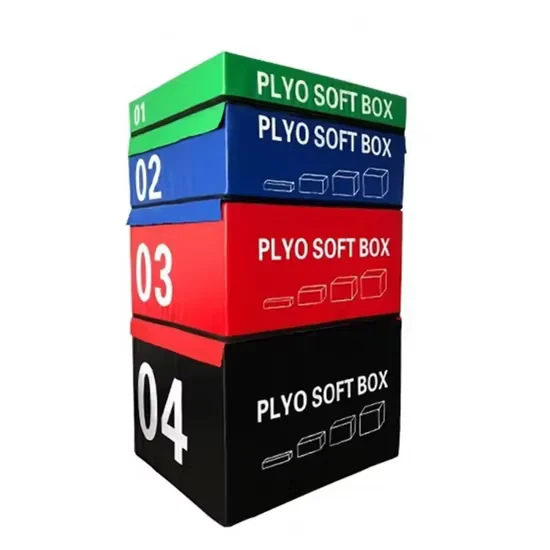
Foam Density Impact Absorption — High-density foam core tested for 10,000 hours of continuous high-frequency box jump landings, eliminating structural noise transmission in multi-story deployments.
Technical Specifications
| Parameter | Value |
|---|---|
| Product Type | Plyometric Box |
| Model | PB-1100 |
| Material | Foam (Plyometric Grade) |
| Available Sizes | 90 × 75 × 15 cm / 30 cm / 45 cm / 60 cm |
| Max User Weight | 180 kg |
| Noise Level | Sub-35 dB landing impact |
| Logo | Customized Logo Available |
| Color | Black (custom options available) |
| Certification | CE, EN 957, ISO 9001 |
| Production Capacity | 5,000 units/year |
| MOQ | 50 PCS |
| HS Code | 9506911900 |
Application Suitability
| Deployment Scenario | Typical Use |
|---|---|
| Hotel fitness center on guest room floors | 24-hour plyometric access with zero noise complaints from adjacent rooms |
| Chain gym cardio zone | High-frequency box jump circuits and HIIT programming across peak hours |
| CrossFit box | WOD-standard box jump stations requiring repeated landing durability |
| Corporate wellness room | Progressive jump training for mixed-fitness employee populations |
| High-end residential home gym | Quiet plyometric work in shared buildings where floor impact is restricted |
| Sports performance training center | Athlete vertical power development with joint-friendly foam cushioning |
Why Impact Noise Determines Whether a Plyo Box Stays on the Floor
Dense foam construction turns explosive landings into near-silent contact.
Every hotel gym operator has faced the same problem: wooden or metal plyometric boxes transmit landing shock through floor slabs, generating structure-borne noise that reaches rooms directly below. Front desk complaints follow within days, and the equipment gets moved to a basement corner or removed entirely. The commercial foam plyometric box jump solves this by absorbing impact energy internally rather than transmitting it downward. [NEED_CITE: structure-borne noise transmission standards for multi-floor fitness facilities]
I have seen facilities invest in premium cardio zones only to discover their plyometric equipment violates the acoustic environment guests expect on upper floors. Foam-core construction addresses this without sacrificing the rigidity athletes need for stable takeoff and landing.
Positioning Within the Cardio and Functional Training Zone
This commercial foam plyometric box jump fills the explosive power station within a full cardio layout, complementing treadmills and rowing machines by targeting vertical force production and fast-twitch muscle recruitment. The four-size modular system (15 through 60 cm) supports progressive overload from beginner step-ups to advanced depth jumps without requiring separate equipment purchases. Each unit handles user loads up to 180 kg, accommodating heavyweight athletes in performance centers and general populations in corporate wellness rooms. Deployment works in open training bays, dedicated plyometric lanes, or compact hotel fitness corners where space efficiency matters.
Continuous High-Frequency Landing Durability
A CrossFit box running three group classes daily subjects its plyometric stations to hundreds of landings per hour, six days a week. Foam density and compression recovery rate determine whether the box holds its shape or deforms into an unsafe rounded surface within months. The internal reinforced structure within this commercial foam plyometric box jump maintains dimensional stability under that continuous impact cycle. Noise transmission remains sub-35 dB at landing, which keeps deployment viable on any floor level without acoustic isolation mats. Operators should confirm available ceiling height relative to the tallest box in the set and maintain clear landing zones per manufacturer spacing guidance. [NEED_CITE: compression recovery testing protocols for commercial-grade foam fitness equipment]
Foam Density, Internal Framing, and Landing Mechanics
The distinction between a consumer foam block and commercial-grade plyometric foam lies in density rating and compression recovery speed. Low-density foam compresses fully under a 90 kg athlete, transferring residual force to the floor structure and providing an unstable landing platform. The plyometric-grade foam used here absorbs impact energy through controlled cellular compression while the internal reinforcement frame prevents lateral deformation during off-center landings. This construction method also eliminates the hollow resonance common in wooden boxes, which amplifies landing sound rather than dampening it. The four available heights allow trainers to match box selection to athlete capability without compromising the noise-reduction benefit that only solid foam-core construction provides.
What Happens When Plyometric Equipment Is Underspecified
Facilities that source wooden or steel plyometric boxes for multi-story deployments often face a predictable cycle: noise complaints arrive within the first week, the boxes get relocated to unsuitable spaces, and the plyometric programming that justified their purchase goes unused. Foam boxes with insufficient density deform permanently within months under commercial traffic, creating uneven landing surfaces that increase ankle and knee injury risk. [NEED_CITE: injury correlation with degraded plyometric landing surfaces in commercial facilities] Operators then replace the entire set, paying twice for equipment that should have been specified correctly at the outset. The 180 kg maximum user load rating and 10,000-hour durability testing on this commercial foam plyometric box jump address both the structural and acoustic failure modes simultaneously.
Why This Product Line Addresses Facility-Level Requirements
Every unit undergoes 10,000-hour continuous impact testing that simulates years of high-frequency commercial use before leaving the production line. The sub-35 dB landing noise profile has been verified in actual hotel floor deployments where acoustic thresholds are non-negotiable. The complete four-size range allows facilities to outfit an entire plyometric zone from a single product family, maintaining consistent foam density and landing feel across all heights. OEM customization covers logo placement and color matching for brand-aligned gym aesthetics. Our team provides complimentary 3D training zone layout planning that accounts for ceiling clearance, landing zone spacing, and athlete flow patterns around the plyometric station. All backed by round-the-clock technical support and direct spare parts availability.
Documentation & Test Records
- CE declaration of conformity for plyometric equipment
- EN 957 test report covering structural load and stability
- ISO 957 compliance certificate for commercial fitness gear
- Foam density and compression recovery test documentation
- 10,000-hour impact durability test record per unit
- Noise level test report confirming sub-35 dB landing profile
Installation, Commissioning & Maintenance
- Position each box on level flooring with minimum clearance around all sides for safe landing zones
- No power or electrical requirements as this is passive foam construction
- Inspect foam surface for compression marks or surface wear during weekly facility checks
- Clean with mild disinfectant compatible with foam surfaces to prevent degradation
- Rotate box orientation periodically to distribute landing wear evenly across the surface
- Verify logo and branding integrity after extended high-traffic use for OEM customized units
Configuring Your Plyometric Zone
Provide your training area dimensions and ceiling height to receive a 3D layout showing box placement relative to other equipment and traffic flow paths. Specify your average daily class volume and athlete count to confirm that foam density specifications match your expected landing frequency. Confirm your deployment floor level and adjacent room types so acoustic requirements can be validated before shipment.
Frequently Asked Questions
Q: How does foam plyometric box construction reduce noise compared to wooden boxes?
A: Wooden boxes create hollow resonance chambers that amplify landing impact sound and transmit vibrations through their rigid structure into the floor. High-density foam absorbs impact energy through cellular compression, converting kinetic force into internal deformation rather than acoustic energy. This eliminates the sharp percussive sound that triggers complaints in multi-story hotel and residential deployments, keeping landing noise well below the threshold that disturbs adjacent occupied spaces.
Q: What foam density is required for commercial-grade durability under continuous use?
A: Commercial plyometric foam must resist permanent deformation after thousands of repeated landings from athletes weighing up to 180 kg. Consumer-grade foam compresses fully and loses recovery capacity within months of high-frequency use. The plyometric-grade foam in this box is tested through 10,000 hours of continuous impact cycles, maintaining dimensional stability and consistent landing feel throughout its service life in demanding gym and performance center environments.
Q: How do I select the right box height progression for athlete safety?
A: The four available heights — 15, 30, 45, and 60 cm — correspond to distinct training progressions. Beginners start with step-ups on the lowest platform to establish landing mechanics before advancing to full jumps. Intermediate athletes work primarily at 30 and 45 cm, while the 60 cm height serves advanced explosive power development. Having all four sizes available lets trainers match each athlete to the appropriate challenge level safely.
Q: Can the box be customized with facility branding and color matching?
A: OEM customization covers logo application and color options to align with your facility brand identity. This is particularly relevant for hotel fitness centers and corporate wellness rooms where equipment aesthetics must match interior design specifications. The customization process is integrated into the production workflow, ensuring branding quality is consistent across the full order quantity without extending lead times unnecessarily.
Q: What maintenance is required for foam plyometric boxes in high-traffic commercial environments?
A: Foam plyometric boxes require minimal maintenance compared to mechanical cardio equipment. Weekly surface inspection for compression damage or wear, regular cleaning with foam-compatible disinfectants, and periodic rotation of box orientation to distribute landing impact evenly are the primary requirements. No lubrication, calibration, or electrical servicing is needed, which significantly reduces the ongoing maintenance burden on facility operations teams.