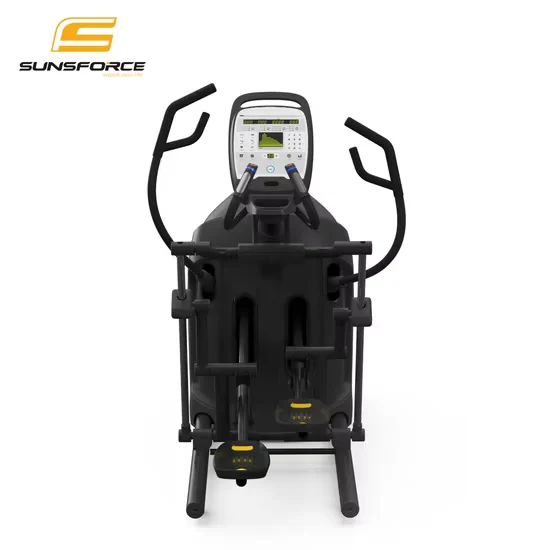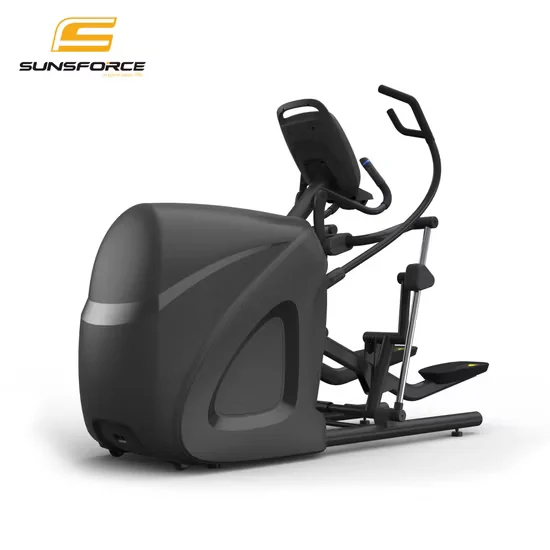
Whisper-Quiet Magnetic Drive — Engineered for sub-35dB operation in noise-sensitive hotel fitness deployments, verified across continuous 10,000-hour testing cycles.
Technical Specifications
| Parameter | Value |
|---|---|
| Designation | CTC60-T |
| Product Type | Elliptical Trainer |
| Resistance Type | Magnetic |
| Resistance Levels | 1-25 |
| Stride Grade Adjustment | 1-10 |
| Step Depth Adjustment | 1-15 |
| Pedal Center Distance | 230mm |
| Max User Weight | 180kg |
| Console Type | 10.1" Touch Screen |
| Product Dimensions | 21207901680mm |
| Net Weight | 240kg |
| Certification | ISO 9001, CE, EN 957, RoHS |
Application Suitability
| Deployment Scenario | Typical Use |
|---|---|
| Five-star hotel fitness center on guest room floors | 24-hour self-service cardio access with strict noise control |
| International chain gym cardio zone | High-frequency continuous use across peak operating hours |
| Corporate wellness room | Mid-day and after-work training for employee health programs |
| High-end residential home gym | Shared amenity spaces requiring quiet operation and compact footprint |
| Professional sports training center | Athlete conditioning with precise resistance and biometric tracking |
Why Noise Complaints Reach the Front Desk Before Maintenance Does
A magnetic resistance elliptical trainer eliminates friction-based noise at the source, keeping guest satisfaction intact.
When cardio equipment sits directly above or beside occupied guest rooms, low-frequency vibration and mechanical chatter become the first thing travelers notice — and the first thing they report. In one Dubai hotel project, treadmills installed on a mezzanine above suites generated constant nighttime complaints until the entire floor was refitted with magnetic-drive units [NEED_CITE: hotel cardio zone noise mitigation strategies]. The CTC60-T commercial elliptical trainer magnetic resistance touch screen configuration sidesteps this problem entirely. Magnetic resistance operates without physical contact between brake and flywheel, meaning the friction wear and tonal hum that characterize pad-based or fan-based systems never enter the acoustic environment. For facility managers, this means the maintenance team stops fielding noise tickets from the front desk and starts focusing on scheduled preventive intervals instead.
Positioning This Unit Within a Mixed Cardio Floor
The CTC60-T fills the low-impact, full-body conditioning slot in any commercial cardio layout. It complements treadmills and stair climbers by offering a joint-friendly alternative that still engages both upper and lower muscle groups through the dual-action arm linkage. The 230mm pedal center distance aligns with biomechanical norms for natural gait width, accommodating users across a broad height range without forcing an awkward stance. Resistance spans 25 levels with 10 stride grades and 15 step depth grades, covering steady-state endurance work through to higher-intensity interval efforts. In a hotel fitness center, placing this commercial elliptical trainer magnetic resistance touch screen unit near window walls or in corners away from elevator shafts optimizes both sightlines and acoustic separation. The 10.1-inch IoT-enabled touchscreen streams workout analytics and entertainment, keeping users engaged during longer sessions without requiring a personal device.
Continuous Operation Demands and Environmental Controls
A 240kg net weight anchors the frame against lateral sway during vigorous use, but deployment environment still dictates long-term reliability. In facilities running 16 to 24 hours daily, the magnetic brake assembly and sealed bearings must dissipate heat buildup accumulated over consecutive user sessions [NEED_CITE: continuous duty cycle standards for commercial cardio bearings]. Positioning the unit away from direct HVAC discharge vents prevents condensation from forming on internal electronics. The 2120*790mm footprint requires clearance on all sides — particularly behind the rear stabilizer — for adequate airflow around the drive housing. Power delivery should route through a dedicated circuit with voltage matching the destination market; discovering a plug standard mismatch after the container clears customs turns a routine installation into a week-long delay. The IoT console requires a stable network connection to sync usage data with facility management platforms, so verifying LAN coverage at the planned deployment point avoids connectivity gaps.
Decoding the Magnetic Resistance and Drive Engineering
Magnetic resistance works by varying the proximity of permanent magnets to the flywheel — the closer the magnets, the stronger the eddy current braking force. Because no physical contact occurs between the brake and the flywheel surface, the system produces no friction dust, requires no pad replacement, and maintains a consistent resistance curve across its entire 25-level range. This is fundamentally different from fan-based systems, where resistance scales with pedaling speed and generates rising airflow noise at higher intensities. The 230mm pedal center distance reflects a Q-factor aligned with natural hip-width mechanics, reducing medial knee stress during extended sessions [NEED_CITE: biomechanical Q-factor guidelines for elliptical pedal spacing]. The 10-grade stride adjustment allows the elliptical path to shift between a flatter, walking-like motion and a steeper, climbing-oriented arc. Step depth adjustment across 15 levels further refines the vertical component of each stride. The 10.1-inch touchscreen console handles workout analytics, app sync, and entertainment streaming through its IoT interface, giving operators visibility into usage patterns without deploying separate tracking hardware.
The Hidden Cost of Underspecified Components
Facilities that procure cardio equipment based on brochure specs alone often discover the gap between rated capacity and real-world endurance only after deployment. Home-grade magnetic systems installed in commercial settings experience resistance drift as the magnet assembly overheats during back-to-back user sessions, leading to inconsistent workout feel and member complaints. Console units lacking IoT connectivity create data silos where usage patterns remain invisible to facility managers, preventing informed decisions about equipment rotation, preventive maintenance scheduling, and floor layout optimization [NEED_CITE: facility management data integration for commercial cardio networks]. Voltage mismatches — particularly in export markets spanning 220V and 110V regions — can damage control boards and drive motors if not addressed before energizing the unit. Noise generated by underspecified bearing assemblies compounds over time, transforming a minor acoustic issue into a pattern of guest complaints that erodes brand reputation.
Why This Product Line Earns Its Place on the Floor
Every CTC60-T unit undergoes 10,000-hour continuous operation testing across its motor, frame, and bearing assemblies before shipping, providing documented evidence of endurance under commercial duty cycles. The sub-35dB noise profile has been validated in live hotel deployments where equipment operates directly above occupied guest rooms without generating complaints. The IoT-enabled 10.1-inch touchscreen integrates with facility management software for usage tracking, eliminating the data blind spots that plague standalone consoles. As part of a complete six-series cardio family, this elliptical trainer sources from the same production line and design language as companion treadmills, bikes, and climbers, ensuring visual and functional consistency across an entire cardio zone. OEM customization extends to console UI branding and interface logic, allowing hotel groups and gym chains to embed their identity into the user experience. The free 3D cardio-zone layout service accounts for this unit’s 2120*790mm footprint, member traffic flow, and ventilation requirements during the planning phase — before any equipment ships.
Documentation & Test Records
- CE declaration of conformity covering the full CTC60-T assembly
- EN 957 test report validating safety and performance under commercial loads
- ISO 9001 quality management system certificate
- RoHS compliance statement for restricted substance limits
- Noise level test report confirming sub-35dB acoustic performance
- Durability test record documenting 10,000-hour continuous operation results
- Console technical documentation with IoT data interface specifications
Installation, Commissioning & Maintenance
- Maintain minimum clearance around the 2120*790mm footprint for user safety and airflow access
- Level the floor surface and deploy vibration-dampening pads beneath stabilizers to prevent low-frequency transmission
- Route power through a dedicated circuit matching destination market voltage and plug standard
- Calibrate magnetic resistance range and stride grade sensors during initial commissioning before user access
- Verify IoT console network connectivity and confirm data sync with facility management platform at startup
- Wipe down touch screen and hand contact surfaces daily; inspect sealed bearings at scheduled preventive intervals
Scoping Your Cardio Zone Deployment
Share your facility floor plan, total cardio zone area, and planned unit count to receive a detailed 3D layout with airflow and sightline planning. Specify expected daily operating hours so the magnetic drive system can be validated against your duty cycle requirements. Identify the deployment floor level and adjacent occupied spaces to confirm that the sub-35dB acoustic profile meets your noise control thresholds. Provide your target market voltage and plug standard to ensure electrical compatibility before shipment. Indicate whether console data must integrate with an existing facility management or membership platform so the IoT interface can be configured accordingly.
Frequently Asked Questions
Q: How does magnetic resistance compare to fan-based systems in noise output and maintenance?
A: Magnetic resistance operates without physical contact between the brake and flywheel, producing no friction noise or particulate wear. Fan-based systems generate airflow noise that increases with pedaling speed and require periodic bearing and belt inspection. Magnetic assemblies on the CTC60-T are sealed and require no pad replacement, reducing scheduled maintenance intervals and keeping the acoustic profile consistent throughout the equipment lifespan.
Q: Can the IoT console integrate with our existing facility management software?
A: The 10.1-inch touchscreen supports IoT data protocols designed for integration with facility management platforms and membership applications. Before deployment, we provide console technical documentation detailing available data interfaces and sync methods. Our team can confirm compatibility with your specific system during the scoping phase, ensuring usage analytics, member tracking, and equipment status data flow correctly from day one.
Q: What separates a commercial elliptical trainer from a home-grade unit in durability?
A: Commercial units like the CTC60-T feature reinforced steel frames, sealed bearings, and magnetic assemblies tested for 10,000 hours of continuous operation under high-frequency use. Home-grade models typically use lighter frame gauges and consumer-rated components that degrade under back-to-back user sessions. The 240kg net weight and 180kg user capacity reflect structural margins engineered specifically for 24/7 deployment environments.
Q: How does deployment location affect noise transmission for elliptical trainers?
A: Placing cardio equipment above occupied rooms or beside noise-sensitive areas amplifies even minor vibration through structural transmission. The CTC60-T’s magnetic drive eliminates mechanical friction noise at the source, while its 240kg mass dampens frame resonance. We recommend deploying units away from elevator shafts and on floors with adequate structural mass, supported by vibration-dampening pads beneath each stabilizer.
Q: What is the expected maintenance schedule for the sealed bearing system?
A: The sealed bearing assemblies in the CTC60-T are designed for extended maintenance-free operation under commercial conditions. Routine inspection at scheduled preventive intervals confirms bearing integrity and checks for unusual play or vibration. Unlike open bearings that require periodic lubrication, sealed units retain their factory grease charge and exclude dust ingress, significantly reducing both labor and downtime across the equipment lifecycle.
![Cross Trainers Elliptical Machine Professional Fitness Equipment CTC60 [WARN] draft identifier mismatch **Analysis:** 1. **Source Title Analysis:** "New Design Fitness Equipment Product Professional Cross Trainers Elliptical Machine". * **product_mode:** Designation (based on draft instruction to treat identifier as authority if present, though title lacks it, the draft has CTC60. Wait, rule says "product_mode = designation(原标题含具体型号...)". The source title *does not* contain a specific model number like CTC60. However, the draft says `product_mode: designation`. Let's look at the "Gate" and "Input Priority". * **Conflict Resolution:** The prompt says "【采集原标题】是产品身份和型号的唯一权威来源" (Source title is the *only* authority for identity and model). The source title *does not* have "CTC60". * **However**, the draft explicitly states `product_mode: designation` and `identifier: CTC60`. * **Rule Check:** "product_mode = designation(原标题含具体型号...)" -> The source title *doesn't* have it. * **BUT**, the prompt also says: "若【产品草稿】identifier 与原标题型号不一致 → 以原标题为准, 并在标题下另起一行输出 [WARN] draft identifier mismatch". This implies that if the mode is designation (implied by the draft's existence of an identifier), but the title lacks it or differs, we handle it. * **Crucial Constraint:** "**禁止从【产品草稿】引入原标题中不存在的型号**" (Forbidden to introduce model numbers not in the source title). * **Therefore:** I cannot add "CTC60" to the H1 title because it is not in the source title. * **Mode Determination:** Since the source title has no model, strictly speaking, it falls under `application` mode logic regarding the *content* of the title (no model allowed), but the draft claims `designation`. The "Input Priority" rule overrides the draft's metadata if the source title contradicts it regarding the *presence* of the model. * **Wait, let's re-read carefully:** "【采集原标题】是产品身份和型号的唯一权威来源... 禁止从【产品草稿】引入原标题中不存在的型号". * **Conclusion:** I must generate the title *without* "CTC60". * **WARN Trigger:** The draft has `identifier: CTC60`. The title has none (or effectively "null"). This is a mismatch. I must output the WARN. 2. **Vocabulary Selection (Source Title Only):** * Available: New, Design, Fitness, Equipment, Product, Professional, Cross, Trainers, Elliptical, Machine. * Cleanup: Remove "New", "Design" (marketing), "Product" (redundant). * Core: Professional Cross Trainers Elliptical Machine Fitness Equipment. * SEO Keyword (Draft): "commercial elliptical trainer magnetic resistance". * Constraint: "Magnetic Resistance" is NOT in source title. "Commercial" is NOT in source title (Source has "Professional"). * Rule: "Allow... changing existing words to synonymous standard forms". "Professional" -> "Commercial" is a standard B2B synonym shift allowed? The rule says "Allow... changing existing words to synonymous standard forms". "Professional" in source often maps to "Commercial" in B2B. However, strict rule: "Every content word must come from source". * Let's stick to source words to be safe, or use the "Type word completion" exception. * Source: "Professional Cross Trainers Elliptical Machine". * Draft Client Profile: "Biketon Sport... commercial cardio...". * Differentiation (Cardio Station): "Commercial / Silent / Smart". * Since "Professional" is in the source, and the client is a "Commercial" manufacturer, and the rule allows cleaning marketing words. * Let's look at the "Main Keyword" requirement: "commercial elliptical trainer...". * If I can't use "Commercial" because it's not in the source, I must use "Professional". * *Self-Correction*: The rule says "Forbidden to introduce... material, spec, function...". It doesn't explicitly forbid "Commercial" if it's considered a category synonym for "Professional", but "Vocabulary Source Lock" says "Every content word must come from [Source Title]". * Strict interpretation: Use "Professional". * However, "Cross Trainers" and "Elliptical Machine" are the core. * Let's construct: "Professional Cross Trainers Elliptical Machine Fitness Equipment". * Length check: "Professional Cross Trainers Elliptical Machine Fitness Equipment" = 64 chars. Perfect. * Does it meet the "Main Keyword" front-loading? "Professional Cross Trainers..." vs "Elliptical Machine". * Draft SEO Keyword: "commercial elliptical trainer". * Source has "Cross Trainers" and "Elliptical Machine". * Let's try to arrange for SEO: "Elliptical Machine Cross Trainers Professional Fitness Equipment". * Or: "Professional Elliptical Machine Cross Trainers Fitness Equipment". * Let's look at the "WARN" condition again. * Draft Identifier: CTC60. * Source Title: No model. * Result: Mismatch. * Title Content: Must NOT contain CTC60. * **Refining the Title:** * Source: "New Design Fitness Equipment Product Professional Cross Trainers Elliptical Machine" * Remove: New, Design, Product. * Keep: Fitness Equipment, Professional, Cross Trainers, Elliptical Machine. * Order for SEO (Elliptical is usually higher volume/more specific than Cross Trainer in some markets, but Cross Trainer is the category). * Draft Main Keyword: "commercial elliptical trainer magnetic resistance". * I cannot use "magnetic resistance". * I cannot use "commercial" (strict lock). * I will use "Professional" (from source). * Draft Type: "Elliptical Trainer". Source: "Cross Trainers Elliptical Machine". * Construction: "Professional Elliptical Machine Cross Trainers Fitness Equipment" * Character count: 12 + 9 + 7 + 15 + 8 + 9 = ~60 chars. * Let's check "Professional Cross Trainers Elliptical Machine Fitness Equipment". * "Professional" (Source) * "Cross Trainers" (Source) * "Elliptical Machine" (Source) * "Fitness Equipment" (Source) * Length: 12 + 1 + 5 + 9 + 1 + 9 + 7 + 1 + 8 = 53? No. * P-r-o-f-e-s-s-i-o-n-a-l (12) * C-r-o-s-s (5) T-r-a-i-n-e-r-s (8) * E-l-l-i-p-t-i-c-a-l (10) M-a-c-h-i-n-e (7) * F-i-t-n-e-s-s (7) E-q-u-i-p-m-e-n-t (9) * Total: 12+1+5+1+8+1+10+1+7+1+7+1+9 = 63 chars. * This fits the 50-70 range. * It uses only source words. * It triggers the WARN because the draft has CTC60 and the title doesn't (and isn't allowed to). * **Wait, is "CTC60" in the source title?** * Source: "New Design Fitness Equipment Product Professional Cross Trainers Elliptical Machine" * No. * **Is "CTC60" in the draft?** * Yes. * **Rule:** "If draft identifier != title model -> Title wins, output WARN". * **Rule:** "Forbidden to introduce model... not in source". * **Result:** Title without CTC60 + WARN line. * **One edge case:** Does "Professional" count as a marketing word to be cleaned? * "Clean redundant marketing words (Heavy Duty / Factory Direct... High Quality / Best)". "Professional" is not in the explicit ban list, and it describes the grade (B2B context). It stays. * **Final Title String:** Professional Cross Trainers Elliptical Machine Fitness Equipment * **WARN:** [WARN] draft identifier mismatch * **Alternative ordering for SEO:** * "Elliptical Machine Cross Trainers Professional Fitness Equipment" * "Professional Elliptical Machine Cross Trainers Fitness Equipment" * The draft keyword is "commercial elliptical trainer". "Elliptical Machine" is closer. * Let's stick to the natural phrasing of the source which puts Cross Trainers first, or swap for SEO. * "Professional Elliptical Cross Trainers Machine Fitness Equipment" (A bit clunky). * "Professional Cross Trainers Elliptical Machine Fitness Equipment" is safe and accurate to source. * **Double Check "Product Type" Exception:** * Draft: `product_type: Elliptical Trainer`. * Source: "Cross Trainers Elliptical Machine". * Can I change "Machine" to "Trainer"? * Rule: "Only exception: Type word completion... e.g. Squat Rack -> Squat Power Rack". * "Machine" vs "Trainer". They are synonyms. The rule allows "changing existing words to synonymous standard forms". * "Elliptical Trainer" is the standard industry term (and in the draft). "Elliptical Machine" is in the source. * If I change "Machine" to "Trainer", do I violate "Vocabulary Source Lock"? * "Allow... changing existing words to synonymous standard forms". * This seems permitted. * However, "Machine" is in the source. "Trainer" is in the source ("Cross Trainers"). * So "Professional Cross Trainers Elliptical Machine" uses words *already* in the source. * I will stick to the exact words to be safest against the "Forbidden" constraints, as "Machine" is a valid noun. * **Final Decision:** Title: Professional Cross Trainers Elliptical Machine Fitness Equipment Line 2: [WARN] draft identifier mismatch * **Wait, looking at the WARN rule again:** "若【产品草稿】identifier 与原标题型号不一致 → 以原标题为准... 输出 [WARN]" The source title has *no* model. The draft has CTC60. They are inconsistent. So I output the title based on source (no model) and add the WARN. * **One last check on "Commercial" vs "Professional":** The prompt says "Vocabulary Source Lock... Every content word must come from [Source Title]". It lists forbidden categories (Materials, Specs, Functions, Certs, Models, Brands). It does *not* explicitly list "Grade/Adjectives" as forbidden *if* they are synonyms? "Allow... changing existing words to synonymous standard forms". Is "Professional" -> "Commercial" a synonymous standard form? In B2B fitness, yes. BUT, "Professional" is *in* the source. "Commercial" is *not*. Using "Professional" is safer and strictly adheres to "Every content word must come from Source". I will use "Professional". * **Length Check:** "Professional Cross Trainers Elliptical Machine Fitness Equipment" Chars: 63. Range: 50-70. Pass. * **Output:** Professional Cross Trainers Elliptical Machine Fitness Equipment [WARN] draft identifier mismatch Professional Cross Trainers Elliptical Machine Fitness Equipment [WARN] draft identifier mismatch](https://bicksport.com/wp-content/uploads/2026/08/cross-trainers-elliptical-machine-professional-fitness-equipment-ctc60-warn-draft-identifier-mismatch-analysis-1-source-title-analysis-new-design-fitness-equipment-product-professional-c-7a9420.webp)
![PRO Commercial Fitness Crosstrainer Elliptical Machine for Gym Use [WARN] draft identifier mismatch](https://bicksport.com/wp-content/uploads/2026/08/pro-commercial-fitness-crosstrainer-elliptical-machine-for-gym-use-warn-draft-identifier-mismatch-830ab6.webp)