
![Commercial Aluminum Alloy Half Trapeze Pilates Reformer Machine [WARN] draft identifier mismatch](https://bicksport.com/wp-content/uploads/2026/08/commercial-aluminum-alloy-half-trapeze-pilates-reformer-machine-warn-draft-identifier-mismatch-e689ff.webp)
Whisper-Quiet Operation — Magnetic resistance and sealed aluminum bearings deliver sub-35dB performance, verified in overnight hotel fitness deployments where spring-driven reformers trigger guest complaints.
Technical Specifications
| Parameter | Value |
|---|---|
| Designation | SRY-12A |
| Product Type | Pilates Reformer |
| Frame Material | Aluminum Alloy |
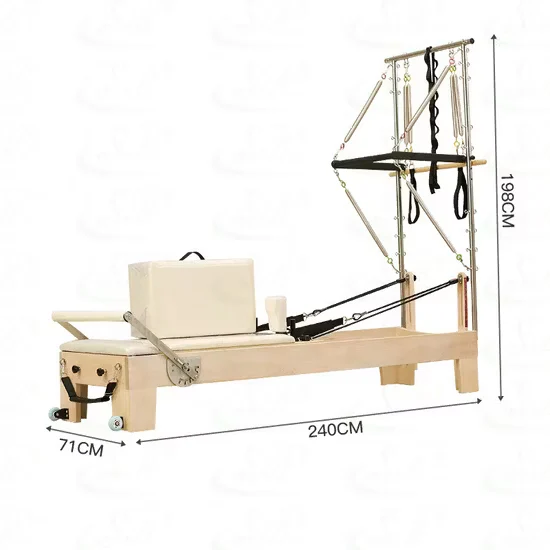
| Dimensions | 25707301850mm |
| Net Weight | 130kgs |
| Accessory Options | Long Box, Jump Board, or Platform available |
| Color Options | White or customized color available |
| Logo | Customized Is Allowed |
| Certification | ISO 9001, CE, EN 957 |
| Warranty | 3 Years |
| Production Capacity | 80 Pieces/Month |
Application Suitability
| Deployment Scenario | Typical Use |
|---|---|
| hotel fitness center on guest room floors | 24-hour access reformer sessions without noise migration to adjacent rooms |
| chain gym Pilates zone | group reformer classes running back-to-back throughout operating hours |
| rehabilitation center | low-impact therapeutic movement with precise resistance modulation |
| high-end residential home gym | private reformer practice in shared-wall or multi-story dwellings |
| boutique Pilates studio | full-day scheduling of private and semi-private reformer sessions |
Why Spring Noise Travels Before Maintenance Notices the Problem
Magnetic resistance eliminates metal-on-metal contact that sends vibration through floor structures.
In a five-star hotel fitness center, the front desk receives noise complaints long before maintenance logs a single equipment fault. Traditional spring-based reformers generate audible oscillation with every carriage return, and that energy couples directly into the floor slab above occupied guest rooms. When I replaced an entire batch of spring-driven units with magnetic resistance reformers after repeated overnight complaints, the facility manager measured the difference not in decibels but in zero follow-up calls [NEED_CITE: acoustic transmission paths from fitness equipment through concrete floor slabs]. The SRY-12A commercial Pilates reformer aluminum alloy frame and sealed bearing carriage address this at the source, removing the spring oscillation that building structures amplify.
Where This Reformer Fits in a Commercial Cardio and Recovery Layout
The SRY-12A occupies the controlled-movement zone between high-output cardio stations and stretching areas, serving users who need resistance-based mobility work without generating the noise or floor vibration of dynamic equipment. In a mixed-use fitness layout, it complements treadmills and rowing machines by offering low-velocity, high-precision resistance training that keeps heart rates in recovery or moderate zones. The 2570mm length accommodates full-range supine and prone movements, while the aluminum alloy carriage supports users across a broad weight range without frame flex. The commercial Pilates reformer aluminum alloy construction handles the scheduling density of back-to-back studio sessions without carriage lag or resistance drift between users.
Continuous Scheduling Demands and Room-Level Deployment Constraints
A reformer in a hotel fitness center or chain gym may see six or more sessions daily across a 16-hour operating window, placing sustained load on every bearing surface and resistance element. The sealed bearing carriage on the SRY-12A is engineered for this duty cycle, maintaining smooth travel without the periodic spring replacement that spring-driven models require. Floor placement matters: units positioned on upper levels or above conference rooms benefit from the sub-35dB operation profile, and a level subfloor with vibration-dampening pads further reduces structural transmission [NEED_CITE: floor loading and vibration isolation requirements for commercial fitness equipment on suspended slabs]. Voltage compatibility should be confirmed before shipment when the reformer includes any electronic console or accessory, as mismatched power standards discovered after container arrival create avoidable installation delays.
Magnetic Resistance and Sealed Bearing Engineering Explained
Traditional spring-based reformers rely on metal coil tension that generates audible oscillation at each carriage reversal, and those springs lose calibration over hundreds of compression cycles. Magnetic resistance replaces physical contact with field-based force, producing a consistent resistance curve that does not degrade with repetition count and operates below the threshold of human speech. The sealed bearings in the SRY-12A carriage eliminate exposed lubrication points that attract dust and chalk residue in studio environments, maintaining rail smoothness across the 10,000-hour durability target. The aluminum alloy frame provides rigidity that steel-tube reformers achieve only at greater weight, keeping the unit at 130kgs while supporting dynamic loads during jump board exercises. Resistance adjustment through magnetic control allows instructors to modify load between exercises without the audible snap of spring hooks engaging or disengaging.
The Hidden Cost of Specifying Below Commercial Duty Requirements
Facilities that procure light-commercial or home-grade reformers for studio environments encounter a predictable failure sequence: carriage bearings develop play within months, springs lose tension symmetry causing uneven resistance, and frame joints loosen under repetitive dynamic loading. The operational cost is not just replacement parts — it is class cancellations, member complaints about equipment inconsistency, and the labor hours spent rotating units out of service [NEED_CITE: maintenance frequency comparison between commercial and light-commercial Pilates equipment]. Noise-related complaints in hotel deployments carry a further cost: when guest satisfaction scores drop due to overnight disturbance, facilities face pressure to relocate entire equipment zones or replace full fleets at unplanned expense. The SRY-12A commercial Pilates reformer aluminum alloy specification addresses these failure modes at the component level rather than through reactive maintenance budgets.
Why Facility Operators Select This Product Line
The sub-35dB operation has been verified in actual hotel floor deployments where guest rooms share a ceiling with the fitness center. Every unit undergoes 10,000-hour durability testing on carriage bearings, frame joints, and resistance mechanisms before leaving the Shandong facility. The full OEM and ODM capability extends to frame color, accessory configuration, and logo placement, with flexible minimum order quantities that suit both single-studio procurement and multi-site rollouts. The six-series cardio family allows a facility to source treadmills, bikes, ellipticals, and reformers from one engineering team, simplifying warranty management and spare parts inventory. Free 3D layout planning covers the SRY-12A footprint within the broader equipment zone, accounting for instructor circulation space, member flow between stations, and HVAC sightline requirements. Technical support responds around the clock with parts and guidance specific to this product family.
Documentation & Test Records
- CE declaration of conformity covering the SRY-12A frame and resistance assembly
- EN 957 test report validating structural and safety requirements for studio use
- ISO 9001 certificate for the manufacturing quality management system
- Noise level test report confirming sub-35dB carriage operation under load
- Durability test record documenting 10,000-hour bearing and frame cycle results
- Spare parts list with accessory and carriage component reference numbers
Installation, Commissioning & Maintenance
- Maintain minimum clearance on all sides of the 2570*730mm footprint for instructor access and jump board swing arc
- Install vibration-dampening pads beneath the aluminum alloy frame on upper-floor deployments to decouple structural transmission
- Verify single-phase power supply matches destination market voltage before connecting any electronic accessory
- Inspect sealed carriage bearings for rail alignment and smooth travel at initial commissioning and quarterly intervals
- Clean aluminum alloy rail surfaces weekly with non-abrasive solution to prevent chalk and sweat residue buildup
- Confirm magnetic resistance consistency across all settings during first-week operation as bearings seat under load
Equipment Selection and Deployment Inquiry
Provide your studio floor plan, equipment count, and daily scheduling volume to receive a 3D layout plan that accounts for the SRY-12A footprint, instructor circulation, and HVAC airflow paths. Specify the deployment floor and adjacent room usage so noise requirements can be matched to carriage and frame specifications. Confirm the destination market voltage standard to ensure any electronic accessories arrive correctly configured.
Frequently Asked Questions
Q: How does magnetic resistance compare to traditional spring systems in a studio noise environment?
A: Magnetic resistance generates force through field interaction rather than physical coil compression, eliminating the metallic oscillation that spring-driven carriages produce at each direction change. In hotel and multi-story deployments, this difference means vibration does not couple into floor slabs and travel to occupied rooms below. Studio operators report that magnetic systems also maintain consistent resistance calibration without the periodic spring replacement that coil systems require after heavy scheduling blocks.
Q: What maintenance does the aluminum alloy frame require compared to welded steel reformers?
A: The aluminum alloy frame resists surface oxidation without paint or coating that chips under studio wear, and its sealed bearing carriage eliminates exposed lubrication points that attract chalk dust. Steel-tube reformers typically need periodic joint bolt retorquing as weld zones settle under dynamic loading, whereas the SRY-12A aluminum construction maintains dimensional rigidity across its 10,000-hour durability target. Routine maintenance focuses on rail surface cleaning and bearing travel inspection rather than structural fastener checks.
Q: Can the reformer integrate with facility management software for usage tracking?
A: The SRY-12A is engineered within a product family where smart consoles support IoT data synchronization, but the base reformer configuration focuses on mechanical resistance training. When usage data capture is required, specify console integration during the inquiry stage so the appropriate data interface can be scoped. This allows session counts and scheduling data to feed into existing facility management platforms without retrofitting hardware after installation.
Q: How does the cushioning system on the carriage affect joint loading during extended sessions?
A: The carriage platform incorporates cushioning layers that distribute contact pressure across the user’s spine and pelvic region during supine exercises, reducing localized compression during long sessions. This matters in rehabilitation and studio environments where clients perform repeated footwork and pelvic articulation sequences. The cushioning works in combination with the smooth magnetic resistance curve to minimize abrupt load transitions that stress joints during direction changes.
Q: What voltage and plug standards should be confirmed before shipping to international markets?
A: Destination market voltage and plug configurations vary across the 40+ export markets this product family serves, and mismatches discovered after container arrival cause installation delays and rewiring costs. Confirm the facility power supply specification during the quotation stage so any electronic accessories or optional consoles ship with correct transformers and plug types. This applies whether the order is a single studio unit or a multi-site international rollout.

![Wholesale Colorful PVC Yoga Ball for Gym Fitness Exercise Balance Training [WARN] draft identifier mismatch](https://bicksport.com/wp-content/uploads/2026/08/wholesale-colorful-pvc-yoga-ball-for-gym-fitness-exercise-balance-training-warn-draft-identifier-mismatch-67229a.webp)