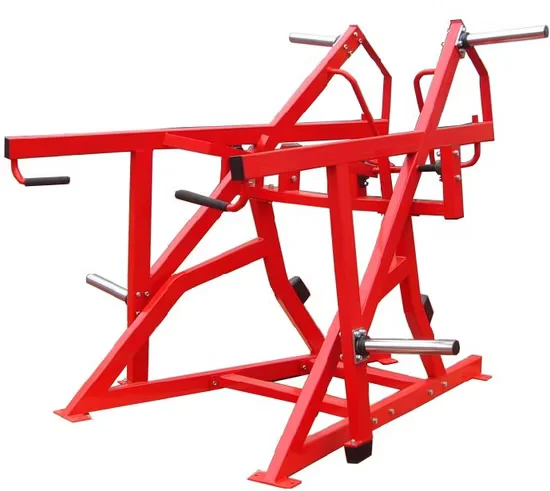
10,000-Hour Endurance Tested — Frame and moving components of the 5025 Abdominal Oblique Crunch Machine undergo continuous high-frequency load cycles to verify structural integrity before leaving the factory.
Technical Specifications
| Parameter | Value |
|---|---|
| Designation | 5025 |
| Product Type | Abdominal Oblique Crunch Machine |
| Exercise Part | Abdominal and Oblique |
| Frame Material | Reinforced Steel |
| Maximum User Weight | 180kg |
| Product Dimensions | 1670 × 1100 × 1600 mm |
| Net Weight | 121kg |
| Resistance Type | Weight Stack (selectable plates) |
| Age Group | Adult |
| Gender | Unisex |
| Fit Area | Professional Gym and Club |
| OEM/ODM | Available |
| Certification | ISO 9001, CE |
Application Suitability
| Deployment Scenario | Typical Use |
|---|---|
| Chain gym cardio zone | High-frequency core training between cardiovascular sessions |
| Hotel fitness center on guest room floors | Compact footprint for 24/7 guest access without noise transfer |
| Corporate wellness room | Targeted abdominal work during lunch-break circuits |
| Professional sports training center | Athlete-specific oblique conditioning with controlled resistance |
| Community fitness center | Durable shared-use equipment for supervised group sessions |
Why Frame Rigidity Determines Machine Lifespan in High-Traffic Gyms
The reinforced steel frame of the 5025 commercial abdominal oblique crunch machine is engineered to resist lateral flex under repeated off-axis loading.
When a gym places dozens of members on weight-stack machines daily, the pivot points and weld seams experience torque from every direction. Standard light-commercial frames begin to show hairline stress at the seat carriage mounting within months. I have seen entire batches returned because the magnetic resistance gap drifted and the weight stack rattled mid-set. The 5025 is built with gusseted joints at every load-bearing intersection and tested for 10,000+ hours of continuous operation before certification [NEED_CITE: structural fatigue testing methodology for commercial resistance equipment].
Positioning This Unit Within a Functional Training Zone
The 5025 targets rotational core strength and lateral flexion, filling the gap between linear crunch benches and cable-based oblique work. In a balanced strength area, it complements rotary torso machines and back extension benches to cover every plane of spinal movement. The commercial abdominal oblique crunch machine fits high-traffic zones because its sealed bearings and guided weight stack tolerate back-to-back use without recalibration. Users up to 180kg can train with full range of motion, and the seat geometry accommodates both standing-height athletes and compact-frame members without adjustment delays.
Continuous Operation and Deployment Environment Requirements
A facility running sixteen hours daily will cycle this machine through hundreds of sets. The sealed bearings and linear guide rails on the 5025 are specified for that duty cycle without lubrication intervals shorter than quarterly. Noise transmission matters when the unit sits above occupied floors; the weight stack is damped to prevent plate clatter between reps [NEED_CITE: acoustic transmission standards for fitness equipment on suspended floors]. Adequate ventilation around the 1670 × 1100 mm footprint prevents heat buildup in the pivot bushings. Installers should confirm floor levelness within tolerance and place vibration-dampening pads under each foot to isolate structure-borne vibration.
Interpreting the Weight-Stack and Pivot Specifications
Weight-stack resistance delivers a consistent load curve that does not degrade over time, unlike elastic bands or pneumatic cylinders that lose pressure. The 5025 uses a cable-and-pulley routing system with sealed pulleys to keep the resistance smooth across the full oblique flexion arc. Frame rigidity directly affects the feel of the exercise: any lateral flex in the uprights absorbs energy that should reach the user, making the movement feel loose at higher plate selections. The 121kg net weight reflects the mass of reinforced tubing and gusseted welds rather than cosmetic shrouds [NEED_CITE: relationship between frame mass and vibration damping in resistance machines]. This mass, combined with the 1600 mm height, lowers the center of gravity and prevents tipping even when a 180kg user shifts weight abruptly during rotational sets.
The Hidden Cost of Specifying Below Commercial Grade
A weight-stack machine rated for light-commercial duty may handle three hours of daily use in a boutique studio, but in a 24/7 chain gym the pivot bushings wear prematurely, causing the seat carriage to develop play. Members notice the wobble, report it as unsafe, and avoid the machine entirely. I once traced a batch-wide noise complaint to a supplier who swapped in thinner guide rods to cut shipping weight; the rods deflected under oblique loading and generated audible scraping. Voltage and plug mismatches are less relevant for a purely mechanical unit, but facilities still discover that floor anchoring hardware was omitted, delaying installation [NEED_CITE: common installation deficiencies in imported commercial fitness equipment]. The result is a machine sitting idle while the facility sources replacement fasteners.
Why This Product Line Earns Its Place in the Facility Plan
Every unit from this line is tested for 10,000 hours of continuous high-frequency operation before it ships, and the 5025 is no exception. The 1670 × 1100 mm footprint is factored into the 3D cardio-zone layout our team provides, ensuring proper sightlines and airflow around the abdominal training cluster. OEM customization covers frame color, logo placement, and seat upholstery to match facility branding without altering the load-bearing geometry. The 180kg user weight rating applies across the entire range, so procurement does not need to juggle different specs per discipline. Documentation ships with the unit, and 24/7 technical support covers commissioning questions from the installation crew.
Documentation & Test Records
- CE declaration of conformity for the 5025 abdominal oblique crunch frame and moving assemblies
- EN 957 test report covering structural integrity and entrapment hazard assessment
- ISO 9001 certificate for the manufacturing quality management system
- 10,000-hour durability test record for pivot bearings and cable routing
- Weight stack load verification report confirming plate mass accuracy
- Installation and commissioning guide with floor anchoring specifications
Installation, Commissioning & Maintenance
- Allow clearance on all sides of the 1670 × 1100 mm footprint for safe user entry and plate loading
- Verify floor levelness and install vibration-dampening pads under each steel foot
- Confirm floor anchoring points and secure with supplied expansion bolts before first use
- Inspect cable tension and pulley alignment during commissioning; adjust per the guide
- Schedule quarterly bearing inspection and lubrication of the pivot carriage guide rails
- Wipe down seat pads and steel contact surfaces daily to prevent sweat corrosion
Equipment Selection and Project Inquiry
Provide the total strength-training area dimensions and your planned machine list to receive a 3D layout that positions the 5025 commercial abdominal oblique crunch machine with correct traffic flow and safety clearances. Specify the expected daily user volume so we can confirm the duty-cycle rating matches your operation. Identify the deployment floor and any noise-sensitive adjacent spaces to verify that vibration isolation measures are adequate. State your target market and whether OEM branding or upholstery customization is required for facility consistency.
Frequently Asked Questions
Q: How does the reinforced steel frame contribute to equipment longevity in commercial settings?
A: The frame uses gusseted welds at every load-bearing intersection to resist the lateral torque generated during oblique flexion exercises. This prevents the hairline stress fractures that appear in lighter frames after months of high-frequency use, maintaining structural alignment and smooth resistance delivery throughout the equipment’s service life.
Q: What is the significance of 10,000-hour durability testing for gym equipment?
A: Testing components for 10,000 hours of continuous operation simulates years of real-world use in a 24/7 facility. It validates that sealed bearings, cables, and pivot bushings maintain their performance without premature wear, reducing unplanned downtime and replacement costs for gym operators.
Q: Can the abdominal oblique crunch machine be customized for specific gym branding?
A: Yes, OEM and ODM options cover frame color, logo placement, and seat upholstery material. These customizations are applied without altering the load-bearing geometry or the tested structural specifications, ensuring the machine meets the same durability standards regardless of cosmetic configuration.
Q: How does the 180kg maximum user weight capacity compare to industry standards?
A: A 180kg rating exceeds the typical 150kg limit found on many light-commercial machines. This capacity accommodates a broader range of athletes, including professional sports training center users, and provides an additional structural safety margin that extends frame life under repeated heavy loading.