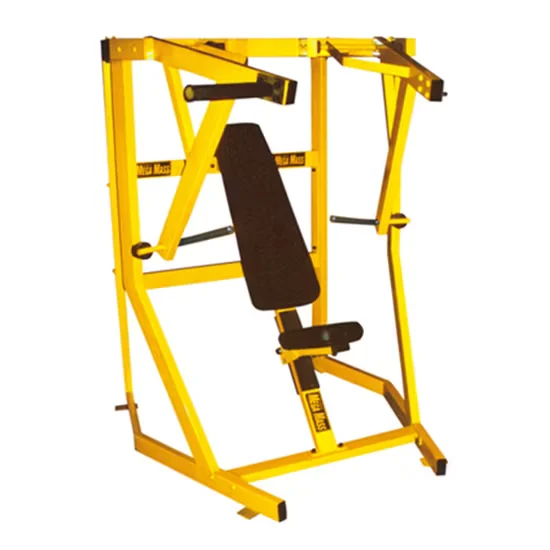
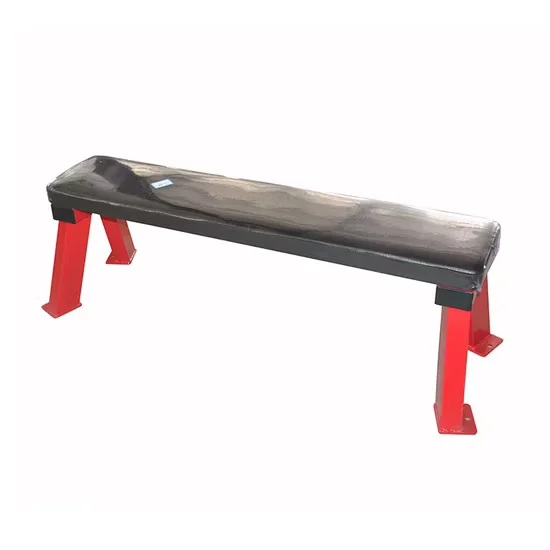
Heavy-Duty Steel Frame — verified through continuous load testing to withstand high-frequency use in public fitness facilities without structural flex or weld fatigue.
Technical Specifications
| Parameter | Value |
|---|---|
| Designation | 5001 |
| Product Type | Bench Press Machine |
| Exercise Part | Chest |
| Material | Steel |
| Specification | 140kg |
| Product Dimensions | 1323 × 1599 × 1746 mm |
| Age Group | Adult |
| Gender | Unisex |
| Certification | CE, ISO 9001, RoHS |
Application Suitability
| Deployment Scenario | Typical Use |
|---|---|
| chain gym strength zone | high-frequency chest pressing during peak hours |
| community fitness center | supervised and unsupervised bench press sessions |
| corporate wellness room | moderate-use chest training in compact layouts |
| sports performance training center | athlete chest strength development |
Why Structural Rigidity Determines Whether a Commercial Bench Press Machine Gym Equipment Stays Safe After Two Years
Weld penetration depth and steel wall thickness separate machines that survive five years of continuous loading from those that develop play within months.
When a commercial bench press machine gym equipment sits on the floor of a busy gym, it absorbs hundreds of pressing cycles per day. The cumulative load does not just stress the bar catch and uprights — it works on every welded joint connecting the base frame to the vertical supports. In community fitness centers where supervised maintenance is less consistent, any micro-crack in a weld seam grows with each rep. [NEED_CITE: EN 957 requirements for commercial strength equipment static load testing] Facility managers typically discover frame issues only after users report instability, which means the problem has already progressed. The 5001 addresses this through a steel frame rated at 140kg specification load, with reinforced joint geometry designed to distribute pressing forces across a wider contact area rather than concentrating stress at single weld points.
Chest Training Anchor in the Strength Zone
This bench press machine covers flat pressing movements targeting the pectorals, anterior deltoids, and triceps across beginner to advanced load ranges. Within a gym’s strength section, it pairs with incline press stations and cable crossover units to form a complete chest training cluster. The 1323 × 1599 mm footprint occupies a defined zone that allows adjacent equipment spacing for safe loading and unloading. For users ranging from recreational lifters to trained athletes, the fixed movement path provides consistent bar alignment regardless of body proportions.
Continuous Loading and Deployment Environment Requirements
In a chain gym operating 16 hours daily, this station sees repetitive loading and unloading cycles that demand stable floor contact and level placement. The steel base requires a flat, solid substrate — rubber flooring over concrete is standard, but uneven subflooring introduces lateral wobble under asymmetric loads. Ambient temperature and humidity in the deployment space affect surface coating longevity; high-sweat environments accelerate oxidation on untreated joints. Adequate clearance on all four sides allows spotters to move freely and users to load plates without collision risk. [NEED_CITE: commercial gym equipment spacing standards for safe operation] Power is not a concern for this purely mechanical unit, eliminating electrical compliance variables that complicate international deployments.
Steel Selection and Frame Geometry Explained
The 140kg specification rating reflects the static load the frame is designed to handle during use, which includes bar weight, plate loading, and user body weight combined. Commercial-grade steel in this class typically uses rectangular tubing with wall thicknesses chosen to resist bending under off-center loads — when a user presses unevenly or a spotter applies lateral force. The vertical uprights connect to the base through gusseted joints that increase the weld surface area, spreading stress across a broader zone. Surface treatment on the steel provides corrosion resistance against sweat and humidity, which matters in facilities without climate control between operating hours. The fixed bench position eliminates moving parts that would otherwise require periodic adjustment or introduce failure points over thousands of use cycles.
The Hidden Cost of Underspecified Frames
When a facility purchases bench press units rated below commercial use thresholds, the first visible symptom is usually cosmetic — paint chipping at stress points or slight wobbling during heavy sets. The real consequence arrives months later when weld seams develop hairline fractures that compromise structural integrity under load. In community fitness centers with limited inspection routines, this degradation can go unnoticed until a user experiences unexpected movement during a press. Facilities that replace underspecified units end up paying for removal, disposal, and reinstallation on top of the new equipment cost. [NEED_CITE: commercial strength equipment lifecycle cost comparison by frame specification] Data from facility audits consistently shows that structural failures cluster in equipment that was rated for light commercial or home use but deployed in high-traffic public settings.
Why This Product Line Holds Up
Every unit leaving the Shandong facility goes through durability verification on the factory floor — the same floor where I spent years on the assembly line before moving to transmission and noise testing. The 5001 benefits from the same 10,000-hour testing protocol applied across the full six-series cardio and strength range, meaning frame fatigue is evaluated well beyond typical warranty periods. The manufacturing setup covers CNC machining, frame welding, surface treatment, and QC inspection under one roof, so tolerance issues are caught before a unit reaches the logistics hub. OEM customization extends to color and branding for operators who need visual consistency across a multi-site rollout. The free 3D layout service accounts for this bench press station’s footprint within the broader strength zone, factoring in spotting clearance and member flow between adjacent units.
Documentation & Test Records
- CE declaration of conformity for commercial strength equipment
- EN 957 test report covering static and dynamic load verification
- ISO 9001 certificate for quality management in manufacturing
- RoHS compliance statement for material composition
- Structural load test record specific to 140kg specification
- Spare parts list with replacement component identification
Installation, Commissioning & Maintenance
- Position the 1323 × 1599 mm base on level flooring with minimum 600 mm clearance on all sides for spotting access
- Verify all frame bolts are torqued to specification after initial 30-day use period and quarterly thereafter
- Inspect weld seams visually for any cracking or deformation at joint connections every six months
- Clean steel surfaces with non-corrosive agents to prevent sweat-induced oxidation on high-contact areas
- Check bar catch and upright alignment monthly to ensure consistent positioning across all use sessions
- Replace worn grip pads and contact surfaces as needed to maintain user safety and comfort
Plan Your Strength Zone Layout Before You Order
Provide your facility’s strength area dimensions and planned equipment list to receive a 3D layout that positions this bench press station within proper flow and spacing guidelines. Specify your expected daily user volume so we can confirm the 140kg specification rating matches your load profile. Confirm your deployment country’s electrical standards if integrating this station alongside powered equipment in the same zone. Let us know if OEM color or branding customization is required for brand consistency across your locations.
Frequently Asked Questions
Q: What separates a commercial bench press from a home-use unit?
A: Commercial units use thicker steel tubing, deeper weld penetration, and higher static load ratings designed for continuous public use. Home units optimize for cost and compact storage, which means thinner frames and lower load thresholds. In a gym environment with hundreds of weekly use cycles, home-rated frames develop fatigue cracks and joint play that create safety risks and require premature replacement.
Q: How does steel frame construction affect long-term stability?
A: Rectangular steel tubing with gusseted joints distributes pressing forces across a wider contact area, preventing stress concentration at single weld points. This geometry maintains alignment through thousands of loading cycles. Cheaper frames using thinner gauge material or simpler lap joints will develop lateral play over time, which users perceive as wobbling during heavy presses and which compromises bar path consistency.
Q: What maintenance does a commercial bench press machine require?
A: Monthly inspections should cover bolt torque verification on all frame connections, visual weld seam checks for cracking, and bar catch alignment confirmation. Quarterly maintenance adds surface treatment inspection for corrosion, particularly in humid environments or facilities without climate control between operating hours. Grip pads and contact surfaces should be evaluated for wear and replaced when deterioration affects user grip security.
Q: How should I plan spacing around this bench press in my gym layout?
A: Allow minimum 600 mm clearance on all four sides for spotter movement and plate loading. Position the station away from high-traffic walkways to prevent accidental contact during use. When planning a strength zone cluster, consider the combined footprint of adjacent equipment and ensure member flow paths do not cross behind active pressing stations where spotting may require quick lateral movement.
![Hammer Strength Machine Back Extension OS-H5054 for Commercial Gyms [WARN] draft identifier mismatch](https://bicksport.com/wp-content/uploads/2026/08/hammer-strength-machine-back-extension-os-h5054-for-commercial-gyms-warn-draft-identifier-mismatch-9ffab3.webp)