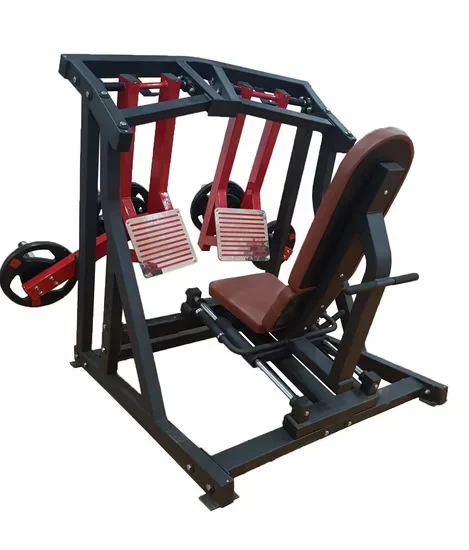
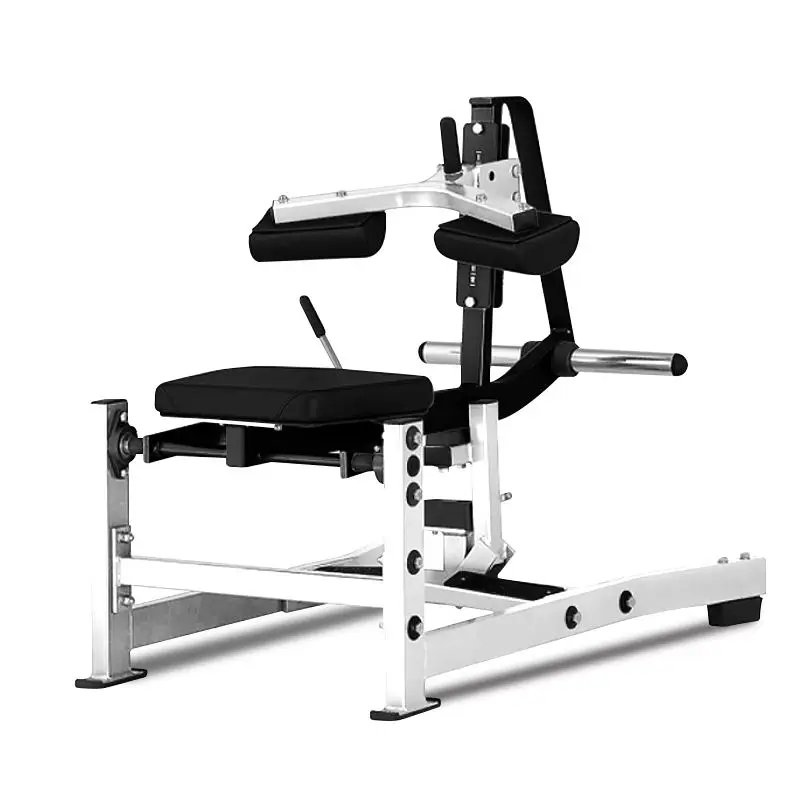
Engineered Rigidity — steel frame welding and high-density cushioning validated through continuous commercial load cycles.
Technical Specifications
| Parameter | Value |
|---|---|
| Designation | 2019 Hammer Strength Leg Extension 30 |
| Product Type | Leg Extension |
| Model NO. | OS — H5030 |
| Main Frame Material | Steel |
| Product Dimensions | 1440 × 1695 × 1481 mm |
| Net Weight | 103 kg |
| Main Frame Color | Available per customer requirements |
| Cushion Color | Available per customer requirements |
| OEM/ODM | Acceptable |
| Certification | ISO 9001, CE |
Application Suitability
| Deployment Scenario | Typical Use |
|---|---|
| Chain gym strength zone | Quadriceps isolation training within a full resistance lineup |
| Corporate wellness room | Compact lower-body strengthening for employee fitness programs |
| Community fitness center | Durable leg extension accessible to adult members of varying fitness levels |
| Sports performance training center | Targeted quad development supporting athletic conditioning protocols |
| Professional club free-weight area | Supplementary isolation work between compound lift stations |
Why Cushion Density Matters More Than Frame Weight in Strength Equipment
High-density cushion filling and reinforced steel welding together determine whether a commercial leg extension machine gym operators deploy survives its first year without member complaints.
Seat pads on strength equipment compress and deform under repeated loading far faster than most facility operators anticipate. When the foam core loses resilience within months, the vinyl cover wrinkles, the seating surface hardens, and members begin avoiding the station [NEED_CITE: cushion density degradation timelines in commercial strength equipment]. The problem compounds because a degraded pad shifts the user’s hip alignment on the machine, altering the resistance curve and placing uneven stress on the knee joint during extension. Meanwhile, the steel frame itself may weigh over 100 kg and appear indestructible, but if weld joints at the pivot axis develop micro-fractures under cyclical loading, the entire unit develops play that no amount of pad replacement can fix. This commercial leg extension machine gym teams select must address both failure modes simultaneously — structural rigidity at the welds and long-term cushion integrity — or it becomes a liability rather than an asset.
Where Leg Extension Fits in a Commercial Strength Zone Layout
The leg extension serves as a dedicated quadriceps isolation station, complementing compound movements performed on squat racks, leg press machines, and hack squat platforms. In a typical strength zone configuration, this commercial leg extension machine gym planners position it adjacent to the leg curl station, forming a paired anterior-posterior lower-body cluster that minimizes member travel distance between opposing muscle group exercises. The 1440 × 1695 mm footprint requires moderate floor allocation — enough clearance for safe entry and exit on both sides, plus weight plate storage if the unit uses selectorized or plate-loaded resistance. The equipment suits adult users across a broad anthropometric range, with adjustable pad positioning accommodating different femur lengths and torso proportions.
Continuous Loading Cycles and Floor Deployment Considerations
A leg extension station in a busy gym sees repeated load-and-release cycles throughout operating hours, with peak usage during evening rushes when multiple members rotate through the lower-body cluster [NEED_CITE: usage density patterns in commercial gym strength zones]. Unlike cardio equipment that runs continuously, strength machines experience intermittent but high-magnitude stress at the pivot point and seat mounting brackets. Floor deployment must account for the 103 kg unit weight plus dynamic loading — a level concrete substrate with anti-vibration pads beneath the stabilizer feet prevents rocking on uneven surfaces and reduces transmitted noise to floors below. For facilities on upper levels or above occupied spaces, confirming floor load capacity and adding rubber matting around the station protects both the subfloor and surrounding equipment from plate-drop shock. Adequate overhead clearance and lateral spacing ensure members can load plates and adjust settings without interfering with adjacent stations.
Steel Gauge, Weld Integrity, and Pad Construction Decoded
The structural performance of a plate-loaded or selectorized leg extension hinges on three engineering decisions. First, the main frame steel gauge and cross-section profile determine how much deflection occurs at the pivot axis when a loaded stack or plates reach maximum resistance — thinner tubing flexes visibly under heavy sets, degrading the movement path over time. Second, weld quality at the seat carriage and pivot arm junctions directly controls long-term play; penetration welds that fully fuse the joint cross-section resist cyclical fatigue far better than surface tacks [NEED_CITE: welding standards for commercial fitness equipment frames]. Third, cushion construction involves foam density, cover material thickness, and upholstery tension — higher-density foam retains its profile through thousands of compression cycles, while reinforced vinyl resists tearing at the stitch lines where sweat accumulation accelerates degradation. The OS — H5030 specifies a 103 kg net weight, indicating substantial steel mass in the frame and carriage assembly relative to light-commercial alternatives. Frame and cushion color customization allows facility operators to maintain visual consistency across a mixed-equipment strength zone without compromising structural specification.
The Hidden Cost of Specifying Below Commercial Grade
When procurement decisions prioritize unit price over duty-cycle rating, the consequences surface within the first operational quarter. Seat pads filled with low-density foam compress permanently, creating a hard seating surface that members associate with poor equipment quality — complaints about discomfort during quad isolation sets drive usage avoidance and, eventually, membership cancellations. Frames built from undersized tubing develop visible wobble at the pivot, making the machine feel unstable during heavy extensions and raising liability concerns for facility operators. Weld failures at high-stress junctions can occur suddenly rather than gradually, creating a safety incident that forces the entire station offline pending inspection. Color-matched vinyl covers on budget pads crack along stitch lines within months, making the strength zone look neglected even when the rest of the facility is well maintained. These failures compound because replacing individual components rarely restores original performance — the commercial leg extension machine gym managers initially installed must be specified correctly from the start [NEED_CITE: total cost of ownership comparisons for commercial versus light-commercial strength equipment].
Why This Product Line Addresses Deployment Realities
The steel frame construction and 103 kg net weight reflect material investment in structural longevity rather than cosmetic mass. High-density cushion specification addresses the most common member complaint in commercial strength zones — pad compression and surface degradation. OEM and ODM capability extends to frame color and cushion color, enabling chain operators to deploy visually unified strength zones across multiple locations without sacrificing build specification. The 1440 × 1695 × 1481 mm dimensions allow integration into 3D cardio and strength zone layouts where equipment spacing, member flow paths, and sightlines are planned before installation rather than corrected afterward. ISO 9001 manufacturing processes and CE conformity ensure that weld quality and material traceability meet export market regulatory requirements. Full documentation packages support facility commissioning and ongoing maintenance scheduling from day one.
Documentation & Test Records
- CE declaration of conformity covering structural and safety requirements
- EN 957 test report validating mechanical performance under load
- ISO 9001 certificate confirming quality management system compliance
- Frame steel specification and weld inspection records
- Cushion density and cover durability test documentation
- OEM customization scope and color matching approval sheets
Installation, Commissioning & Maintenance
- Position the 1440 × 1695 mm footprint with clearance on all sides for safe plate loading and member passage
- Level stabilizer feet on flat concrete and fit anti-vibration pads to eliminate rocking during loaded extensions
- Inspect all pivot bolts and carriage fasteners after the first 500 usage cycles and retorque to specification
- Wipe cushion vinyl after each session and apply protective conditioner monthly to prevent sweat-induced cracking
- Check weld joints at the pivot axis quarterly for signs of stress cracking or paint fracture
- Verify frame color and cushion color match against OEM approval samples upon delivery and document any discrepancies
Planning Your Strength Zone Equipment Specification
Share your facility floor area, equipment count, and intended usage density to receive a 3D strength zone layout that accounts for equipment spacing, member flow, and operational sightlines. Specify daily usage hours and expected member volume so that pad density and frame gauge recommendations match your actual duty cycle. Confirm your deployment floor level and adjacent occupied spaces to determine whether additional vibration isolation is required beneath the station. State your target market and voltage standards if any electrically adjusted components are included in your specification scope.
Frequently Asked Questions
Q: What steel standards differentiate commercial leg extension frames from light-commercial units?
A: Commercial frames typically use heavier-gauge steel tubing with full-penetration welds at high-stress junctions, whereas light-commercial units may use thinner profiles with surface welds. The difference becomes apparent under continuous high-frequency loading, where lighter frames develop pivot play and visible flex. Request weld inspection documentation and steel specification sheets to verify structural grade before procurement.
Q: How should cushion leather be maintained in a high-traffic gym environment?
A: Vinyl or leather cushion covers require daily wiping with a pH-neutral cleaner to remove sweat residue that accelerates material breakdown. Monthly application of a protective conditioner prevents cracking along stitch lines. Inspect upholstery tension and foam recovery weekly — if the pad no longer returns to its original profile after use, replacement is more effective than spot repair.
Q: What is the minimum order quantity for OEM frame and cushion color customization?
A: MOQ for color customization depends on the specific frame finish and cushion material selected. Chain operators typically consolidate orders across multiple equipment categories to meet threshold volumes efficiently. Confirm your color requirements, including RAL or Pantone references, during the quotation stage to ensure accurate matching and production scheduling.
Q: How should strength and cardio zones be planned together for optimal member flow?
A: Effective layout planning positions isolation stations like leg extensions near complementary compound equipment while maintaining clear circulation paths between strength and cardio areas. 3D zone planning considers sightlines, ventilation requirements, and member traffic patterns to prevent congestion during peak hours. Equipment spacing should accommodate safe loading and adjustment without blocking adjacent stations.
Q: What floor preparation is needed before installing heavy strength equipment?
A: A level concrete substrate with adequate load-bearing capacity is essential for a 103 kg unit plus dynamic loading forces. Anti-vibration pads beneath stabilizer feet reduce transmitted vibration to floors below. For upper-floor deployments, verify structural load ratings with your building engineer and consider rubber matting around the station perimeter to absorb incidental plate contact.
![Hammer Strength Deluxe Weight Tree 55 Plate Storage Rack for Gyms [WARN] draft identifier mismatch](https://bicksport.com/wp-content/uploads/2026/08/hammer-strength-deluxe-weight-tree-55-plate-storage-rack-for-gyms-warn-draft-identifier-mismatch-ea1fd5.webp)