
How to Source Reliable Fitness Equipment Suppliers for Indonesia Vietnam Philippines

How to Source Reliable Fitness Equipment Suppliers for Indonesia, Vietnam, Philippines Markets
Most Southeast Asia fitness buyers automatically assume low-cost Chinese fitness products lack valid import certifications, but this is one of the most persistent sourcing myths in the regional industry. For fitness business operators and distributors across Indonesia, Vietnam and the Philippines, navigating the fragmented supplier landscape often leads to tradeoffs between upfront cost, compliance and long-term operational support that leave many buyers stuck between overpriced Western brands and unvetted low-quality vendors.
Partnering with a qualified Chinese manufacturer enables access to cost-effective full-range fitness solutions, flexible order terms and compliant products that fit local market demands, eliminating the common tradeoffs that plague regional sourcing projects.
Over 8 years of working with fitness buyers across the three core Southeast Asian markets, we’ve seen first-hand how even experienced operators make avoidable mistakes that add 20-40% to total project costs or delay facility launches by months. [NEED_CITE: 40% to 60% cost gap between Chinese factory-direct fitness equipment and mainstream European American brand pricing]
The following framework breaks down actionable steps to filter qualified suppliers, cut unnecessary costs and reduce post-sourcing operational burden for any size of fitness project.
What core needs do fitness equipment buyers in Indonesia, Vietnam and Philippines have to prioritize?
Unlike generic global sourcing, local buyers have three non-negotiable priorities that generic overseas suppliers rarely address. Price sensitivity, flexible order terms and product compliance matching ASEAN import rules rank far higher than brand name recognition for both small studio owners and regional distributors, who each face unique pain points when building or expanding their fitness offerings.
| Buyer Type | Common Inefficient Sourcing Practice | Recommended Sourcing Focus |
|---|---|---|
| Independent Gym & Studio Owners | Locking into pre-set product configurations with no ability to adjust layouts for small spaces | Prioritize suppliers that offer custom layout planning and single-unit order flexibility |
| Accepting rigid MOQ requirements that force overstock of low-demand SKUs | Seek tiered pricing structures that accommodate mixed SKU orders in small and large batch sizes | |
| Hotel & Property Operators | Sourcing equipment from separate vendors for cardio, strength and installation | Look for turnkey solutions that cover all product categories and end-to-end delivery support |
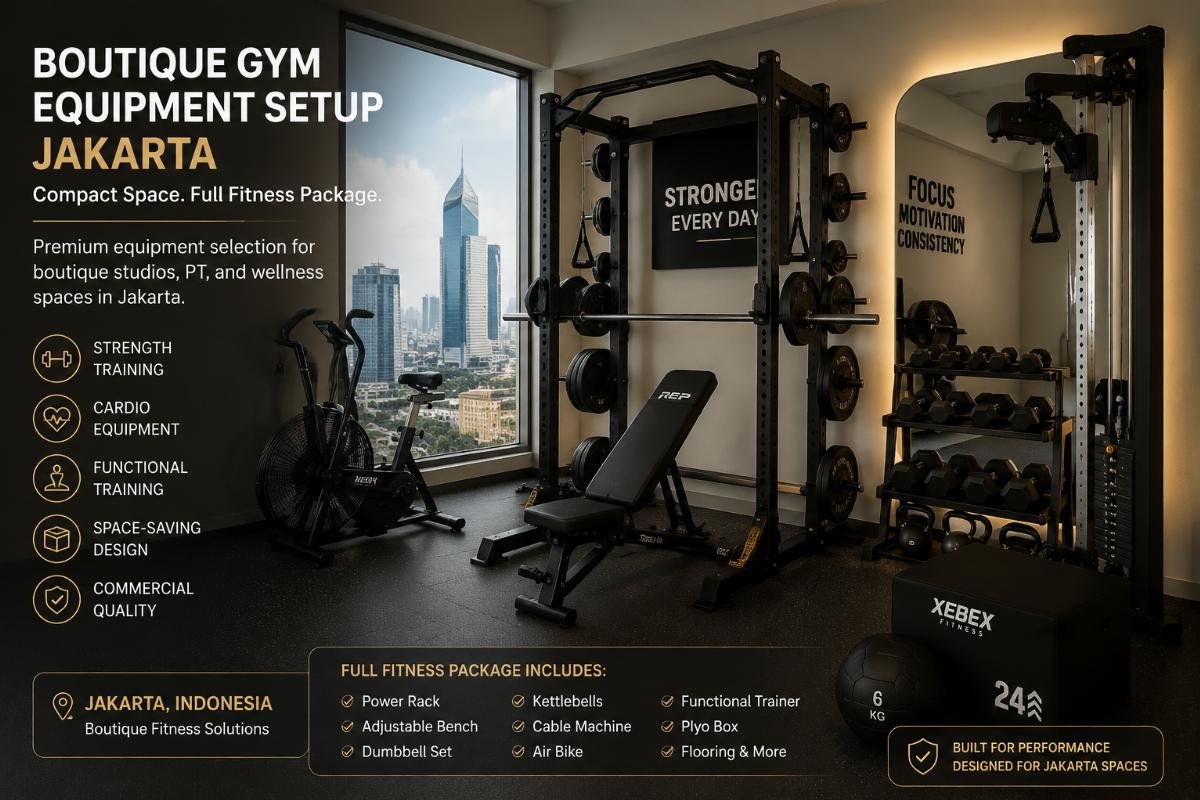
A mid-sized gym owner in Jakarta built a 120 sqm boutique studio with a full equipment package, cutting total cost by 50% compared to sourcing from European brands, and avoided common import delays by working with a supplier that already held all required ASEAN compliance documentation. [NEED_CITE: Over 80% of compliant Chinese manufacturers hold CE TüV and ISO 9001 credentials meeting regional import standards]
- Compliance Verification – Confirm suppliers hold active CE, TüV and ISO 9001 certifications that meet current ASEAN import requirements before requesting quotes.
- Order Term Testing – Request a quote for a small 5-unit mixed order first to confirm flexible MOQ and tiered pricing structures in practice.
- Local Reference Check – Ask for at least two local market customer references matching your project type to validate past delivery performance.
How to filter out qualified fitness equipment manufacturers to avoid common sourcing risks?
The most effective screening criteria focus on operational fundamentals rather than only chasing the lowest per-unit price tag. Production scale, certification coverage and after-sales support systems are far better predictors of reliable delivery and long-term value than marketing claims or initial quote numbers.
| Screening Factor | Common Risky Practice | Reliable Supplier Benchmark |
|---|---|---|
| Production Capacity | Working with trading companies with no in-house manufacturing facility | Require proof of a minimum 20,000 sqm owned production base with dedicated lines for all core product categories |
| After-sales Support | Accepting only 1-year limited product warranties | Look for standard 3-year frame warranty and lifetime technical support for all product lines |
| Service Scope | Assuming installation and training are included in base pricing | Confirm full turnkey support including 3D layout design, on-site installation and operator training |
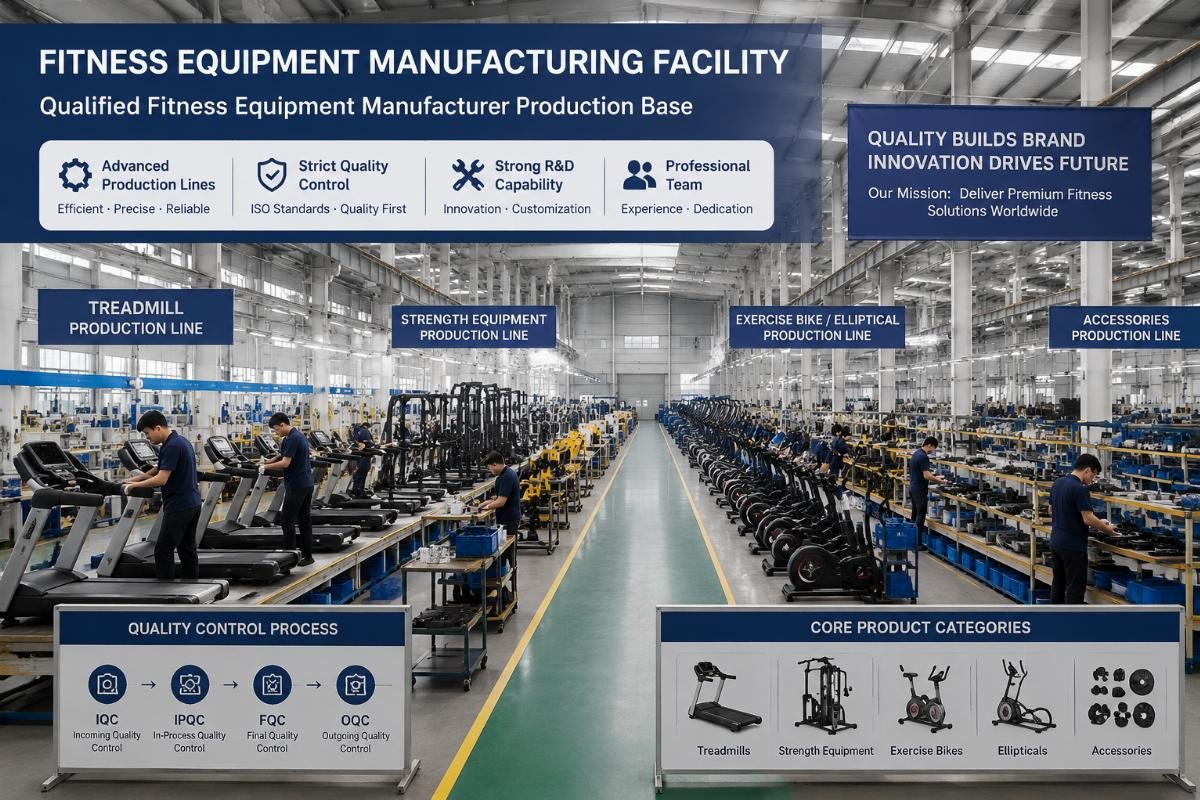
Shandong BICK Fitness, with 15 years of manufacturing experience, a 30000+ sqm production base and full product line covering strength, cardio, functional and rehabilitation fitness lines, serves as a clear reference for what a compliant, qualified supplier can deliver for regional buyers.
- Factory Site Verification – Request live virtual walkthroughs of the production facility to confirm in-house manufacturing capabilities rather than third-party resale.
- Certification Validation – Ask to see original copies of all compliance certificates to avoid counterfeit documentation that leads to customs seizure.
- Support Scope Confirmation – List all included services in writing before contracting to avoid hidden fees for installation or post-delivery support.
What cost-saving options are available for small and mid-sized fitness projects in Southeast Asia?
Flexible MOQ terms and tiered factory pricing allow small studios and regional resellers to get cost advantages previously only accessible to large bulk buyers. The outdated assumption that only full container orders qualify for factory-direct pricing leaves many small operators overpaying by thousands of dollars for no added benefit.
| Project Size | Common Overspending Trap | Available Cost-Saving Solution |
|---|---|---|
| 1-10 unit small upgrade projects | Paying retail markup from local resellers | Access single-unit customisation and tiered pricing directly from factories |
| 50-150 unit studio package | Paying rush shipping premiums for delayed orders | Lock in scheduled production slots that align with your launch timeline |
| 100+ unit distributor container order | Wasting budget on low-demand SKUs to meet rigid MOQs | Mix over 120 SKUs across 6 product categories to match local consumer preference |
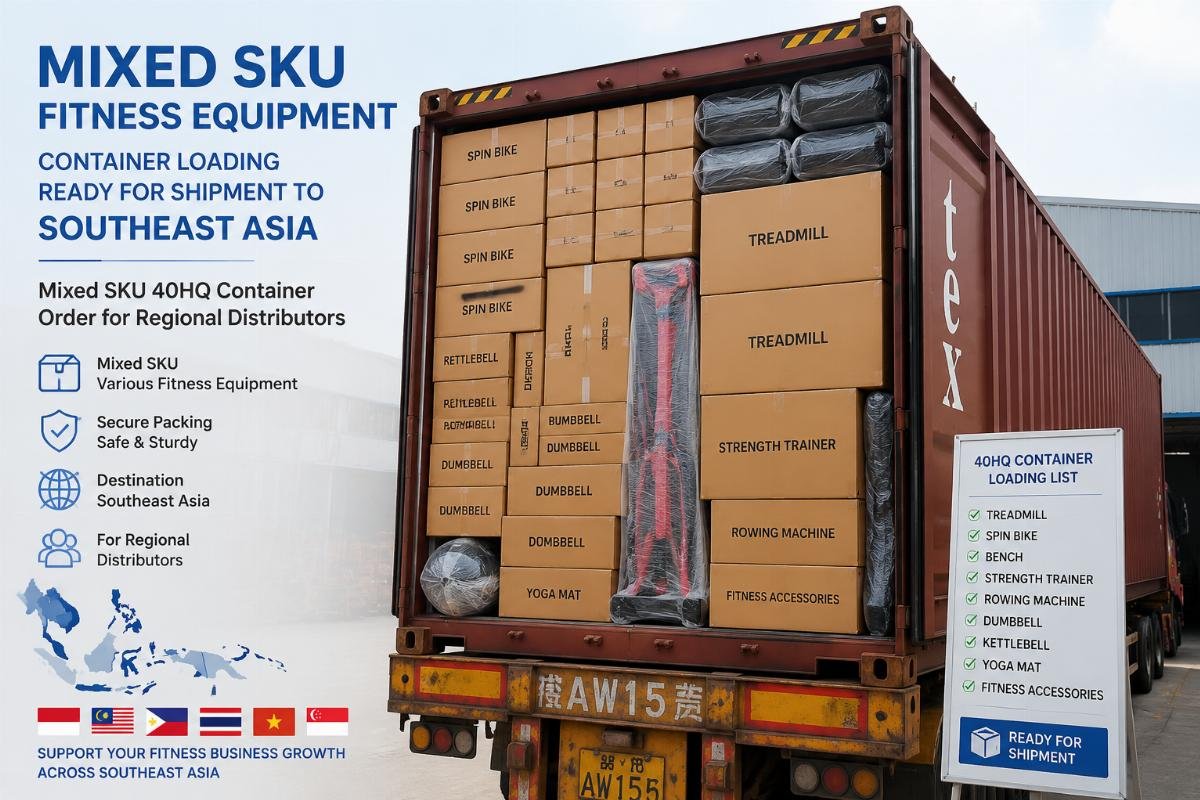
A Philippines regional distributor placed a 1 x 40HQ container order covering 6 product categories, with MOQ flexibility to mix 120+ SKUs matching local consumer preference, and qualified for the same factory-direct pricing previously only offered to 3+ container bulk buyers. [NEED_CITE: Tiered pricing structures are available for orders as small as 5 units]
- Tiered Price Request – Ask for formal tiered pricing sheets for 5-unit, 50-unit and 200-unit order volumes to compare actual per-unit costs across order sizes.
- SKU Mix Confirmation – Explicitly state your required SKU mix in initial inquiries to avoid hidden surcharges for custom order combinations.
- Package Comparison – Request quotes for pre-built small studio and gym packages that already leverage bulk component pricing for smaller projects.
What support can suppliers provide to reduce post-sourcing operational burden?
Full turnkey services from layout design to installation eliminate the need for buyers to coordinate multiple third-party vendors. Many buyers underestimate the time and cost of coordinating design, delivery, assembly and staff training separately, which can add up to 30% to total project overhead.
| Post-Sourcing Task | Common Pain Point | Turnkey Supplier Support |
|---|---|---|
| Facility Layout Planning | Spending weeks drafting layouts that do not work for equipment dimensions | Receive custom 3D layout designs optimized for your exact space dimensions |
| Installation Coordination | Hiring and managing multiple local contractors to assemble equipment | Access pre-vetted on-site installation teams that handle full assembly |
| Staff Training | Spending internal hours creating training materials for front desk and coaching teams | Receive standard operating procedure training for all equipment lines for your team |
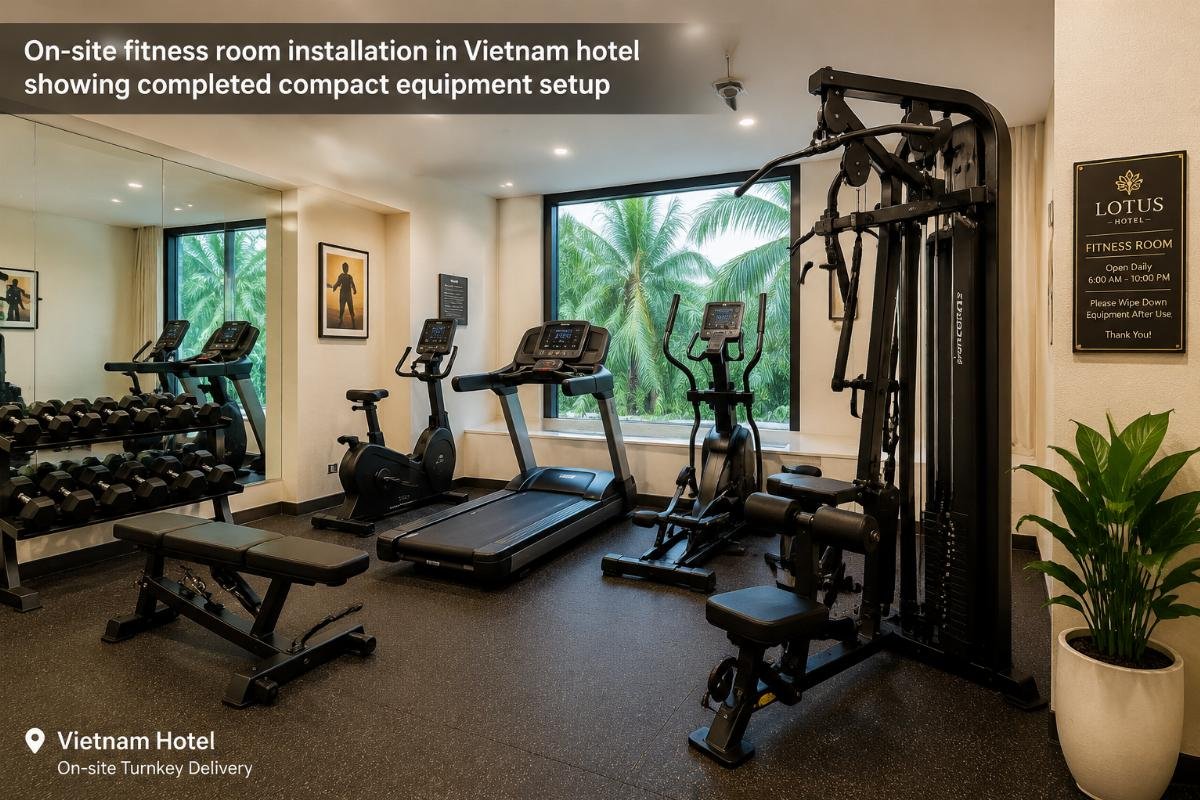
A Vietnam chain hotel fitted 8 on-site fitness rooms with low-noise cardio and compact strength equipment, all delivered and installed within 45 days, with no need for the hotel to coordinate separate local vendors for any part of the project. [NEED_CITE: Full turnkey solution scope including 3D layout design, installation and staff training]
- Turnkey Scope Audit – List all post-delivery tasks you need support for and confirm they are explicitly included in the supplier’s offering.
- Timeline Lock – Get a written delivery and installation timeline that aligns with your facility launch date to avoid costly delays.
- Training Confirmation – Ask for details of included staff training to ensure your team can operate and maintain all equipment correctly from day one.
Conclusion
Reliable fitness equipment sourcing for Indonesia, Vietnam and Philippines markets does not require choosing between low cost and quality, or between bulk pricing and flexible order terms. The biggest shift
MORE FROM
Bumper Plate Set for Belarus: Wholesale OEM Supplier & Import Checklist
Olympic Barbell Manufacturer Russia Import: Bick OEM Supplier
T-9000 Treadmill Wholesale Supplier for Pakistan Buyers from Bick Factory
EQUIP YOUR
From CrossFit boxes to chain facilities -- BICKFIT engineers, manufactures and delivers heavy-duty commercial strength equipment worldwide.
JOIN THE DISCUSSION