![Wholesale Pilates Reformers Cadillac with Tower for Home Gym [WARN] draft identifier mismatch](https://bicksport.com/wp-content/uploads/2026/08/wholesale-pilates-reformers-cadillac-with-tower-for-home-gym-warn-draft-identifier-mismatch-426e26.webp)
Acoustic Precision — Full steel frame and slide rail assembly tested for resonance-free operation in shared residential and studio environments.
Technical Specifications
| Parameter | Value |
|---|---|
| Designation | SRY-01A |
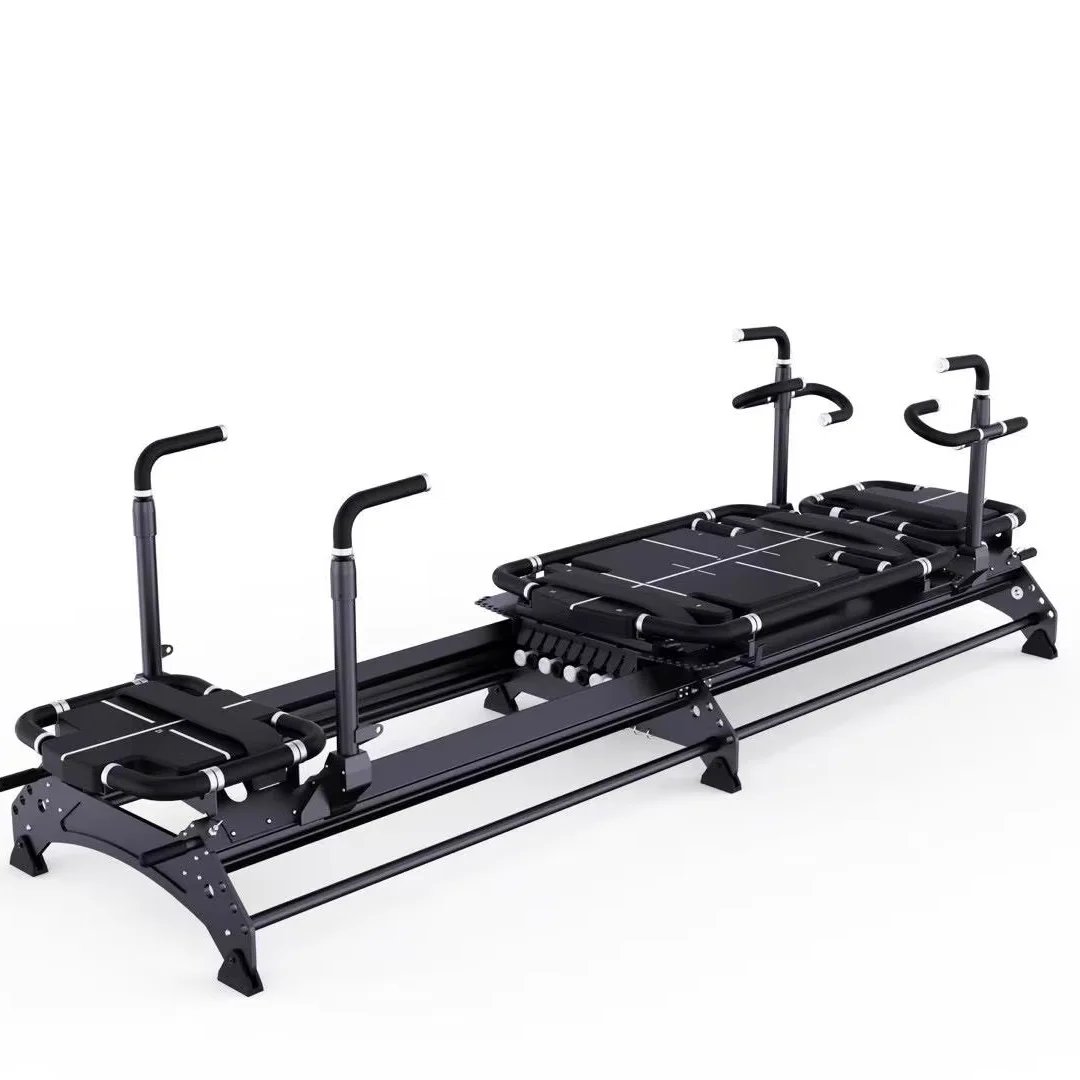
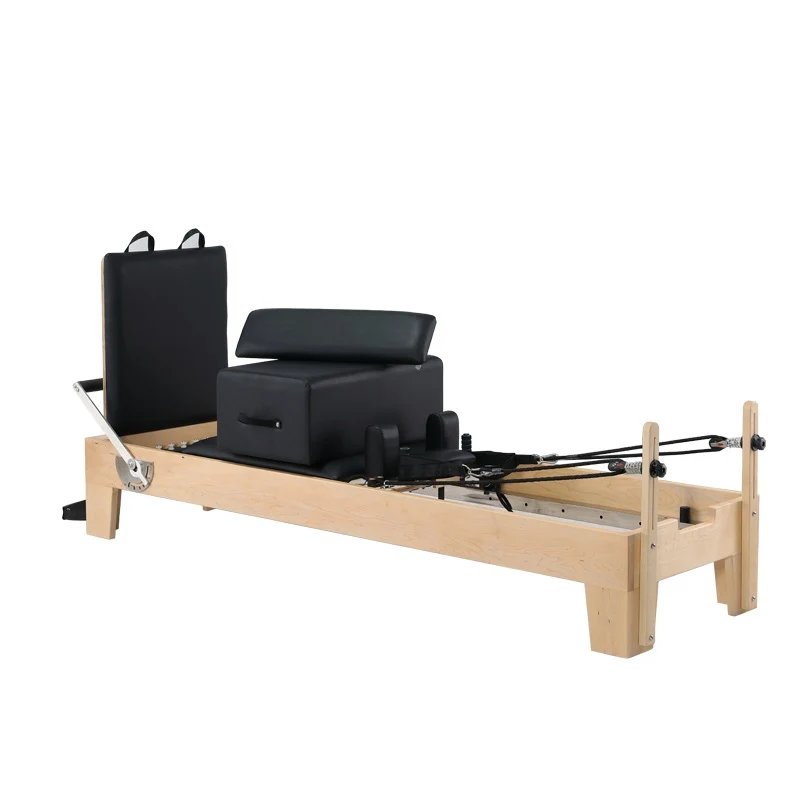
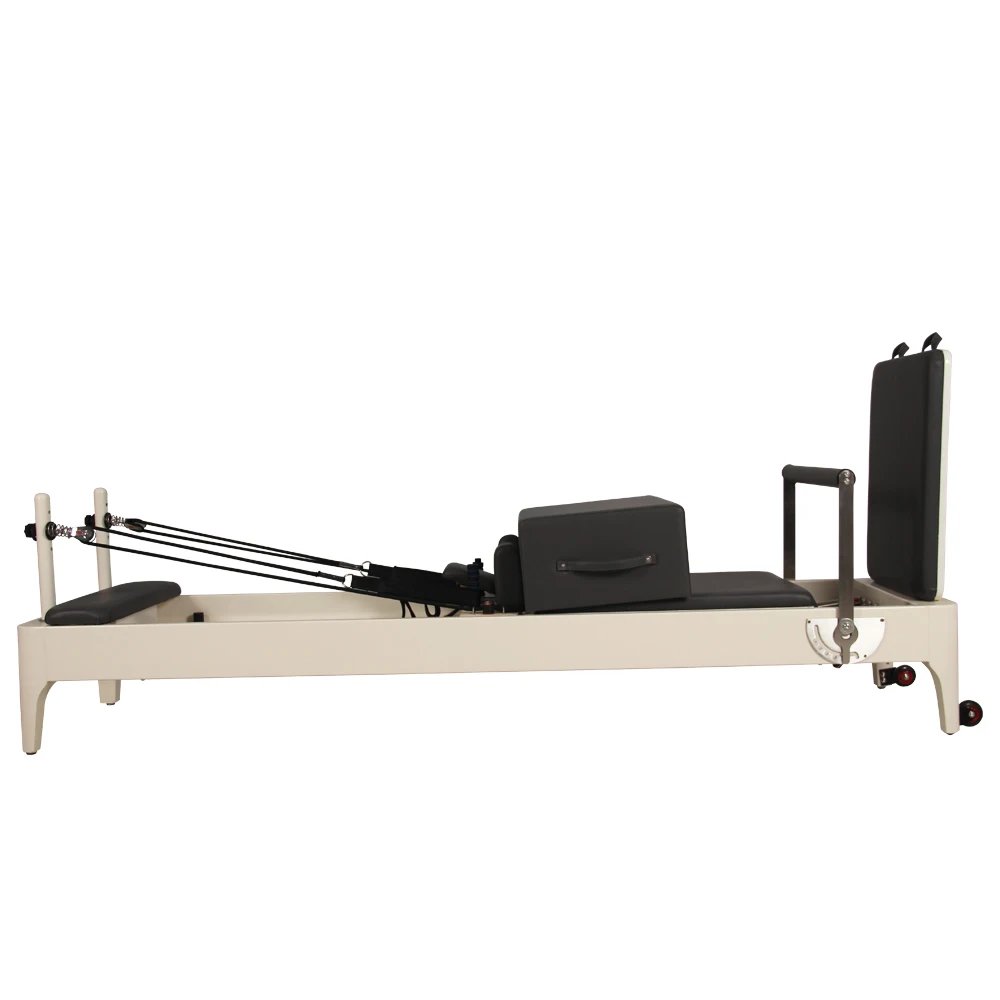
| Product Type | Pilates Reformer with Tower (Cadillac-style) |
| Product Dimensions | 2400 × 770 × 2160 mm |
| Net Weight | 150 kg |
| Frame Material | Steel |
| Accessories | Long Box / Jump Board / Platform |
| Color Options | Solid Color (customizable) |
| Logo | Customized Is Allowed |
| Age Group | Adult |
| Gender | Unisex |
| Warranty | 3 Years |
| Production Capacity | 80 Pieces/Month |
| HS Code | 9506911900 |
| Certification | CE |
| Standard | EN 957 |
Application Suitability
| Deployment Scenario | Typical Use |
|---|---|
| Boutique Pilates studio | Full-sequence reformer and tower classes with jump board intervals |
| Hotel fitness center on guest room floors | 24-hour access Pilates zone requiring low-vibration, low-noise equipment |
| High-end residential home gym | Private Cadillac-style training with long box and platform accessories |
| Rehabilitation center | Guided spring-resistance therapy with adjustable tower bar positions |
| Chain gym cardio and recovery zone | Complementary Pilates station alongside treadmill and elliptical rows |
Why Slide Rail Precision Decides Whether a Reformer Survives Its First Year in a Studio
Steel frame rigidity and rail tolerance define both the acoustic signature and the service life of any commercial Pilates reformer with tower Cadillac home gym deployment.
In studio and hotel environments, a reformer that develops lateral rail play within months generates audible carriage rattle that travels through floor structures. Maintenance logs from multi-site fitness operators show that slide rail complaints outnumber spring replacements by a wide margin during the first year of operation [NEED_CITE: commercial reformer maintenance frequency by component category]. When the carriage does not track cleanly, users compensate with uneven force application, accelerating wear on pulleys and spring anchors. The SRY-01A addresses this through a welded steel frame that maintains rail alignment under repetitive loading cycles typical of back-to-back group classes.
Positioning Within the Cardio and Recovery Equipment Matrix
The SRY-01A operates across the full resistance spectrum of spring-loaded Pilates training, from low-tension rehabilitation sequences to high-load jump board intervals that elevate heart rate into cardio-training zones. Within a mixed-equipment floor plan, it complements steady-state cardio machines by offering controlled eccentric loading and spinal articulation work that treadmills and ellipticals cannot replicate. Its 2400 mm footprint fits a dedicated alcove or a partitioned zone beside a rowing machine bank. The 150 kg net weight and steel chassis provide the stability needed for jump board use without requiring floor anchoring in most commercial settings. The commercial Pilates reformer with tower Cadillac home gym configuration supports users across a broad body-mass range, with the tower bar and long box accommodating both seated and supine exercise positions.
Continuous Use Demands and Deployment Environment Considerations
A boutique studio running six group classes per day places each reformer through roughly 30 to 40 full-length carriage cycles per session, demanding slide rails and spring sets rated for thousands of cycles per month without re-tensioning [NEED_CITE: spring fatigue cycle rating for commercial Pilates equipment]. In hotel deployments above occupied guest rooms, carriage noise and spring vibration travel through concrete slabs more readily than equipment with isolation feet. The SRY-01A’s mass and steel construction dampen low-frequency transmission compared to aluminum-framed alternatives, though rubber isolation pads under the base rails further reduce structural coupling. Adequate ceiling height — at least 2.4 meters — must be confirmed before tower bar installation to allow full overhead reach sequences. Floor leveling within tolerance prevents carriage drift on the longitudinal axis, which otherwise accelerates asymmetric rail wear.
Steel Frame, Spring Set, and Accessory Compatibility Examined
The welded steel frame resists torsional deflection during off-center loading, a common occurrence when users perform unilateral leg work on the reformer carriage. This rigidity keeps the slide rails parallel over years of use, which directly governs carriage smoothness and the acoustic profile of the machine. The spring resistance system offers selectable tension levels through a standard color-coded arrangement, allowing instructors to adjust load between rehabilitation and athletic conditioning without mechanical reconfiguration. Pulley routing through the tower and base frame supports both horizontal and vertical resistance vectors, expanding the exercise library without additional attachments. The included long box extends the carriage surface for seated and prone work, the jump board converts the reformer into a plyometric platform, and the platform attachment provides a stable surface for standing balance sequences. Each accessory mounts through standardized connection points rather than proprietary fittings, simplifying replacement. [NEED_CITE: EN 957 requirements for commercial resistance training equipment structural integrity]
What Spec-Sheet Shortcuts Cost After Deployment
Aluminum-framed reformers reduce shipping weight but often develop rail play under the repetitive lateral forces of jump board work, producing carriage rattle that studio owners describe as the single most common reason for member complaints. Spring sets specified without fatigue-cycle ratings lose tension consistency within months, forcing instructors to manually compensate during classes and undermining program progression. Accessories that rely on friction-fit mounting rather than positive-lock connections shift during use, creating both a safety concern and an interruption to class flow [NEED_CITE: accessory mounting failure modes in commercial Pilates studios]. When a reformer’s frame flexes under load, the carriage does not return to the same neutral position between repetitions, introducing measurement inconsistency into any data-driven training protocol. These failures rarely appear in showroom demonstrations but surface predictably within the first operational quarter.
Why This Product Line Earns Placement in Demanding Facilities
The SRY-01A’s steel frame construction aligns with a manufacturing philosophy that prioritizes sub-35dB operational acoustics across the entire cardio and strength portfolio — a noise discipline that extends from treadmill magnetic resistance systems to reformer slide rail tolerances. Equipment from this production line undergoes 10,000-hour durability testing on load-bearing components, which for a reformer translates to spring fatigue validation and rail wear measurement under simulated studio schedules. Full OEM customization covers logo application, frame color, and accessory configuration, allowing boutique operators to maintain brand consistency across a multi-unit rollout. The manufacturer’s 3D zone layout service addresses reformer placement alongside cardio equipment, accounting for instructor sightlines and participant circulation paths within the Pilates alcove. A 24/7 technical support channel covers spring replacement guidance and rail alignment procedures, reducing dependence on on-site service visits.
Documentation & Test Records
- CE declaration of conformity covering the SRY-01A steel frame and spring assembly
- EN 957 test report validating structural integrity under repeated loading cycles
- ISO 9001 certificate for the manufacturing quality management system
- Noise level test record documenting carriage and spring acoustic performance
- Durability test record for spring fatigue life and slide rail wear measurement
- Installation and commissioning guide with accessory mounting procedures and spare parts list
Installation, Commissioning & Maintenance
- Confirm 2400 × 770 mm footprint clearance plus minimum 600 mm circulation on all sides before positioning the SRY-01A
- Level the steel base frame using adjustable feet to prevent carriage drift on the longitudinal rail axis
- Inspect slide rail parallelism and carriage tracking after the first 200 cycles of operation and re-grease as specified
- Verify spring anchor tension consistency across all resistance levels during initial commissioning before client use
- Wipe down steel frame and carriage surfaces daily to prevent sweat-induced corrosion on welded joints
- Inspect jump board and platform mounting hardware monthly for loosening under plyometric loading
Request a Deployment Assessment
Provide your Pilates zone dimensions and intended class schedule to receive a 3D layout that positions the SRY-01A within your existing equipment matrix and confirms ceiling clearance for full tower bar articulation. Specify whether the deployment floor sits above occupied spaces so that vibration isolation requirements can be matched to your building’s acoustic criteria. Confirm your accessory configuration needs — long box, jump board, platform, or a combination — to align the production order with your class programming. State any OEM requirements for frame color and logo placement to integrate the unit into your facility’s visual identity.
Frequently Asked Questions
Q: What structural differences exist between a steel frame reformer and an aluminum frame reformer?
A: Steel frames provide higher torsional rigidity, which keeps slide rails parallel under off-center loading and reduces carriage rattle over extended use. Aluminum frames lower shipping weight and resist corrosion in humid environments but may require more frequent rail alignment checks under commercial jump board schedules. The choice depends on deployment density and whether the reformer sits on a floor above occupied rooms where vibration transmission matters.
Q: How does slide rail precision influence training smoothness and equipment longevity?
A: Rail tolerance governs how cleanly the carriage tracks during both slow controlled movements and rapid jump board returns. Tighter manufacturing tolerances reduce lateral play, which decreases wear on pulley wheels and spring anchors. Over thousands of cycles, even minor rail misalignment compounds into uneven carriage travel that users perceive as roughness and that accelerates component replacement intervals.
Q: How do spring resistance and rope-based resistance systems compare for studio deployment?
A: Spring systems deliver progressive resistance that increases with extension, matching the strength curve of many Pilates exercises and providing tactile feedback instructors can observe visually. Rope systems with weight stacks offer more granular load adjustment but add mechanical complexity and require more floor space. Most boutique studios standardize on spring-based reformers for simplicity and the distinct resistance feel that certified Pilates curricula expect.
Q: What effect does accessory configuration have on training coverage and studio utilization?
A: Adding a long box extends the reformer into seated spinal articulation and prone back extension work that the standard carriage alone does not support. A jump board converts the unit into a plyometric station for cardiovascular conditioning within a Pilates class structure. A platform attachment enables standing balance and weight-transfer exercises. Configuring all three accessories from a single reformer maximizes class variety without purchasing additional equipment.
Q: What is the scope of OEM customization and typical delivery timeline?
A: OEM options include custom logo application, frame color selection from a solid-color palette, and accessory bundle configuration. Production capacity runs at approximately 80 units per month, and lead times depend on order volume and customization complexity. Buyers should confirm minimum order quantities and request a proforma invoice with a production schedule before committing to a container load.