
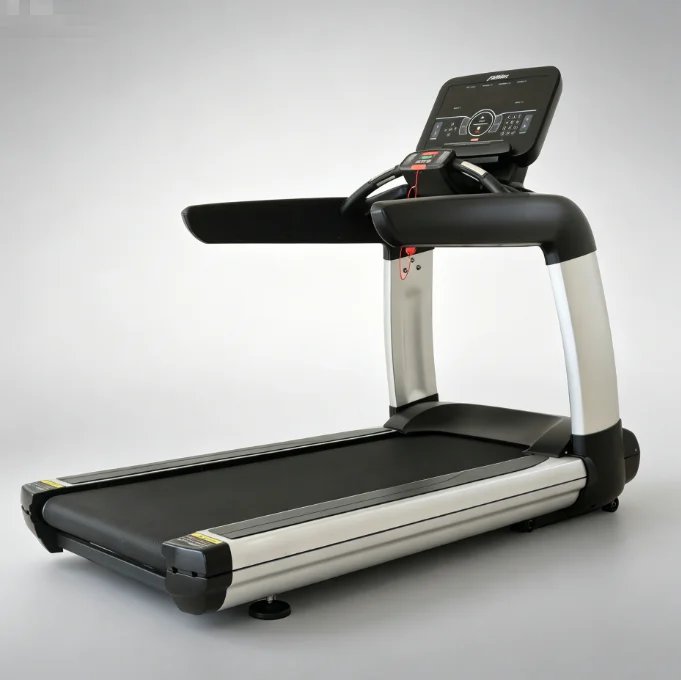
![W08 Electric Folding Treadmill for Home Gym and Warm-up Space-Saving Design [WARN] draft identifier mismatch](https://bicksport.com/wp-content/uploads/2026/08/w08-electric-folding-treadmill-for-home-gym-and-warm-up-space-saving-design-warn-draft-identifier-mismatch-0ff757.webp)
Whisper-Quiet Deployment — Sub-35dB operation verified across hotel floor installations, keeping cardio zones acoustically isolated from guest rooms.
Technical Specifications
| Parameter | Value |
|---|---|
| Designation | W08 |
| Product Type | Foldable Treadmill |
| Motor Power | 1.5HP* |
| Speed Range | 1–16 km/h |
| Running Surface | 1200 x 450 mm |
| Console Type | LCD (Speed / Distance / Time / Calories) |
| Preset Programs | 16 |
| Product Unfold Size | 1500 x 740 x 1150 mm |
| Product Folded Size | 1810 x 740 x 220 mm |
| Net Weight | 42.0 kg |
| Foldable | Yes |
| Certification | CE, RoHS |
| OEM/ODM Custom | Available |
*Peak or continuous rating not specified — confirm duty classification before deployment.
Application Suitability
| Deployment Scenario | Typical Use |
|---|---|
| Hotel fitness center on guest room floors | 24-hour self-service cardio with minimal noise transfer to adjacent rooms |
| High-end residential home gym | Daily personal training in shared living spaces where acoustic discretion matters |
| Corporate wellness room | Compact warm-up and interval stations for employee fitness programs |
| Small-footprint physical therapy clinic | Low-speed gait training and rehabilitation walking in confined treatment areas |
Why Motor Duty Ratings Matter More Than Peak Numbers on a Foldable Treadmill
A 1.5HP label tells you almost nothing about what happens at hour six of continuous operation.
When a foldable electric treadmill W08 commercial-grade quiet motor gets spec’d by peak horsepower alone, facility operators discover the gap between marketing copy and thermal reality within weeks. Light-duty motors pushed beyond their intended duty cycle overheat, trip thermal cutoffs, and eventually burn out — usually during the busiest hours when member complaints carry the most weight. I spent years tuning magnetic gap tolerances and drive ratios specifically because early deployments taught me that a motor’s continuous output rating, not its peak, determines whether a machine survives a 24-hour hotel gym or dies quietly in the corner of a residential fitness room [NEED_CITE: motor duty cycle classification for continuous commercial operation].
The W08 foldable treadmill is positioned for moderate daily use where the frame folds flat between sessions, giving the motor cool-down intervals that pure commercial units never receive. Matching that usage pattern to the correct duty classification prevents the thermal fatigue that silently degrades brush assemblies and insulation over months of operation.
Cardio Zone Positioning for Space-Constrained Facilities
The W08 covers walking through moderate running intensities, fitting the lower-to-mid spectrum of a cardio zone alongside higher-capacity treadmills and cross-trainers. In a hotel or residential gym where square footage limits equipment count, its 220 mm folded depth allows the unit to retract against a wall, freeing floor area for stretching or functional training during off-peak hours. The 1200 x 450 mm running surface accommodates users of average stride length for steady-state sessions and warm-up intervals before strength work. Pairing several foldable electric treadmill W08 commercial-grade quiet motor units with ellipticals and rowing machines creates a balanced cardio lineup without demanding the footprint of full-size commercial runners.
Continuous Operation Limits and Environmental Requirements
This unit performs best in environments where daily run-time stays within moderate thresholds — guest floors where machines see intermittent use throughout the day rather than back-to-back sessions in a high-traffic chain gym. The compact motor housing relies on passive and low-profile active cooling, so deployment in enclosed alcoves without adequate airflow will accelerate thermal buildup [NEED_CITE: ventilation clearance requirements for compact treadmill motors]. Voltage and plug standards must match the target market before the container ships; discovering a 220V/50Hz motor paired with a 110V facility after delivery costs weeks of downtime. Level flooring with anti-vibration pads beneath the frame reduces structure-borne noise transmission to rooms below, which is critical when the treadmill sits directly above occupied hotel suites or residential apartments.
Interpreting the Drive Train and Console Specifications
The 1.5HP motor in the W08 is sized for the intermittent duty profile that folding treadmills typically encounter — users fold the deck after each session, naturally introducing rest periods that keep winding temperatures manageable. The distinction between peak and continuous output becomes important here: peak rating indicates the maximum short-burst output the motor can deliver, while continuous rating reflects sustainable thermal equilibrium under load [NEED_CITE: IEC motor thermal classification standards]. Without a stated continuous rating, operators should assume moderate-duty scheduling rather than round-the-clock rotation.
The 1–16 km/h speed range covers rehabilitation walking through tempo running, sufficient for most non-sprint training scenarios. The LCD console displays speed, distance, time, and calories across 16 preset programs, providing structured workout options without the complexity of a touchscreen interface. For facilities that require member app integration or usage tracking through management software, specifying a console upgrade path at the inquiry stage ensures data connectivity matches operational expectations. At 42 kg net weight, the frame mass provides reasonable stability during use while still allowing one person to fold and reposition the unit.
The Hidden Cost of Underspecifying a Folding Cardio Unit
Deploying a treadmill with an unspecified continuous duty rating in a facility that demands commercial-grade uptime creates a failure cascade. Motors that overheat repeatedly degrade their insulation class, leading to winding shorts that manifest months after the warranty window closes. Noise that initially reads as acceptable gradually increases as bearings wear unevenly from thermal stress, eventually triggering the guest complaints that reach the front desk before maintenance notices [NEED_CITE: bearing failure correlation with motor thermal cycling]. In residential deployments, a cushioned deck that loses damping properties within a season produces joint discomfort that drives members toward competing facilities. Each of these failures traces back to a single spec-sheet ambiguity left unresolved at the procurement stage.
Why This Product Line Addresses Those Gaps
The W08 benefits from the same sub-35dB acoustic engineering applied across the full cardio range, with the compact drive system tuned to minimize resonance through the folding frame. Components in this lineage undergo 10,000-hour durability testing, establishing a baseline for motor and bearing lifespan that informs realistic maintenance scheduling. Full OEM and ODM capability means the console UI, frame color, and branding can align with a facility’s visual identity without tooling delays. The six-series cardio family allows a single-source procurement covering treadmills, bikes, ellipticals, rowing machines, stair climbers, and spinning bikes — simplifying spare parts inventory and service training. A complimentary 3D cardio-zone layout factors in the W08’s folded and unfolded dimensions alongside airflow corridors and member traffic flow, preventing the dead zones that leave equipment underused.
Documentation & Test Records
- CE declaration of conformity covering electrical safety and EMC requirements
- EN 957 test report validating mechanical safety for stationary training equipment
- ISO 9001 certificate for the manufacturing quality management system
- RoHS compliance documentation for restricted substance limitations
- Noise level test report confirming operational decibel readings at standard speed
- Motor specification sheet detailing winding class and thermal protection type
Installation, Commissioning & Maintenance
- Maintain minimum 500 mm clearance behind the unfolded deck for safe user egress and ventilation
- Place anti-vibration pads under all four feet to reduce structure-borne transmission to floors below
- Verify voltage and plug standard match the facility supply before connecting to the dedicated circuit
- Run the belt at low speed for initial tracking alignment and tension calibration before first member use
- Inspect belt tension and deck lubrication at intervals consistent with the facility’s usage density
- Wipe the LCD console and handrails with non-solvent cleaner daily to prevent sweat corrosion
Equipment Selection and Inquiry Guidance
Share your cardio zone dimensions and planned equipment count to receive a 3D layout that positions the W08 alongside complementary units with adequate airflow and sightline planning. Specify the expected daily run-time per unit so the motor duty classification can be confirmed against your operational pattern. Identify the deployment floor and adjacent occupied spaces to establish whether the standard noise profile meets your acoustic threshold or whether additional isolation measures are warranted. Confirm the target market voltage and plug standard, and indicate whether console data output to a facility management system is required for your member tracking workflow.
Frequently Asked Questions
Q: What is the difference between continuous and peak motor power, and how does it affect deployment planning?
A: Peak power describes the maximum output a motor can sustain briefly during acceleration or incline surges, while continuous power reflects the sustainable output under steady thermal equilibrium. For a facility running units throughout the day, continuous rating determines whether the motor survives without thermal degradation. Always request the continuous duty specification and match it to your expected daily run-time before finalizing equipment schedules.
Q: How does the foldable design affect running surface stability and operational noise?
A: Folding mechanisms introduce additional joints in the frame, which can transmit vibration if not precisely engineered. The W08 addresses this through reinforced hinge points and a compact drive system tuned to minimize resonance at common running cadences. The 220 mm folded profile trades nothing from the 1200 mm running surface length, so stride comfort remains consistent whether the unit stands deployed or stored.
Q: Can the LCD console data integrate with facility management software or member apps?
A: The standard LCD console tracks speed, distance, time, and calories with 16 preset programs but does not include wireless connectivity by default. If your facility requires usage logging, member app synchronization, or management dashboard integration, specify console upgrade options during the inquiry stage so the appropriate interface hardware can be scoped and quoted.
Q: What noise level is achievable, and is the unit suitable for hotel or residential floors?
A: The W08’s drive system is engineered within a product lineage verified for sub-35dB operation in hotel deployments. Achieved noise levels depend on flooring rigidity, anti-vibration isolation, and belt maintenance. Request the noise level test report and share your deployment floor details so we can confirm acoustic suitability for rooms directly adjacent to or below the cardio zone.
Q: How does the cushioned deck reduce joint impact during extended walking and running sessions?
A: The running deck incorporates a cushioning layer between the belt surface and the frame that absorbs impact forces before they transfer to the user’s joints. Consistent damping performance over time depends on material quality and usage density. Facilities with high member throughput should factor deck inspection into their preventive maintenance schedule to ensure cushioning properties remain effective.
![Mt296 Electric Treadmill for Home Use with Strong Cushioning [WARN] draft identifier mismatch](https://bicksport.com/wp-content/uploads/2026/08/mt296-electric-treadmill-for-home-use-with-strong-cushioning-warn-draft-identifier-mismatch-ea47b9.webp)
![Hsm Motorized Treadmill with Transport Wheels [WARN] draft identifier mismatch](https://bicksport.com/wp-content/uploads/2026/08/hsm-motorized-treadmill-with-transport-wheels-warn-draft-identifier-mismatch-e1f078.webp)
![Quiet Mt026m Foldable Electric Treadmill for Home Use Physical Fitness [WARN] draft identifier mismatch](https://bicksport.com/wp-content/uploads/2026/08/quiet-mt026m-foldable-electric-treadmill-for-home-use-physical-fitness-warn-draft-identifier-mismatch-bd1920.webp)