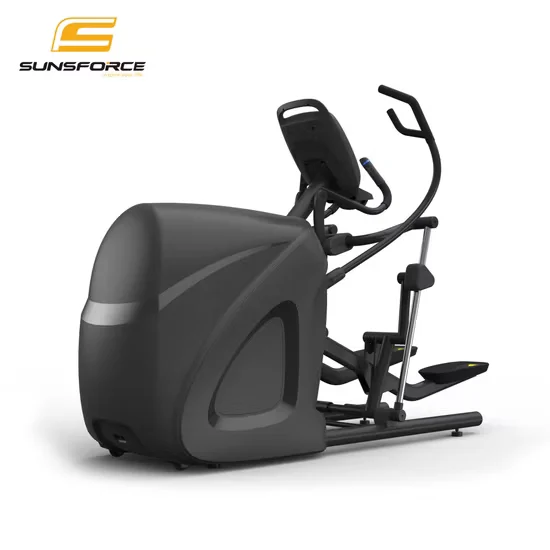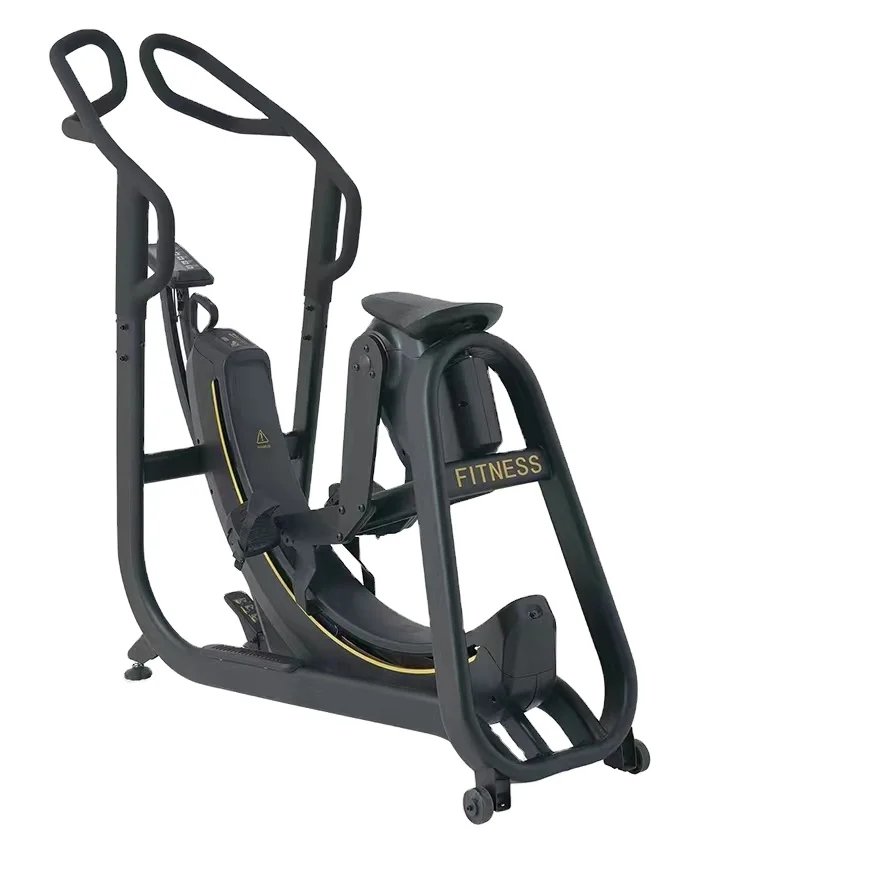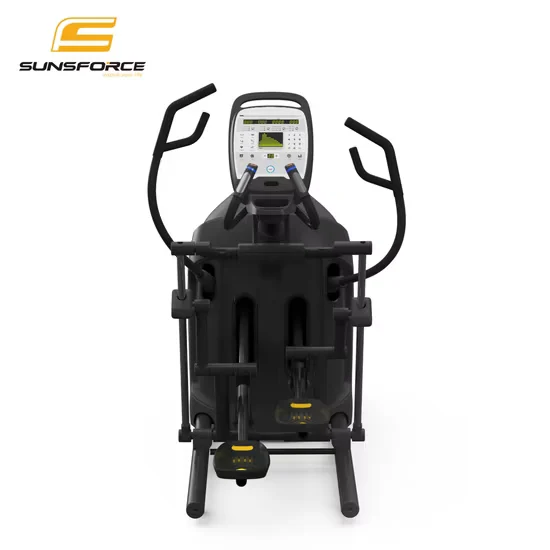
Quiet Stride Engineering — Magnetic resistance and a 240kg reinforced frame eliminate mechanical friction noise while stabilizing high-frequency elliptical deployments.
Technical Specifications
| Parameter | Value |
|---|---|
| Designation | CTC60 |
| Product Type | Elliptical Trainer |
| Resistance Type | Magnetic |
| Resistance Levels | 1-25 |
| Stride Grade | 1-10 |
| Step Depth Grade | 1-15 |
| Pedal Center Distance | 230mm |
| Console Type | LED |
| Max User Weight | 180kg |
| Net Weight | 240kg |
| Product Dimensions | 21207901680mm |
| Certification | ISO 9001, CE, RoHS, EN 957 |
Application Suitability
| Deployment Scenario | Typical Use |
|---|---|
| Five-star hotel fitness center on guest room floors | 24-hour access cardio for guests requiring sub-35dB operation near occupied rooms |
| International gym chain cardio zone | High-frequency continuous use across peak morning and evening traffic windows |
| Corporate wellness room | Compact footprint accommodating employee fitness breaks during shift rotations |
| High-end residential home gym | Shared living environment demanding whisper-quiet stride mechanics |
| Sports performance training center | Athlete conditioning with precise resistance gradation across 25 levels |
Why Magnetic Resistance Settles the Noise Debate in Commercial Cardio Zones
Contactless braking eliminates the friction wear that turns traditional ellipticals into maintenance liabilities.
When friction-pad ellipticals operate beyond their design duty cycle, the physical contact surfaces degrade unevenly. This produces audible grinding that travels through floor structures — particularly problematic when cardio zones sit directly above guest rooms or conference spaces. Facility managers typically discover the issue only after noise complaints reach the front desk. [NEED_CITE: acoustic transmission standards for fitness equipment in multi-story commercial buildings]
The CTC60 commercial elliptical trainer magnetic resistance system avoids this failure mode entirely. The braking mechanism operates without physical contact, meaning there is no wearable friction surface generating progressive noise over thousands of operating hours. During our deployment at a five-star property, replacing their friction-based units with magnetic systems eliminated the nighttime noise complaints that had been generating guest compensation credits.
Positioning Within a Multi-Discipline Cardio Layout
This elliptical trainer occupies the low-impact, full-body conditioning segment of a commercial cardio floor. It complements treadmills by offering users who require reduced joint loading an equivalent cardiovascular stimulus. The 1-25 resistance range paired with 1-10 stride grading accommodates everything from active recovery sessions to high-intensity interval protocols.
Within a mixed cardio zone, this unit serves users across a broad anthropometric range — the 180kg maximum user weight and 230mm pedal center distance handle larger-framed athletes without lateral sway. Deploying ellipticals adjacent to windows or perimeter walls takes advantage of natural sightlines, encouraging usage in zones that might otherwise feel isolated from the main training floor. The commercial elliptical trainer magnetic resistance profile means it can operate in these peripheral positions without generating noise that bleeds into adjacent quiet zones.
Continuous Operation and Environmental Deployment Requirements
Facilities running 24-hour access need equipment rated for continuous duty cycles well beyond light-commercial thresholds. This unit’s 240kg net weight and reinforced steel frame manage the vibration transfer that lighter frames propagate through floor slabs during extended use sessions.
Noise传导 in multi-story buildings depends not only on the source mechanism but on how vibration couples into the structure. Magnetic resistance removes the primary mechanical noise source, but frame mass and foot leveling determine whether residual harmonic vibration reaches occupied spaces below. [NEED_CITE: structural vibration isolation requirements for upper-floor fitness facilities]
Deployment on upper floors requires attention to subfloor leveling and isolation pad specification. Voltage and plug standards must be confirmed before shipment — we have seen containers arrive at destination ports only to discover plug incompatibility requiring wholesale adapter procurement. The LED console draws minimal power, but dedicated circuit allocation prevents voltage fluctuation from neighboring high-draw equipment affecting console stability.
Decoding the Electromagnetic Drive and Load Specifications
Magnetic resistance operates on a fundamentally different principle from friction or air-based systems. An electromagnetic field creates braking force against a metal flywheel without any physical contact. This produces a resistance curve that remains consistent across the unit’s entire lifespan — there is no pad wear shifting the perceived effort at specific resistance levels. The 1-25 range provides granular progression suitable for supervised rehabilitation programs at the lower end and advanced athletic conditioning at the upper end.
The stride grade adjustment spanning 1-10 positions modifies the elliptical path geometry, altering muscle recruitment patterns without requiring users to switch machines. Combined with the 1-15 step depth range, this allows programming variety that reduces repetitive strain on specific joint pathways. The 230mm pedal center distance — known in biomechanics as Q-factor — positions the feet at a natural hip-width alignment, reducing the lateral torque that narrower or wider spacing imposes on knees and ankles during extended sessions.
LED console technology prioritizes reliability and readability over multimedia features. In environments where sweat exposure, cleaning chemicals, and continuous operation stress electronic components, LED displays maintain legibility without the backlight degradation that affects LCD panels over time. The console captures fundamental training metrics — time, distance, resistance level, stride count — which facility managers can use to track equipment utilization patterns.
What Cutting Specifications Quietly Costs Facility Operators
Specifying light-commercial ellipticals for public-access facilities accelerates component failure in ways that rarely appear on the initial purchase order. Motors undersized for continuous operation accumulate thermal stress during peak-hour back-to-back usage, eventually failing outside warranty coverage windows. [NEED_CITE: thermal degradation patterns in commercial versus light-commercial cardio motors]
Friction-based resistance systems generate progressive noise as contact surfaces wear asymmetrically. What begins as an acceptable hum degrades into grinding that transmits through floor structures — triggering complaints, member attrition, and ultimately replacement costs that exceed the savings from specifying a lower-tier unit. Data isolation from consoles that cannot output utilization metrics leaves operators blind to which equipment zones drive membership retention and which represent dead floor space.
Why This Product Line Deserves a Second Look
Our in-house noise testing protocol verifies sub-35dB operation under load — not at idle. This CTC60 unit undergoes the same continuous-run validation applied across our entire six-series cardio family, ensuring that noise performance holds at resistance levels where members actually train.
The 10,000-hour durability testing covers motor, frame, and bearing assemblies under simulated high-frequency commercial operation. OEM customization extends to console interface configuration, allowing facility branding and data output protocols tailored to existing management software. Our 3D layout service accounts for this elliptical’s specific 21207901680mm footprint when calculating safe spacing corridors and airflow paths through the cardio zone.
24/7 technical support means a failed unit on a Saturday evening in an international deployment doesn’t wait until Monday for a response. The complete documentation package — from EN 957 test records to motor specification sheets — provides procurement teams the evidence required for internal compliance reviews.
Documentation & Test Records
- CE declaration of conformity covering electromagnetic compatibility directives for this elliptical trainer
- EN 957 test report validating structural integrity and safety requirements for commercial stationary training equipment
- ISO 9001 quality management certification covering manufacturing and assembly processes
- Noise level test report documenting operational decibel readings across the 1-25 resistance range
- Durability test record verifying component performance through 10,000-hour continuous operation simulation
- LED console technical documentation including data output specifications and maintenance intervals
Installation, Commissioning & Maintenance
- Allocate minimum clearance zones around the 21207901680mm footprint per EN 957 safety spacing requirements
- Level the 240kg frame on isolation pads to prevent harmonic transfer to floor structures below
- Confirm voltage and plug standard match destination market before uncrating to avoid adapter delays
- Calibrate magnetic resistance baseline during first power-on to ensure accurate 1-25 level progression
- Inspect pedal bearings and drive belt tension at manufacturer-specified intervals for consistent stride feel
- Wipe LED console with non-abrasive cleaner to maintain display legibility in high-sweat environments
Specifying the Right Configuration for Your Facility
Provide your cardio zone square footage and intended unit count to receive a 3D layout incorporating airflow analysis and sightline optimization for this elliptical’s footprint. Specify average daily operating hours so we can confirm the duty-cycle rating matches your traffic pattern.
Identify deployment floor level and adjacent occupied spaces to verify acoustic requirements are met. Confirm your destination market voltage standard and plug type, and indicate whether LED console data output needs to interface with your existing facility management platform.
Frequently Asked Questions
Q: How does magnetic resistance compare to air resistance for commercial elliptical deployment?
A: Magnetic systems generate resistance through electromagnetic fields without physical contact, producing consistent load profiles that remain stable across the equipment lifespan. Air resistance increases with pedal speed, making the effort curve less predictable for programmed interval sessions. For hotel and corporate environments prioritizing quiet operation, magnetic resistance delivers noticeably lower noise without the whoosh characteristic of fan-based systems.
Q: What operational noise level should guide cardio equipment placement in multi-story buildings?
A: Noise transmission through floor structures depends on both airborne sound and vibration coupling. Equipment specified for upper-floor hotel fitness centers or residential shared spaces should demonstrate sub-35dB operation under load conditions, not merely at idle. The magnetic resistance mechanism eliminates contact-based noise generation, but frame mass and isolation pad specification equally influence what adjacent occupants actually perceive during use.
Q: Can LED console data integrate with third-party facility management software?
A: LED consoles capture fundamental training metrics including time, distance, resistance level, and stride count. Integration capability depends on the specific data output protocol and the receiving system’s compatibility. We provide console technical documentation detailing available interfaces, enabling your IT team to verify communication standards before deployment. Specify your management platform during inquiry so we can confirm protocol alignment.
Q: How does pedal center distance affect long-session comfort on an elliptical trainer?
A: Pedal center distance, or Q-factor, determines how closely the foot path aligns with natural hip-width gait mechanics. Excessively narrow or wide spacing forces compensatory movement patterns that create lateral stress on knee and ankle joints over extended sessions. The 230mm center distance on this unit positions the stride path within the biomechanical range that accommodates most adult users without imposing unnatural joint angles.
![Commercial Gym Elliptical Trainer Cross Direct Sell Equipment CTC60-T [WARN] draft identifier mismatch](https://bicksport.com/wp-content/uploads/2026/08/commercial-gym-elliptical-trainer-cross-direct-sell-equipment-ctc60-t-warn-draft-identifier-mismatch-9fc3b0.webp)