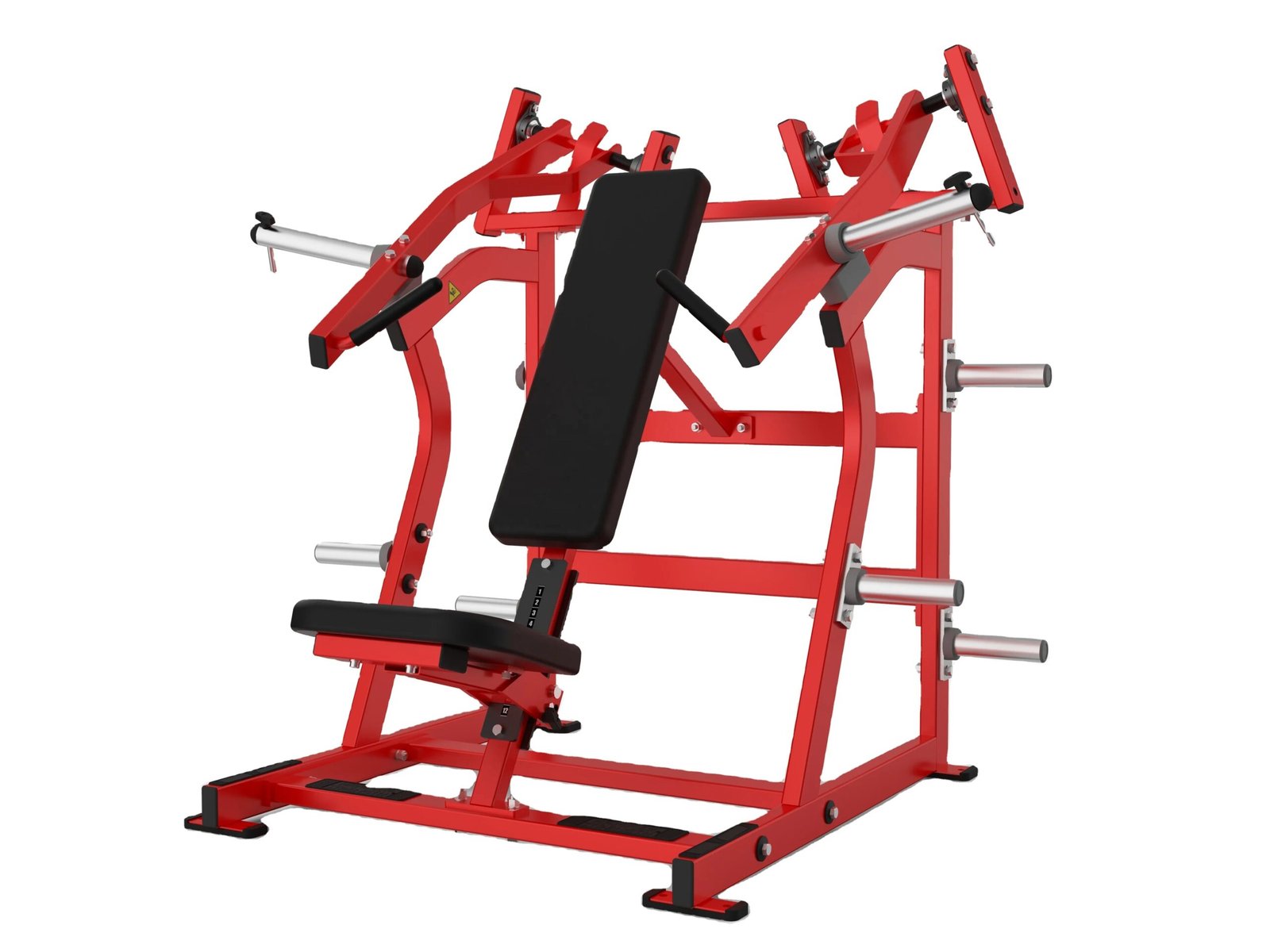
![Srh-73 Commercial Plate Loaded Adductor Machine for Gym Equipment [WARN] draft identifier mismatch](https://bicksport.com/wp-content/uploads/2026/08/srh-73-commercial-plate-loaded-adductor-machine-for-gym-equipment-warn-draft-identifier-mismatch-eb7332.webp)
Sealed Pivot Durability — reinforced iron frame and sealed bearings tested for continuous high-frequency repetitions in commercial strength zones.
Technical Specifications
| Parameter | Value |
|---|---|
| Designation | SRH-73 |
| Product Type | Plate Loaded Adductor Machine |
| Exercise Part | Leg |
| Material | Iron |
| Product Dimensions | 122512201570mm |
| Certification | RoHS, ISO9001, CE |
| Age Group | Adult |
| Gender | Unisex |
| Logo | Customized |
| Color | Customized |
| Appliance | Community, Gymnasium, Home |
| Production Capacity | 200 Pieces/Month |
Application Suitability
| Deployment Scenario | Typical Use |
|---|---|
| commercial gymnasium strength zone | inner thigh isolation training between free weight and cable stations |
| community fitness center | high-frequency member use with minimal maintenance intervals |
| residential home gym installation | compact footprint adductor training for dedicated leg day routines |
| hotel fitness center | space-efficient plate loaded station for guests seeking targeted leg work |
| corporate wellness room | supervised lower-body conditioning during scheduled fitness sessions |
Why Pivot Noise Develops Before the Warranty Expires
Sealed bearings and reinforced weld points prevent the play that generates maintenance tickets.
Plate loaded adductor machines in shared facilities often begin developing audible pivot noise within the first heavy-use cycle. The root cause traces back to dry contact points where standard bushings wear through under thousands of repetitive adduction movements. Once the pivot develops play, the frame begins to flex at stress joints, creating a rattle that members notice before maintenance staff do [NEED_CITE: pivot bearing wear patterns in plate loaded strength equipment]. Facility operators then face the choice between frequent lubrication shutdowns or replacing the entire pivot assembly — neither of which was budgeted. The SRH-73 commercial plate loaded adductor machine addresses this with sealed pivot bearings and an iron frame built to maintain alignment across extended duty cycles.
Where This Adductor Station Fits in a Commercial Layout
The SRH-73 occupies a dedicated inner-thigh isolation role in the strength training zone, complementing squat racks, leg press stations, and cable machines that target compound lower-body movements. Members typically use the commercial plate loaded adductor machine during focused leg sessions, performing controlled repetitions in moderate intensity ranges suited to both hypertrophy and rehabilitation protocols. The 1225*1220mm footprint fits standard strength equipment spacing, allowing adjacent placement to abductor machines or leg extension stations without compromising user clearance. The iron frame and plate loaded resistance path accommodate adult users across a broad weight range, with customized color options enabling integration into facility branding.
Continuous Use Demands and Environmental Factors
In a busy gymnasium, adductor machines see steady rotation throughout peak hours, meaning pivot points and weld joints endure near-constant load cycling. The sealed bearing system on the SRH-73 reduces lubrication frequency, which matters when maintenance windows are limited to early morning or overnight [NEED_CITE: maintenance interval standards for commercial plate loaded equipment]. Floor placement should account for plate loading clearance on both sides, and the 1570mm height requires adequate overhead clearance in rooms with low-mounted lighting or HVAC ducts. Rubber flooring beneath the unit absorbs plate contact vibration and protects subfloor surfaces from iron-on-concrete impact damage. Proper leveling during installation prevents uneven frame stress that accelerates pivot wear.
Reading the Frame and Resistance Specifications
Iron frame construction on the SRH-73 provides the rigidity needed for plate loaded resistance without the cable stretch or pulley wear found in selectorized machines. Plate loaded systems transfer resistance directly through the lever arm, meaning the user feels a consistent load curve without the mechanical lag that worn cables introduce. The reinforced weld points at stress joints prevent the micro-flex that gradually loosens frame geometry over thousands of repetitions. Customizable logo and color options are applied during manufacturing rather than aftermarket, ensuring finish durability matches the frame coating. Plate horn diameter should be confirmed against standard Olympic plates to ensure compatibility across mixed-equipment facilities.
What Specification Shortcuts Cost Over Time
Facilities that select plate loaded machines with undersized frames or unsealed pivots typically see the consequences within the first year of commercial deployment. Dry pivot points generate grinding noise that members report, triggering reactive maintenance that pulls equipment offline during peak hours. Frame flex under loaded repetitions degrades the resistance tracking accuracy, making the movement feel inconsistent and driving members toward alternative stations. Weld cracks at high-stress joints can develop when material thickness is inadequate for continuous plate loaded use, requiring structural repair or full frame replacement [NEED_CITE: frame fatigue failure modes in commercial strength equipment]. These failures compound when multiple units across a facility share the same specification compromises.
Why This Product Line for Commercial Deployment
The SRH-73 commercial plate loaded adductor machine is backed by manufacturing processes that include in-house CNC machining, frame welding, assembly, and quality testing — all within vertically integrated facilities. Every unit undergoes structural and functional verification before shipment, with noise level and durability test records available for review. The six-series cardio and strength family allows facility planners to source multiple equipment categories from a single production line, simplifying logistics and consistency. OEM customization covers logo application, color matching, and branding integration at flexible minimum quantities. A complimentary 3D layout plan addresses equipment spacing, member flow, and ventilation requirements specific to the deployment space. Technical support remains available around the clock after installation.
Documentation & Test Records
- CE declaration of conformity for commercial plate loaded strength equipment
- EN 957 test report covering structural integrity and safety requirements
- ISO 9001 certificate confirming quality management system compliance
- RoHS compliance documentation for material and coating specifications
- Durability test record documenting pivot and frame performance under load
- Spare parts list with pivot bearing and frame component specifications
Installation, Commissioning & Maintenance
- Allow clearance on both sides for Olympic plate loading and unloading around the 1225*1220mm footprint
- Level the iron frame on rubber matting to absorb vibration and prevent uneven pivot stress
- Confirm floor load capacity supports the machine weight plus maximum plate loaded resistance
- Inspect sealed pivot bearings at scheduled intervals and replace if play develops
- Wipe down iron surfaces with non-corrosive cleaner to prevent sweat-induced oxidation
- Verify all frame bolts and plate horn fasteners after the first 500 use cycles
Planning Your Deployment
Share your strength zone dimensions and equipment list to receive a 3D layout plan that accounts for the SRH-73 footprint, plate loading clearance, and member circulation paths. Specify expected daily usage volume so that pivot bearing and frame specifications are validated against your facility’s duty cycle. Identify the deployment floor and adjacent occupied spaces to determine whether additional vibration damping is required. Confirm target market voltage requirements if any electrically assisted features are being considered alongside the plate loaded unit. Indicate whether color and logo customization should match existing facility branding standards.
Frequently Asked Questions
Q: How does plate loaded resistance compare to selectorized machines for long-term maintenance?
A: Plate loaded machines like the SRH-73 eliminate cable stretch, pulley wear, and weight stack guide rod friction that require regular servicing on selectorized equipment. The direct resistance path through the lever arm means fewer moving parts to maintain, and sealed pivot bearings further reduce scheduled maintenance. Facilities with high-traffic strength zones often find plate loaded stations remain operational with less frequent intervention.
Q: What frame material specifications should I verify before purchasing?
A: Confirm the iron frame thickness at stress joints and the weld specification at pivot connection points. The SRH-73 uses reinforced weld points designed to withstand continuous plate loaded resistance without frame flex. Request documentation that specifies material grade and load testing results, and verify that plate horn diameter matches your facility’s standard Olympic plate inventory.
Q: What are the pivot maintenance requirements for this adductor machine?
A: The sealed pivot bearings on the SRH-73 are designed to operate without routine lubrication, significantly reducing maintenance frequency compared to open bushing systems. Facilities should schedule periodic inspection to check for bearing play or unusual noise during operation. If the sealed bearing shows wear, replacement is straightforward using the components listed in the spare parts documentation.
Q: How much space does a plate loaded adductor station require in a commercial layout?
A: The SRH-73 measures 122512201570mm and requires additional clearance on both sides for plate loading and unloading. Plan for at least 600mm of lateral access space per side and adequate overhead clearance for the full frame height. A 3D layout plan can optimize placement relative to adjacent strength stations and member circulation paths.


![Commercial Reverse Hyper Extension Strength Machine Gym Equipment [WARN] draft identifier mismatch](https://bicksport.com/wp-content/uploads/2026/08/commercial-reverse-hyper-extension-strength-machine-gym-equipment-warn-draft-identifier-mismatch-c9462b.webp)