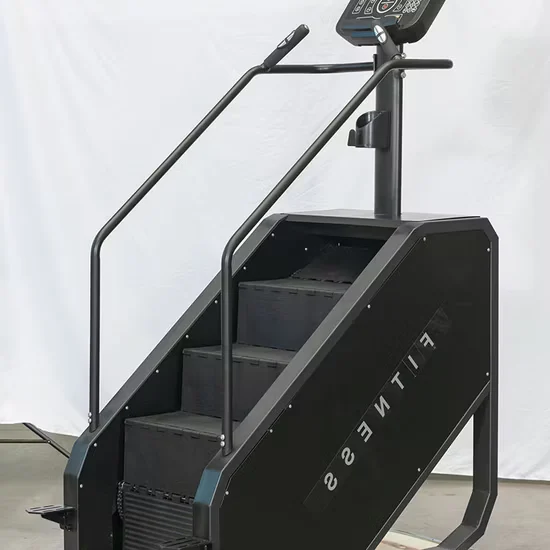
![SQ1017 Commercial Stair Machine for Gym Workouts [WARN] draft identifier mismatch](https://bicksport.com/wp-content/uploads/2026/08/sq1017-commercial-stair-machine-for-gym-workouts-warn-draft-identifier-mismatch-315e82.webp)
Whisper-Quiet Stepping Precision — Motor-driven transmission calibrated for sub-35dB acoustic output under continuous commercial deployment on noise-sensitive guest floors.
Technical Specifications
| Parameter | Value |
|---|---|
| Designation | SQ1017 |
| Product Type | Stair Climber |
| Drive Type | Motor Drive |
| Running Velocity | 15 steps/min – 164 steps/min |
| Max User Weight | 180 kg |
| Step Area | 560 x 235 x 220 mm |
| Console Type | OSD (Time, Climb, Calories, Steps, Heart Rate) |
| Power Requirement | AC220V±10% / AC110V±10% |
| Product Dimensions | 1450 x 820 x 2080 mm |
| Net Weight | 148 kg |
| Material | Steel Pipe + PP Plastic |
| Foldable | Unfolded |
| Color | Black |
| Certification | CE |
| Customization | Available |
Application Suitability
| Deployment Scenario | Typical Use |
|---|---|
| Hotel fitness center on guest room floors | 24-hour self-service cardio access with strict acoustic limits to prevent overnight noise complaints from adjacent rooms |
| Chain gym cardio zone | High-frequency stepping sessions during peak hours with continuous-duty motor operation and durable steel-frame construction |
| Corporate wellness room | Staff stair climbing routines during breaks with heart-rate-enabled session tracking on the OSD console |
| High-end residential home gym | Shared-building installations where motor-driven quiet operation respects neighboring tenants |
| Sports performance training center | Athlete conditioning drills using precise velocity control across the 15–164 steps/min range |
Why Motor Duty Cycle Matters More Than Step Count
Continuous-duty motor ratings dictate whether a stair climber survives its first year in a commercial facility.
Facility operators frequently replace stair climbers prematurely because the motor specification listed in the brochure reflects peak output rather than sustained load. A motor-drive commercial stair climber motor drive system must maintain consistent torque at mid-range speeds for hours without thermal degradation. When hotels deploy these units on floors above occupied rooms, the combination of thermal stress and vibration amplification accelerates bearing wear and escalates front-desk noise complaints. [NEED_CITE: motor duty cycle classification for continuous commercial operation]
Positioning This Stair Climber Within a Commercial Cardio Zone
The SQ1017 covers low-to-high intensity vertical climbing, targeting the 15–164 steps/min range that supports both steady-state endurance sessions and interval conditioning. In a balanced cardio floor layout, this commercial stair climber motor drive unit complements treadmills and ellipticals by engaging posterior-chain musculature through a distinct movement pattern. Its 1450 x 820 mm footprint fits standard cardio row spacing, and the 180 kg max user weight accommodates a broad member demographic. The OSD console captures time, steps, calories, climb count, and heart rate, providing baseline data for facility usage monitoring without requiring external wearable integration.
Continuous Operation Demands and Deployment Environment Factors
Facilities running cardio equipment 16+ hours daily need motor systems rated for sustained thermal loads, not intermittent peak bursts. The dual-voltage input (AC220V±10% / AC110V±10%) eliminates post-delivery commissioning failures caused by voltage standard mismatches between origin and destination markets. Floor-level deployment—particularly on suspended slabs above guest rooms or offices—requires vibration isolation pads beneath the 148 kg frame to limit structure-borne noise transmission. Adequate rear clearance ensures motor ventilation airflow, preventing thermal throttling during consecutive high-velocity sessions. [NEED_CITE: commercial cardio equipment ventilation and clearance requirements] Data output from the OSD console should be verified against facility management software API requirements before bulk procurement.
Motor-Drive Transmission and OSD Console Signal Integrity
Motor-drive stair climbers deliver consistent stepping torque across the full speed range without the belt-slip or chain-stretch issues that plague mechanically linked systems. The motor maintains rotational stability under variable user loads up to 180 kg, which is critical because load fluctuations during gait transitions cause torque spikes in undersized drive systems. The OSD console reads heart rate through grip sensors, offering acceptable session-level accuracy for general fitness tracking, though chest-strap telemetry remains more reliable for HIIT protocols requiring beat-by-beat precision. Steel pipe and PP plastic construction balances structural rigidity with weight management, and the 560 x 235 mm step area accommodates a range of foot placements during extended climbs.
The Hidden Cost of Specifying Below Commercial Thresholds
Purchasing stair climbers with light-commercial motors for 24/7 gym floors leads to thermal cutoffs and winding failures within months, forcing unplanned equipment swaps and member disruption. Noise levels exceeding acceptable thresholds on hotel guest floors generate complaint logs that trigger entire fleet replacements rather than single-unit repairs. Voltage mismatches discovered at the commissioning stage—where a 110V unit arrives at a 220V facility—result in transformer retrofits or complete reshipment, delaying facility opening timelines. Console systems that cannot export usage data leave operators without visibility into peak-hour utilization patterns, preventing evidence-based equipment rotation and maintenance scheduling. [NEED_CITE: EN 957 requirements for commercial cardio equipment]
Why This Product Line Addresses Facility-Level Procurement Risks
Sub-35dB operation has been verified in hotel deployments where stair climbers occupy floors directly above guest rooms, confirming acoustic compatibility with noise-sensitive environments. Motors and bearings undergo 10,000-hour continuous-run durability testing to validate performance under high-frequency commercial use. The SQ1017 is part of a six-series cardio family—treadmills, bikes, ellipticals, rowers, climbers, and spin bikes—allowing a facility to source every discipline from a single production line. OEM customization extends to console UI branding, frame color, and logo placement at flexible MOQ. Free 3D cardio-zone layout planning covers square footage calculations, sightline optimization, and airflow mapping specific to this unit’s footprint and ventilation needs, backed by 24/7 technical support for commissioning and ongoing maintenance.
Documentation & Test Records
- CE declaration of conformity covering SQ1017 electrical safety and EMC compliance
- EN 957 test report validating mechanical safety and structural load performance
- ISO 9001 certificate confirming manufacturing quality management processes
- Noise level test report documenting acoustic output at operational step speeds
- Durability test record for motor, frame, and bearing continuous-run validation
- OSD console technical documentation with data output format specifications
Installation, Commissioning & Maintenance
- Maintain 600 mm rear clearance for motor ventilation and 500 mm lateral access around the 1450 x 820 mm footprint
- Install vibration isolation pads under all four leveling feet to dampen structure-borne noise on suspended floors
- Verify AC220V±10% or AC110V±10% supply matches unit rating before first power-on to prevent motor damage
- Calibrate step counter and OSD heart rate sensor during initial commissioning to ensure accurate session metrics
- Inspect motor drive belt tension and step surface wear at quarterly intervals under heavy-use commercial conditions
- Wipe down PP plastic shrouds and steel frame daily to prevent sweat corrosion on grip surfaces and console housing
Equipment Selection and Facility Planning Inquiry
Provide cardio zone square footage and target unit count to receive a 3D layout plan with airflow mapping calibrated to this climber’s dimensions and ventilation requirements. Specify average daily operating hours so motor duty-cycle rating can be matched to facility demand profiles. Confirm deployment floor level and adjacent room types to validate acoustic compatibility, and identify destination market voltage standards to ensure correct unit configuration prior to production. Indicate whether console data integration with existing facility management software is required.
Frequently Asked Questions
Q: How does motor-drive compare to self-powered stair climbers in noise and maintenance?
A: Motor-drive systems maintain consistent stepping cadence and torque output regardless of user weight, which reduces the mechanical rattling common in self-powered units when lighter users fail to sustain momentum. Maintenance intervals differ because motor-drive stair climbers require belt tension checks and motor brush inspection rather than the flywheel bearing servicing typical of self-powered models. The motor-drive commercial stair climber motor drive design also enables precise speed control from the console.
Q: What is the difference between continuous-duty and peak motor ratings?
A: Peak rating measures the maximum output a motor can sustain for seconds during startup or sudden load spikes, while continuous-duty rating reflects sustained thermal performance under hours of uninterrupted operation. Commercial stair climbers in 24/7 facilities must be specified against continuous-duty values because peak ratings mask thermal degradation risks. Operators who select equipment based solely on peak figures often experience premature winding failures and unplanned downtime during peak usage windows.
Q: Can the console data sync with gym management or member apps?
A: The OSD console captures time, steps, calories, climb count, and heart rate for session-level tracking. Data output format and interface specifications should be verified against your facility management software API requirements before procurement. Some gym platforms require standardized data packet structures, and confirming compatibility during the specification phase avoids post-installation integration delays that leave usage data inaccessible for operational reporting.
Q: What noise level is acceptable for hotel-floor or residential deployment?
A: Hotel guest floors and shared residential buildings typically require cardio equipment to operate below conversation-level noise to prevent disturbance in adjacent occupied rooms. Sub-35dB operation has been validated in hotel deployments where stair climbers sit directly above sleeping areas. Requesting a noise level test report at operational stepping speeds provides documented evidence for acoustic compliance review by property management and building engineering teams before installation approval.

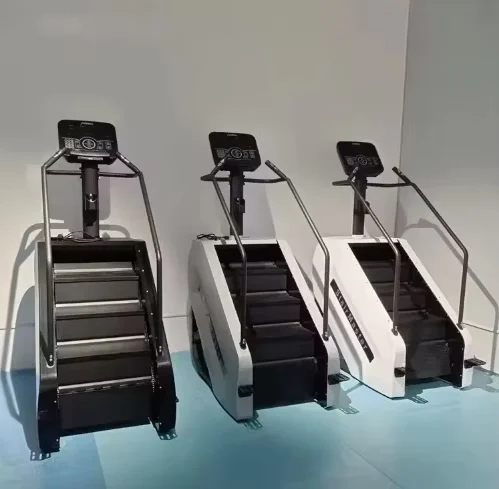
![Commercial Stair Machine for Cardio Fitness SQ1017 [WARN] draft identifier mismatch](https://bicksport.com/wp-content/uploads/2026/08/commercial-stair-machine-for-cardio-fitness-sq1017-warn-draft-identifier-mismatch-8c06e9.webp)