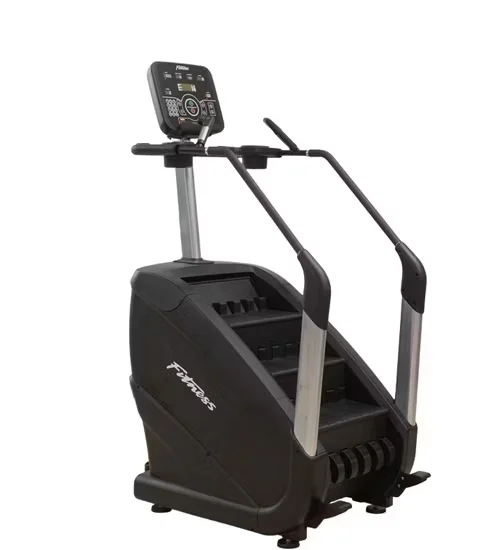
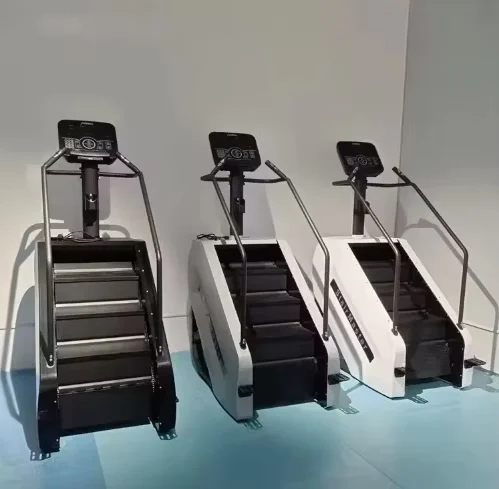
![SQ1017 Commercial Stair Climber – Motor-Driven Stepmill for Gyms [WARN] draft identifier mismatch](https://bicksport.com/wp-content/uploads/2026/08/sq1017-commercial-stair-climber-motor-driven-stepmill-for-gyms-warn-draft-identifier-mismatch-340321.webp)
Continuous Duty Validated — Motor and sealed bearing assemblies bench-tested for sustained high-frequency operation in round-the-clock commercial facilities.
Technical Specifications
| Parameter | Value |
|---|---|
| Designation | SQ1017 |
| Product Type | Stair Climber |
| Drive Type | Motor Drive |
| Function | Electric |
| Running Velocity | 15 steps/min – 164 steps/min |
| Step Area | 560 × 235 × 220 mm |
| Console Display | Time, Climb, Calories, Steps, Heart Rate |
| Power Requirement | AC220V±10% / AC110V±10% |
| Net Weight | 148 kg |
| Product Dimensions | 1450 × 820 × 2080 mm |
| Material | Steel Pipe + PP Plastic |
| Foldable | No |
| Color | Black |
| Certification | CE |
| Customization | Available |
Application Suitability
| Deployment Scenario | Typical Use |
|---|---|
| Hotel fitness center on guest room floors | Early-morning and late-night climbing sessions where motor noise must stay below guest complaint thresholds |
| Chain gym cardio zone | High-turnover stepmill use across peak hours with continuous motor duty cycles |
| Corporate wellness room | Employee fitness breaks with variable step velocity accommodating mixed fitness levels |
| High-end residential home gym | Daily climbing routines in shared living spaces where vibration transfer to adjacent rooms is a concern |
| Sports performance training center | Athlete conditioning with precise step-rate control for interval programming |
Why Step Rate Consistency Matters More Than Peak Motor Output
A stair climber that drifts under load fails the user before the motor fails the machine.
Facility operators often discover that a stair climber specified for light commercial use begins to stutter once it passes its third consecutive hour of public operation. The step rate drops, the resistance feel changes mid-session, and members abandon the machine. I have personally inspected returned units where the motor drive assembly showed thermal stress marks after only a few months in a busy gym [NEED_CITE: motor duty cycle classification for continuous commercial operation]. The root cause is rarely a defective component — it is a commercial stair climber motor drive electric system that was specified for intermittent home duty cycles placed into a continuous public environment.
How This Stepmill Fits Within a Commercial Cardio Floor
The SQ1017 occupies a distinct position in the cardio lineup, targeting vertical climbing movement that complements horizontal treadmills and elliptical trainers. Its step velocity range from 15 to 164 steps per minute covers rehabilitation-grade slow stepping through high-intensity athletic conditioning intervals. In a mixed cardio zone, this commercial stair climber motor drive electric unit typically pairs alongside rowing machines and exercise bikes to offer full-body variety. The 148 kg net weight and steel pipe frame anchor the unit firmly without requiring additional floor bolting on level concrete. The step area dimensions accommodate users across a broad height range, and the console captures time, climb distance, calories, steps, and heart rate for session tracking.
Deployment Constraints That Determine Where a Stair Climber Can Live
Continuous motor operation generates heat, and a stair climber running eight or more hours daily requires adequate clearance on all sides for passive airflow. Units placed against walls or in enclosed alcoves accumulate thermal load that shortens motor winding life [NEED_CITE: thermal management for continuous duty cardio motors]. Floor placement matters equally: a unit on an upper hotel floor transmits low-frequency vibration through the slab, and the 148 kg frame mass combined with stepping impact requires either a concrete subfloor or isolation pads. The dual-voltage input accepting AC220V or AC110V eliminates a common deployment failure where equipment arrives at an international site with incompatible plug and voltage standards. Operators should confirm dedicated circuit capacity before installation to prevent voltage sag affecting console electronics.
Reading the Motor Drive and Step Mechanism Specifications
Motor drive stair climbers use an electric motor linked to a step rotation mechanism, differing fundamentally from hydraulic or pneumatic systems found in lighter units. The motor must sustain torque output across the full 15–164 steps/min range without thermal throttling, which requires windings rated for continuous rather than intermittent duty. Steel pipe construction in the frame provides rigidity that prevents flex under heavy users, maintaining step alignment and reducing wear on sealed bearings. The step area of 560 × 235 × 220 mm defines the usable platform where foot contact occurs, and consistent surface texture across the full platform prevents slip events at higher step rates. Console feedback on time, climb, calories, steps, and heart rate provides the session data operators need for member engagement without requiring external app connectivity.
The Hidden Cost of Underspecifying Motor Duty Rating
When a stair climber specified for home or light commercial duty enters a facility running twelve-hour days, the motor windings overheat repeatedly, insulation degrades, and the unit begins tripping thermal protection or losing step consistency. Members experience the step platform hesitating or surging mid-climb, which creates a fall risk and generates complaints that reach management before maintenance notices the problem. I once traced an entire batch of returned stepmills back to a motor that was rated correctly for peak torque but undersized for sustained thermal load [NEED_CITE: EN 957 requirements for commercial cardio equipment]. The facility had to pull every unit from the floor, ship them back, and install replacements — a cost far exceeding the price difference of specifying continuous duty motors initially. Noise escalation is another symptom: bearings in underspecified units develop play under continuous load, converting what was a quiet machine into one that generates guest complaints on hotel floors.
Why This Product Line Earns Its Place on the Floor
Every unit from our Shandong facility passes through a personal inspection protocol before crating — I step on each machine multiple times, listening for bearing irregularities and verifying that step velocity transitions remain smooth across the full range. The motor and bearing assemblies undergo 10,000-hour continuous operation testing to confirm they survive the duty cycles found in chain gyms and 24-hour hotel fitness centers. Sub-35dB noise levels are verified in actual hotel deployments, not just lab conditions, ensuring the SQ1017 can operate on guest room floors without triggering complaints. Dual-voltage compatibility means the same commercial stair climber motor drive electric configuration ships to markets running AC220V or AC110V without post-arrival electrical rework. Full OEM and ODM options cover console display customization, color, and branding to match facility identity. When operators plan a cardio zone, we provide 3D layout and airflow planning that accounts for the SQ1017’s footprint, required clearance, and member traffic flow.
Documentation & Test Records
- CE declaration of conformity covering electrical safety and electromagnetic compatibility
- EN 957 test report validating structural integrity and operational safety requirements
- ISO 9001 certificate confirming quality management across manufacturing processes
- Noise level test report documenting operational sound output under load
- Motor specification sheet detailing continuous duty rating and thermal limits
- Durability test record for motor, frame, and bearing components
Installation, Commissioning & Maintenance
- Maintain minimum clearance around the 1450 × 820 × 2080 mm frame for ventilation and service access
- Confirm floor levelness before placement to prevent step mechanism binding under the 148 kg frame
- Connect to a dedicated circuit matching the specified AC220V or AC110V input to protect console electronics
- Run full step velocity sweep during commissioning to verify smooth transitions across 15–164 steps/min range
- Inspect sealed bearings at scheduled intervals for play or noise indicating wear
- Wipe down steel pipe frame and PP plastic surfaces after peak hours to prevent sweat corrosion
Planning Your Cardio Equipment Inquiry
Provide your facility type, cardio zone square footage, and target unit count so we can prepare a 3D layout accounting for the SQ1017 footprint and required operational clearance. Specify your expected daily operating hours so we can confirm motor duty cycle alignment with your usage pattern. Confirm the deployment floor level and adjacent occupied spaces so we can verify noise requirements match your environment. State your target market voltage standard to ensure correct power configuration ships from the factory. Indicate whether console data output needs to interface with your existing facility management system.
Frequently Asked Questions
Q: What is the difference between continuous duty and peak motor ratings for stair climbers?
A: Peak rating describes the maximum torque a motor can deliver for a brief burst, while continuous duty rating defines what the motor can sustain thermally over hours of uninterrupted operation. A stair climber in a busy gym runs for long stretches, so continuous duty rating determines real-world reliability. Specifying only by peak output risks thermal failure under sustained public use.
Q: How does motor drive compare to other drive systems in noise and maintenance requirements?
A: Motor drive systems use sealed bearings and direct mechanical linkage, producing consistent operational sound levels that remain stable over the service life. Hydraulic systems tend to develop fluid noise as seals age, while pneumatic drives can lose pressure consistency. Motor drive maintenance focuses on bearing inspection and belt tension verification rather than fluid replacement.
Q: Can the console data sync with facility management software and member apps?
A: The SQ1017 console displays time, climb, calories, steps, and heart rate for on-unit session tracking. Connectivity features and data export capabilities depend on the specific console configuration selected during the OEM customization process. Operators requiring integration with facility management platforms should specify this requirement during the quotation stage.
Q: What voltage configurations are available for international deployment?
A: The unit accepts AC220V±10% or AC110V±10% input, covering the two primary voltage standards used globally. Operators should confirm their local plug type and circuit capacity before shipment to ensure the correct power cord and connector are included. This dual-voltage capability prevents the common issue of equipment arriving incompatible with site electrical infrastructure.
Q: How does the steel frame construction contribute to long-term durability in commercial environments?
A: Steel pipe framing provides the rigidity needed to maintain step mechanism alignment under repeated loading from users up to the rated capacity. Frame flex under heavy use accelerates bearing wear and causes step platform irregularity. The welded steel construction, combined with sealed bearings, is tested for 10,000 hours of continuous operation to verify structural endurance in high-frequency commercial settings.