
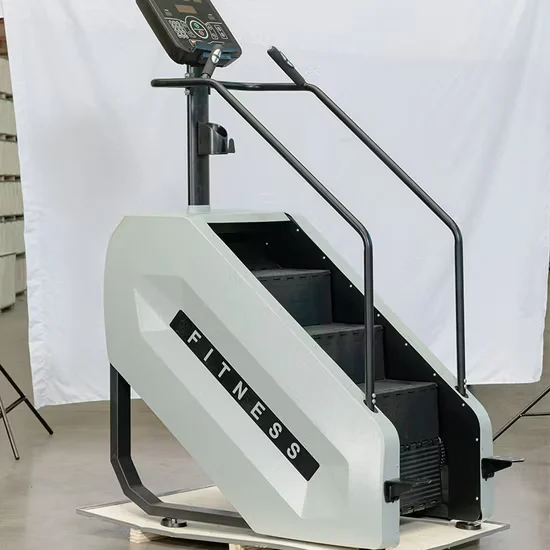
Quiet Step Operation — Motor-driven stepmill validated through 10,000-hour continuous duty testing, engineered to operate below 35dB on hotel guest floors without triggering noise complaints.
Technical Specifications
| Parameter | Value |
|---|---|
| Designation | SQ1017 |
| Product Type | Stair Climber |
| Type | Climbing Stepper |
| Drive Type | Motor Drive |
| Running Velocity | 15 – 164 steps/min |
| Max User Weight | 180 kg |
| Step Area | 560 × 235 × 220 mm |
| Console Display (OSD) | Time, Climb, Calories, Steps, Heart Rate |
| Mains Input | AC220V±10% / AC110V±10% |
| Material | Steel Pipe + PP Plastic |
| Folded | Unfolded |
| Color | Black (customization available) |
| Net Weight | 148 kg |
| Product Dimensions | 1450 × 820 × 2080 mm |
| Certification | CE |
| Customization | Available (logo, color, console UI, specification) |
Application Suitability
| Deployment Scenario | Typical Use |
|---|---|
| Hotel fitness center on guest room floors | 24/7 access stair climber with sub-35dB noise to prevent guest disturbance |
| Chain gym cardio zone | High-uptime climbing station in dedicated stepmill training areas |
| Corporate wellness room | Low-noise vertical climbing for employee fitness breaks |
| High-end residential home gym | Quiet continuous stepping in shared-wall apartments and villas |
| Sports performance training center | Biometric-tracked climb intervals for athlete conditioning programs |
Why Noise Complaints Reach the Front Desk Before Maintenance Does
The motor-drive stair climber eliminates the belt-slap and gear-rattle that trigger guest complaints within the first month of installation.
Hotel operators routinely receive noise calls about cardio equipment positioned above or beside occupied rooms, long before the maintenance team flags a mechanical failure. A stair climber with an undersized drive motor will develop harmonic vibration under continuous load, transmitting low-frequency rumble through floor slabs [NEED_CITE: structural vibration transmission from commercial cardio equipment in multi-story buildings]. The SQ1017 commercial stair climber motor drive for gym use addresses this by running a dedicated motor-drive system through sealed bearings tested for 10,000 hours of continuous operation, keeping acoustic output below 35dB — quiet enough for installation on guest room floors without acoustic isolation retrofits.
Positioning the Stair Climber Within a Commercial Cardio Floor
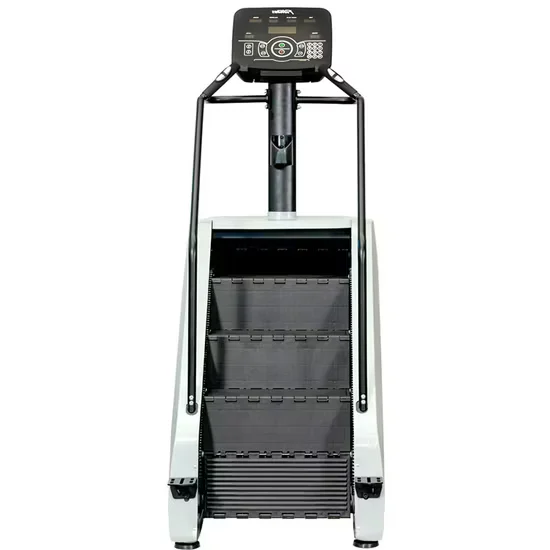
This machine fills the vertical-climbing slot in a multi-discipline cardio zone, complementing treadmills and ellipticals by engaging the posterior chain through a stepping pattern that neither machine replicates. Its 15 to 164 steps/min velocity range covers slow rehabilitation walks through to high-intensity intervals, making it suitable for both open-access floors and coached training areas. The 180 kg maximum user weight accommodates the full commercial membership demographic. The console captures time, climb height, calories, step count, and heart rate — data points that facility management systems can log when IoT sync is configured. Deployment works best with one unit of lateral clearance on each side and overhead space matching the 2080 mm frame height, typically positioned against a wall or column to anchor the cardio zone sightline. The commercial stair climber motor drive SQ1017 holds its own in high-traffic zones where members rotate through equipment every twenty to thirty minutes.
Continuous Run-Time and Deployment Environment Requirements
A 24-hour hotel gym demands equipment that never cools down between users, meaning the drive motor operates at a near-constant duty cycle with only brief pauses. The SQ1017 motor-drive system is rated for this continuous commercial operation, but proper deployment still requires adequate airflow around the motor housing to prevent thermal throttling during peak occupancy periods [NEED_CITE: thermal management requirements for continuous-duty motors in commercial cardio equipment]. Facilities on upper floors should confirm structural load capacity for the 148 kg net weight plus dynamic user loading. The dual-voltage input (AC220V±10% / AC110V±10%) must be matched to local mains before the container ships, because voltage mismatch discovered after delivery delays commissioning by weeks. A dedicated circuit with appropriate breaker rating prevents tripping when multiple cardio units start simultaneously, and a leveled floor with vibration-damping pads further isolates the step mechanism from the building structure.
Reading the Motor-Drive and Step Mechanism Specifications
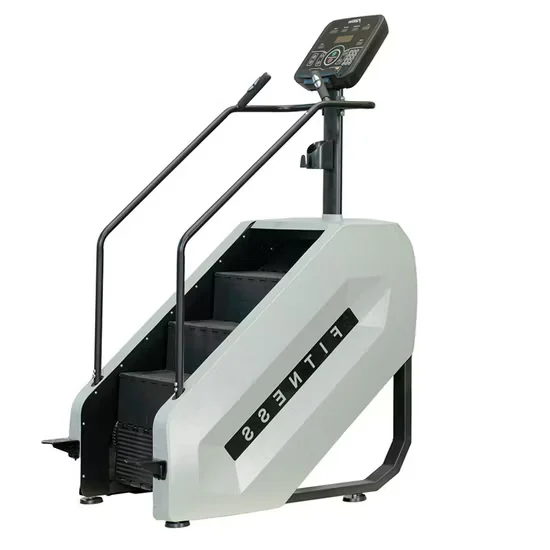
The motor-drive system in this stair climber replaces the manual friction-brake design found in entry-level steppers, where resistance is generated by a physical pad pressing against a flywheel. A motor-driven stepmill controls step cadence electronically, allowing smooth transitions between 15 and 164 steps/min without the mechanical jolt that occurs when friction brakes engage at higher speeds. This matters for HIIT programming where members shift between sprint and recovery intervals every thirty to sixty seconds — the drive motor adjusts velocity through electronic signals rather than physical contact, which also eliminates the wear and noise associated with friction surfaces. The steel pipe frame provides the rigidity needed to prevent lateral sway when a 180 kg user climbs at maximum cadence, while PP plastic step covers offer grip without the weight penalty of rubber overlays. Console data (time, climb, calories, steps, heart rate) outputs through the OSD panel, and IoT-equipped consoles can relay this data to facility management platforms when configured with the appropriate communication protocol. Heart rate is captured through the handlebar sensors, which provide consistent readings during steady-state climbing but may experience brief signal drift during rapid hand-position changes.
The Hidden Cost of Underspecified Step Climbers
Facilities that install residential-grade steppers in commercial environments typically see motor burnout within the first quarter of operation, because the drive system was never engineered for eight or more hours of daily use by rotating users. Noise escalation follows the same timeline — bearings not rated for continuous duty develop play, and the resulting vibration travels through the frame into the floor structure, generating complaints from adjacent rooms [NEED_CITE: premature bearing failure in light-commercial cardio equipment deployed in high-frequency environments]. When console data cannot integrate with the gym management system, usage tracking relies on manual observation, leaving operators blind to which units are overused and which sit idle. Voltage and plug mismatches discovered at delivery add weeks to commissioning timelines. Every one of these failures traces back to specifications that looked acceptable on paper but were never validated for the actual deployment environment.
Why This Product Line Holds Up Under Continuous Deployment
Every SQ1017 unit passes 10,000-hour continuous-operation testing on the motor, bearings, and step mechanism before leaving the production line — data logs are available for review with each shipment. The sub-35dB noise level is verified under load in hotel fitness deployments, not just measured at idle on the factory floor. Console UI customization is available through OEM configuration, allowing operators to match branding or add facility-specific workout programs. The complete six-series cardio range means a facility can source treadmills, bikes, ellipticals, rowers, and spin bikes from one production line with consistent data interfaces. Free 3D cardio-zone layout planning covers square footage calculations, equipment spacing for the SQ1017 footprint (1450 × 820 mm), airflow requirements, and member flow patterns. Technical support responds around the clock with spare parts logistics, so a drive motor or console replacement does not leave a unit offline for extended periods.
Documentation & Test Records
- CE declaration of conformity confirming compliance with European machinery and low-voltage directives
- EN 957 test report validating safety and performance requirements for stationary training equipment
- ISO 9001 certificate covering quality management across manufacturing and assembly processes
- Noise level test report confirming sub-35dB operation of the SQ1017 under loaded continuous stepping
- 10,000-hour durability test record documenting motor and bearing performance under simulated commercial use
- Console technical documentation with data interface specifications for IoT and facility management integration
Installation, Commissioning & Maintenance
- Confirm floor-leveling and install vibration-damping pads beneath the 1450 × 820 mm footprint to isolate step mechanism vibration from the building structure
- Connect to a dedicated circuit matching the specified AC220V±10% or AC110V±10% input with appropriate breaker rating to prevent multi-unit startup trips
- Run initial calibration of the motor-drive system through the full 15 to 164 steps/min range to verify smooth velocity transitions before member access
- Configure console IoT settings and verify data output (time, climb, calories, steps, heart rate) against the facility management platform during commissioning
- Schedule periodic inspection of sealed bearings and step mechanism fasteners based on actual daily usage hours logged by the console
- Wipe steel frame and PP plastic step covers daily with non-corrosive cleaner to prevent sweat residue buildup in high-humidity gym environments
Planning Your Cardio Zone Equipment Selection
Submit your facility floor plan with total cardio-zone square footage to receive a 3D layout covering equipment placement, spacing, and airflow for the SQ1017 alongside complementary cardio units. Specify daily operating hours and expected user rotation to confirm the motor-drive duty cycle matches your traffic profile. Identify the deployment floor and adjacent occupied spaces so acoustic requirements can be validated against the sub-35dB benchmark. Confirm your local mains voltage and plug standard before the proforma invoice to prevent post-shipment compatibility issues. State whether console data must integrate with an existing facility management platform so the appropriate IoT interface can be configured during production.
Frequently Asked Questions
Q: What is the difference between motor drive and manual resistance in stair climbers?
A: Motor-drive stair climbers control step cadence electronically through a dedicated drive motor, allowing smooth transitions across the full 15 to 164 steps/min range without mechanical jolts. Manual resistance systems rely on friction pads or magnetic brakes that create noticeable engagement lag and generate more noise as friction surfaces wear. Motor-drive systems also maintain consistent resistance regardless of user weight, whereas manual systems can feel heavier or lighter depending on the climber’s mass and stepping force.
Q: How does the 15 to 164 steps/min range support different training intensities?
A: The lower end of the range accommodates rehabilitation protocols and warm-up periods where controlled, slow stepping is required. The upper end supports high-intensity interval training where athletes push maximum cadence for short bursts. Because the motor-drive system adjusts velocity electronically, transitions between recovery and sprint intervals occur without the mechanical hesitation that friction-based systems introduce, allowing coaches to program precise work-to-rest ratios.
Q: Can the console data sync with our gym management software or member app?
A: The console captures time, climb height, calories, steps, and heart rate through its OSD display. IoT-equipped console configurations can relay this data to external platforms through standard communication protocols. During the OEM customization scoping phase, specify your facility management software or member app requirements so the appropriate data interface can be configured and tested before the unit ships, ensuring compatibility at commissioning rather than discovered afterward.
Q: What noise level can we expect during continuous operation in a hotel setting?
A: The SQ1017 is engineered for sub-35dB operation under load, verified through noise level testing in actual hotel fitness deployments. This acoustic performance makes it suitable for installation on guest room floors where cardio equipment noise commonly triggers complaints through floor slab vibration. Proper deployment with vibration-damping pads and a leveled floor further reduces structural transmission, keeping the unit quiet enough for 24-hour access without disturbing adjacent occupied rooms.
Q: How do we confirm voltage and plug compatibility before shipment?
A: The unit supports AC220V±10% and AC110V±10% mains input. During the quotation phase, specify your target market’s voltage standard and plug type so the correct power cord and internal configuration are set at the factory. Discovering a voltage mismatch after container arrival delays commissioning by weeks while replacement components are sourced, so this confirmation happens before the proforma invoice is issued.

![SQ1017 High Performance Motor Drive Commercial Stair Machine [WARN] draft identifier mismatch](https://bicksport.com/wp-content/uploads/2026/08/sq1017-high-performance-motor-drive-commercial-stair-machine-warn-draft-identifier-mismatch-c50b40.webp)