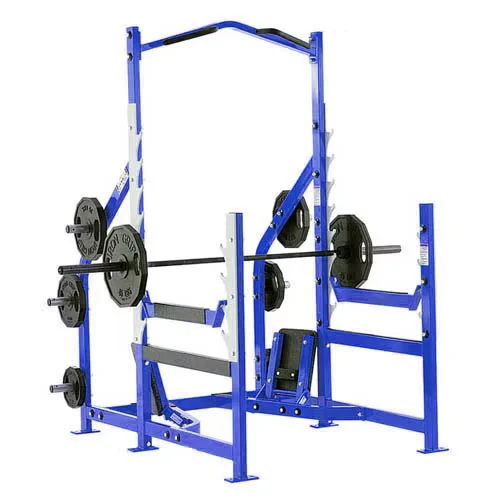
10,000-Hour Durability — pivot bearings and reinforced steel welds stress-tested for continuous high-frequency use in round-the-clock gym environments.
Technical Specifications
| Parameter | Value |
|---|---|
| Designation | H5013 |
| Product Type | Seated Biceps Curl Machine (Strength Equipment) |
| Exercise Part | Biceps |
| Material | Steel |
| Power Source | Manual |
| Product Dimensions | 1466 × 1292 × 1502 mm |
| Net Weight | 93 kg |
| Foldable | Unfolded |
| Main Frame Color | Available per customer requirements |
| Cushion Color | Available per customer requirements |
| OEM/ODM | Acceptable |
| Age Group | Adult |
| Gender | Unisex |
| Certification | ISO 9001, CE |
| Target Facility | Professional Gym, Club, Community, Gymnasium |
| Transport Package | Plywood Box |
| HS Code | 9506911900 |
Application Suitability
| Deployment Scenario | Typical Use |
|---|---|
| International chain gym strength zones | High-volume biceps isolation training across standardized equipment fleets |
| Corporate wellness fitness rooms | Moderate-frequency upper body circuits for employee health programs |
| Hotel fitness center on guest room floors | Low-noise, compact footprint strength training for transient guests |
| Community fitness center | Durable biceps equipment serving broad age and fitness ranges |
| Professional sports training center | Athlete-grade upper body development with biomechanical isolation |
Why Pivot Bearings Fail First on Commercial Strength Stations
Sealed pivot bearings prevent the most common cause of downtime on plate-loaded and selectorized curl stations.
In facilities running sixteen or more hours daily, the pivot point on a biceps curl machine endures thousands of articulation cycles per week. Open bearings accumulate chalk dust, sweat residue, and humidity — leading to grinding, play, and eventually seized motion. I have seen entire rows of curl stations pulled from gym floors because maintenance could not keep pace with bearing wear [NEED_CITE: pivot bearing failure frequency in commercial strength equipment]. The sealed bearing design in the H5013 keeps contaminants out, extending service intervals and keeping members training without interruption. When a commercial seated biceps curl machine strength equipment station goes down, members notice immediately — and they remember.
Where This Curl Station Fits in a Commercial Strength Floor
The H5013 targets strict biceps isolation within a dedicated upper body training zone. It pairs with triceps press-down machines and shoulder press stations to create a complete arm development circuit. In high-traffic commercial gyms, this seated configuration occupies a stable footprint without requiring the lateral clearance that standing cable stations demand. The fixed seat and back pad accommodate users across a broad height range while maintaining consistent elbow alignment. As a commercial seated biceps curl machine strength equipment unit, it handles repetitive loading cycles typical of drop-set and superset programming without frame deflection.
Continuous Operation and Facility Environment Requirements
This station operates without electrical input, so deployment does not depend on circuit planning or voltage matching. However, floor leveling matters — an uneven base introduces lateral stress on the main frame welds over time, particularly when users load unevenly or shift during heavy sets [NEED_CITE: floor leveling impact on strength equipment frame longevity]. Facilities on upper floors should consider vibration transfer through the base; rubber isolation pads reduce structure-borne noise transmitted to rooms below. The 1466 × 1292 mm footprint requires clearance on three sides for safe plate loading and user entry. Ambient humidity in coastal or tropical deployments accelerates corrosion on exposed fasteners, making regular bolt torque checks part of the maintenance cycle.
Reading the Frame and Pulley Specifications
The steel main frame uses reinforced welding at stress concentration points — the junction where the seat post meets the base and where the pulley tower connects to the upright. These are the locations where cyclic loading produces fatigue cracks in lighter-duty designs. The integrated cable and pulley system routes through sealed bearings at each deflection point, reducing friction compared to open bushings and producing a smoother resistance curve through the full range of motion. A 93 kg net weight indicates substantial steel mass in the frame and base, contributing to stability during aggressive loading without requiring floor bolting in most installations. The manual power source means zero electrical maintenance — no motor brushes, no control boards, no firmware updates [NEED_CITE: maintenance interval comparison between manual and motorized resistance systems]. OEM customization extends to frame color and cushion color, allowing the unit to match existing facility aesthetics without aftermarket refinishing.
The Hidden Cost of Underspecified Strength Stations
Gyms that purchase light-commercial curl machines for high-traffic floors discover the real cost within months. Pulley cables fray at deflection points, cushions compress and crack under constant use, and pivot play develops until the motion feels loose and untrustworthy. Members gravitate away from equipment that feels imprecise, leaving expensive floor space underutilized. I have watched facilities replace entire strength circuits because the initial purchase price seemed attractive but the total cost of ownership — replacement cables, bearing swaps, cushion reupholstery, and member complaints — exceeded what proper commercial-grade equipment would have cost from the start [NEED_CITE: total cost of ownership comparison for commercial strength equipment]. Specifying a commercial seated biceps curl machine strength equipment unit built for continuous public use eliminates this cycle.
Why This Product Line Earns Its Floor Space
Every unit ships with frame welds inspected under load, not just visual checks. The sealed bearing specification is verified for continuous articulation through 10,000-hour testing protocols applied across the product range. For facilities planning a complete strength zone, the OEM program covers frame color and cushion color matching so the biceps curl station visually integrates with adjacent machines from the same line. The engineering team provides 3D layout planning that accounts for the H5013 footprint, user clearance on three sides, and member flow between adjacent stations — preventing the dead zones that appear when equipment is placed without sightline consideration. Technical support responds around the clock, with spare parts documentation available before issues escalate into floor closures.
Documentation & Test Records
- CE declaration of conformity for commercial strength equipment market entry
- EN 957 test report verifying structural and safety performance under load
- ISO 9001 certificate covering manufacturing quality management systems
- Durability test record documenting pivot and cable system endurance cycles
- Cable and pulley system load rating specification sheet
- OEM customization scope document including color matching and branding options
Installation, Commissioning & Maintenance
- Confirm floor is level within tolerance; use isolation pads beneath the 1466 × 1292 mm base footprint to dampen vibration transfer
- Maintain clearance on three sides for safe plate loading and user access around the unfolded frame
- Inspect sealed pivot bearings quarterly for smooth articulation; replace if lateral play is detected
- Check cable tension and pulley alignment monthly; adjust to eliminate slack through the full range of motion
- Wipe down steel frame and cushion surfaces daily to prevent sweat corrosion and vinyl degradation
- Verify all frame bolts to specified torque values during initial commissioning and after the first 30 days of use
Planning Your Strength Equipment Deployment
Share your facility floor plan and target equipment count to receive a 3D layout that positions the H5013 within your upper body training zone with proper clearance and member flow. Specify your average daily operating hours so we can confirm the sealed bearing specification matches your usage intensity. Identify the deployment floor and adjacent occupied spaces to determine whether vibration isolation pads are necessary. Confirm your target market so all compliance documentation — CE, ISO 9001, EN 957 — arrives aligned with local requirements.
Frequently Asked Questions
Q: What maintenance schedule is required for commercial biceps curl machines in 24/7 gym environments?
A: Sealed pivot bearings require quarterly inspection for smooth articulation and lateral play. Cable tension and pulley alignment should be checked monthly, with adjustment when slack appears through the motion arc. Frame bolts need torque verification after the first month of use, then quarterly. Daily wipe-downs of the steel frame and cushion prevent sweat corrosion. This schedule assumes continuous commercial operation across extended daily hours.
Q: How does seated biomechanical design reduce joint stress compared to standing cable curls?
A: The fixed seat and back pad stabilize the torso, preventing momentum-driven swinging that shifts load from the biceps to the lower back and shoulders. Elbow alignment stays consistent through the full range of motion because the pivot axis is fixed relative to the seated position. This isolation reduces compensatory joint stress during high-volume sets, particularly when fatigue sets in during later repetitions of a working set.
Q: What customization options are available for frame color, cushion color, and facility branding?
A: The OEM/ODM program covers main frame color and cushion color to match existing facility design standards. Logo placement and branding integration are available at flexible minimum order quantities. Console and UI customization applies to electronically equipped models in the broader product range. Contact the engineering team with your Pantone references and branding guidelines to begin the customization scoping process.
Q: How do sealed bearing systems extend service life compared to open bearing designs?
A: Open bearings expose rolling elements to chalk dust, sweat aerosol, and ambient humidity — all of which accelerate wear and introduce grinding or play into the pivot motion. Sealed bearings enclose these elements behind protective shields that block contaminant ingress, maintaining smooth articulation over significantly longer service intervals. In high-traffic commercial environments, this difference translates to fewer bearing replacement events and less unplanned equipment downtime.
Q: What load testing and durability standards apply to commercial strength equipment pivot points?
A: Commercial strength equipment pivot points are evaluated under EN 957 standards, which specify cyclic loading protocols simulating years of repetitive use. Testing covers structural integrity at weld junctions, bearing smoothness under sustained load, and cable system fatigue resistance. Units intended for 24/7 commercial deployment undergo additional endurance cycles beyond the baseline standard to verify performance under continuous high-frequency operation in public facilities.
![Body Building Gym Equipment Commercial Leg Extension Machine 5030 [WARN] draft identifier mismatch](https://bicksport.com/wp-content/uploads/2026/08/body-building-gym-equipment-commercial-leg-extension-machine-5030-warn-draft-identifier-mismatch-528359.webp)