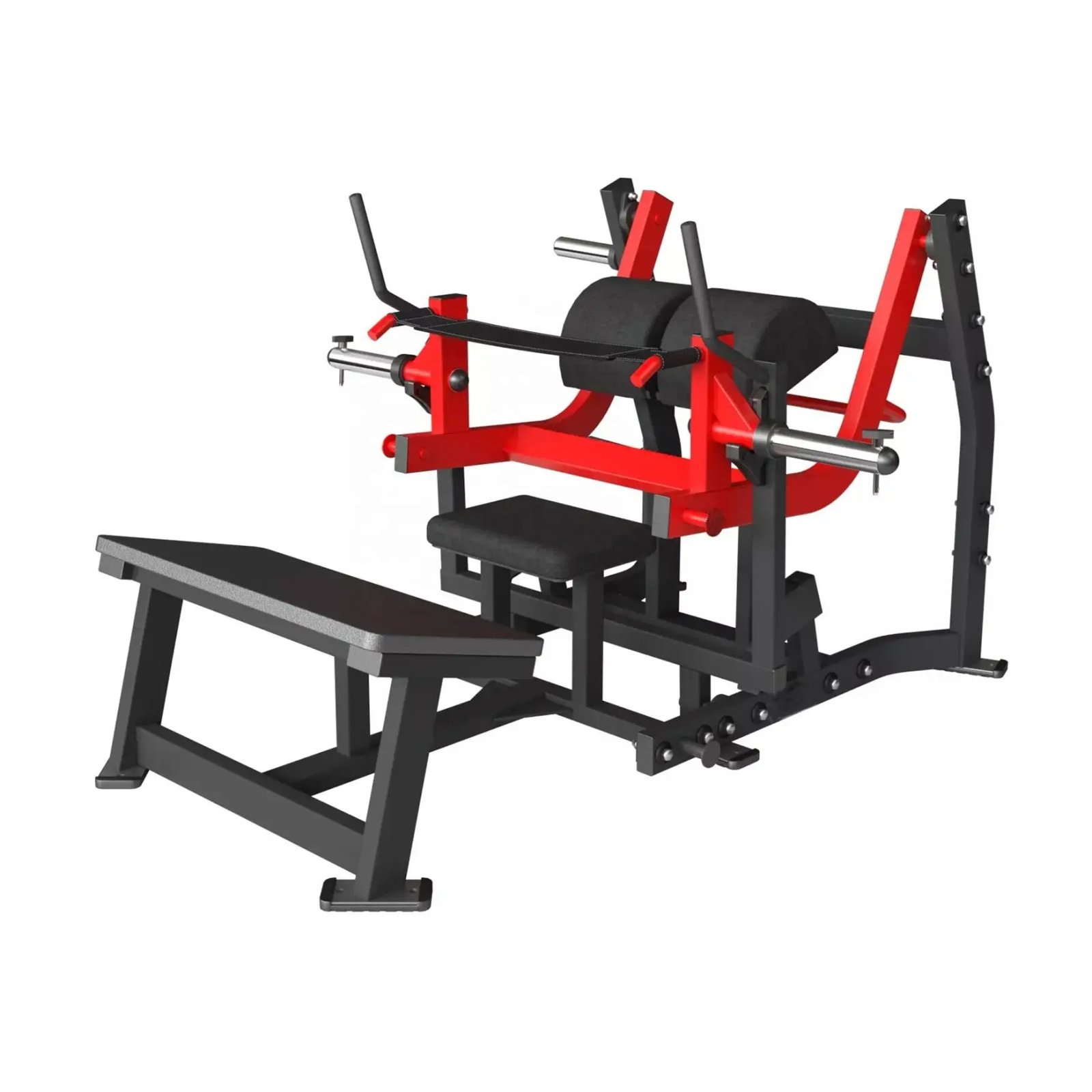
![Reverse Hyper Extension Machine OS-H5073 Commercial Gym Equipment [WARN] draft identifier mismatch](https://bicksport.com/wp-content/uploads/2026/08/reverse-hyper-extension-machine-os-h5073-commercial-gym-equipment-warn-draft-identifier-mismatch-4ecf9f.webp)
Steel Frame Rigidity — Reinforced steel construction tested for high-frequency commercial duty cycles in professional strength zones.
Technical Specifications
| Parameter | Value |
|---|---|
| Designation | OS-H5073 |
| Product Type | Reverse Hyperextension Machine |
| Exercise Target | Posterior Chain / Legs |
| Frame Material | Steel |
| Net Weight | 120kg |
| Product Dimensions | 1000 × 7500 × 1430mm |
| Frame Color | Customizable per facility branding |
| Cushion Color | Customizable per facility branding |
| OEM/ODM | Acceptable |
| Certification | ISO 9001, CE |
Application Suitability
| Deployment Scenario | Typical Use |
|---|---|
| Professional gym and club strength zones | Targeted posterior chain training for general membership and athletes |
| Community fitness centers | Accessible lower-back and glute development for varied fitness levels |
| Gymnasium athletic training areas | Sport-specific conditioning and rehabilitation support |
| Sports performance training centers | Controlled hip extension work for power athletes |
Why Frame Deflection Undermines Athlete Safety and Equipment Longevity
A flexing frame under dynamic load signals structural compromise, not normal operation.
Strength facilities frequently discover that frames rated for light-commercial duty cycles begin showing weld fatigue within months of continuous athlete use. The pivot mechanism on a reverse hyperextension endures repetitive force vectors that expose material weaknesses rapidly. When frame deflection goes unnoticed, bearing alignment drifts and pad mounting points loosen — creating maintenance cascades that pull equipment off the floor repeatedly [NEED_CITE: structural fatigue patterns in commercial strength equipment under cyclic loading].
Posterior Chain Development in the Strength Zone Layout
This commercial reverse hyperextension machine targets the glutes, hamstrings, and spinal erectors through controlled hip extension against gravity. In a professional strength zone, it complements squat racks and deadlift platforms by isolating posterior chain activation without axial spinal loading. The fixed movement path suits high-density deployment where free-weight supervision is limited, and the adjustable pad accommodates users across a broad height range. Facilities typically position this unit along perimeter walls to preserve open floor space for compound barbell work.
Continuous Use Demands and Facility Environment Considerations
Professional training environments routinely see this equipment loaded and unloaded dozens of times per hour during peak programming blocks. The steel frame must resist cumulative stress at the pivot junction without requiring mid-day torque checks. Deployment on suspended floors demands attention to vibration transfer through the base contact points, particularly in multi-story athletic facilities. Adequate clearance around the swing arc prevents interference with adjacent equipment during full range-of-motion repetitions [NEED_CITE: commercial strength equipment spacing standards for safe operation].
Interpreting the Steel Construction and Pivot Mechanics
The 120kg net weight reflects substantial steel mass distributed through the main frame and base structure — a necessary foundation for stability when athletes generate forceful hip extensions. Heavier frame mass lowers the center of gravity and resists tipping during loaded movements. The pivot bearing system at the hip contact point must maintain smooth rotation under variable loads; sealed bearings prevent contamination from chalk dust and sweat common in training environments. The pad assembly requires high-density foam that resists compression set over thousands of loading cycles, maintaining consistent hip positioning for repeatable movement patterns. Color customization on both frame and cushion allows facility operators to maintain visual branding consistency across the commercial reverse hyperextension machine and surrounding equipment without compromising the underlying structural specifications.
The Hidden Costs of Underspecification in Strength Equipment
Facilities that source frames designed for home or light-commercial use encounter predictable failure sequences: weld cracking at stress concentrations, pad foam flattening within months, and pivot bearings that develop play under daily athlete loads. Each failure pulls the unit off the floor for warranty service, disrupting programming schedules and eroding member confidence. Batch replacement of underspecified units costs significantly more than initial procurement of properly engineered commercial reverse hyperextension machine equipment rated for the actual duty cycle [NEED_CITE: total cost of ownership comparison between light-commercial and full-commercial strength equipment].
Why This Product Line Delivers for Commercial Deployments
The 10,000-hour durability testing protocol extends to pivot bearings and frame welds on strength equipment, not just cardio motors. Full OEM and ODM capability covers frame color, cushion color, and pad geometry adjustments to match facility requirements. The 3D strength zone layout service addresses equipment spacing, swing arc clearance, and member flow around this unit’s footprint. Documentation packages include load testing records and material specifications that procurement teams need for compliance verification. Technical support responds around the clock for commissioning questions or maintenance guidance, regardless of deployment timezone.
Documentation & Test Records
- CE declaration of conformity for European market compliance
- EN 957 test report covering structural integrity and safety requirements
- ISO 9001 certificate verifying manufacturing quality management systems
- Load testing records documenting frame and pivot performance under dynamic conditions
- Material specification sheets for steel grade and foam density verification
- Installation guide with anchor point specifications and clearance diagrams
Installation, Commissioning & Maintenance
- Maintain minimum clearance around the 1000 × 7500mm footprint for full swing arc safety
- Level the steel base on solid flooring using adjustable feet to prevent frame twist
- Inspect pivot bearing seals monthly for chalk dust intrusion in high-use training environments
- Verify pad mounting bolt torque quarterly to maintain consistent hip contact positioning
- Clean frame contact surfaces weekly to prevent sweat corrosion on welded joints
- Request customized color samples before bulk production to confirm branding match accuracy
Equipment Selection and Procurement Inquiry
Provide your strength zone square footage and adjacent equipment list to receive a 3D layout addressing clearance, member flow, and safe swing arcs around this unit. Specify expected daily usage volume so duty cycle recommendations align with your facility’s training schedule. Confirm target market voltage requirements if integrating any electronic monitoring components. Indicate whether frame and cushion color matching to existing equipment is required for visual consistency.
Frequently Asked Questions
Q: What steel grade and frame thickness ensure commercial durability for reverse hyperextension equipment?
A: Commercial strength equipment requires structural steel with adequate wall thickness at stress concentration points, particularly the main upright and pivot junction. Request material specification sheets documenting steel grade and cross-section dimensions. Verify that load testing records show performance under dynamic cyclic loading representative of actual athlete use patterns, not just static weight capacity ratings.
Q: How does reverse hyperextension target posterior chain muscles differently from other exercises?
A: This movement isolates glutes, hamstrings, and spinal erectors through hip extension without the axial spinal compression present in squats or deadlifts. The fixed pad position stabilizes the torso while the lower body moves through a controlled arc. This makes the commercial reverse hyperextension machine valuable for athletes managing lower-back fatigue or seeking targeted posterior chain volume without additional spinal stress.
Q: Can frame and cushion colors be customized to match existing facility branding?
A: Both frame powder-coat color and cushion upholstery color accept full customization under the OEM/ODM program. Request physical color samples before confirming bulk production to verify accurate matching under your facility’s lighting conditions. Custom colors typically require confirmation of minimum order quantities and may extend lead time slightly compared to standard color options.
Q: What maintenance is required for the pivot mechanism and bearings?
A: Sealed bearings at the pivot point require periodic visual inspection for contamination from chalk dust and moisture common in training environments. Check for rotational play or grinding sensation during unloaded movement cycles. Replacement bearings follow standard industrial specifications, and maintenance intervals depend on daily usage volume and environmental conditions within your facility.
Q: How should facilities verify load capacity matches their athlete population requirements?
A: Request dynamic load testing documentation that demonstrates frame and pivot performance under repetitive loading cycles, not just static weight ratings. Consider your heaviest athletes plus any external loading used during training. The 120kg equipment mass provides inherent stability, but verification of tested load limits ensures safe operation across your intended user population.
![Commercial ISO Lateral Leg Press Machine Hammer Strength [WARN] draft identifier mismatch](https://bicksport.com/wp-content/uploads/2026/08/commercial-iso-lateral-leg-press-machine-hammer-strength-warn-draft-identifier-mismatch-a50c6d.webp)