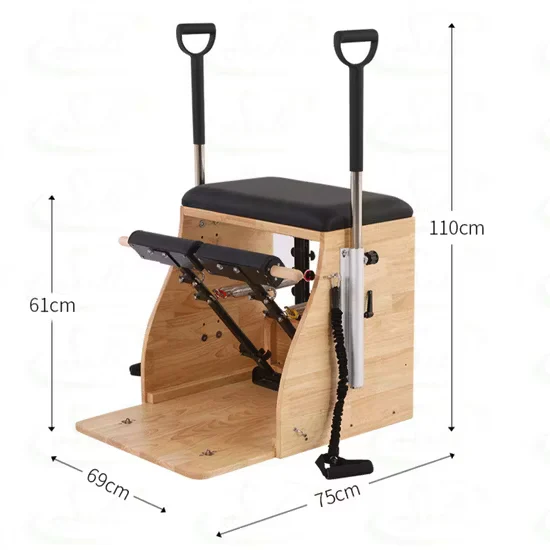
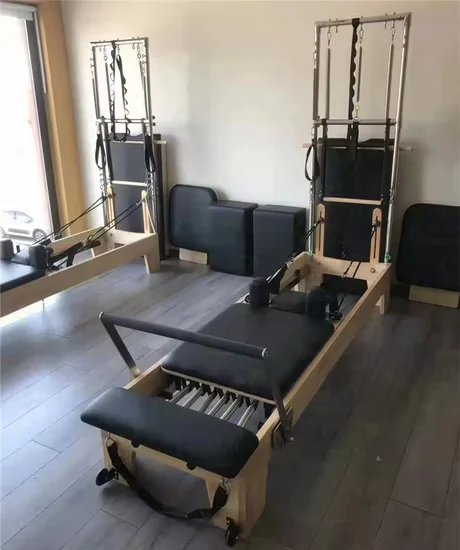
Acoustic Isolation for Shared Spaces — reinforced steel frame and precision pulley system minimize structural vibration during continuous studio class schedules.
Technical Specifications
| Parameter | Value |
|---|---|
| Product Type | Pilates Reformer |
| Model NO. | SRY-24 |
| Specification | 2460 × 730 × 680 mm |
| Net Weight | 100 kg |
| Frame Construction | Reinforced steel |
| Resistance Type | Spring-based precision pulley system |
| Included Accessories | Long box, jump board, platform |
| Color | Solid color (customizable) |
| Logo | Customized is allowed |
| Max User Weight | Up to 180 kg |
| Warranty Time | 3 Years |
| Target Demographic | Adult, unisex |
| Production Capacity | 80 pieces/month |
| Transport Package | Standard wood case |
Application Suitability
| Deployment Scenario | Typical Use |
|---|---|
| Dedicated Pilates studio | Group reformer classes running sequential sessions throughout operating hours |
| Commercial fitness center | Complement to cardio and strength zones for members seeking controlled resistance training |
| Rehabilitation and physiotherapy clinic | Low-impact guided movement for injury recovery and mobility restoration |
| High-end residential home gym | Private reformer practice without carriage drift or frame flex under daily use |
| Boutique wellness and movement studio | Full-spectrum reformer programming from a single chassis with modular accessories |
Why Studios Replace Residential Reformer Frames Within the First Year
Commercial schedules expose frame flex and spring fatigue that residential equipment was never designed to absorb.
I have walked into studios where reformers purchased for home use started showing carriage drift after a few months of back-to-back group classes. The frame tubes were simply not rated for the repetitive lateral loading of eight to ten daily sessions [NEED_CITE: structural fatigue thresholds for commercial Pilates equipment under continuous class schedules]. Pulley alignment shifts, spring tension becomes inconsistent, and instructors start compensating by adjusting choreography rather than correcting the machine. The portable pilates reformer commercial studio operators choose must be built around a reinforced steel chassis that holds geometry under continuous class loads, not a light-duty frame borrowed from the consumer market.
Where This Reformer Sits in a Movement Studio Layout
The SRY-24 covers full-spectrum reformer work — from foundational spring-loaded footwork to jump board plyometrics and long box prone sequences. In a mixed-modality studio, it pairs with mat zones and stability equipment to create progressive programming without requiring members to move between machines. Its footprint suits high-density class layouts where instructors need clear sightlines across all stations. The 2460 mm length accommodates the full carriage travel required for advanced repertoire while fitting within standard studio bay spacing. Users up to 180 kg can perform the complete exercise library without frame deflection or pulley binding.
Continuous Class Scheduling and Floor Loading Requirements
A studio running six to eight reformer classes daily demands equipment that holds calibration across the full operating day. Spring tension must remain consistent from the first morning session through the evening wind-down without mid-day recalibration. Floor surfaces need to be level and rigid — any unevenness introduces carriage drift that compounds under repetitive use [NEED_CITE: floor flatness tolerance for commercial Pilates reformer deployment]. The 100 kg unit weight provides stability during jump board work without requiring permanent anchoring, though anti-vibration pads are recommended on suspended floors or above occupied spaces. Operators should plan adequate lateral clearance between units so members can mount and dismount safely during class transitions.
Spring Tension, Pulley Geometry, and Frame Rigidity Explained
The reinforced steel frame resists the torsional loads generated during asymmetric exercises — single-leg work, standing sequences, and jump board rebound all apply off-axis forces that cause lighter frames to flex. Precision pulley alignment ensures the rope tracks cleanly across the full carriage travel without lateral drift that degrades rope lifespan. The spring-based resistance system delivers consistent tension curves calibrated for commercial repetition counts, meaning the resistance at rep fifty matches rep one within a set. The long box extends the platform surface for prone and seated exercises, while the jump board converts the reformer into a closed-chain plyometric station. Each accessory mounts directly to the chassis without adapter plates, reducing setup time between class segments. The solid-color finish withstands repeated cleaning cycles common in shared studio environments.
What Specification Compromises Cost in a Commercial Deployment
Studios that select reformers based on price rather than frame construction often face cascading costs. Carriage drift from flexed frames causes ropes to wear prematurely, triggering replacement cycles that compound downtime across a fleet. Inconsistent spring calibration forces instructors to modify exercise progressions, eroding the method integrity that members pay for [NEED_CITE: spring tension consistency requirements for commercial Pilates method delivery]. Pulley misalignment generates noise that disrupts the controlled environment essential to reformer practice. When accessories do not mount precisely to the chassis, transition times between class segments stretch, reducing usable instruction minutes per session.
Why This Product Line Fits Studio Procurement
The SRY-24 arrives as a complete system — long box, jump board, and platform included — eliminating accessory compatibility guesswork across a multi-unit order. The reinforced steel frame and precision pulley system undergo durability verification aligned with 10,000-hour continuous operation standards. OEM customization covers logo application and solid-color finish selection so studio branding carries through the equipment fleet. Free 3D studio layout planning accounts for unit spacing, instructor sightlines, and ventilation requirements specific to reformer room dimensions. Documentation packages include structural inspection reports and spring calibration records that procurement teams need for facility compliance files. Technical support covers commissioning guidance and spare parts coordination across the operational lifespan.
Documentation & Test Records
- CE declaration of conformity for the SRY-24 reformer assembly
- EN 957 test report covering structural load and safety verification
- ISO 9001 certificate for manufacturing quality management systems
- Spring resistance calibration documentation per unit
- Frame material and weld quality inspection report
- Installation and commissioning guide with spare parts list
Installation, Commissioning & Maintenance
- Position each unit on a level surface with clearance on all sides for safe mounting and dismounting
- Verify floor rigidity to prevent carriage drift; add anti-vibration pads on suspended floors
- Inspect pulley alignment and rope tracking across full carriage travel during initial commissioning
- Check spring tension calibration against documentation at first use and at scheduled intervals
- Clean rails and carriage wheels after each class block to prevent residue buildup affecting glide
- Confirm accessory fitment for long box, jump board, and platform before class programming begins
Requesting a Deployment Recommendation
Share your studio floor area and planned reformer count to receive a 3D layout covering unit spacing, instructor sightlines, and airflow planning. Specify your daily class schedule so spring and pulley components can be matched to the expected duty cycle. Indicate the deployment floor level and adjacent room usage to determine whether additional vibration isolation measures are needed. Note whether OEM logo and color customization is required for brand alignment across the fleet.
Frequently Asked Questions
Q: What construction differences separate a commercial reformer from a residential one?
A: Commercial reformers use reinforced steel frames engineered to resist torsional flex under continuous asymmetric loading from group class schedules. Pulley systems are calibrated for consistent rope tracking across thousands of repetitions. Residential frames typically use lighter tubing that develops carriage drift and pulley misalignment within months of commercial-frequency use, triggering premature component replacement cycles.
Q: How should spring resistance be calibrated and when should springs be replaced?
A: Springs should be checked against calibration documentation during initial commissioning and at regular intervals based on class volume. Visible deformation, inconsistent tension delivery, or loss of return speed indicates replacement is due. Commercial studios running multiple daily sessions typically plan spring replacement on a defined cycle rather than waiting for member complaints about exercise feel inconsistency.
Q: Are the included accessories interchangeable with other reformer models?
A: The long box, jump board, and platform are engineered to mount directly to the SRY-24 chassis without adapter plates. Cross-compatibility with other reformer brands is not guaranteed due to differences in mounting geometry and rail width. Studios ordering multiple units from this product line can interchange accessories freely across the fleet, simplifying class setup logistics.
Q: What OEM customization is available for studio branding alignment?
A: Logo application and solid-color finish selection are available for the frame and upholstery surfaces. Customization scope covers visual branding elements rather than structural modifications. Studios should confirm artwork specifications, color codes, and minimum order quantities during the quotation phase to ensure branding consistency across the entire reformer fleet delivery.
Q: What maintenance schedule supports high-frequency studio operation?
A: Daily rail and carriage wheel cleaning prevents residue buildup affecting glide smoothness. Pulley alignment and rope condition should be inspected weekly under commercial class loads. Spring tension verification follows the interval schedule provided in the commissioning documentation. Keeping a maintenance log per unit helps identify wear patterns early and coordinate component replacement across the studio fleet without disrupting class scheduling.