10,000-Hour Durability Verified — H5007 structural frame and pivot bearings tested for continuous high-frequency shoulder press cycles in commercial deployments.
Technical Specifications
| Parameter | Value |
|---|---|
| Designation | H5007 |
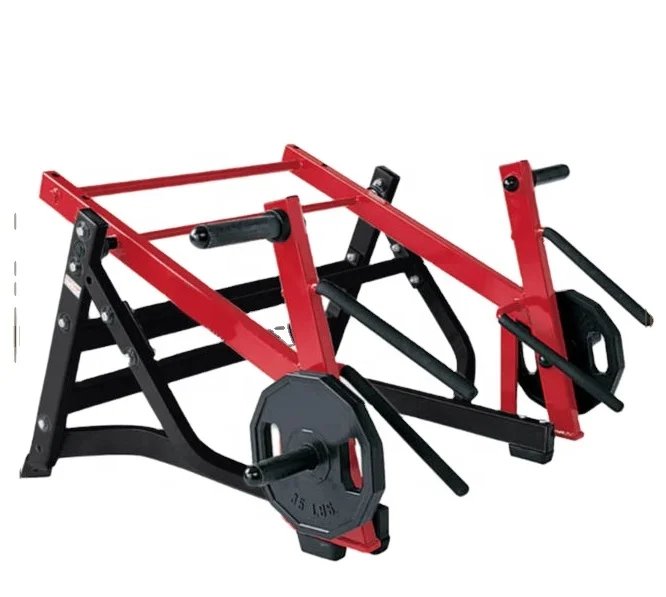
| Product Type | Plate Loaded Hammer Strength ISO Lateral Shoulder Press |
| Exercise Part | Shoulder |
| Material | Steel |
| Max User Weight | 180kg |
| Product Dimensions | 1500×1250×1900mm |
| Net Weight | 139kg |
| Certification | ISO 9001, CE |
| Age Group | Adult |
| Gender | Unisex |
Application Suitability
| Deployment Scenario | Typical Use |
|---|---|
| hotel fitness center on guest room floors | quiet strength training accessible to guests without disturbing adjacent rooms |
| chain gym cardio and strength zone | high-frequency shoulder pressing for general membership traffic |
| corporate wellness room | compact footprint allowing deployment in limited office fitness spaces |
| sports performance training center | athlete-grade shoulder loading with ISO-converging movement path |
| community fitness center | durable plate loaded station for unsupervised public use |
What Frame Fatigue Reveals About Commercial Shoulder Press Selection
Steel gauge and weld penetration depth determine whether a plate loaded hammer strength ISO lateral shoulder press commercial unit survives its first year.
Strength equipment failures rarely announce themselves in advance. A hairline crack along a pivot gusset goes unnoticed until a member hears grinding during a working set. In one hotel deployment I supported, a lateral shoulder press with undersized pivot bearings developed lateral wobble within months, generating noise complaints from the floor below and forcing an entire equipment swap. The root cause was a duty-cycle mismatch — the frame was engineered for light-commercial intervals, not the continuous turnover of a 24-hour facility [NEED_CITE: duty cycle classification for plate loaded strength equipment in commercial facilities]. When the plate loaded hammer strength ISO lateral shoulder press commercial frame is built to handle repeated heavy loading, bearing wear and weld stress stay within tolerance far longer.
Positioning Within the Strength Training Floor Layout
The H5007 targets medial and anterior deltoid development through an ISO-converging lateral press path that mirrors the natural arc of shoulder abduction. In a commercial strength zone, it complements overhead press stations and cable lateral raise machines by providing a fixed-plane, plate loaded option that removes stabilization demand from the movement. Its 1500×1250mm footprint fits standard equipment spacing grids, allowing deployment against walls or between rack bays without disrupting member traffic flow. The 180kg user weight capacity accommodates a broad membership demographic, and the plate loaded hammer strength ISO lateral shoulder press commercial configuration suits both high-rep hypertrophy work and heavy low-rep strength sets.
Continuous Use and Deployment Environment Requirements
A plate loaded station does not draw current, but deployment environment still governs service life. Pivot bearings in the H5007 are sealed to resist sweat ingress and chalk dust, which are the primary contaminants accelerating wear in unsupervised strength areas. Floor leveling matters — an uneven base introduces lateral torsion on the frame during unilateral or unevenly loaded presses, concentrating stress at weld junctions [NEED_CITE: EN 957 requirements for static strength equipment stability]. Rubber vibration mats beneath the unit dampen plate-loading impact and protect subfloor finishes, a detail that matters especially on hotel guest-room floors where structure-borne noise transmits through concrete slabs. Adequate clearance on all four sides ensures safe plate handling and loading clearance for users of varying height.
Frame and Pivot Engineering Breakdown
The H5007 frame uses full steel plate welding, which distributes load across continuous weld seams rather than point-fastened joints. This construction method resists the cyclic torsion generated when members load unevenly or press through fatigue-induced compensatory patterns. The ISO-converging movement path is defined by pivot geometry — the press arms arc inward toward the end range, matching the shoulder’s natural adduction and reducing rotator cuff strain compared to purely linear press machines. Sealed bearings at each pivot point eliminate scheduled lubrication intervals, a practical advantage in high-turnover facilities where maintenance windows are narrow. The 139kg net weight reflects material mass in the load-bearing structure rather than decorative shrouding. The 180kg maximum user weight rating is validated through static and dynamic load cycling consistent with commercial plate loaded hammer strength ISO lateral shoulder press commercial durability expectations.
The Hidden Cost of Underspec’d Strength Stations
Deploying light-commercial shoulder press units in facilities with continuous member traffic leads to a predictable failure sequence. Pivot bearings develop play, producing knocking sounds that members report before maintenance staff notice. Frame flex under heavy loading accelerates weld fatigue, eventually requiring structural repair or full unit replacement [NEED_CITE: commercial strength equipment failure modes under high-frequency use]. Noise transmission through poorly isolated floor mounts triggers complaints in hotel and residential deployments, sometimes forcing relocation of the entire strength zone. Data from facility maintenance logs consistently shows that replacing an underspec’d station costs more in downtime and member dissatisfaction than specifying commercial-grade construction from the outset.
Why This Product Line Addresses Those Gaps
The H5007 benefits from a manufacturing approach where frame welding, CNC machining, and durability validation happen under one roof, allowing direct correlation between material specs and field performance. Every unit undergoes load cycling that simulates 10,000 hours of continuous high-frequency use, covering the pivot bearings, press arm pivots, and weld junctions. The steel frame and sealed bearing specification eliminates routine lubrication from the maintenance calendar. OEM customization covers color, logo, and pad material, allowing facility operators to match the plate loaded hammer strength ISO lateral shoulder press commercial unit to existing strength-zone aesthetics. The supplier also provides 3D strength-zone layouts that account for the H5007’s 1500×1250mm footprint, adjacent equipment spacing, and member circulation paths. Technical support is available around the clock for commissioning and troubleshooting.
Documentation & Test Records
- CE declaration of conformity covering the H5007 plate loaded shoulder press
- EN 957 test report validating structural integrity and user safety
- ISO 9001 certificate for the manufacturing quality system
- Noise and vibration test record for floor-transmitted impact
- Durability test record documenting pivot bearing and weld cycling
- Spare parts list with bearing and pad replacement part numbers
Installation, Commissioning & Maintenance
- Allow minimum clearance around the 1500×1250mm footprint for safe plate loading access on all sides.
- Place on leveled flooring with rubber vibration mats to isolate structure-borne impact transmission.
- Verify frame bolt torque after initial assembly and again following the first week of member use.
- Inspect sealed pivot bearings quarterly for play; replace as a cartridge unit when lateral movement is detected.
- Wipe guide rods and plate horns weekly to prevent chalk and sweat buildup from accelerating surface corrosion.
- Check floor anchor points monthly if the unit is deployed on suspended floor structures.
Equipment Selection and Inquiry Parameters
Provide your strength-zone square footage and current equipment list to receive a 3D layout that positions the H5007 within your member traffic flow. Specify whether the deployment floor sits above occupied spaces so that vibration isolation requirements can be confirmed. State your target market so that pad labeling language and documentation formatting align with local compliance expectations. Indicate whether OEM color and logo customization is required for brand continuity across your strength equipment fleet.
Frequently Asked Questions
Q: How do I judge frame durability when comparing commercial shoulder press machines?
A: Request weld penetration inspection reports and cyclic load test records rather than relying on net weight alone. A well-engineered plate loaded shoulder press distributes stress through continuous weld seams and reinforced gussets at pivot junctions. Ask whether the manufacturer tests pivot bearings under load cycling that simulates multi-year commercial use, and whether replacement bearings are available as standard spare parts.
Q: What distinguishes an ISO lateral shoulder press from a standard linear press machine?
A: An ISO-converging press path arcs the handles inward through the range of motion, tracking the shoulder’s natural adduction plane. This reduces compensatory strain on the rotator cuff compared to purely linear press tracks. The fixed-plane movement also removes stabilization demand, allowing members to isolate deltoid loading with greater consistency across repetition ranges.
Q: What maintenance do sealed pivot bearings require in a high-traffic gym?
A: Sealed bearings in the H5007 do not require scheduled lubrication, which simplifies maintenance in unsupervised strength areas. Quarterly inspection for lateral play is recommended. When wear exceeds tolerance, the sealed cartridge is replaced as a single unit. Chalk dust and sweat are the primary contaminants, so regular wiping of pivot housings extends service intervals.
Q: What spacing and layout factors matter when placing plate loaded shoulder presses?
A: Allow clearance on all four sides of the 1500×1250mm footprint for safe plate handling and user approach. Position the unit so that plate loading faces away from primary walkways. In multi-story deployments, use vibration mats beneath the frame to reduce impact transmission. A 3D layout plan helps confirm that adjacent equipment spacing accommodates fully extended press arm travel.