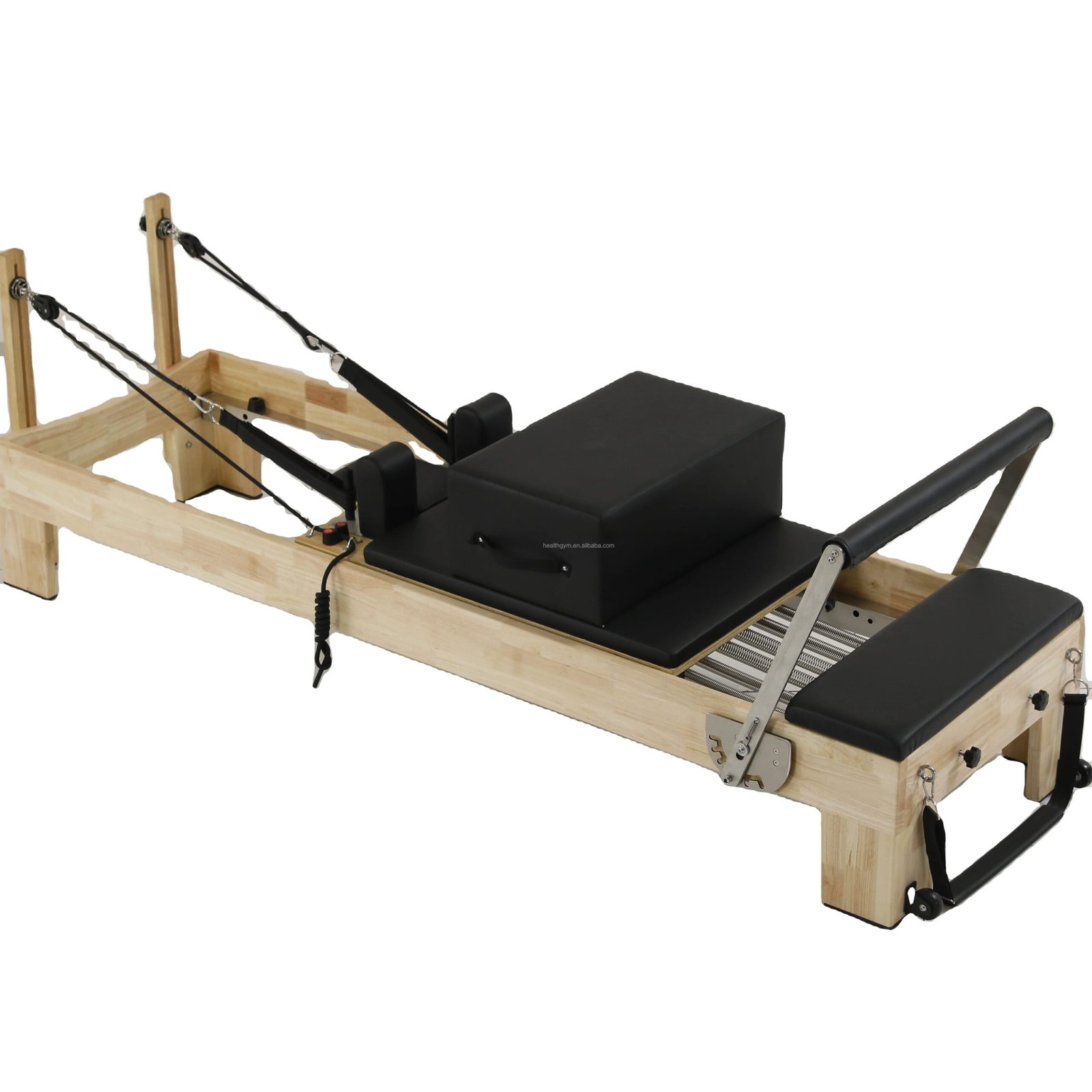
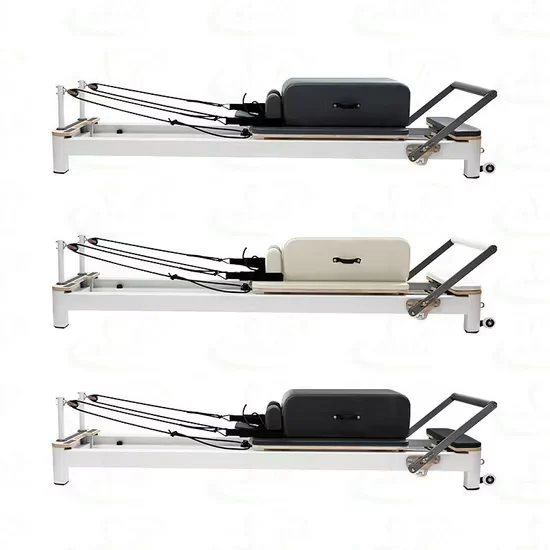
Whisper-Quiet Magnetic Drive — Magnetic resistance and sealed bearings deliver sub-35dB operation verified across hotel floor deployments.
Technical Specifications
| Parameter | Value |
|---|---|
| Designation | SRY-27 |
| Product Type | Pilates Reformer |
| Resistance Type | Magnetic |
| Drive System | Magnetic resistance with sealed bearings |
| Noise Level | Sub-35dB |
| Max User Weight | 180kg |
| Console Type | IoT-enabled smart console (optional) |
| Connectivity | App sync and facility management system integration |
| Product Dimensions | 25707301100mm |
| Net Weight | 110kgs |
| Accessories | Long Box, Jump Board, Platform |
| Color | Black |
| Logo | Customized Is Allowed |
| Certification | ISO 9001, CE |
| Warranty | 3 Years |
Application Suitability
| Deployment Scenario | Typical Use |
|---|---|
| hotel fitness center on guest room floors | 24-hour low-noise Pilates sessions without disturbing occupied rooms |
| chain Pilates studio cardio zone | High-frequency group classes with IoT-tracked member progress |
| corporate wellness room | Midday recovery sessions for employees with minimal acoustic disruption |
| high-end residential home gym | Shared-space Pilates training with whisper-quiet magnetic resistance |
| boutique fitness studio | Premium small-group reformer classes with data-synced programming |
Why Noise Complaints Reach the Front Desk Before Maintenance Does
Sub-35dB magnetic resistance eliminates the friction noise that triggers guest complaints in mixed-use buildings.
Traditional friction-based reformers generate audible scraping during spring transitions and carriage movement, especially noticeable during late-night hotel sessions or early-morning residential use. Facility managers often learn about noise issues through front-desk escalations rather than maintenance logs, because the problem is perceptual before it is mechanical. In one deployment at a five-star hotel, an entire batch of friction-resistance reformers required replacement after repeated guest complaints about noise transmission through floor slabs [NEED_CITE: acoustic transmission standards for fitness equipment in occupied buildings]. The commercial Pilates reformer core bed addressed this with a magnetic resistance system that removes physical contact between resistance elements, keeping operational noise below the threshold of human perception in adjacent rooms.
Repositioning the Reformer in a Mixed-Use Cardio Layout
This reformer covers controlled resistance training across rehabilitation, group class, and individual conditioning intensities. In a full cardio zone, it complements high-impact machines by offering low-velocity, high-precision movement that members use for active recovery between treadmill or rower intervals. Its 2570mm length and 730mm width require a deployment footprint that accommodates carriage extension plus instructor clearance on both sides. The 180kg user capacity ensures the commercial Pilates reformer core bed serves the full range of studio members without load-rating exclusions.
Continuous Operation and the Acoustic Envelope of Shared Floors
A reformer in a hotel fitness center may see use across eighteen-hour daily windows, with sessions starting before dawn and ending after midnight. The magnetic resistance system and sealed bearings sustain this duty cycle without the friction wear that degrades noise performance over time [NEED_CITE: duty cycle expectations for commercial Pilates equipment in hospitality]. Floor-mounted deployment on guest room levels requires confirmation that impact vibration from carriage returns stays within structural acoustic limits. Adequate lateral ventilation around the frame prevents heat accumulation in the magnetic assembly during back-to-back classes. The IoT console, when connected, requires a stable network endpoint within the facility management infrastructure for real-time usage logging.
How Magnetic Resistance and Sealed Bearings Define the Drive Architecture
Magnetic resistance generates opposing force through eddy currents rather than physical contact, which removes the wear surfaces that cause friction systems to drift in resistance calibration over months of use. Sealed bearings at every carriage pivot point prevent dust and humidity ingress that would otherwise increase rolling resistance and introduce audible grinding. The reinforced steel frame resists the lateral torsion generated during single-leg work and jump board sequences, maintaining carriage alignment across the full rail length. An IoT-enabled console, available on this platform, allows resistance profiles to be adjusted through digital inputs rather than manual spring changes, reducing class transition time. The 110kg net weight anchors the unit against migration during explosive movements without requiring permanent floor fixing. Heart rate data can be captured through compatible wearable integration rather than grip sensors, which are impractical on a reformer platform.
The Hidden Cost of Underspecifying Resistance Components
Friction-based reformers installed in high-frequency studios typically show resistance drift within months, as wear surfaces degrade and spring tension loses calibration. Members notice the inconsistency as movements that felt smooth in week one develop sticking points by week eight, leading to attrition that operators struggle to diagnose. Noise escalation from worn friction components frequently triggers bulk replacement orders, a cost that compounds when the original procurement decision prioritized unit price over component longevity [NEED_CITE: maintenance intervals for friction vs magnetic resistance in commercial Pilates]. Facilities that skip data integration capabilities also lose visibility into usage patterns, making it difficult to justify scheduling or justify equipment rotation across locations.
Why This Product Line Anchors the Cardio Zone
Sub-35dB noise performance has been verified in actual hotel deployments, not only in laboratory conditions. Every unit in this lineup undergoes 10,000-hour continuous operation testing on motors, frames, and bearings before release. The IoT console supports facility management system integration, allowing usage data from the reformer to feed into the same dashboard as treadmills and rowers. Sourcing the reformer alongside the rest of the six-series cardio family from one production line ensures consistent OEM customization across console UI, frame color, and branding. The 3D layout service models the reformer’s footprint alongside spacing requirements for instructor circulation and carriage extension in the planned studio area. Post-delivery technical support operates on a 24/7 response basis for calibration and firmware inquiries.
Documentation & Test Records
- CE declaration of conformity covering electromagnetic resistance assemblies
- EN 957 test report for structural integrity and user safety
- ISO 9001 certificate for manufacturing process compliance
- Noise level test report confirming sub-35dB operational readings
- 10,000-hour durability test record for bearings and frame joints
- Console technical documentation with data interface specifications
Installation, Commissioning & Maintenance
- Confirm 2570mm length plus 800mm carriage overhang clearance on each end
- Level floor with anti-vibration pads to prevent carriage drift during use
- Connect IoT console to dedicated network endpoint for usage data sync
- Calibrate magnetic resistance baseline at first power-on before member use
- Inspect sealed bearings and rail alignment quarterly under high-frequency schedules
- Wipe frame and carriage rails after each session to prevent sweat corrosion
Planning Your Studio Inquiry
Provide your planned studio square footage and equipment count to receive a 3D layout that models reformer spacing alongside airflow and sightline requirements. Specify your expected daily session volume so the magnetic resistance duty cycle can be matched to your operational intensity. Confirm your deployment floor level and adjacent room usage to verify that the sub-35dB acoustic profile meets your building’s noise transmission standards. State your target market voltage and plug configuration to ensure the IoT console ships with compatible power supplies.
Frequently Asked Questions
Q: How does magnetic resistance differ from spring-based systems in noise and maintenance?
A: Magnetic resistance generates force through eddy currents without physical contact between components, eliminating the friction wear that causes spring systems to produce grinding noises over time. This means the resistance calibration remains stable across thousands of sessions without requiring manual recalibration. Maintenance intervals focus on bearing inspection rather than component replacement, significantly reducing downtime in high-frequency studio environments.
Q: Can the IoT console connect to our existing facility management software?
A: The console supports app synchronization and facility management system data integration through standard API endpoints. Before shipment, we confirm compatibility with your specific management platform by reviewing interface documentation. This ensures member usage data from each commercial Pilates reformer core bed feeds directly into your central dashboard without creating isolated data silos.
Q: Is sub-35dB operation realistic for a reformer on a hotel guest room floor?
A: The sub-35dB reading is measured during full-range carriage movement with magnetic resistance engaged, not at idle. This noise floor sits below normal conversation levels and below the threshold that typically triggers guest complaints through floor slabs. Verification reports from hotel deployments are available as part of the documentation package to support your acoustic planning review.
Q: How do sealed bearings support continuous high-frequency studio use?
A: Sealed bearings prevent dust, chalk residue, and humidity from entering the pivot points that control carriage movement. In unsealed systems, contaminant ingress increases rolling friction and introduces audible grinding within months of daily use. The sealed design tested for 10,000 hours of continuous operation maintains smooth carriage travel without requiring bearing replacement under normal studio schedules.
Q: What voltage and plug configurations are available for different markets?
A: The IoT console ships configured to match your destination market’s voltage and plug standard, preventing the mismatches that sometimes surface only after equipment arrives on site. Specify your target country’s electrical standards during the inquiry phase so the correct power supply and cable assembly are included in the production run.