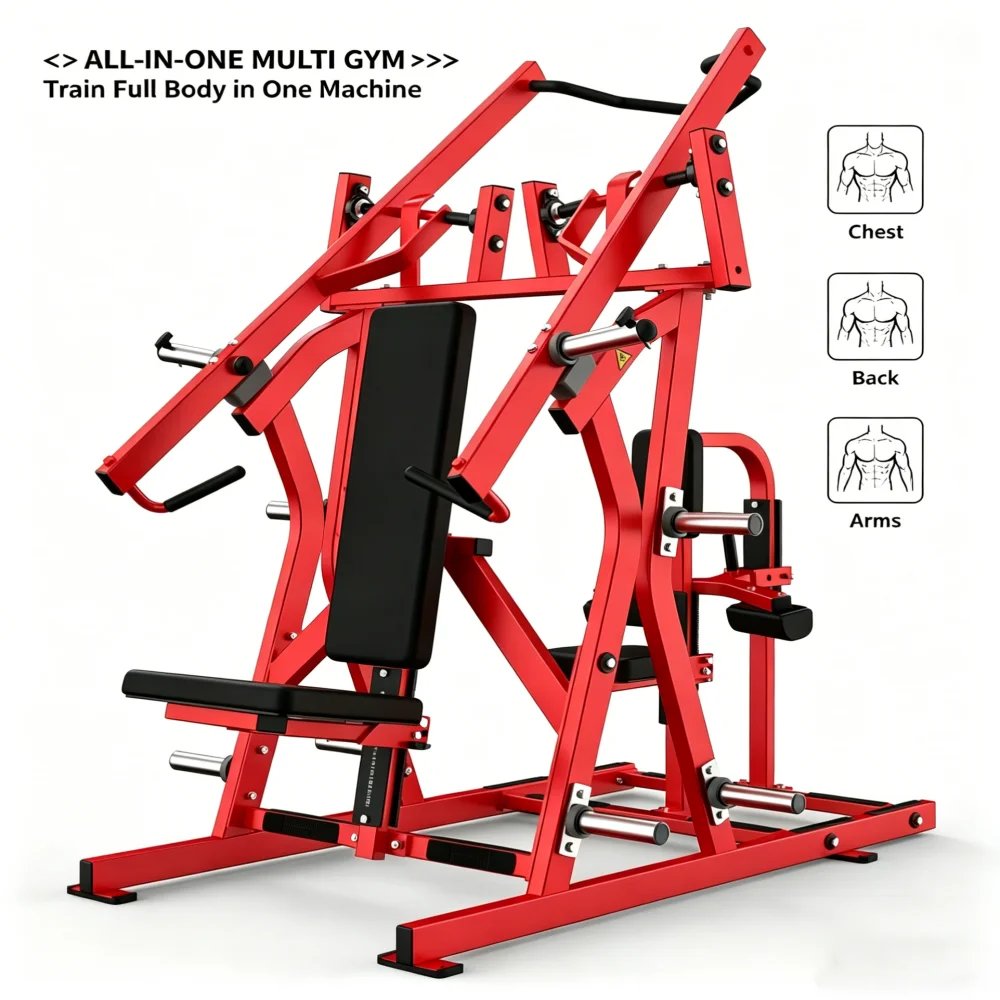
![OS-H5064 Commercial Incline Bench Gym Equipment [WARN] draft identifier mismatch](https://bicksport.com/wp-content/uploads/2026/08/os-h5064-commercial-incline-bench-gym-equipment-warn-draft-identifier-mismatch-6de17d.webp)
Engineered for Stability — Steel frame and multi-angle adjustment withstand thousands of cycles in high-traffic commercial strength zones.
Technical Specifications
| Parameter | Value |
|---|---|
| Designation | OS-H5064 |
| Product Type | Incline Bench |
| Material | Steel |
| Product Dimensions | 8605501250 mm |
| Net Weight | 32kg |
| Exercise Part | Arm |
| Function | Body Building |
| Application | Gymnasium / Fitness Center |
| Age Group | Adult |
| Gender | Unisex |
| Color | Optional |
| OEM | Available |
| Production Capacity | 500 Units Per Month |
| Certification | ISO 9001, CE |
Application Suitability
| Deployment Scenario | Typical Use |
|---|---|
| hotel fitness center on guest room floors | upper-body and dumbbell work during off-peak hours without disturbing adjacent rooms |
| chain gym free-weight zone | high-frequency adjustable bench presses and incline fly routines across peak traffic shifts |
| corporate wellness room | compact strength station for employees performing brief arm and chest circuits |
| high-end residential home gym | dedicated incline platform for personal dumbbell and barbell routines |
| sports performance training center | controlled-angle isolation work supporting athlete upper-body conditioning programs |
Why Wobble and Play Become the Top Member Complaint in Free-Weight Zones
A rigid steel frame eliminates the lateral sway that drives members away from incline stations.
When an adjustable bench develops play in its hinge or ladder mechanism, users feel instability during heavy dumbbell presses and quickly move to other stations. Over months, this single point of failure causes the incline bench to sit unused while adjacent flat benches stay occupied. I have seen hotel gym operators replace an entire row of benches after guests reported the backrest shifting mid-set [NEED_CITE: commercial bench structural rigidity standards under repeated loading cycles]. A commercial incline bench gym equipment unit must maintain zero tolerance in its locking pins and weld joints to survive thousands of adjustments per week.
Where This Bench Fits in a Commercial Strength Layout
The OS-H5064 covers incline and flat pressing angles, bridging the gap between flat benches and dedicated shoulder-press stations in a free-weight zone. It pairs with dumbbell racks and plate-loaded machines, allowing members to rotate through chest, shoulder, and arm movements without leaving a single footprint. Its 860 mm footprint fits standard spacing grids used by chain gyms, while the 180 kg user capacity accommodates a wide range of athlete body types. Facility planners deploying commercial incline bench gym equipment benefit from positioning this unit near dumbbell storage to keep member flow linear and reduce congestion during peak hours.
Continuous Load and Facility Environment Requirements
A commercial strength bench does not draw power, but its mechanical joints endure load cycles equivalent to motorized cardio equipment running eight hours daily. The ladder-style angle selector must hold position under asymmetric loads when a member presses a heavier dumbbell on one side. In hotel fitness centers located above occupied floors, the rubber-tipped feet must prevent steel-on-tile contact noise that transmits through slab structures [NEED_CITE: impact noise transmission through concrete floor slabs in mixed-use hospitality buildings]. Adequate clearance of at least 600 mm on each side allows spotter access and safe dumbbell handling. The powder-coated steel resists sweat corrosion in humid environments, though regular wiping with pH-neutral cleaner extends the coating lifespan.
Reading the Steel Gauge and Locking Mechanism Specs
Frame rigidity on an incline bench depends on steel tube wall thickness and cross-section profile rather than overall weight alone. A rectangular tube resists torsional twisting more effectively than a round tube of the same mass, which matters when a 120 kg user shifts during a heavy incline press. The ladder adjustment mechanism uses hardened steel pins that engage positive stops; worn or undersized pins introduce play that users perceive as instability. High-density foam padding with a firmness rating suited to commercial use prevents bottoming-out under heavy loads, maintaining consistent support across the backrest and seat. Stitching along the upholstery seams should be double-row to resist splitting after repeated wipe-downs. The 32 kg net weight of the OS-H5064 reflects a steel gauge and welding pattern built for stationary commercial deployment rather than portability.
The Hidden Cost of Specifying Below Commercial Grade
Benches built for light-commercial or home duty cycles show hinge play within months when subjected to gym traffic, prompting members to avoid the station entirely. Thin-gauge frames develop visible flex during heavy presses, raising safety concerns and liability exposure for operators. Upholstery filled with low-density foam compresses permanently, creating uneven support that leads to member complaints about back discomfort [NEED_CITE: foam density degradation rates under continuous commercial seating loads]. Rubber feet that lack vibration-dampening compounds transmit metal scraping sounds through hard floors, generating noise complaints in hotel environments. Replacing a full row of under-specified benches costs far more in procurement and downtime than specifying the correct gauge and mechanism from the outset.
Why Operators Choose This Product Line
Our Shandong facility tests every adjustable mechanism through repetitive cycling to verify that locking pins engage consistently after thousands of adjustments. The six-series cardio and strength family lets a facility source incline benches alongside treadmills, ellipticals, and rowing machines from a single production line, simplifying procurement and spare-parts management. OEM customization covers frame color, upholstery material, and logo placement to match brand identity across a gym chain. Free 3D layout planning accounts for the OS-H5064 footprint and required safety clearances, ensuring the free-weight zone flows naturally with adjacent cardio equipment. Technical support responds around the clock for on-site maintenance guidance, reducing equipment downtime to hours rather than days.
Documentation & Test Records
- CE declaration of conformity covering structural load and safety requirements
- EN 957 test report validating bench stability and static load performance
- ISO 9001 certificate confirming manufacturing quality management processes
- Durability test record documenting locking mechanism cycle counts
- Upholstery density and abrasion resistance test documentation
Installation, Commissioning & Maintenance
- Position on level flooring with minimum 600 mm clearance on all sides for safe spotter access
- Verify all ladder pins engage fully at each angle before releasing the bench into service
- Inspect and tighten fasteners at hinge joints monthly to maintain zero-play operation
- Wipe upholstery daily with pH-neutral cleaner to prevent sweat-induced material degradation
- Check rubber feet quarterly and replace if worn flat to prevent floor scratching and noise
Request a Deployment Assessment
Provide your free-weight zone dimensions and existing equipment list so we can generate a 3D layout showing the OS-H5064 placement with proper safety clearances and member flow paths. Specify the expected daily user count to confirm the locking mechanism duty cycle matches your traffic profile. For hotel deployments above occupied floors, share adjacent room types so we can verify noise isolation through the rubber feet specification. Indicate target market voltage standards if you are also sourcing powered cardio units in the same shipment, allowing us to coordinate documentation and plug configurations. State whether OEM branding or custom upholstery color is required to align with your facility design guidelines.
Frequently Asked Questions
Q: What separates a commercial incline bench from a home-adjustable model?
A: Commercial units use thicker steel gauges, hardened locking pins, and high-density foam rated for continuous multi-user cycles. Home benches prioritize portability with lighter frames and thinner padding that compress permanently under gym traffic volumes.
Q: How do adjustment angles correspond to common training movements?
A: Low incline angles suit chest press variations, mid-range angles target upper-chest and front-deltoid work, and near-vertical settings support shoulder press and seated bicep curls. The positive-stop ladder mechanism locks each position firmly.
Q: Why does steel tube profile matter more than overall bench weight?
A: Rectangular tubing resists torsional twist better than round tubing of equivalent mass, keeping the backrest stable under asymmetric dumbbell loads. Profile geometry and weld pattern determine real-world rigidity during heavy pressing movements.
Q: How does upholstery material affect long-term durability in a gym?
A: Commercial-grade vinyl with double-row stitching resists splitting from daily wipe-downs and member friction. High-density foam underneath maintains shape under repeated loading, preventing the permanent compression channels that cause member discomfort.
Q: What is the typical OEM customization scope and timeline?
A: Customization covers frame powder-coat color, upholstery material and color, and logo placement. Lead time depends on order volume and current production scheduling, confirmed during the quotation stage after design proofs are approved.
![Commercial Leg Press Machine Gym Equipment for Professional Use [WARN] draft identifier mismatch](https://bicksport.com/wp-content/uploads/2026/08/commercial-leg-press-machine-gym-equipment-for-professional-use-warn-draft-identifier-mismatch-c0167e.webp)
![Commercial Incline Pec Fly Machine for Gym Equipment [WARN] draft identifier mismatch](https://bicksport.com/wp-content/uploads/2026/08/commercial-incline-pec-fly-machine-for-gym-equipment-warn-draft-identifier-mismatch-236288.webp)