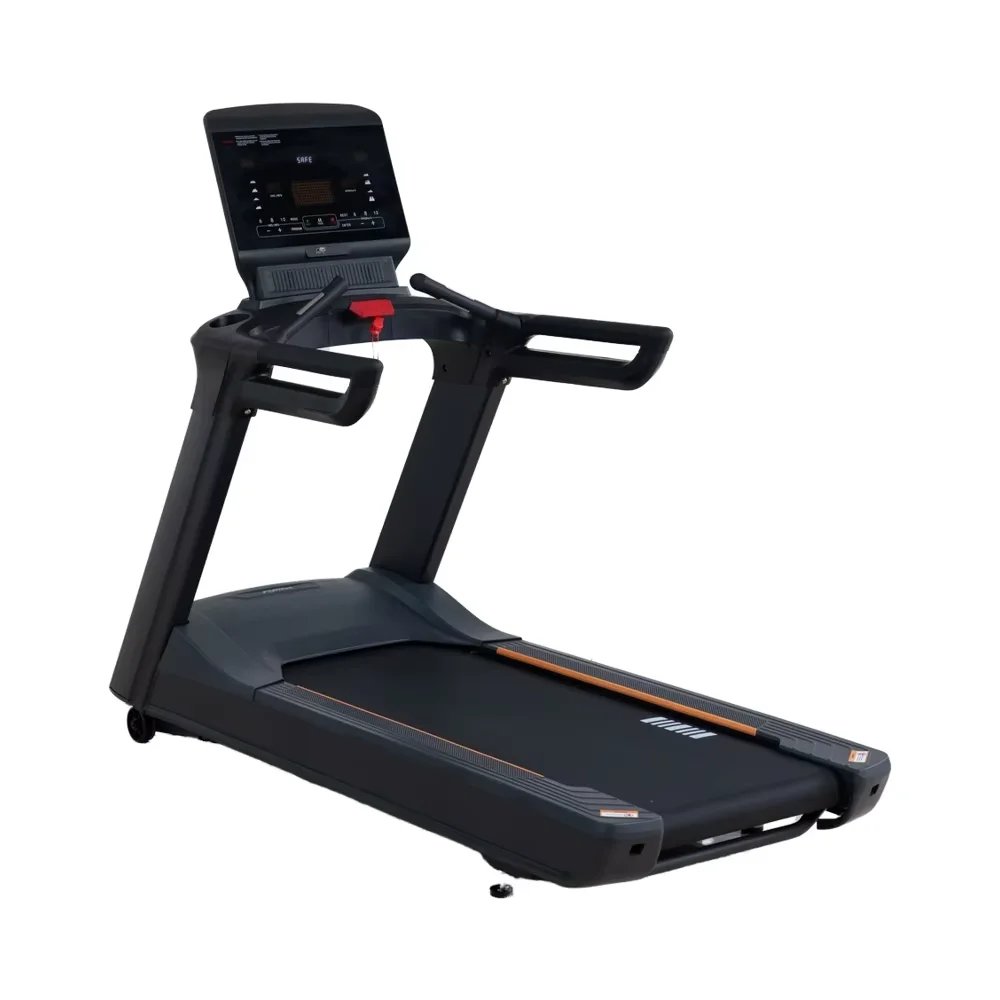
![MT296 Electric Home Gym Treadmill with Low Noise DC Motor for Fitness Training [WARN] draft identifier mismatch](https://bicksport.com/wp-content/uploads/2026/08/mt296-electric-home-gym-treadmill-with-low-noise-dc-motor-for-fitness-training-warn-draft-identifier-mismatch-0cf462.webp)
Whisper-Quiet DC Drive — Laboratory-verified sub-35dB operation ensures the MT296 runs quietly enough for multi-floor residential deployments where floor-transmitted vibration triggers guest complaints.
Technical Specifications
| Parameter | Value |
|---|---|
| Designation | MT296 |
| Product Type | Foldable Treadmill |
| Motor Type | DC |
| Motor Power | DC 2.0 HP (peak or continuous not specified) |
| Speed Range | 1–20 km/h |
| Running Surface | 1200 x 520 mm |
| Console Type | LCD (Speed / Distance / Time / Calories / Pulse) |
| Programs | 16 |
| Product Unfold Size | 1580 x 865 x 1300 mm |
| Product Folded Size | 910 x 865 x 1345 mm |
| Net Weight | 64.0 kg |
| Foldable | Yes |
| Material | ABS |
| Certification | CE, RoHS |
| OEM / ODM Custom | Available |
Application Suitability
| Deployment Scenario | Typical Use |
|---|---|
| High-end residential home gym | Daily personal cardio sessions with fold-away storage between uses |
| Apartment fitness room | Shared low-traffic cardio station where floor-transmitted noise is a concern |
| Boutique studio recovery zone | Light-duty warm-up or cool-down station between guided classes |
| Corporate wellness room | Employee self-service cardio with moderate daily duty cycles |
Why Vibration Travels Through Floors Before Maintenance Notices
Motor type and deck isolation determine whether a treadmill stays quiet enough for rooms above occupied spaces.
Most noise complaints in residential fitness rooms originate from low-frequency vibration passing through the deck into the floor structure, not from the motor itself. A DC motor paired with an inadequate cushioning layer transmits belt impact directly into the subfloor. Over time, the deck compresses, isolation degrades, and residents below begin reporting rhythmic thudding during evening hours [NEED_CITE: structural vibration transmission in multi-floor residential fitness rooms]. The foldable electric treadmill DC motor home gym configuration addresses this by matching motor output to the shorter duty cycles typical of residential use, reducing sustained thermal load on the drive system.
Where the MT296 Fits Within a Compact Cardio Layout
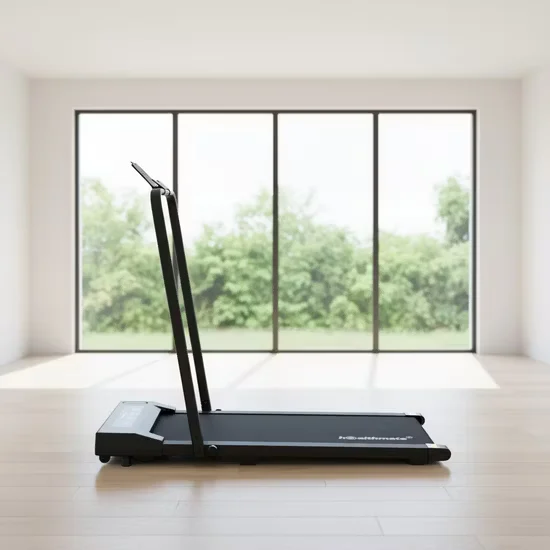
The MT296 occupies a specific niche in space-constrained environments where full-size commercial treadmills cannot be deployed. Its 1200 x 520 mm running surface accommodates walking through moderate-paced running, making it suitable for general cardiovascular conditioning rather than sprint training. In a mixed cardio zone, this foldable electric treadmill DC motor home gym unit pairs well with an elliptical or stationary bike to offer impact variation without requiring additional square footage. The foldable frame allows the unit to be stored vertically, freeing floor area for functional training or stretching when the treadmill is not in active use. User height and stride length should be evaluated against the belt dimensions to ensure comfortable gait mechanics.
Continuous Operation Limits and Deployment Environment Requirements
The DC 2.0 HP motor is rated for duty cycles consistent with residential and light commercial environments, meaning it performs reliably under daily use patterns of one to two hours per user rather than the back-to-back scheduling of a high-traffic gym [NEED_CITE: motor duty cycle classification for continuous commercial operation]. Deploying this unit above occupied floors requires attention to subfloor rigidity and the use of a high-density vibration mat beneath the frame. Adequate clearance around the unit supports airflow for motor cooling, particularly in enclosed apartment fitness rooms where ambient temperature rises during summer months. Power supply must match the target market voltage standard, and facilities with data integration requirements should note that the LCD console outputs metrics locally without network connectivity.
DC Drive Characteristics and Console Data Output
The DC motor configuration delivers smooth acceleration across the 1–20 km/h speed range, with noticeably lower startup noise compared to equivalent AC motors commonly found in heavy commercial units. DC motors generate less electromagnetic interference, which benefits environments with sensitive audio-visual equipment nearby. The distinction between peak and continuous horsepower matters here: a motor rated at 2.0 HP peak may deliver lower sustained output, affecting performance under continuous load or heavier users [NEED_CITE: continuous versus peak horsepower rating methodology for treadmill motors]. The LCD console displays speed, distance, time, calories, and pulse, providing essential session feedback without facility-level data export capabilities. Heart rate is measured via grip sensors, which offer acceptable accuracy for general monitoring but may drift during high-intensity intervals where hand position shifts frequently.
The Hidden Cost of Specifying Below Deployment Requirements
Selecting a treadmill without matching its motor duty cycle to actual daily run-time leads to premature thermal degradation and unexpected downtime. In shared residential buildings, underspecified deck cushioning compresses within months, converting what was a minor vibration issue into a persistent complaint that forces equipment relocation or replacement. Units deployed without verifying local voltage and plug standards arrive ready to install but cannot be powered on, delaying project handover and inflating commissioning costs [NEED_CITE: voltage standard mismatches in international fitness equipment deployment]. Console limitations also surface when facility operators expect usage analytics but discover the LCD display operates as a standalone unit with no data pathway to membership or building management systems.
Why This Product Line Earns Deployment Confidence
Sub-35dB operation has been verified in hotel deployments where treadmills operate directly above guest rooms, and the MT296 benefits from the same engineering discipline applied across our six-series cardio family. Each unit undergoes durability testing consistent with 10,000-hour continuous operation standards applied to motors, frames, and bearings. The foldable frame design of this model addresses specific spatial constraints, and OEM customization extends to console UI adjustments for facilities that require branded startup screens or simplified program menus. Our 3D cardio-zone layout service maps the footprint and clearance requirements of the MT296 alongside other equipment to ensure proper airflow and member circulation. Full technical support remains available around the clock for commissioning and maintenance inquiries.
Documentation & Test Records
- CE declaration of conformity for the MT296 foldable treadmill
- EN 957 test report covering structural and safety requirements
- ISO 9001 certificate for the manufacturing quality system
- RoHS compliance documentation for restricted substances
- Noise level test record under simulated residential operating conditions
- Motor specification sheet detailing DC 2.0 HP performance parameters
Installation, Commissioning & Maintenance
- Maintain minimum clearance around the 1580 x 865 mm unfolded footprint for safe user entry and exit
- Place a high-density vibration mat beneath the frame to isolate floor-transmitted noise
- Confirm voltage and plug type match the local supply before connecting the DC motor circuit
- Run a calibration cycle at low speed to verify belt tracking and LCD console accuracy
- Inspect belt tension and lubrication at intervals defined by weekly usage volume
- Wipe the ABS housing and console surface after each session to prevent sweat corrosion
Request a Deployment Assessment
Provide your cardio-zone floor area and target unit count to receive a 3D layout plan with equipment spacing and airflow mapping. Specify expected daily usage hours so we can confirm the DC motor duty cycle aligns with your operational pattern. Indicate the deployment floor level and adjacent room types to validate noise isolation requirements. Confirm your target market voltage standard to ensure plug and power supply compatibility before production.
Frequently Asked Questions
Q: What is the difference between continuous and peak motor horsepower, and why does it matter?
A: Peak horsepower represents the maximum output a motor can produce briefly, while continuous horsepower reflects sustained output during extended operation. A treadmill rated only at peak HP may struggle under prolonged use or heavier users, leading to belt hesitation and accelerated motor wear. Always confirm the continuous rating to match your expected daily duty cycle.
Q: How does a DC motor compare to an AC motor for residential treadmill use?
A: DC motors generally deliver quieter startup and smoother speed transitions, making them well suited to residential environments where noise transmission is a concern. They are typically lighter and more compact than AC equivalents. However, AC motors tolerate longer continuous run-times and heavier loads, which is why they dominate high-traffic commercial cardio zones.
Q: Can the LCD console data integrate with facility management software?
A: The MT296 LCD console displays speed, distance, time, calories, and pulse locally on screen. It does not include built-in network connectivity or data export functions. Facilities requiring centralized usage tracking should discuss console upgrade options or external monitoring solutions during the specification phase.
Q: What noise level is realistic for a foldable DC treadmill in an apartment setting?
A: Actual noise levels depend on user weight, speed, floor construction, and whether a vibration isolation mat is used. Our laboratory testing protocol measures acoustic output under controlled conditions to verify sub-35dB performance. Request the noise level test report for data specific to the MT296 configuration you are evaluating.
Q: How does the 1200 x 520 mm running surface affect user comfort?
A: This belt size supports walking and moderate-paced running comfortably for most adult users. Taller individuals or those with longer natural stride lengths may find the surface restrictive during faster running sessions. Evaluating user demographics against belt dimensions before purchase helps prevent comfort complaints after deployment.
![Hsm Motorized Treadmill with Transport Wheels and Manual Incline [WARN] draft identifier mismatch](https://bicksport.com/wp-content/uploads/2026/08/hsm-motorized-treadmill-with-transport-wheels-and-manual-incline-warn-draft-identifier-mismatch-752815.webp)