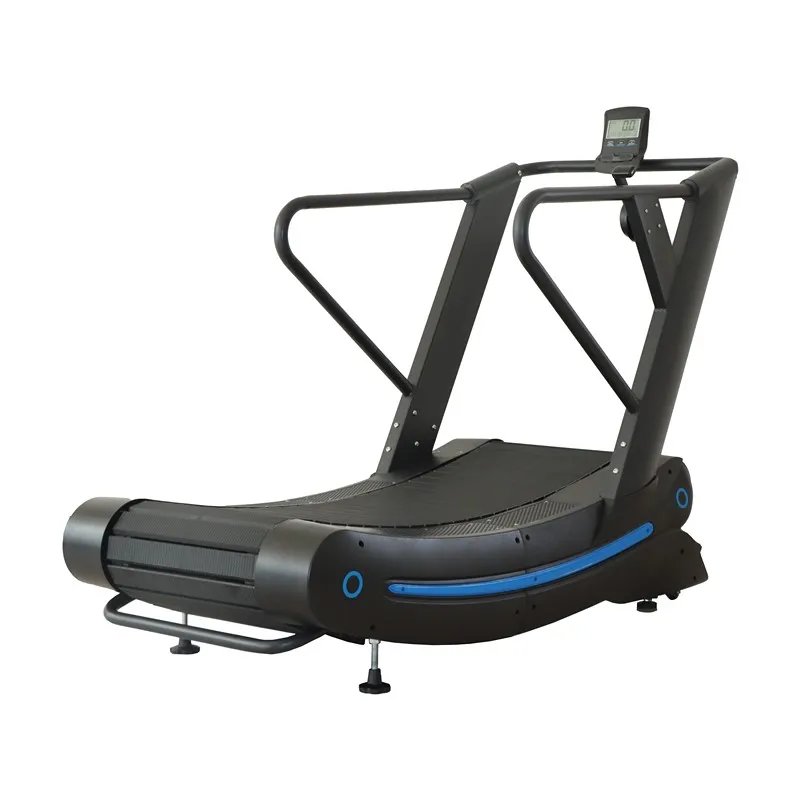
![Mt026m Electric Fold Fitness Home Use Treadmill for Fat Burning [WARN] draft identifier mismatch](https://bicksport.com/wp-content/uploads/2026/08/mt026m-electric-fold-fitness-home-use-treadmill-for-fat-burning-warn-draft-identifier-mismatch-738bd4.webp)
Quiet Residential Deployment — DC motor drive with foldable frame addresses both acoustic transmission and spatial constraints in shared living environments.
Technical Specifications
| Parameter | Value |
|---|---|
| Designation | MT026M |
| Product Type | Foldable Treadmill |
| Motor Type | DC |
| Motor Power | 1.5HP ¹ |
| Speed Range | 1–12 km/h |
| Running Surface | 1200 × 460 mm |
| Console Type | LCD (Speed / Distance / Time / Calories / Pulse) |
| Preset Programs | 12 |
| Foldable | Yes |
| Product Unfold Size | 1465 × 750 × 1150 mm |
| Product Folded Size | 1465 × 750 × 390 mm |
| Net Weight | 46.0 kg |
| Material | ABS |
| Certification | CE, RoHS |
| OEM/ODM Custom | Yes |
¹ Peak or continuous duty rating not specified in source documentation — confirm with manufacturer test data before deployment scoping.
Application Suitability
| Deployment Scenario | Typical Use |
|---|---|
| High-end residential apartment fitness room | Low-impact cardio in noise-sensitive shared spaces above occupied units |
| Compact home gym | Daily walking and jogging routines for individual or family use |
| Boutique wellness studio supplementary zone | Light cardio warm-up station alongside primary strength and group-training areas |
Why a Foldable Home Treadmill DC Motor Matters in Noise-Sensitive Floors
DC drive architecture produces lower baseline acoustic output than AC-driven commercial units, making it the defensible choice for apartment-level deployment.
When treadmills sit directly above occupied rooms, motor hum and belt slap transmit through concrete slabs and trigger noise complaints that reach property management before maintenance teams ever log a ticket. [NEED_CITE: structural noise transmission pathways in multi-story residential fitness deployments] A foldable home treadmill DC motor configuration reduces that transmission at the source — the DC motor generates less electromagnetic vibration at idle and low speed, while the foldable chassis lets operators retract the unit entirely when the room is not in use, eliminating standby hum altogether. The 1200 × 460 mm running surface keeps the deck footprint compact without sacrificing stride accommodation for most adult users.
Positioning Within a Compact Cardio Layout
The MT026M covers walking through moderate jogging intensities, filling the steady-state cardio slot in residential and home fitness configurations. It pairs with resistance-training stations or bodyweight zones where square footage is limited and every unit must justify its floor area. The foldable frame collapses to 390 mm depth, freeing usable floor space during off-hours. This foldable home treadmill DC motor platform suits users up to the rated chassis capacity and accommodates strides within the 1200 mm belt length, making it appropriate for most adult walkers and joggers in a shared residential setting.
Continuous Operation and Deployment Environment Constraints
At 1.5HP, this DC motor is rated for home-duty cycles rather than continuous commercial operation, meaning daily run times should be managed to avoid thermal accumulation in the windings. [NEED_CITE: motor duty cycle classification for continuous versus intermittent residential use] The foldable home treadmill DC motor configuration performs best in climate-controlled interiors where ambient temperature stays within standard residential ranges. Deployment on upper floors requires attention to slab thickness and underlying ceiling construction to manage low-frequency vibration transfer. A dedicated circuit with correct voltage and plug standard prevents tripped breakers during motor startup surges.
Reading the Drive and Console Specifications
DC motors in this power class operate with permanent magnets rather than field windings, which eliminates the brush noise and heat generation associated with universal motors at comparable output. The distinction between peak and continuous horsepower matters here — a 1.5HP peak rating indicates maximum instantaneous output during acceleration, not sustained load capacity across a full session. The LCD console surfaces speed, distance, time, calories and pulse readings, giving users self-monitored feedback without requiring external device pairing. Heart rate is captured through grip sensors on the handlebar, which provides adequate trend monitoring for steady-state work though it may lag during rapid intensity transitions. The 12 preset programs offer structured interval and tempo options that reduce the cognitive load on users who want guided sessions without manual speed adjustments.
The Cost of Underspecified Drive Components
Home-grade motors installed in environments with higher daily usage accumulate thermal stress that shortens winding insulation life, leading to premature failure that shows up as intermittent shutdowns before total burnout. [NEED_CITE: thermal degradation patterns in undersized treadmill motors under extended duty cycles] Insufficient belt deck cushioning generates repeated impact feedback that users attribute to joint discomfort, driving member attrition in shared facilities. Units deployed without verifying voltage and plug compatibility arrive on-site requiring electrician intervention or adapter workarounds that void warranty coverage. Foldable mechanisms that lack cycle-test validation develop hinge play over time, introducing lateral wobble that degrades running stability.
Why This Product Line Addresses Those Gaps
Every unit undergoes noise level verification against the deployment environment’s acoustic threshold before shipment. Durability testing on motors, frames and bearings follows a 10,000-hour protocol that exposes thermal and mechanical weak points before they reach the field. The six-series cardio family means a residential facility can source treadmills, bikes, ellipticals and rowers from a single engineering platform with matched console interfaces. OEM customization extends to console UI layout and branding, so the LCD display reflects the facility’s identity. Free 3D cardio-zone layout planning accounts for the MT026M’s folded and unfolded footprints, ensuring clearance for safe mounting and dismounting within the available square footage. Technical support responds around the clock for commissioning questions and spare-parts identification.
Documentation & Test Records
- CE declaration of conformity covering electrical safety and EMC compliance for this foldable treadmill platform
- EN 957 test report validating structural integrity and safety requirements for stationary training equipment
- ISO 957 noise level test report documenting acoustic output under defined load conditions
- Motor specification sheet detailing DC drive characteristics, duty cycle rating and thermal limits
- Console technical documentation with LCD display parameters and pulse sensor calibration data
- Installation and commissioning guide with foldable mechanism operation and belt tensioning procedures
Installation, Commissioning & Maintenance
- Allow minimum clearance around the 1465 × 750 mm unfolded footprint for safe user mounting and dismounting
- Place on a level surface with vibration-dampening mat to reduce slab transmission from the 46 kg chassis
- Connect to a dedicated circuit matching target market voltage and plug standard to prevent startup surge trips
- Run initial calibration sequence to verify LCD speed readout accuracy against actual belt velocity
- Inspect belt alignment and lubricate deck surface at intervals specified in the commissioning guide
- Wipe console and handlebar grip sensors after each use to prevent sweat corrosion on ABS housing
Sizing Your Inquiry
Provide the intended deployment area dimensions and unit count so we can generate a 3D layout with airflow and clearance planning for the foldable chassis. Specify expected daily usage duration per unit to confirm whether the DC motor duty cycle matches your operational pattern. Identify the deployment floor and adjacent occupied spaces so we can verify acoustic requirements against test data. Confirm your target market voltage and plug standard, and note whether LCD console data needs to interface with any facility management software.
Frequently Asked Questions
Q: What is the difference between continuous duty and peak horsepower on the MT026M?
A: Peak horsepower measures maximum instantaneous motor output during acceleration bursts, while continuous duty reflects sustained thermal capacity under steady load. The 1.5HP rating on this unit requires manufacturer test data to confirm which metric applies. For residential deployments with multiple daily users, continuous duty rating determines whether the motor can handle back-to-back sessions without thermal shutdown.
Q: How does DC motor noise compare to AC motors in apartment-level fitness rooms?
A: DC motors generate less electromagnetic vibration and operate with lower baseline hum at idle and walking speeds compared to AC-driven commercial units. This difference is most noticeable in multi-story residential buildings where low-frequency vibration transmits through floor slabs. The MT026M’s DC drive is specified for these noise-sensitive shared environments where acoustic complaints are a primary deployment concern.
Q: Can the LCD console interface with third-party fitness applications?
A: The standard LCD console displays speed, distance, time, calories and pulse locally without external data export capability. For facilities requiring app synchronization or facility management system integration, OEM customization scoping during the inquiry phase determines whether the console hardware supports the necessary communication protocols. Specify this requirement before production to evaluate feasibility.
Q: What maintenance does the belt deck require under regular home use?
A: The running belt requires periodic inspection for lateral drift and tension loss, with deck lubrication applied at intervals documented in the commissioning guide. Grip heart rate sensors on the handlebar should be wiped clean after each session to maintain conductivity. The foldable hinge mechanism benefits from occasional visual inspection for fastener tightness to preserve frame rigidity during use.
![Home Gym Fitness Machine Stairmaster Stepper Stair Climber [WARN] draft identifier mismatch](https://bicksport.com/wp-content/uploads/2026/08/home-gym-fitness-machine-stairmaster-stepper-stair-climber-warn-draft-identifier-mismatch-3db19b.webp)