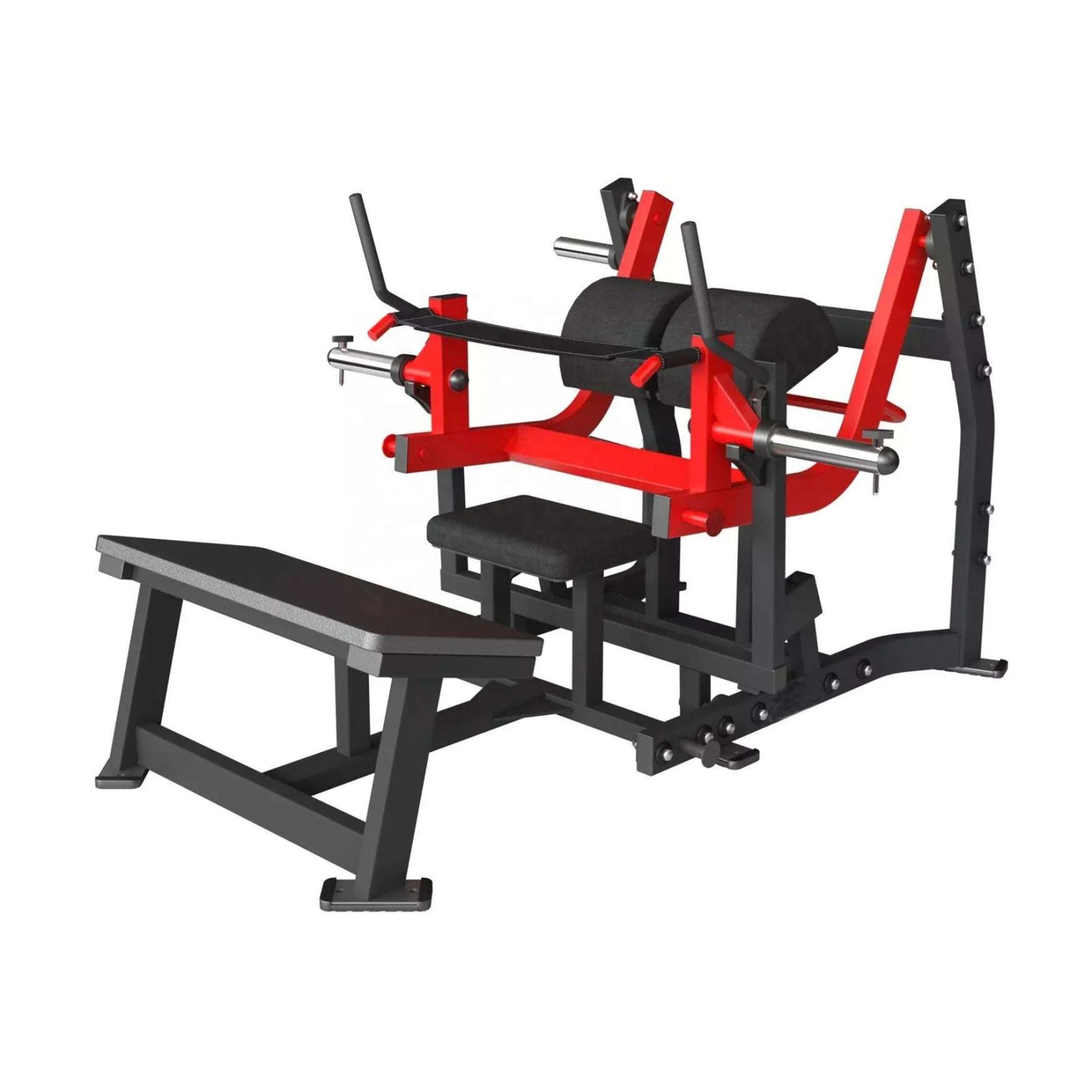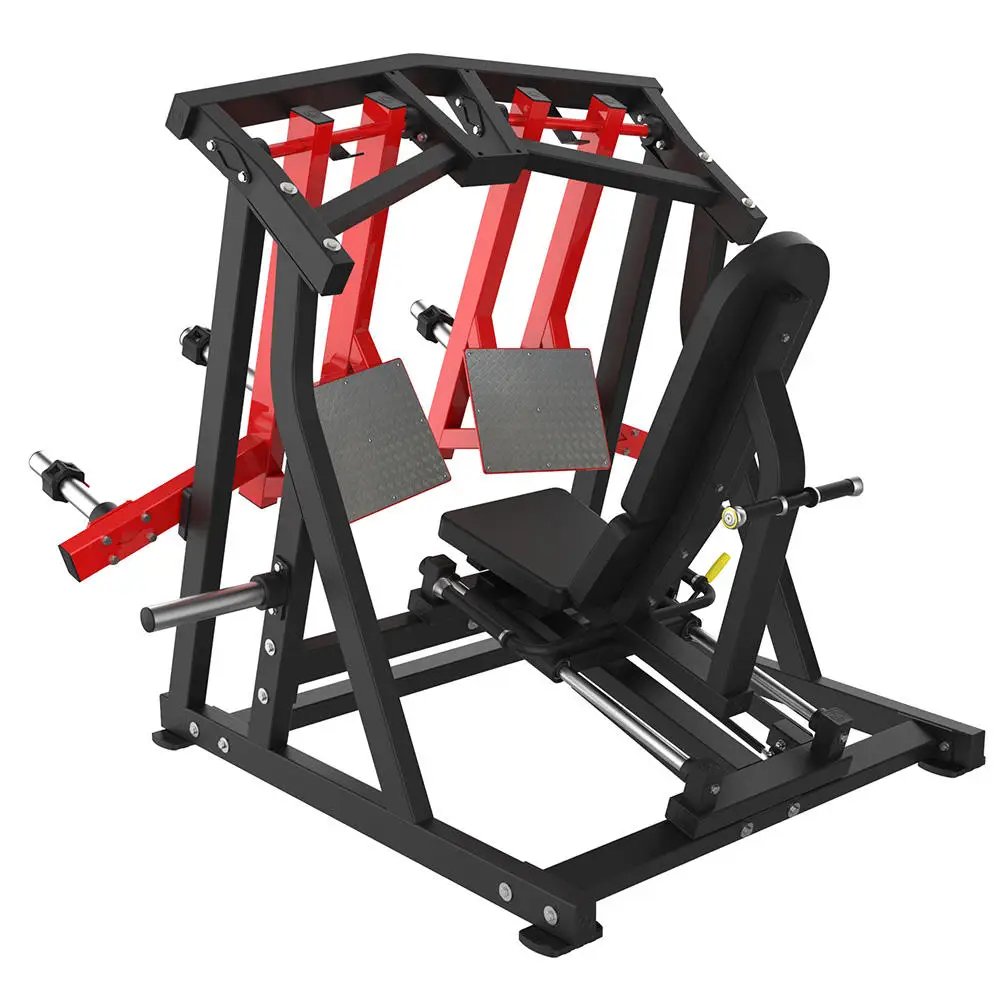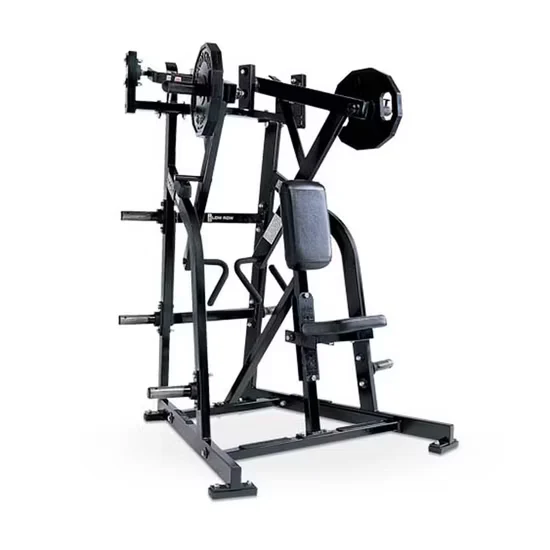
Whisper-Quiet Drive Architecture — independent arm bearings and reinforced steel frames keep the H5005 ISO-Lateral Low Row operating smoothly under continuous commercial gym loads.
Technical Specifications
| Parameter | Value |
|---|---|
| Designation | H5005 |
| Product Type | ISO-Lateral Low Row |
| Exercise Part | Chest |
| Frame Material | Steel |
| Resistance Type | Free weight plate-loaded |
| Max User Weight | Not specified in source |
| Product Dimensions | 1250 × 1056 × 1700 mm |
| Net Weight | 135 kg |
| Color Options | Optional |
| OEM | Available |
| Certification | ISO 9001, CE |
| Application | Fitness Center / Gymnasium |
| Age Group | Adult |
| Gender | Unisex |
| Function | Body Building |
| Production Capacity | 500 Units Per Month |
| HS Code | 9506911900 |
Application Suitability
| Deployment Scenario | Typical Use |
|---|---|
| hotel fitness center on guest room floors | low-noise chest training for early-morning and late-night guest sessions |
| chain gym cardio-to-strength transition zone | independent-arm rowing between high-traffic cardio and free weight areas |
| corporate wellness room | compact plate-loaded strength station for time-limited employee workouts |
| high-end residential home gym | durable steel-frame chest equipment for daily personal training |
| sports performance training center | unilateral rowing for athlete scapular stability and bilateral symmetry assessment |
Why Independent Arm Drift Destroys Shoulder Comfort in Commercial Gyms
ISO-lateral movement eliminates the forced synchronization that causes shoulder shear on fixed-path machines.
When a chain gym installs fixed-path low row stations, members with unilateral imbalances instinctively compensate through the stronger side. Over weeks of high-frequency use, the uneven load accelerates bearing wear and causes the arm carriage to drift off its intended arc. Complaints surface as shoulder discomfort during peak hours, and maintenance tickets accumulate faster than the service contract covers [NEED_CITE: bearing wear patterns on fixed-path vs independent-arm strength equipment]. The commercial ISO-lateral low row machine chest strength equipment category addresses this by allowing each arm to travel its own natural pulling arc, which keeps load distribution honest and reduces asymmetric joint stress.
Where the H5005 Fits in a Commercial Strength Floor Plan
This plate-loaded ISO-lateral low row targets the mid-back and chest retraction pattern, filling the horizontal pulling gap between lat pulldowns and cable rows. In a standard strength zone, it complements vertical pull stations and free weight bench areas by providing a guided yet independent movement path. The 1250 × 1056 mm footprint allows placement along perimeter walls or as an island station with adequate clearance on all sides. The steel frame accommodates adult users across a wide size range, and the plate-loaded horns accept standard Olympic plates, so resistance scales from rehabilitation loads to advanced athlete programming without requiring pin-stack cable changes. This commercial ISO-lateral low row machine chest strength equipment unit handles moderate to high daily throughput in facilities where members expect consistent movement feel session after session.
Continuous Load Expectations and Deployment Environment Factors
A hotel fitness center running from 5 AM to 11 PM places different demands on strength equipment than a members-only gym with capped daily traffic. The H5005 relies on sealed bearings and a welded steel frame rather than electronic motors, so its continuous-use rating depends on mechanical wear cycles rather than thermal duty limits. Noise transmission through floor slabs matters most when the strength zone sits directly above or beside occupied rooms; plate-loaded machines generate lower ambient noise than selectorized pin-stack units, but plate clatter and frame resonance still require attention to floor damping pads [NEED_CITE: structure-borne vibration transmission from plate-loaded equipment on suspended floors]. Adequate ventilation around the unit prevents sweat accumulation on steel surfaces, and a dedicated level subfloor ensures the frame does not rock during unilateral loading. Power is not a concern for this plate-loaded design, but lighting and sightline planning affect member adoption rates in the zone where it is placed.
Plate-Loaded Horns, Sealed Bearings, and the Steel Frame Logic
The H5005 uses independent plate-loaded horns rather than a cable-and-pulley selectorized stack. This eliminates cable stretch, pulley bearing degradation, and pin wear that plague high-traffic pin-stack machines over time. Each arm pivots on its own sealed bearing assembly, which allows the single-arm rowing motion to follow the user’s natural scapular retraction path without the other side forcing a mirror-image trajectory. The welded steel frame provides the rigidity needed to resist torsional flex when a member loads one side significantly heavier than the other. Olympic-compatible horns accept standard bumpers and iron plates already present in most commercial facilities, so there is no proprietary plate cost or supply chain dependency. The 135 kg net weight anchors the unit against lateral shift during heavy unilateral sets, reducing the need for floor bolt-down in most installations. This commercial ISO-lateral low row machine chest strength equipment design prioritizes mechanical simplicity over electronic features, which translates to fewer service calls in environments where maintenance response time is measured in days rather than hours.
The Hidden Cost of Cutting Corners on Arm Carriage Bearings
Strength machines with undersized or unsealed arm bearings develop play within months of continuous commercial operation. That play translates into lateral wobble during the rowing stroke, which members perceive as instability and which physical therapists flag as a potential impingement risk. Once a carriage develops noticeable play, the machine sits out of service until the bearing cartridge is replaced — and if the manufacturer uses a proprietary bearing size, lead times stretch into weeks [NEED_CITE: commercial gym equipment downtime caused by proprietary bearing replacements]. Selectorized cable machines add another failure layer: frayed cables snap under load, pulley wheels develop flat spots, and selector pins bend when members force them between plates. A plate-loaded ISO-lateral design with standard sealed bearings sidesteps every one of those failure modes, keeping the unit operational and reducing the maintenance backlog that drives member dissatisfaction in busy facilities.
Why This Product Line Holds Up Under Real Deployment Conditions
The H5005 benefits from a manufacturing process that covers frame welding, CNC machining, assembly, and QC testing under one roof, which keeps tolerance control consistent across production runs. Each unit undergoes durability testing aligned with the 10,000-hour continuous-operation benchmark established across the commercial range [NEED_CITE: durability test protocol for commercial strength equipment frames and bearings]. OEM customization extends to frame color, upholstery leather, and branded badges, allowing hotel groups and chain gyms to maintain visual identity across locations without compromising structural specifications. The 3D layout service factors in this unit’s 1250 × 1056 mm footprint along with adjacent equipment clearances, member flow lanes, and HVAC airflow paths so the strength zone does not become a dead corner. Technical support responds around the clock, and spare parts — including replacement bearing cartridges and upholstery pads — ship from the same facility that built the frame. This commercial ISO-lateral low row machine chest strength equipment integrates into a six-series cardio and strength ecosystem so a facility can source multiple disciplines from a single production line.
Documentation & Test Records
- CE declaration of conformity covering the H5005 frame and mechanical assemblies
- EN 957 test report validating structural integrity under static and cyclic loading
- ISO 9001 certificate for the manufacturing quality management system
- Durability test record documenting bearing and frame cycle counts
- OEM customization specification sheet with color, upholstery, and branding options
- Spare parts list with bearing cartridge and plate horn replacement part numbers
Installation, Commissioning & Maintenance
- Allow minimum clearance on all four sides of the 1250 × 1056 mm footprint for safe plate loading and arm travel
- Level the steel frame on a flat subfloor using adjustable foot cups to eliminate rocking during unilateral sets
- Place vibration-damping pads beneath the base rails when deploying on suspended floors above occupied rooms
- Inspect sealed bearing cartridges for lateral play every quarter and replace if detectable wobble appears
- Wipe down steel frame and upholstery after each use cycle to prevent sweat-induced corrosion and leather degradation
- Verify plate horn retaining clips are secure before each operational day to prevent plate dislodgement during sets
How to Scope This Unit for Your Facility
Provide your strength zone square footage and adjacent equipment list to receive a 3D layout that positions the H5005 within member flow and ventilation corridors. Specify daily operating hours and expected peak-session user volume so the deployment plan accounts for bearing wear intervals and upholstery replacement timelines. Indicate whether the unit will sit on a ground-level slab or a suspended floor above guest rooms or office spaces, as this determines floor damping requirements. State your target market region so plate compatibility and labeling meet local regulatory expectations. Confirm whether OEM color and branding customization is needed to match an existing facility visual system.
Frequently Asked Questions
Q: How does ISO-lateral arm movement differ from a fixed-path low row machine?
A: Fixed-path machines link both handles to a single carriage, forcing both arms to move in mirror-image synchronization. ISO-lateral design gives each arm its own independent pivot and bearing, so the left and right sides can travel different distances and at different speeds. This accommodates natural bilateral asymmetry and allows unilateral training without the other arm being forced through a range it cannot match.
Q: What maintenance do sealed bearings require on plate-loaded strength equipment?
A: Sealed bearings are pre-lubricated and enclosed to keep dust and moisture out, so they do not need routine greasing. The main maintenance task is a periodic check for lateral play by gripping the arm and attempting to wobble it side to side. If play is detectable, the bearing cartridge should be replaced. In high-traffic commercial environments, this inspection is typically scheduled quarterly.
Q: How do plate-loaded and pin-stack machines compare on long-term operating cost?
A: Plate-loaded units have fewer moving parts — no cables to replace, no selector pins to bend, no pulley wheels to wear flat. Plates themselves are already present in most gyms for barbell training. Pin-stack machines carry recurring costs for cable replacement, pulley service, and pin mechanism repair. Over several years of commercial use, the plate-loaded design generally accumulates lower maintenance expenses despite requiring manual plate changes.
Q: What layout factors matter when placing strength equipment in a commercial zone?
A: Member flow direction, sightlines from the entrance, HVAC airflow reach, and emergency egress clearance all affect how often a station actually gets used. Equipment placed in dead corners with poor airflow sees lower utilization regardless of quality. A 3D layout that maps the H5005 footprint against adjacent unit clearances and ventilation paths helps ensure the station sits in a zone members naturally pass through and feel comfortable occupying.
Q: What can be customized under OEM for the H5005?
A: Frame color, upholstery leather grade and color, branded logo badges, and plate horn specifications can all be adjusted to match a facility’s visual identity. Minimum order quantities and lead times depend on the scope of customization. Console UI customization applies to the cardio product lines rather than this plate-loaded unit, but the strength frame branding options cover the primary visual touchpoints members see.
![Commercial Adjustable Bench Steel Frame Gym Equipment [WARN] draft identifier mismatch](https://bicksport.com/wp-content/uploads/2026/08/commercial-adjustable-bench-steel-frame-gym-equipment-warn-draft-identifier-mismatch-9d5af8.webp)