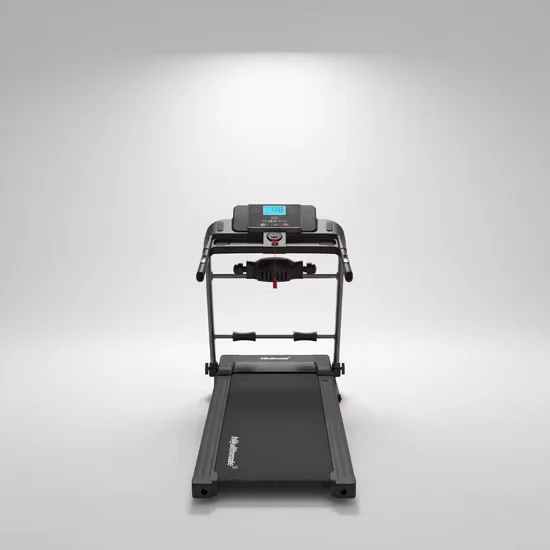
Acoustic-Optimized Drive — The MT296 foldable treadmill employs a DC motor platform engineered for quiet daily operation in noise-sensitive residential and light-commercial environments.
Technical Specifications
| Parameter | Value |
|---|---|
| Product Type | Foldable Treadmill |
| Motor Type | DC |
| Motor Power | DC 2.0 HP* |
| Speed Range | 1–20 km/h |
| Running Surface | 1200 x 520 mm |
| Console Type | LCD Screen |
| Programs | 16 |
| Heart Rate | Pulse sensors |
| Product Unfold Size | 1580 x 865 x 1300 mm |
| Product Folded Size | 910 x 865 x 1345 mm |
| Net Weight | 64.0 kg |
| Foldable | Yes |
| Material | ABS |
| Color Options | Available in multicolor options |
| OEM/ODM Custom | Available |
| Certification | CE, RoHS |
*Peak or continuous rating not specified — confirm duty classification with manufacturer documentation before procurement.
Application Suitability
| Deployment Scenario | Typical Use |
|---|---|
| High-end residential home gym | Daily running and walking in apartments or upstairs rooms where noise transfer to neighbors is a concern |
| Corporate wellness room | Moderate-traffic employee fitness space with structured cardio sessions during break hours |
| Boutique studio recovery zone | Warm-up and cool-down station between group classes or personal training sessions |
| Light-commercial community fitness room | Shared cardio equipment in residential community centers with moderate daily user traffic |
Why Noise Complaints Reach the Front Desk Before Maintenance Does
Quiet drive systems prevent problems that maintenance tickets never solve.
In my years testing transmission noise on the workshop floor, the pattern was always the same: a consumer-grade treadmill placed in an upstairs apartment or beside a hotel guest room generates low-frequency vibration that travels through floor slabs long before the motor itself fails. Residents and guests file complaints about the hum, not the horsepower. The foldable motorized treadmill DC motor home fitness platform addresses this at the source — a DC drive that produces lower acoustic output during moderate daily run-times compared to heavier AC alternatives. [NEED_CITE: acoustic transmission through concrete floor slabs from cardio equipment vibration]
When operators select equipment based solely on peak horsepower figures, they miss the variable that actually determines whether the machine stays deployed or gets pulled from the floor after the third noise complaint.
Positioning the MT296 Within a Compact Cardio Zone
This foldable motorized treadmill covers steady-state walking through moderate-intensity running, with the 1–20 km/h speed range and 16 preset programs supporting structured sessions from recovery pace to tempo work. In a compact cardio zone, it pairs naturally with an exercise bike or elliptical to offer users a non-impact alternative without demanding additional square footage. The 1200 x 520 mm running surface accommodates most adult stride patterns while the foldable frame reclaims floor space between sessions. The LCD console tracks speed, distance, time, calories, and pulse, providing essential session data without requiring network connectivity — a deliberate fit for facilities that need reliable standalone tracking.
Continuous Operation and Deployment Environment Requirements
The DC motor in this unit is suited for moderate daily duty cycles typical of home and light-commercial environments, where total run-time per day stays within thresholds that allow adequate cooling between sessions. [NEED_CITE: motor duty cycle classification for continuous commercial operation] Deploying the MT296 on upper floors of residential buildings or above occupied hotel rooms requires attention to subfloor rigidity and vibration isolation pads beneath the frame. The unit requires a standard dedicated circuit matching the target market voltage — confirming plug type and frequency before production avoids costly on-site rewiring. Facilities planning to aggregate usage data should note that the LCD console provides on-screen tracking only and does not include networked data export interfaces.
Reading the Electrical and Drive Specifications
The DC motor architecture is common in home and light-commercial treadmill platforms because it delivers smooth acceleration at lower acoustic levels than comparably rated AC motors, which require heavier components and generate more heat under sustained load. The distinction between peak and continuous horsepower matters here: a 2.0 HP peak rating indicates maximum output during short bursts, not the sustained thermal capacity the motor can maintain over a full training session. [NEED_CITE: peak versus continuous horsepower measurement standards for treadmill motors] The 1–20 km/h speed range covers everything from rehabilitation walking to sustained running for most recreational users. Pulse sensors integrated into the handlebars provide real-time heart rate readings suitable for pacing guidance, though grip-based collection can drift during high-intensity intervals when users release contact. The ABS material construction keeps overall unit weight at 64 kg, which supports the foldable mechanism while requiring a level, stable surface to prevent frame shift during operation.
The Hidden Cost of Underspecifying Drive Components
Operators who select treadmills based on price-per-unit without matching motor duty cycles to actual daily traffic consistently see two failure modes. The first is thermal shutdown: a motor rated for intermittent home use accumulates heat faster than it can dissipate in a community fitness room with back-to-back users, leading to repeated thermal cut-offs and eventually winding failure. The second is noise escalation: vibration that seems acceptable during a showroom test becomes a complaint magnet once the unit sits above a conference room or guest suite. [NEED_CITE: treadmill motor failure rates in commercial versus residential duty cycle environments] Either failure mode results in equipment replacement costs that far exceed the initial savings from selecting a lower-specification drive system.
Why This Product Line Fits the Deployment
The MT296 is part of a full cardio family where every discipline sources from a single manufacturing line, simplifying maintenance parts and visual consistency across a facility. Quiet operation has been validated through hotel deployment experience where sub-35dB targets matter for guest satisfaction. Components undergo durability testing protocols designed to verify sustained performance under repeated daily use. The foldable footprint of this specific unit — 910 x 865 mm when stored — allows 3D cardio-zone layouts to allocate clearance and airflow around stored equipment, not just deployed dimensions. OEM customization covers console labeling and color to match facility branding. Documentation and 24/7 technical support are structured around commercial deployment timelines, not consumer retail cycles.
Documentation & Test Records
- CE declaration of conformity covering the MT296 electrical safety requirements
- EN 957 test report validating mechanical and structural performance criteria
- ISO 957 compliance documentation for stationary training equipment standards
- RoHS certification confirming restriction of hazardous substances in components
- Noise level test report documenting acoustic output during operation
- Motor specification sheet detailing DC drive thermal and duty cycle parameters
- LCD console technical documentation with display parameter descriptions
- Installation and commissioning guide with site preparation requirements
- Spare parts list covering wearable and replaceable components
Installation, Commissioning & Maintenance
- Allow minimum clearance around the 1580 x 865 mm unfolded footprint for safe user mounting and dismounting
- Place vibration isolation pads beneath the frame to reduce structure-borne noise on upper floor deployments
- Connect to a dedicated circuit matching target market voltage and plug standard before first power-on
- Run the belt at low speed during first commissioning to verify tracking and tension alignment
- Inspect belt tension and deck lubrication at intervals based on weekly usage volume
- Clean LCD console surface and pulse sensor contacts with non-abrasive, non-solvent wipes after use
- Wipe down ABS frame and handrails after each session to prevent sweat corrosion on contact surfaces
Scoping Your Equipment Selection
Provide your cardio zone square footage and target unit count to receive a 3D layout with equipment spacing and airflow recommendations. Specify expected daily run-time per unit so motor duty cycle can be matched to your traffic pattern. Confirm the deployment floor level and what occupies adjacent or below-grade spaces to verify acoustic suitability. State your target market voltage and plug standard to ensure production matches site electrical infrastructure.
Frequently Asked Questions
Q: What is the difference between peak and continuous HP, and how does it affect treadmill lifespan?
A: Peak horsepower measures maximum motor output during brief acceleration bursts, while continuous horsepower reflects sustained thermal capacity under ongoing load. A motor frequently operated near its peak rating without adequate cooling accumulates thermal stress, shortening winding insulation life. For moderate daily use in home or light-commercial settings, confirming the continuous duty rating ensures the motor operates within its thermal design envelope.
Q: How does a DC motor compare to an AC motor for noise and daily duty cycle?
A: DC motors typically run quieter and cooler under moderate loads because they use lighter rotating components and simpler drive electronics. They suit environments with daily sessions of moderate duration. AC motors handle heavier continuous-duty cycles with greater thermal headroom but generate more acoustic output and require more substantial frames, making them better matched to high-traffic commercial floors.
Q: Can the LCD console data be exported or integrated with third-party fitness apps?
A: The LCD console displays real-time session metrics including speed, distance, time, calories, and pulse on screen for user reference. It does not include wireless connectivity or data export interfaces. Facilities requiring aggregated usage analytics or member app synchronization should consider models equipped with IoT-enabled console platforms that support network integration.
Q: What noise level can be expected during operation, and is it suitable for upstairs residential use?
A: The DC motor platform produces lower acoustic output during operation compared to heavier commercial AC alternatives. Actual perceived noise depends on subfloor construction, vibration isolation measures, and user running style. Upper-floor deployments benefit from placing isolation pads beneath the frame and ensuring the subfloor is rigid enough to prevent structure-borne resonance transmission.
Q: How does the foldable mechanism affect frame rigidity and long-term durability?
A: The foldable design incorporates a pivot mechanism that allows the deck to stow vertically, reducing the stored footprint to 910 x 865 mm. When deployed and locked, the frame maintains structural rigidity suitable for running at speeds up to 20 km/h. Long-term durability depends on the locking mechanism receiving proper engagement before each use and the pivot hardware being inspected periodically for wear.
![MT296 Electric Fitness Home Use Treadmill for Training [WARN] draft identifier mismatch](https://bicksport.com/wp-content/uploads/2026/08/mt296-electric-fitness-home-use-treadmill-for-training-warn-draft-identifier-mismatch-8819c9.webp)