
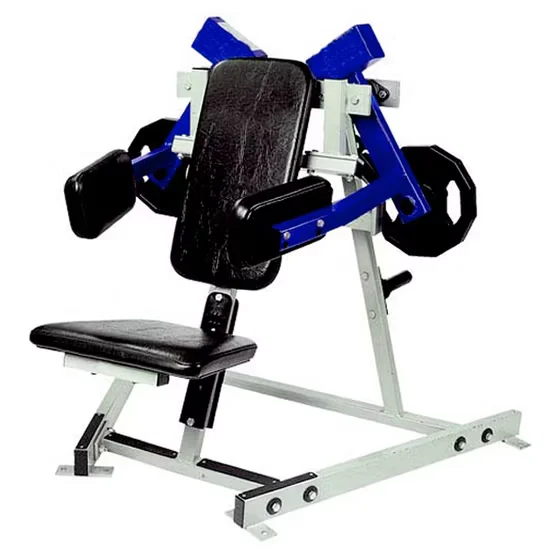
Steel Pivot Durability — Manual resistance with sealed bearings eliminates motor failure risk in 24/7 strength zones.
Technical Specifications
| Parameter | Value |
|---|---|
| Product Type | Lateral Raise Machine |
| Model NO. | OS-H5010 |
| Exercise Part | Arm |
| Function | Body Building |
| Power Source | Manual |
| Material | Steel |
| Resistance Type | Plate-loaded / selectorized |
| Product Dimensions | 105015061300mm |
| Net Weight | 102kg |
| Folded | Unfolded |
| Age Group | Adult |
| Gender | Unisex |
| Application | Fitness Center |
| Color | Optional |
| OEM | Available |
| Certification | ISO 9001, CE |
Application Suitability
| Deployment Scenario | Typical Use |
|---|---|
| hotel fitness center on guest room floors | quiet, motor-free shoulder isolation for early-morning and late-night sessions without noise complaints |
| chain gym cardio zone | high-frequency lateral deltoid work between cardio intervals, zero electronic downtime |
| corporate wellness room | low-maintenance strength station for employees during short breaks |
| high-end residential home gym | compact steel-frame station for dedicated shoulder training without motorized noise |
| sports performance training center | biomechanically aligned medial deltoid isolation for athlete conditioning programs |
Why Pivot Bearings Fail Before the Frame Does
Commercial-grade pivot bearings outlast the surrounding steel when duty cycles exceed eight hours daily.
Strength equipment in high-traffic facilities rarely fails at the frame — it fails where rotation meets load. The pivot axis on a lateral raise machine endures repetitive off-center force vectors that wear standard bushings within months. When bearings degrade, the movement path shifts, creating compensatory shoulder mechanics and member complaints. Facility operators often replace entire units because the pivot assembly was never designed for continuous commercial operation [NEED_CITE: bearing load rating standards for commercial strength equipment].
Where This Station Fits in a Strength Zone Layout
The commercial lateral raise machine occupies a focused isolation role within a broader strength training configuration. It pairs naturally with overhead press stations and cable crossover systems, allowing members to progress from compound pressing movements into targeted medial deltoid work. The 105015061300mm footprint requires standard spacing clearance on three sides for safe plate loading and full arm extension. This equipment suits moderate-to-high traffic placement near other upper-body stations, accommodating users across a wide range of shoulder mobility and strength levels through its manual resistance system.
Continuous Operation Without Motor Dependency
Because this machine runs entirely on manual plate-loaded or selectorized resistance, it bypasses every failure mode associated with electronic components — no motor burnout, no console firmware crashes, no wiring faults under continuous use. Facilities deploying this station on guest room floors or shared residential levels benefit from completely silent operation between sets. The steel frame and 102kg net weight provide inherent stability without requiring anchored floor mounts, though level flooring remains essential for consistent pivot alignment [NEED_CITE: floor leveling requirements for plate-loaded strength equipment]. Voltage mismatches and plug standard issues never enter the deployment conversation.
Manual Resistance and Pivot Engineering Explained
The manual power source eliminates the single most common failure point in commercial strength equipment: the motor or electronic resistance mechanism. Plate-loaded and selectorized configurations both deliver consistent resistance curves through the full range of motion, with no calibration drift over time. The reinforced steel frame supports the pivot axis under heavy unilateral loads, maintaining biomechanical alignment with the shoulder joint throughout each repetition. Sealed bearings at the pivot point prevent contamination from sweat and dust — the two primary accelerants of bearing wear in gym environments. The unfolded, floor-standing design at 102kg net weight resists lateral shifting during intense sets without requiring bolted installation.
What Spec Compromises Cost in Strength Equipment
Facilities that select lateral raise machines with undersized pivot bearings face predictable consequences: uneven resistance curves that members notice within weeks, followed by grinding noises and eventual seizure. Lightweight frames under 80kg shift during heavy sets, creating safety concerns and floor damage. Equipment without proper seal protection on bearings degrades rapidly in humid environments or facilities with poor ventilation. When these failures occur across multiple units, operators face batch replacement costs far exceeding the initial savings from choosing lower-spec equipment [NEED_CITE: total cost of ownership for commercial strength equipment].
Why This Product Line Earns Its Placement
Every unit undergoes testing protocols that verify pivot bearing endurance under continuous high-frequency loading. The manual resistance architecture means maintenance intervals extend to periodic bearing inspection and frame bolt torque checks — no electronic diagnostics required. Full OEM customization covers frame color and branding, allowing facilities to maintain visual consistency across their strength zone. The compact footprint integrates into 3D layout planning alongside other upper-body stations, with airflow and member flow mapped before equipment ships. Documentation includes pivot bearing load ratings and frame material certifications, giving facility managers the verification they need before committing to a multi-unit order.
Documentation & Test Records
- CE declaration of conformity covering mechanical safety requirements
- EN 957 test report validating structural integrity under load
- ISO 9001 certificate confirming manufacturing process control
- Noise level test report confirming silent manual operation
- Durability test record for pivot bearing continuous-use cycles
- Frame material specification sheet with steel grade certification
Installation, Commissioning & Maintenance
- Maintain 800mm clearance on three sides for safe plate loading around the 105015061300mm frame
- Verify floor levelness before placement to preserve pivot axis alignment under load
- Inspect sealed pivot bearings quarterly and re-grease per maintenance schedule
- Torque-check all frame bolts at 90-day intervals to maintain structural rigidity
- Wipe steel surfaces with non-corrosive cleaner after each use to prevent sweat damage
- Confirm selectorized pin engagement or plate collar security before each training session
Equipment Selection and Deployment Planning
Provide your strength zone square footage and existing equipment list to receive a 3D layout that positions this lateral raise station within proper member flow and sightline planning. Specify average daily usage hours so bearing specifications can be confirmed against your facility’s traffic volume. Indicate deployment floor level and adjacent room types to verify that motor-free silent operation meets your acoustic requirements.
Frequently Asked Questions
Q: Plate-loaded vs. selectorized lateral raise — which configuration suits commercial gyms better?
A: Selectorized units allow faster weight changes between users, supporting higher throughput during peak hours. Plate-loaded configurations offer finer weight increments and lower initial cost per unit. The choice depends on your member traffic pattern: high-rotation facilities benefit from selectorized pins, while smaller studios or training centers often prefer the flexibility and cost structure of plate-loaded systems.
Q: How does pivot axis alignment affect shoulder joint safety?
A: The pivot point must align with the natural rotation center of the shoulder joint. Misalignment forces compensatory movement patterns that stress the rotator cuff and reduce medial deltoid activation. A biomechanically engineered pivot axis maintains consistent resistance through the full arc, minimizing joint shear forces and improving exercise effectiveness across different user body proportions.
Q: What maintenance schedule applies to commercial lateral raise machines in 24/7 facilities?
A: Manual resistance systems require minimal maintenance compared to motorized equipment. Quarterly inspection of pivot bearings for wear and smooth rotation is the primary requirement. Frame bolt torque verification every 90 days prevents loosening under repetitive loading. Sealed bearings reduce contamination risk, extending service intervals in most gym environments.
Q: How should lateral raise stations be positioned within a strength zone layout?
A: Place lateral raise machines adjacent to overhead press and cable crossover stations to create logical upper-body training flow. Maintain standard clearance on three sides for plate loading and full arm extension. Consider sightline placement so trainers can monitor form from central positions. Account for member movement patterns between compound and isolation exercises when planning station spacing.

![Body Building Gym Equipment Combo Twist Machine for Commercial Gyms [WARN] draft identifier mismatch](https://bicksport.com/wp-content/uploads/2026/08/body-building-gym-equipment-combo-twist-machine-for-commercial-gyms-warn-draft-identifier-mismatch-c6e089.webp)
![Hammer Strength Squat Lunge Machine for Commercial Gym Use [WARN] draft identifier mismatch](https://bicksport.com/wp-content/uploads/2026/08/hammer-strength-squat-lunge-machine-for-commercial-gym-use-warn-draft-identifier-mismatch-8ca3cf.webp)
![Hammer Strength ISO-Lateral D.Y. Row Commercial Gym Equipment [WARN] draft identifier mismatch](https://bicksport.com/wp-content/uploads/2026/08/hammer-strength-iso-lateral-d-y-row-commercial-gym-equipment-warn-draft-identifier-mismatch-bc5ba5.webp)