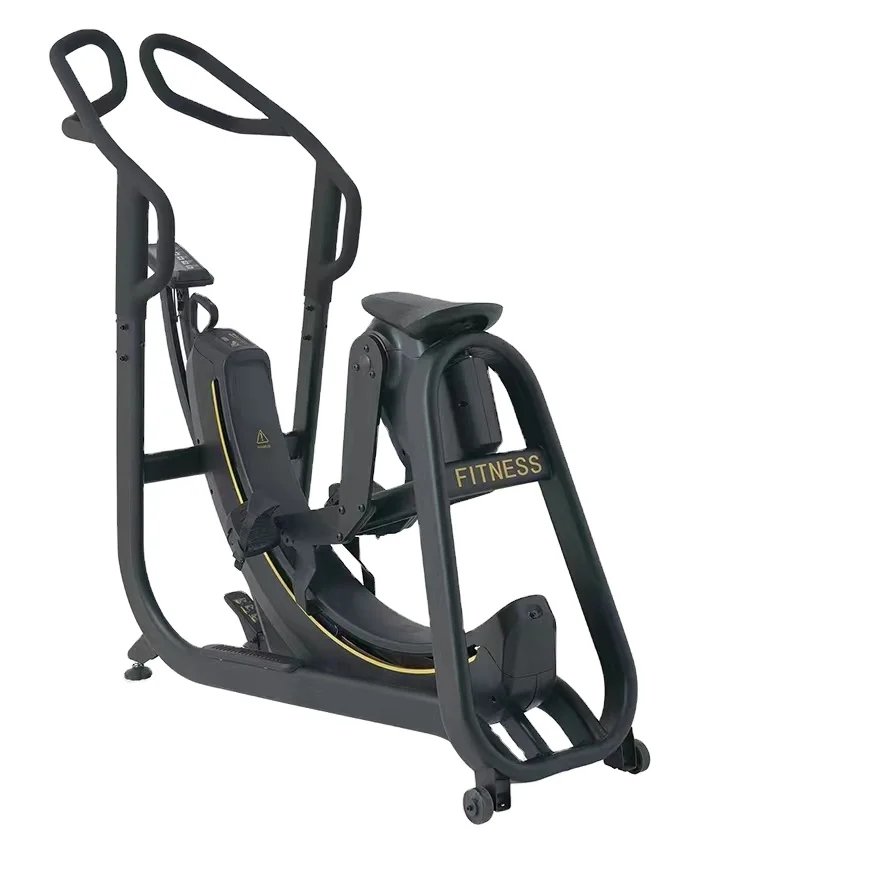
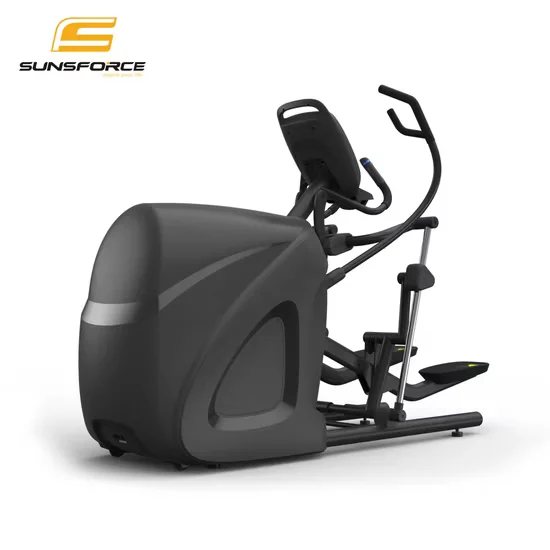
![High-End Germany Designed Elliptical Cross Trainer Commercial Gym Fitness Equipment [WARN] draft identifier mismatch](https://bicksport.com/wp-content/uploads/2026/08/high-end-germany-designed-elliptical-cross-trainer-commercial-gym-fitness-equipment-warn-draft-identifier-mismatch-86e336.webp)
Whisper-Quiet Magnetic Drive — Sub-35dB verified operation eliminates noise transfer through floor structures above occupied guest rooms.
Technical Specifications
| Parameter | Value |
|---|---|
| Designation | CTC60-T |
| Product Type | Elliptical Trainer |
| Resistance Type | Magnetic Resistance |
| Resistance Levels | 1-25 |
| Stride Grade | 1-10 |
| Step Depth Grade | 1-15 |
| Pedal Center Distance | 230mm |
| Max User Weight | 180kg |
| Product Dimensions | 21207901680mm |
| Net Weight | 240kg |
| Connectivity | IoT-enabled console with app sync |
| Certification | CE / EN 957 / ISO 9001 |
Application Suitability
| Deployment Scenario | Typical Use |
|---|---|
| hotel fitness center on guest room floors | 24-hour access requiring sub-35dB acoustic performance |
| chain gym cardio zone | high-frequency interval training with IoT data sync |
| corporate wellness room | extended daily runtime with minimal maintenance intervals |
| high-end residential home gym | shared acoustic environments requiring vibration isolation |
| sports performance training center | precise biomechanical load adjustments for athlete conditioning |
Why Magnetic Resistance Eliminates Front Desk Noise Complaints Before They Happen
Magnetic systems generate resistance without physical contact, removing the primary source of mechanical noise in shared acoustic environments.
When cardio equipment operates on floors directly above occupied guest rooms or residential units, belt-drive friction and flywheel vibration transmit structure-borne noise that registers as low-frequency complaints. The commercial elliptical trainer magnetic resistance architecture uses electromagnetic fields to create load, operating noticeably quieter than friction-based alternatives while eliminating the wear components that require scheduled maintenance shutdowns [NEED_CITE: structure-borne noise transmission in multi-story fitness deployments].
Positioning This Elliptical Within a Mixed Cardio Zone
This commercial elliptical trainer magnetic resistance unit covers steady-state aerobic work and high-intensity interval programming across 25 resistance levels, complementing treadmill zones where impact loading limits user duration. The 230mm pedal center distance accommodates a wide range of user stances, while the 180kg maximum user weight rating ensures structural compatibility with diverse body compositions. The IoT-enabled console captures workout analytics and syncs with facility management systems, making placement decisions data-visible rather than anecdotal.
Continuous Duty Cycles and Multi-Floor Deployment Requirements
Facilities running 16+ hours daily require equipment rated for continuous load rather than intermittent use. The reinforced steel frame and sealed bearings undergo 10,000-hour durability testing under high-frequency operation [NEED_CITE: commercial cardio duty cycle testing standards]. Deployments on upper floors demand attention to structural resonance—this unit’s 240kg net weight and magnetic drive minimize vibration transfer, but floor coupling and leveling remain critical. Power delivery must match local voltage standards before shipment to prevent motor damage from mismatched electrical inputs. Console data interfaces require network configuration for facility management integration.
Magnetic Drive Architecture and Resistance Calibration
Magnetic resistance systems use electromagnetic fields rather than friction pads or air displacement, delivering load through field strength adjustment rather than mechanical contact. This eliminates the wear surfaces that cause resistance drift and noise increase over time. The 1-25 resistance range provides fine-grained load control suitable for both rehabilitation protocols and athletic power development. Stride grade adjustments (1-10) and step depth variations (1-15) alter biomechanical emphasis without requiring hardware changes. The 240kg frame mass and reinforced steel construction absorb operational forces, preventing the harmonic resonance that lighter commercial elliptical trainer magnetic resistance units exhibit under sustained high-load intervals.
The Operational Cost of Specification Compromises
Equipment specified for light-commercial duty cycles fails prematurely when deployed in 24/7 public facilities, with motor burnout occurring within the first year of continuous operation. Units lacking proper acoustic isolation generate guest complaints that cascade into equipment relocation or wholesale replacement. Data systems that cannot integrate with facility management software create operational blind spots where usage patterns remain invisible to maintenance scheduling [NEED_CITE: facility management system integration requirements for commercial cardio]. Voltage mismatches discovered after container arrival require costly on-site electrical modifications or equipment returns.
Why This Product Line Addresses Deployment Pain Points
Sub-35dB operation has been verified in hotel deployments where equipment sits directly above occupied rooms. The 10,000-hour durability testing on motors, frames, and bearings ensures performance retention under continuous high-frequency use. IoT consoles provide workout analytics and app sync capabilities that integrate with facility management systems rather than creating data silos. The complete six-series cardio family allows facilities to source every discipline from one manufacturer with consistent documentation standards. Full OEM/ODM capability includes console UI customization for branded member experiences. Free 3D cardio-zone layout and airflow planning addresses equipment placement, sightlines, and member flow before installation begins.
Documentation & Test Records
- CE declaration of conformity for European market compliance
- EN 957 test report validating safety and performance standards
- ISO 9001 certificate covering manufacturing quality systems
- Noise level test report confirming sub-35dB operation
- 10,000-hour durability test record on frame and bearing assemblies
- Console technical documentation for IoT integration and data sync
Installation, Commissioning & Maintenance
- 2120*790mm footprint requires 600mm clearance on all sides for user access and service
- Magnetic resistance system requires no lubrication or belt tension adjustments during service life
- 240kg unit weight demands structural floor verification before upper-level deployment
- IoT console network configuration must align with facility management system protocols
- Sealed bearings eliminate scheduled lubrication but require periodic rotation smoothness checks
- Daily surface cleaning prevents sweat corrosion on reinforced steel frame components
Equipment Selection Requires Deployment Context
Provide cardio zone square footage and equipment count to receive 3D layout with airflow planning. Specify daily operating hours to confirm duty cycle compatibility. Identify deployment floor and adjacent occupied spaces to validate acoustic requirements. State target market voltage and plug standards to prevent electrical mismatches. Clarify whether console data integration with existing facility management systems is required.
Frequently Asked Questions
Q: How does magnetic resistance compare to friction systems for noise and maintenance?
A: Magnetic resistance generates load through electromagnetic fields rather than physical contact, eliminating the wear surfaces that cause noise increase and require scheduled replacement. This commercial elliptical trainer magnetic resistance system operates noticeably quieter than friction-based alternatives while removing maintenance intervals associated with pad wear and belt tension adjustment, reducing both acoustic complaints and service downtime in continuous-use facilities.
Q: What stride and step depth adjustments are available for different user biomechanics?
A: The CTC60-T provides 1-10 stride grade adjustment and 1-15 step depth variation, allowing users to modify movement patterns without hardware changes. These adjustments accommodate different leg lengths and training emphases, from rehabilitation protocols requiring minimal joint loading to athletic conditioning demanding higher power output. The 230mm pedal center distance provides stable stance width across the full adjustment range.
Q: Can the console sync with facility management software and member apps?
A: The IoT-enabled console captures workout analytics and provides app sync capabilities for data integration. Facilities requiring member tracking or usage pattern analysis can connect console outputs to existing management systems, eliminating data silos where equipment usage remains invisible to operational decision-making. Specific integration requirements should be confirmed during equipment selection to ensure protocol compatibility.
Q: What noise level is achieved and where can this elliptical be deployed?
A: Sub-35dB operation has been verified in hotel deployments where equipment operates on floors above occupied guest rooms. The magnetic resistance system and 240kg reinforced frame minimize vibration transfer through building structures. This commercial elliptical trainer magnetic resistance unit suits five-star hotel fitness centers, high-end residential gyms, and any deployment where acoustic performance affects adjacent occupied spaces or guest satisfaction metrics.
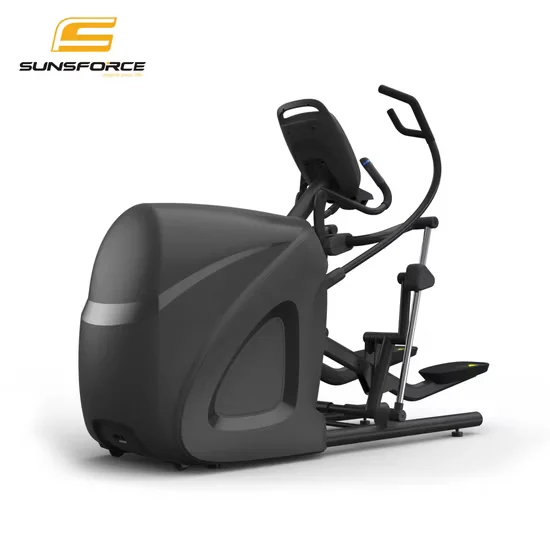
![Elliptical LED Screen Commercial Gym Fitness Equipment Crosstrainer [WARN] draft identifier mismatch](https://bicksport.com/wp-content/uploads/2026/08/elliptical-led-screen-commercial-gym-fitness-equipment-crosstrainer-warn-draft-identifier-mismatch-405954.webp)