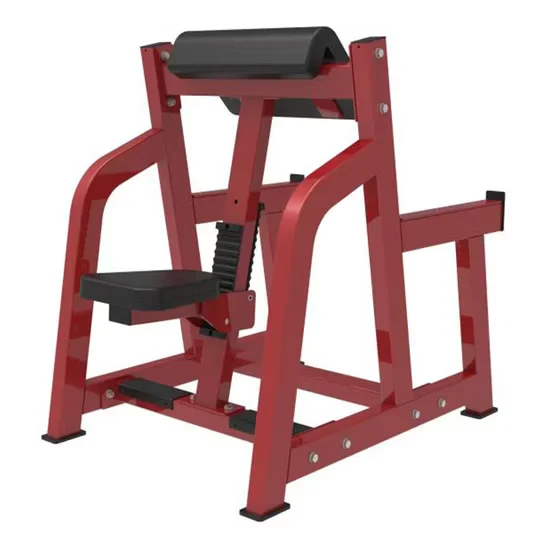
![Heavy Duty Power Rack Equipment for Commercial Gym Strength Training [WARN] draft identifier mismatch](https://bicksport.com/wp-content/uploads/2026/08/heavy-duty-power-rack-equipment-for-commercial-gym-strength-training-warn-draft-identifier-mismatch-5a606a.webp)
Heavy-Duty Stability — reinforced steel frame tested for 10,000+ hours of continuous high-frequency strength training use.
Technical Specifications
| Parameter | Value |
|---|---|
| Product Type | Power Rack |
| Material | Steel |
| Product Dimensions | 1785 × 1365 × 2235 mm |
| Net Weight | 165 kg |
| Foldable | No |
| Power Source | Manual |
| Color Options | Optional (multiple finishes available) |
| OEM Customization | Available |
| Certification | ISO 9001, CE |
| HS Code | 9506911900 |
| Production Capacity | 500 units per month |
Application Suitability
| Deployment Scenario | Typical Use |
|---|---|
| Chain gym strength training zone | Primary squat, bench, and overhead press station for high-traffic free-weight areas |
| Corporate wellness center | Compact multi-exercise station for employees performing compound lifts during limited break windows |
| Sports performance training center | Loaded barbell work for athletes requiring secure spotter-arm protection during heavy sets |
| High-end residential home gym | Dedicated lifting station for serious lifters needing full rack clearance in private spaces |
| Community fitness center | Shared-use power rack accommodating varying member sizes and strength levels throughout the day |
Why Structural Failure in the Weight Room Reaches Management Before Maintenance Does
A commercial gym power rack lives or dies by its weld integrity and steel gauge under repetitive loading.
I have walked into facilities where uprights showed visible deflection after barely a year of member use — rack joints shifting under load, safety spotter arms developing play at the pin holes. The root cause traces back to under-specification: light-gauge steel chosen to hit a price point rather than matched to the duty cycle a commercial environment demands [NEED_CITE: structural load classification for commercial strength equipment]. When a heavy duty power rack commercial gym operators install cannot hold geometry under repeated 200 kg barbell drops, the liability lands on the facility owner, not the manufacturer. Members notice wobble before anyone reports it, and the rack gets quietly avoided — a dead zone on the floor generating no value.
Where This Rack Sits in the Strength Zone Hierarchy
This heavy duty power rack commercial gym operators deploy serves as the anchor station for barbell compound movements — squats, bench presses, overhead presses, and rack pulls. It pairs alongside dedicated deadlift platforms and cable machines, absorbing the heaviest loaded work while lighter accessory stations handle volume sets. The 1785 × 1365 mm footprint fits standard commercial spacing grids, allowing safe barbell clearance on all sides. The upright height clears full-range overhead presses for tall users without requiring ceiling modifications, and the steel construction accommodates users well beyond typical bodyweight ranges.
Continuous High-Frequency Use and Floor Requirements
In a busy chain gym, a single rack may see 10+ users per hour during peak periods, each loading and unloading plates in rapid succession. The 165 kg frame mass provides the inertial stability needed so the unit does not walk or shift across the floor during re-racks. Deployment on rubber flooring with minimum 30 mm thickness absorbs impact vibration and prevents transferred shock to adjacent equipment [NEED_CITE: floor loading requirements for heavy static fitness equipment]. Facilities above ground level must verify slab capacity for concentrated point loads at each upright foot. Adequate overhead clearance — minimum 2400 mm — ensures the top crossmember never interferes with ceiling-mounted lighting or HVAC ductwork.
Steel Gauge, Weld Pattern, and Load Path Engineering
The 1785 × 1365 × 2235 mm dimensions create a frame geometry that distributes barbell loads through four primary uprights into the base footprint. Steel thickness at the upright walls determines whether the rack deflects under asymmetric loading — a member pressing 150 kg on one side of the bar while a spotter grabs the other. Weld quality at every junction between uprights and crossmembers defines the fatigue life of the structure. Bolted connections at adjustable J-hooks and spotter arms must maintain*ual power source means zero electronic failure points — no motors, no wiring, no console firmware to update — just mechanical hardware that either holds or does not [NEED_CITE: weld inspection standards for commercial gym equipment frames].
What Happens When Specifications Get Compromised
Racks built with thinner-gauge tubing develop hairline cracks at weld junctions within months of commercial deployment. Facilities that sourced based on price rather than structural verification end up pulling entire rack rows off the floor for warranty replacement — lost revenue from closed training zones, plus the reputational damage of visible equipment failure. Safety spotter arms that bend under load create a direct member injury risk that no waiver adequately covers. Inconsistent hole spacing across upright pairs prevents level bar placement, forcing members to improvise unsafe workarounds. These failures are entirely predictable when procurement skips steel thickness verification and weld documentation review [NEED_CITE: failure mode analysis for commercial power rack uprights].
Why This Product Line Holds Up Under Scrutiny
Every unit from this manufacturing run passes through a dedicated QC and testing department before leaving the Shandong facility. The steel frame undergoes load testing that mirrors the 10,000-hour durability standard applied across the company’s full product range. OEM customization extends to color finishes and logo placement, allowing chain operators to maintain brand consistency across locations without compromising the structural specification. The vertical integration — from CNC machining of hole patterns through final assembly — means tolerance control stays in-house rather than depending on third-party fabricators. The documentation package includes test records a facility manager can file directly for insurance and liability compliance. Technical support covers installation commissioning questions that arise when local contractors encounter unfamiliar anchor specifications.
Documentation & Test Records
- CE declaration of conformity covering structural safety requirements for stationary training equipment
- EN 957 test report validating load-bearing capacity and stability under maximum rated force
- ISO 957 compliance certificate from accredited third-party testing laboratory
- Weld inspection records documenting joint integrity at every critical structural junction
- Steel material certificates confirming gauge thickness and yield strength specifications
- Installation guide with anchor bolt specifications and floor preparation requirements
Installation, Commissioning & Maintenance
- Position the 1785 × 1365 mm footprint with minimum 600 mm clearance on all sides for safe barbell movement
- Anchor uprights to concrete subfloor using specified wedge anchors to prevent lateral shift under load
- Verify all J-hook pairs sit at matching heights using a level before first member use
- Torque-check all bolted connections at spotter arms and crossmembers after the first 30 days of operation
- Inspect weld junctions quarterly for any visible cracking or deformation under high-frequency loading
- Apply anti-corrosion treatment to exposed steel surfaces annually in high-humidity environments
Request Equipment Matching and Layout Planning
Provide your strength zone square footage and planned rack count to receive a 3D layout covering equipment spacing, member flow paths, and safety clearance zones. Specify your expected daily user volume so we can confirm the frame specification matches your facility’s duty cycle. Confirm whether the deployment floor is ground-level or elevated to verify concentrated load requirements. State your target market so all hardware and documentation ships with the correct compliance markings.
Frequently Asked Questions
Q: What is the difference between a power rack and a squat stand?
A: A power rack encloses the lifter on four sides with adjustable safety spotter arms, providing fail-safe protection if a repetition fails at any point in the range of motion. Squat stands offer only two uprights with limited catch options, requiring a spotter for heavy work. Commercial facilities choose power racks because they eliminate the spotter dependency that creates staffing bottlenecks during peak hours.
Q: How do you evaluate whether a power rack will hold up in a commercial setting?
A: Request steel gauge thickness documentation and weld inspection records rather than relying on total weight alone. A heavier rack built with thin tubing and poor welds will fail faster than a lighter unit engineered with proper load-path geometry. Ask for load test reports showing performance under asymmetric and dynamic loading conditions that mirror actual gym use patterns.
Q: What floor space and clearance does this rack require in a commercial layout?
A: The 1785 × 1365 mm footprint needs a minimum 600 mm buffer zone on all sides for safe barbell loading and member movement. Overhead clearance must exceed 2400 mm to accommodate the 2235 mm rack height plus full overhead press range. Plan adjacent equipment placement so plate storage does not encroach on the approach path to the rack.
Q: What does OEM customization cover for this power rack?
A: Available customization includes color powder-coat finishes, logo placement on uprights or crossmembers, and J-hook spacing configurations to match existing facility standards. Production accommodates these modifications within standard lead times because CNC machining and finishing happen in-house. Minimum order quantities vary by customization scope and are confirmed during the quotation stage.
Q: What maintenance does a commercial power rack require over its service life?
A: Quarterly inspection of all weld junctions and bolted connections catches early-stage fatigue before it becomes a safety issue. J-hook and spotter arm pins need checking for wear that creates play in the adjustment holes. Steel surfaces in humid environments benefit from annual anti-corrosion treatment. Any upright showing visible deflection under load must be pulled from service immediately and replaced.

![Popular Strength Commercial ISO-Lateral Leg Press Gym Equipment [WARN] draft identifier mismatch](https://bicksport.com/wp-content/uploads/2026/08/popular-strength-commercial-iso-lateral-leg-press-gym-equipment-warn-draft-identifier-mismatch-13bd29.webp)