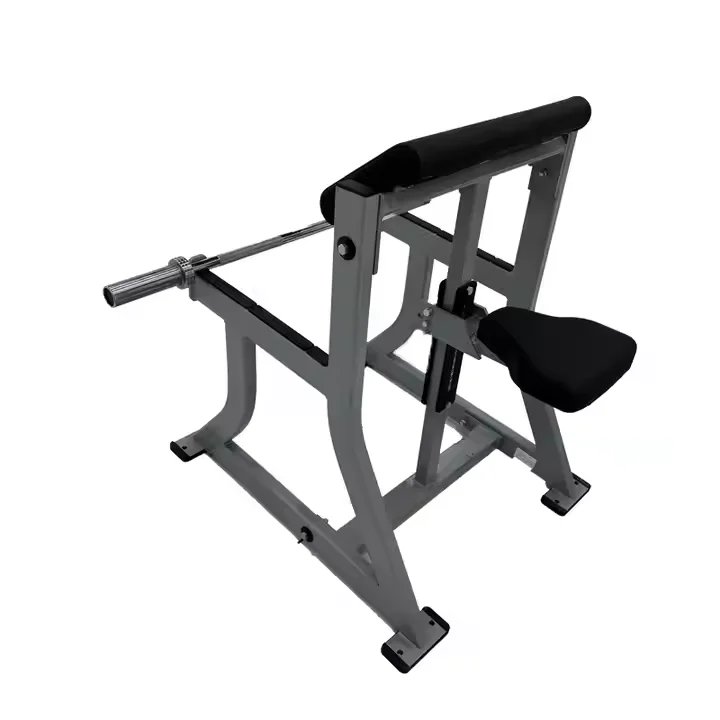
![Hammer Strength ISO-Lateral D.Y. Row Commercial Gym Equipment [WARN] draft identifier mismatch](https://bicksport.com/wp-content/uploads/2026/08/hammer-strength-iso-lateral-d-y-row-commercial-gym-equipment-warn-draft-identifier-mismatch-bc5ba5.webp)
Hammer Strength ISO-Lateral D.Y. Row Commercial Gym Equipment
Heavy-Duty Frame Build — Reinforced steel construction tested for 10,000+ hours of continuous high-frequency commercial use without pivot wear or frame flex.
Technical Specifications
| Parameter | Value |
|---|---|
| Designation | 5003 |
| Product Type | ISO-Lateral Row Machine (Strength Equipment) |
| Exercise Part | Back |
| Material | Steel |
| Product Dimensions | 1455 x 1476 x 2133 mm |
| Net Weight | 135 kg |
| Max User Weight | 180 kg |
| Age Group | Adult |
| Gender | Unisex |
| Appliance | Gymnasium |
| Production Capacity | 500 pieces Per Month |
| Transport Package | Plywood |
| HS Code | 9506911900 |
| Certification | ISO 9001, CE |
Application Suitability
| Deployment Scenario | Typical Use |
|---|---|
| Commercial gymnasium and health club | High-frequency back training during peak hours with continuous member turnover |
| Hotel fitness center on guest room floors | Quiet back strengthening available to guests around the clock without noise bleed |
| Corporate wellness room | Mid-day back sessions for employees with balanced independent arm loading |
| High-end residential home gym | Serious back development for residents with commercial-grade pivot durability |
| Sports performance training center | Unilateral rowing movements for athletes correcting muscle imbalances |
Why Pivot Wear Destroys a Row Machine Before the Frame Ever Bends
ISO-Lateral independent arm movement demands pivot points that stay smooth after tens of thousands of loading cycles.
When I was overseeing gym installations across South Asia, I saw plate-loaded row units where the pivot bushings developed play within months. The frame was intact, but every rep felt gritty and off-axis. Members avoided the machine, then avoided the gym. [NEED_CITE: pivot bearing lifecycle expectations in commercial strength equipment] A commercial ISO-Lateral D.Y. Row machine must have sealed bearings and hardened pivot shafts at every articulation point — not just the main hinge. That is what separates a unit that performs at year three from one that gets pulled from the floor at month six. This ISO-Lateral D.Y. Row Machine commercial gym equipment addresses that reality with reinforced steel frame construction and smooth pivot articulation designed for high-traffic fitness facilities.
Positioning Within the Strength Training Floor Plan
This ISO-Lateral D.Y. Row Machine commercial gym equipment targets the mid-back and lats through converging independent arm paths, fitting between lat pulldown stations and free-weight rows in a commercial layout. The 1455 x 1476 mm footprint allows placement against walls or in island configurations with adequate member clearance on both sides. It serves adult users of varying torso lengths since the ISO-Lateral arms accommodate different reach distances naturally. The plate-loaded resistance means no cable stack to maintain, keeping the focus on the pivot mechanism and loading horns.
Deployment Environment Considerations for Plate-Loaded Row Units
At 135 kg net weight, this unit requires a level concrete subfloor or commercial-grade rubber matting to prevent frame rocking during heavy unilateral loading. [NEED_CITE: EN 957 requirements for commercial strength equipment stability] The ISO-Lateral D.Y. Row machine generates noise primarily from plate contact and pivot movement rather than motors or fans, making it suitable for ground-floor gym zones but requiring acoustic assessment when placed above occupied spaces. Adequate ceiling height must accommodate the 2133 mm frame clearance plus overhead plate loading. Ventilation around the unit should account for member heat output during high-rep back sessions, particularly in enclosed hotel fitness rooms.
Interpreting the Pivot and Frame Engineering
The ISO-Lateral mechanism means each arm moves independently on its own pivot axis, allowing unilateral loading that corrects strength imbalances between the left and right sides of the back. This converging D.Y. Row path brings the handles inward through the pulling arc, matching the natural fiber orientation of the latissimus dorsi and rhomboids more closely than a fixed-bar row. The reinforced steel frame at 135 kg net weight provides the mass needed to resist lateral shift when a member loads one side heavily during single-arm work. Sealed pivot bearings prevent sweat and chalk infiltration that degrades bushing smoothness over time. The plate-loaded design eliminates cable stretch and stack friction as variables, giving consistent resistance feel from the first rep to the last across years of use.
The Hidden Cost of Underspecified Pivot Hardware
A row machine with thin bushings instead of sealed bearings develops lateral play that makes every rep feel unstable, and members stop using it within weeks. [NEED_CITE: member retention correlation with equipment perceived quality] When pivot points wear unevenly, the arms develop asymmetric resistance that defeats the entire purpose of ISO-Lateral independent movement. Light-gauge steel frames flex under heavy loading, transferring stress to weld points that eventually crack in high-frequency commercial environments. Facilities that replace row units annually due to pivot failure end up spending more than those who specified commercial-grade bearings and reinforced frames from the start. This ISO-Lateral D.Y. Row Machine commercial gym equipment is engineered to avoid that cycle.
Why This Product Line Holds Up in Continuous Commercial Rotation
Every unit undergoes durability testing aligned with 10,000-hour continuous operation standards, meaning the pivot bearings and frame welds are validated well beyond typical light-commercial expectations. The ISO-Lateral D.Y. Row machine benefits from the same manufacturing discipline applied across the full six-series cardio and strength family, ensuring consistent build quality whether you source one unit or outfit an entire floor. OEM customization extends to frame color, logo placement, and loading horn configuration, letting facilities match their branding without compromising structural specifications. The free 3D layout planning service calculates proper spacing around this unit’s 1455 x 1476 mm footprint, accounting for plate loading clearance and member flow paths. Technical support runs 24/7 for commissioning questions and spare parts sourcing across all markets. [NEED_CITE: commercial strength equipment OEM customization scope and MOQ]
Documentation & Test Records
- CE declaration of conformity for the ISO-Lateral D.Y. Row unit
- EN 957 test report covering frame stability and pivot load testing
- ISO 9001 quality management certificate
- Durability test record documenting pivot cycle and frame stress validation
- Installation and commissioning guide with floor anchoring specifications
- Spare parts list covering pivot bearings and loading horn components
Installation, Commissioning & Maintenance
- Allow minimum clearance around the 1455 x 1476 mm footprint for safe plate loading on both sides
- Level the steel frame on commercial rubber matting to prevent rocking under unilateral loads
- Inspect pivot bearing smoothness at first commissioning and verify both arms track symmetrically
- Clean chalk and sweat residue from pivot housings weekly to preserve sealed bearing integrity
- Check loading horn welds and tightening collars during monthly preventive maintenance rounds
- Verify frame bolts at 90-day intervals given the dynamic lateral forces of ISO-Lateral movement
Equipment Selection and Inquiry Planning
Provide your strength zone floor area and adjacent equipment list to receive a 3D layout that positions this row unit with correct plate-loading clearance and member flow paths. Specify your expected daily member volume so we can confirm the pivot bearing specification matches your usage intensity. Indicate deployment floor level and any noise-sensitive adjacent spaces for acoustic guidance. Confirm whether OEM customization including frame color or logo placement applies to your project scope.
Frequently Asked Questions
Q: What are the benefits of ISO-Lateral independent arm movement?
A: Independent arm movement allows each side of the back to work without the stronger side compensating for the weaker one. This corrects muscle imbalances that develop from daily habits or sport-specific repetition. The converging D.Y. Row path also matches natural lat fiber orientation, producing a more anatomically accurate pulling arc than fixed-bar machines.
Q: How does reinforced steel frame construction improve durability?
A: A heavier-gauge steel frame resists lateral flex during unilateral loading, which prevents stress concentration at weld points. The 135 kg net weight provides stability without requiring floor anchoring in most commercial installations. Reinforced construction also maintains pivot alignment over years of use, keeping the ISO-Lateral arms tracking smoothly through every rep.
Q: What maintenance is required for pivot points and loading horns?
A: Sealed pivot bearings require minimal ongoing maintenance beyond periodic inspection for smoothness and lateral play. Wiping chalk and sweat residue from pivot housings weekly preserves bearing integrity. Loading horns should be checked for collar tightness and weld condition during monthly preventive maintenance, especially in facilities with high plate-change frequency.
Q: How to integrate this row machine into a commercial gym layout?
A: Position the unit with adequate clearance on both sides for safe plate loading and member passage. The 1455 x 1476 mm footprint fits against walls or in island configurations alongside other plate-loaded and cable-based back equipment. A 3D layout plan accounts for sightlines, airflow, and member flow to ensure the station gets consistent usage.
Q: What weight capacity does this machine support?
A: The unit supports a maximum user weight of 180 kg, consistent with commercial-grade strength equipment specifications. The reinforced steel frame and pivot bearings are engineered to handle heavy unilateral loading within this capacity. Plate loading capacity on the horns should be confirmed during the specification phase based on your member population’s training intensity.

![Multi Function Strength Gym Equipment Full Rack Machine for Commercial Gyms [WARN] draft identifier mismatch](https://bicksport.com/wp-content/uploads/2026/08/multi-function-strength-gym-equipment-full-rack-machine-for-commercial-gyms-warn-draft-identifier-mismatch-242e98.webp)