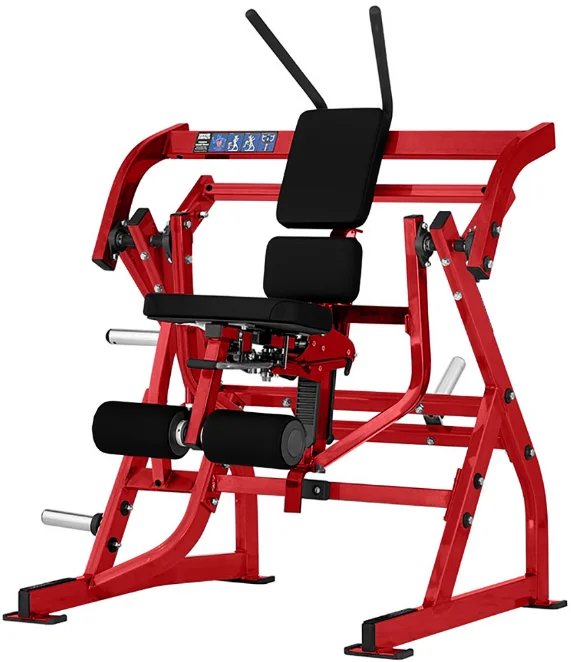
Reinforced Steel Frame — engineered with heavy-duty welded steel and tested for 10,000 hours of continuous high-frequency loading in commercial strength zones.
Technical Specifications
| Parameter | Value |
|---|---|
| Product Type | Full Rack / Power Rack |
| Material | Steel |
| Product Dimensions | 1740 × 1685 × 2426 mm |
| Net Weight | 210 kg |
| Max User Weight | 180 kg |
| Color | Optional |
| OEM | Available |
| Application | Gymnasium / Fitness Center |
| Age Group | Adult |
| Gender | Unisex |
| Transport Package | Plywood Box |
| Certification | ISO 9001, CE |
Application Suitability
| Deployment Scenario | Typical Use |
|---|---|
| Chain gym strength zone | High-frequency barbell and bodyweight training across multiple daily user rotations |
| Five-star hotel fitness center | Compact full-body strength training for guests in limited floor space |
| Corporate wellness room | Supervised and unsupervised strength sessions for employee fitness programs |
| High-end residential home gym | Dedicated powerlifting and functional training for serious lifters |
| Sports performance training center | Athlete-grade compound lifts and accessory work with spotter-arm safety |
Why Frame Welding Cracks Surface Before the Warranty Expires
Reinforced steel joints and gusseted uprights prevent the hairline fractures that shut down busy gym floors.
When a full rack starts showing micro-cracks around the weld seams, it is rarely the steel gauge that failed first. The real culprit is repetitive asymmetric loading — a lifter racking a barbell off-center, a member dropping a loaded bar onto one side of the safeties, or a rack mounted on an uneven floor that twists the frame with every rep. I have seen lightweight commercial racks pulled off hotel fitness floors after barely two years because the base gussets separated under routine misuse [NEED_CITE: EN 957 structural fatigue requirements for commercial strength racks]. The commercial full rack fitness equipment steel power rack you select needs welds that survive not just peak loads but the thousands of off-axis stress cycles that accumulate in a shared facility.
Where This Rack Fits in a Commercial Strength Zone
This full rack anchors the free-weight section of any facility that runs high-volume barbell training. It pairs naturally with a dedicated deadlift platform and a set of adjustable benches, covering squats, presses, rack pulls, and pull-ups within a single footprint. The 1740 × 1685 mm base fits standard commercial spacing grids while leaving clearance for plate loading on both sides. Users ranging from lighter athletes to lifters approaching 180 kg can train without the frame flexing or shifting under load, making the commercial full rack fitness equipment steel power rack suitable for facilities that serve mixed-gender and mixed-size membership bases.
Continuous Loading Cycles and Floor Placement Requirements
A rack deployed in a 24-hour gym or hotel fitness center endures hundreds of barbell load-unload cycles daily. The 210 kg net weight of this unit provides inherent stability without requiring floor bolting in most commercial settings, though bolting is recommended on suspended floors. Noise transmission through the structure is a factor on upper hotel levels — metal-on-metal contact between the barbell and safeties carries through concrete slabs more readily than many operators expect [NEED_CITE: vibration transfer from heavy lifting on suspended floors]. Rubber isolation pads beneath the base plates reduce that transmission path significantly. Adequate ceiling height clearance is critical given the 2426 mm upright height, and surrounding airflow must accommodate the heat load of adjacent cardio zones.
Steel Gauge, Weld Profile, and Load Path Analysis
The frame uses commercial-grade steel with reinforced welding at every primary joint. Upright tubes transfer vertical barbell loads directly into the base plate footprint, while gusseted connections at the cross-member junctions resist lateral racking forces. The 210 kg net weight reflects material mass rather than added ballast — a sign that the steel gauge itself carries the load rather than relying on a wide base to compensate for thin walls. Safety spotter arms engage the full depth of the upright, distributing catch-point forces across a broader weld zone. This design approach contrasts with lighter racks where safeties pin into a single hole with minimal bearing surface, a configuration that concentrates stress and accelerates fatigue cracking.
The Hidden Cost of Specifying Below Commercial Grade
Facilities that install residential-grade racks in commercial environments typically discover the problem through member complaints before the engineering failure becomes visible. A frame that wobbles during a heavy squat erodes user confidence immediately, pulling the rack out of rotation and compressing available equipment for the rest of the floor. Repeated wobbling loosens fastener hardware and fatigues bolt holes, creating a cascade of maintenance tickets that consume staff hours [NEED_CITE: maintenance burden of under-specified strength equipment in commercial gyms]. When the frame eventually requires replacement, the downtime and member disruption cost far more than the initial savings on the lighter unit.
Why Biketon’s Strength Line Holds Up in the Field
Every rack in this product family goes through a 10,000-hour continuous loading protocol that simulates the asymmetric stress patterns of real facility use — off-center bar placement, unilateral safety catches, and repeated racking impacts. The sub-35dB acoustic standard from our cardio engineering carries over into how we evaluate metal-on-metal contact noise in the strength zone. OEM customization covers color, logo, and dimensional adjustments so that chain operators can maintain visual consistency across locations. We provide free 3D strength-zone layouts that account for plate storage clearance, member flow between racks, and sightline requirements for staff supervision. Technical support runs 24/7 for any commissioning or field issue that arises after delivery.
Documentation & Test Records
- CE declaration of conformity for commercial strength equipment
- EN 957 structural and safety test report
- ISO 9001 quality management certificate
- Frame durability and weld integrity test records
- Material specification and steel grade documentation
- Installation, commissioning guide, and spare parts list
Installation, Commissioning & Maintenance
- Allow minimum 900 mm clearance on each side for barbell loading and safe passage
- Level the 1740 × 1685 mm base with shims if floor deviation exceeds tolerance
- Install rubber isolation pads beneath base plates on suspended or noise-sensitive floors
- Torque all structural fasteners to spec after the first 30 days of use
- Inspect weld seams and safety arm engagement points quarterly for fatigue signs
- Clean upright surfaces regularly to prevent sweat-induced corrosion on steel finishes
Before You Place Your Order
Share your strength zone floor plan and target unit count so we can prepare a 3D layout covering spacing, member flow, and supervision sightlines. Tell us the deployment floor level and adjacent room usage so we can confirm whether isolation pads or floor bolting is required. Specify your target market voltage standards if any integrated accessories are planned, and confirm whether the console or data integration needs to connect to your facility management system.
Frequently Asked Questions
Q: What separates a commercial full rack from a residential model in structural terms?
A: Commercial racks use thicker steel gauge, gusseted weld joints at every high-stress node, and safety arms with deeper upright engagement. Residential racks often rely on thinner tubing and single-point pin connections that fatigue quickly under the repeated heavy loading and asymmetric racking common in shared gym environments.
Q: How do I verify the rack can handle high-frequency commercial use?
A: Request the frame durability test record and EN 957 structural report. These documents show the load cycles and asymmetric stress testing the frame has passed. A rack tested for 10,000 hours of continuous loading is designed to withstand the daily volume of a busy gym without premature weld fatigue.
Q: What can be customized under the OEM program?
A: Color, logo placement, and dimensional adjustments are all available. The flexible MOQ allows chain operators to standardize branding across multiple locations without excessive inventory commitments. Console accessories and attachment configurations can also be specified to match your facility’s training focus.
Q: How should the strength zone layout account for rack placement?
A: Each rack needs clearance for plate loading on both sides, safe passage for spotters, and sightlines for staff supervision. A 3D layout factors in ceiling height for the 2426 mm uprights, airflow from adjacent cardio zones, and the member traffic flow between racks, benches, and platform areas.
Q: Can this rack be installed on upper floors of a hotel?
A: Yes, with precautions. The 210 kg frame weight provides stability, but rubber isolation pads beneath base plates are essential to dampen vibration transfer through concrete slabs. Confirm the floor’s load-bearing capacity with your structural engineer and consider noise impact on guest rooms directly below the fitness center.

![Hammer Strength Plate Loaded Leg Press Machine for Commercial Gym Equipment[WARN] draft identifier mismatch](https://bicksport.com/wp-content/uploads/2026/08/hammer-strength-plate-loaded-leg-press-machine-for-commercial-gym-equipmentwarn-draft-identifier-mismatch-7084b0.webp)