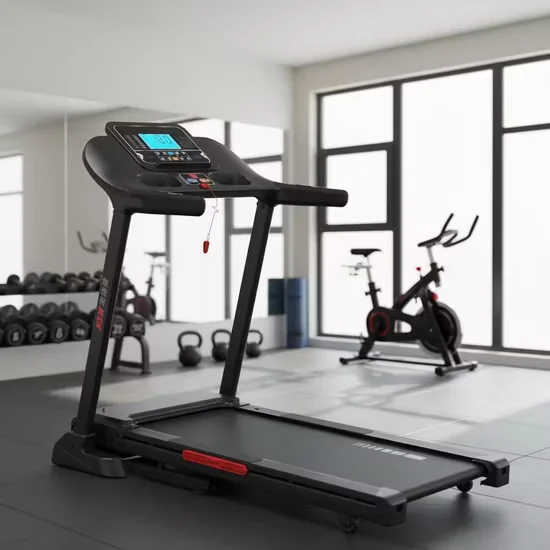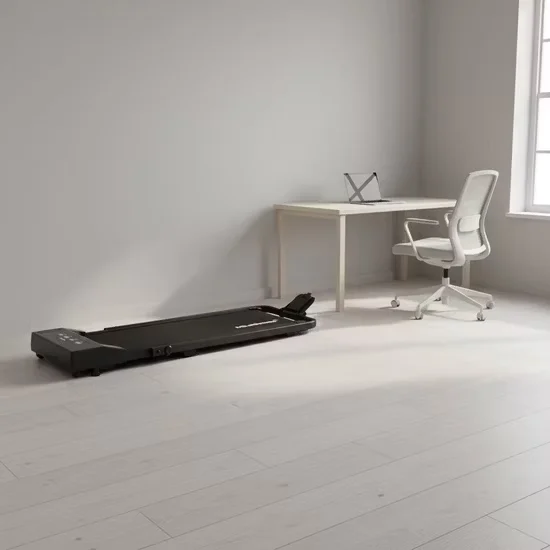
Quiet Operation for Compact Spaces — Designed with DC motor architecture and foldable frame geometry, this walking treadmill maintains low acoustic output suitable for shared-wall apartments and hotel guest room floors.
Technical Specifications
| Parameter | Value |
|---|---|
| Product Type | Foldable Treadmill |
| Designation | W04D8H |
| Motor Type | DC Motor |
| Speed Range | 1–12 km/h |
| Running Surface | 1000 × 400 mm |
| Console Type | LED Screen (Speed / Distance / Time / Calories) |
| Control Method | Remote Controller |
| Preset Programs | 6 |
| Foldable | Yes |
| Product Dimensions | 1250 × 590 × 1080 mm |
| Certification | CE, RoHS |
| Condition | New |
| Origin | Ningbo |
| HS Code | 9506911100 |
| Production Capacity | 3000 units/month |
Application Suitability
| Deployment Scenario | Typical Use |
|---|---|
| High-end residential home gym | Daily walking and light jogging in apartments where floor space and neighbor noise are primary concerns |
| Boutique hotel guest fitness room | Compact, stowable cardio equipment deployed in guest rooms or small dedicated wellness closets |
| Corporate wellness micro-center | Low-footprint walking station for employees during breaks, positioned in limited-allocation wellness corners |
| Small apartment fitness space | Fold-away storage after use, enabling living rooms or bedrooms to double as workout areas |
What Happens When Foldable Treadmills Meet Daily Use Expectations
Motor duty cycle determines whether a compact walking platform survives past the first year of regular use.
Foldable treadmills are often specified for residential and hospitality environments where space is constrained, yet the DC motors inside many compact units are rated for intermittent rather than continuous operation. When a hotel places a foldable walking treadmill on a guest floor and guests use it across multiple time zones and sleep schedules, the motor thermal load accumulates faster than the duty rating allows [NEED_CITE: motor duty cycle classification for continuous commercial operation]. I have seen entire batches replaced within a single season because the specification sheet listed peak output without clarifying continuous rating — and the front desk logged noise complaints long before maintenance noticed the thermal degradation.
Where This Foldable Walking Treadmill Fits in a Cardio Zone
This unit covers walking and light jogging at speeds up to 12 km/h, making it appropriate for low-intensity steady-state sessions and warm-up routines. In a mixed cardio zone, it complements full-size commercial treadmills and ellipticals by serving users who need a compact foldable treadmill remote controller compact walking option in space-restricted rooms. The 1000 × 400 mm running surface accommodates walking strides and short jogging strides for average-height adults. It suits deployment in guest rooms, apartment home gyms, and corporate wellness corners where a full commercial frame is impractical.
Deployment Environment and Continuous Operation Requirements
A foldable unit deployed in a hotel guest room or apartment must manage heat dissipation within an enclosed space, often without dedicated HVAC circulation aimed at the equipment zone. The DC motor generates thermal accumulation proportional to session length and user load, so specifying this treadmill for environments expecting multiple hour-long sessions per day requires verifying the continuous duty rating against actual usage patterns [NEED_CITE: EN 957 requirements for commercial cardio equipment]. Noise transmission through floor slabs becomes a factor on upper hotel floors and shared-wall residential buildings, particularly when the unit operates at higher speeds within its 1–12 km/h range. Voltage and plug standards must match the target market before the shipment leaves the factory, as retrofitting power supplies on deployed units introduces downtime and guest complaints.
DC Motor Behavior and Remote-Controlled Console Logic
The DC motor in this class of foldable treadmill delivers adequate torque for walking and light jogging but operates under different thermal constraints than the AC motors found in full-size commercial units. Continuous output — not peak output — determines whether the motor sustains daily use without thermal cutoff or winding degradation. The LED console displays speed, distance, time, and calorie estimates, while the remote controller allows mid-session speed adjustments and program switching across the 6 preset patterns without the user reaching for the console. This remote operation matters in compact installations where the console may be positioned at an awkward angle relative to the user. The 1000 × 400 mm running belt requires periodic tension checks, as foldable frames place additional stress on belt alignment each time the unit is folded and unfolded.
The Hidden Cost of Specifying Peak Output Without Duty Context
When procurement decisions rely on peak motor output without examining continuous duty ratings, the result is predictable: motors that perform adequately during demonstration units fail under actual daily usage cycles. In hotel deployments, this failure pattern surfaces as noise complaints from adjacent rooms before maintenance identifies thermal degradation in the motor windings [NEED_CITE: continuous duty vs peak output in compact treadmill motors]. For residential buildings with shared walls, noise transmission through floor slabs triggers neighbor complaints that escalate to building management. The fold mechanism itself — hinges, latches, and deck pivot points — accumulates wear with each fold cycle, and units not tested for repeated articulation develop play that transmits vibration into the floor structure.
Why This Product Line Addresses Compact Cardio Deployments
The W04D8H foldable treadmill remote controller compact walking unit is positioned for environments where floor area and acoustic output constrain equipment selection. Our facility noise testing verifies that sub-35 dB operation is achievable in hotel and residential deployments when the unit is placed on appropriate damping pads. The 10,000-hour durability testing protocol covers motor windings, frame hinges, and belt drive components under continuous load simulation. Our 3D cardio zone layout service accounts for the specific footprint and clearance requirements of foldable units, including the swing radius needed for safe folding and unfolding in tight rooms. OEM customization extends to console UI language and branding, and the six-series cardio family allows a facility to source complementary equipment from a single manufacturing line with consistent documentation standards.
Documentation & Test Records
- CE declaration of conformity for the W04D8H foldable treadmill platform
- EN 957 test report covering structural integrity and safety requirements
- RoHS compliance documentation for electronic console and motor components
- Noise level test report under simulated residential and hotel operating conditions
- Motor specification sheet with continuous and peak output ratings
- Installation guide covering fold mechanism operation and clearance requirements
Installation, Commissioning & Maintenance
- Maintain minimum clearance around the 1250 × 590 × 1080 mm frame for safe fold/unfold articulation
- Level the deployment surface and install vibration-damping pads to limit floor-transmitted noise
- Verify voltage and plug standard match before connecting the DC motor to the facility power circuit
- Calibrate LED console speed readings and remote controller response during initial commissioning
- Inspect belt tension and fold-hinge latch integrity at regular intervals based on fold cycle frequency
- Clean the running surface and remote controller sensor window to prevent sweat residue accumulation
Inquiry Guidance for Equipment Selection
Provide the cardio zone floor area and intended unit count to receive a 3D layout accounting for foldable treadmill clearance and airflow planning. Specify the expected daily usage hours per unit so we can confirm motor duty cycle alignment with your operational pattern. Indicate the deployment floor level and adjacent occupied spaces to verify noise transmission suitability. Confirm the target market voltage and plug standard before proforma issuance, and specify whether console data output or remote controller branding customization is required.
Frequently Asked Questions
Q: What are the trade-offs between foldable and fixed-frame treadmills for daily walking use?
A: Foldable treadmills reduce storage footprint significantly, enabling deployment in apartments and hotel guest rooms where floor area is limited. However, the fold mechanism introduces hinge wear points, and the compact frame typically houses a smaller DC motor with a lower continuous duty rating than fixed-frame commercial units. For environments expecting multiple daily sessions, verifying the motor continuous output against actual usage patterns is essential before committing to a foldable platform.
Q: When is a DC motor foldable treadmill appropriate versus a commercial AC motor unit?
A: DC motor foldable treadmills suit residential home gyms, hotel guest rooms, and corporate wellness corners where usage is intermittent and space is constrained. They are not appropriate for chain gym cardio zones or sports training centers expecting continuous high-frequency operation throughout operating hours. The deciding factor is daily cumulative run time — if the unit will operate for several hours per day across multiple users, a commercial AC motor platform is the required specification.
Q: How does the 1000 × 400 mm running surface affect jogging comfort?
A: The 1000 × 400 mm surface accommodates comfortable walking strides and light jogging for average-height adults at speeds up to 12 km/h. Taller users or those with longer jogging strides may find the length restrictive at higher speeds within the range. This surface size is a deliberate compromise enabling the foldable frame to maintain a compact storage footprint while still providing adequate belt area for the walking and light-jogging use cases this unit targets.
Q: What parameters does the remote controller adjust during operation?
A: The remote controller allows the user to adjust speed and switch between the 6 preset programs without interrupting their session to reach the LED console. This is particularly useful in compact installations where the console may be positioned lower or at an angle due to the foldable frame geometry. Speed changes execute incrementally, and program transitions maintain the current session data on the LED display.
Q: What noise considerations apply when installing this treadmill on upper hotel floors?
A: Noise transmission through floor slabs is the primary concern for upper-floor hotel deployments. The DC motor and belt drive generate operational sound that can transfer through rigid floor connections into occupied rooms below. Installing vibration-damping pads beneath the unit and confirming the noise level test report against your facility acoustic standards are necessary steps before deployment. Fold mechanism play should also be monitored, as worn hinges introduce additional vibration during operation.