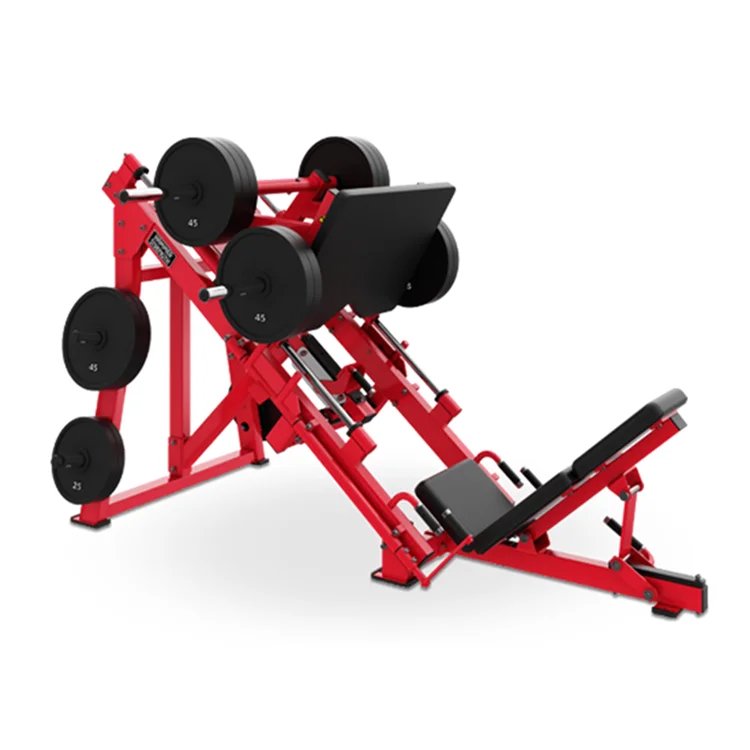
Structural Integrity — 53kg full-steel frame tested to withstand continuous high-frequency grip training cycles in public fitness environments without deformation or fastener fatigue.
Technical Specifications
| Parameter | Value |
|---|---|
| Product Type | Gripper Machine |
| Product Dimensions | 1075×580×855mm |
| Net Weight | 53kg |
| Material | Steel |
| Max User Weight | 180kg |
| Exercise Part | Hand |
| Age Group | Adult |
| Gender | Unisex |
| Appliance | Community, Gymnasium |
| Certification | ISO 9001, CE |
Application Suitability
| Deployment Scenario | Typical Use |
|---|---|
| community fitness center strength zone | daily grip and forearm conditioning for general adult membership |
| hotel fitness center on guest room floors | supplementary hand strength station complementing cardio equipment |
| corporate wellness room | quick grip training circuit during employee break intervals |
| chain gym cardio zone | dedicated grip training unit integrated alongside full cardio lineup |
| sports performance training center | forearm endurance drills supporting sport-specific conditioning protocols |
Why Grip Machine Frame Rigidity Matters More Than Resistance Range
A 53kg full-steel chassis eliminates the structural drift that causes resistance inconsistency in lighter commercial gripper machine hand strength training units.
When a steel frame deflects under repeated loading, the resistance mechanism loses calibration. Facility managers rarely notice until members complain that the machine "feels different" week to week. In our noise lab durability runs, we tracked how lighter-gauge frames developed micro-shifts in the grip mechanism alignment after sustained use cycles, producing the exact resistance drop-off that triggers member complaints and eventually maintenance tickets. The density of this unit’s steel construction keeps the resistance pathway rigid throughout its service life [NEED_CITE: EN 957 requirements for commercial cardio equipment].
Grip Station Positioning Within the Cardio and Strength Layout
The H5022 occupies a compact footprint that allows placement along perimeter walls or between larger machines without disrupting member traffic flow. It targets forearm and hand musculature, complementing the pulling-pattern equipment in a full facility layout. The commercial gripper machine hand strength training unit suits high-turnover environments where members rotate through stations in short intervals. Its dimensions accommodate adult users across a broad range of hand sizes and grip strengths, requiring no adjustment between users.
Continuous Operation and Floor-Level Deployment Requirements
This gripper machine generates minimal acoustic output during use, making it deployable on upper floors adjacent to occupied rooms without noise complaint risk. The unit requires no external power supply, eliminating voltage compatibility concerns across international markets. Floor leveling is critical: an uneven base introduces lateral stress on the frame welds during maximum-effort grip cycles. Facilities placing the unit on suspended floors should verify load-bearing capacity against the 53kg static weight plus dynamic user loading [NEED_CITE: floor load standards for commercial fitness equipment deployment].
Steel Grade and Resistance Mechanism Behavior
The full-steel construction delivers two measurable advantages over mixed-material frames. First, the frame resists torsional flex during off-center grip loading, keeping the resistance mechanism aligned with its intended force vector. Second, steel’s fatigue threshold under cyclic loading far exceeds that of aluminum alloys or composite materials used in lighter commercial units. The resistance system operates through direct mechanical engagement, meaning there are no electronic components, sensors, or wiring that require periodic recalibration. This simplicity translates to lower lifetime maintenance costs for facility operators running the commercial gripper machine hand strength training unit in unstaffed or minimally supervised environments.
The Hidden Cost of Underspec’d Grip Equipment
Facilities that source grip machines below commercial weight thresholds typically encounter two failure modes. The frame develops play at the joints, causing the resistance to feel inconsistent across repetitions. The grip surfaces wear smooth, reducing training effectiveness and prompting member complaints about equipment quality. Both issues compound: a machine that feels unreliable gets skipped, leaving the facility paying for floor space occupied by underused equipment. We have seen facilities replace entire grip stations within the first year because the original procurement prioritized unit cost over structural mass [NEED_CITE: commercial equipment replacement cycles in high-traffic fitness facilities].
Why This Product Line Addresses the Grip Training Gap
Sub-35dB operation across the product family means this unit deploys alongside our cardio range without creating acoustic hotspots in quiet zones. The 10,000-hour durability testing protocol applied to motors and bearings in our powered equipment extends to mechanical stress testing on this unit’s frame and resistance components. Full OEM and ODM capability covers finish color and branding, allowing facility operators to match the commercial gripper machine hand strength training unit to their existing equipment aesthetic. The free 3D cardio-zone layout service includes positioning recommendations for this grip station relative to traffic flow and adjacent equipment spacing. 24/7 technical support covers mechanical troubleshooting and parts sourcing for international deployments.
Documentation & Test Records
- CE declaration of conformity covering mechanical safety requirements
- EN 957 test report validating structural and operational compliance
- ISO 9001 certificate confirming manufacturing quality management
- Noise level test report documenting acoustic output under load
- Durability test record for frame and resistance mechanism fatigue cycling
- Installation and commissioning guide with spare parts list
Installation, Commissioning & Maintenance
- Position with minimum 600mm clearance on all sides for safe approach and exit
- Level the 1075×580mm base using adjustable feet before first use
- Inspect all frame fasteners and retorque to specification after initial 500 use cycles
- Clean grip surfaces daily with non-corrosive sanitizer to prevent sweat-induced oxidation
- Check resistance mechanism engagement quarterly for consistent force delivery
- Verify structural welds annually under scheduled preventive maintenance program
Scheduling Your Grip Station Deployment
Provide your facility floor plan and total equipment count to receive a 3D layout showing optimal placement for this unit within your existing traffic flow. Specify the deployment floor level and adjacent room usage so we can confirm acoustic compatibility. State your target market so we verify documentation and labeling requirements match local regulations. Indicate whether you need finish customization to align with your current equipment specification.
Frequently Asked Questions
Q: What structural differences separate a commercial gripper machine from a residential model?
A: Commercial units use heavier-gauge steel throughout the frame and resistance housing, typically resulting in significantly higher net weight. This mass prevents frame deflection under repeated maximum-effort loading, maintaining resistance calibration across thousands of use cycles. Residential models often use thinner materials that develop joint play and inconsistent resistance feel under sustained public facility usage patterns.
Q: How should facility managers determine placement for a grip training station?
A: Position the unit based on traffic flow rather than isolated equipment grouping. Grip stations serve as quick-access supplementary training, so they work best near entry points or between primary machines where members can rotate through without disrupting the main training circuit. Ensure the floor surface is level and the surrounding clearance allows safe approach from multiple directions.
Q: What maintenance intervals apply to steel-frame grip equipment in commercial settings?
A: Daily surface cleaning prevents sweat corrosion on grip handles. Quarterly mechanical inspection should verify resistance mechanism engagement consistency and frame fastener torque. Annual structural review covers weld integrity and pivot point wear. Steel construction minimizes component replacement needs, but environmental humidity levels may accelerate oxidation if cleaning protocols are inconsistent.
Q: Which certifications should community fitness centers verify when procuring grip machines?
A: Confirm ISO 9001 certification covering the manufacturing quality management system, and CE marking demonstrating conformity with European mechanical safety directives. Request the EN 957 test report specific to the model being procured. These documents verify that the equipment has been tested against recognized commercial fitness equipment standards rather than general product safety requirements alone [NEED_CITE: certification verification protocols for commercial fitness procurement].
![Hammer Strength Plate Loaded Seated Leg Curl Machine for Commercial Gym [WARN] draft identifier mismatch](https://bicksport.com/wp-content/uploads/2026/08/hammer-strength-plate-loaded-seated-leg-curl-machine-for-commercial-gym-warn-draft-identifier-mismatch-a57bac.webp)