![Factory Price Pilates Chair Reformer Gym Equipment for Studio [WARN] draft identifier mismatch](https://bicksport.com/wp-content/uploads/2026/08/factory-price-pilates-chair-reformer-gym-equipment-for-studio-warn-draft-identifier-mismatch-e20dc4.webp)
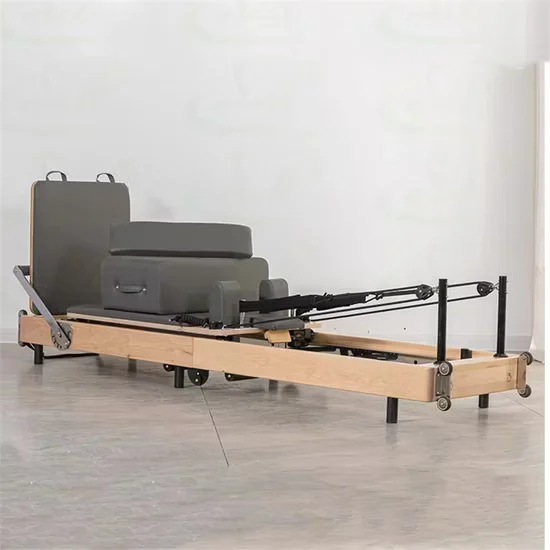
Studio-Grade Load Path — Solid steel frame rated for continuous class rotation without flex or spring drift across high-frequency Pilates deployments.
Technical Specifications
| Parameter | Value |
|---|---|
| Designation | SRY-04 |
| Product Type | Pilates Chair / Pilates Reformer Chair |
| Product Dimensions | 800 × 620 × 1100 mm |
| Net Weight | 45 kg |
| Warranty | 3 Years |
| Color | Solid Color |
| Logo | Customized Is Allowed |
| Age | Adult |
| Gender | Unisex |
| HS Code | 9506911900 |
| Production Capacity | 80 Pieces / Month |
Application Suitability
| Deployment Scenario | Typical Use |
|---|---|
| Boutique Pilates studio | Group reformer classes with continuous rotation across multiple daily sessions |
| Commercial fitness center group class room | Scheduled Pilates programming integrated into broader class timetable |
| Rehabilitation and physical therapy facility | Low-impact resistance work under clinical supervision |
| High-end residential home gym | Private daily practice with studio-grade resistance consistency |
Why Spring Tension Drift Wrecks the Class Before Anyone Reports It
Consistent spring calibration is what separates a reformer that survives three classes a day from one that needs mid-session adjustment.
When a Pilates studio runs back-to-back group sessions, the spring resistance system on a commercial Pilates chair reformer gym equipment unit endures hundreds of compression and release cycles daily. Residential-grade springs lose calibration within weeks under this load, causing tension to flatten at the top of the range. Instructors spend the first five minutes of every class re-tensioning units instead of teaching [NEED_CITE: spring fatigue cycles under continuous commercial studio operation]. Frame flex compounds the problem — when the carriage rail deflects under load, the carriage binding creates uneven resistance that clients feel as stuttering rather than smooth articulation. The noise from a flexing frame also travels through hard studio floors into adjacent treatment rooms.
Where This Reformer Fits in a Studio Layout
The SRY-04 Pilates Reformer Chair covers intermediate to advanced resistance training across full-body Pilates movement patterns. In a studio cardio and strength zone, it pairs with mat-based equipment and larger reformer beds to fill the chair-specific exercise gap. Its compact 800 × 620 mm footprint allows dense placement for group classes while maintaining instructor sightlines across the room. The 45 kg net weight provides stable grounding during dynamic movements without requiring floor anchoring. This commercial Pilates chair reformer gym equipment accommodates adult users across standard body weight ranges with the solid steel frame absorbing lateral forces during unilateral exercises.
Noise, Footprint, and Daily Studio Operation
A Pilates studio running four to six classes daily subjects each reformer to sustained cyclic loading throughout operating hours. The carriage rail articulation and spring engagement generate acoustic energy that transmits through floor structures — particularly relevant when studios occupy upper floors above occupied spaces [NEED_CITE: acoustic transmission requirements for fitness equipment on suspended floors]. The SRY-04’s solid color finish and 800 × 620 mm base footprint allow deployment on standard commercial flooring with appropriate vibration isolation pads. Adequate clearance around each unit — typically the unit dimensions plus instructor walkway space — ensures class flow without equipment collision. Studios planning multi-unit deployments should confirm floor load capacity and consider acoustic underlayment between the equipment base and subfloor.
Spring System and Frame Load Path Explained
The resistance on a Pilates reformer chair comes from spring tension rather than magnetic or electromagnetic systems, which means the calibration depends entirely on spring material quality and attachment geometry. High-carbon steel springs maintain tension consistency across thousands of compression cycles, while lower-grade alternatives develop permanent set and require frequent replacement. The frame construction must resist torsional deflection when users apply asymmetric loads during single-leg or single-arm exercises — a 45 kg net weight in this footprint suggests substantial steel section sizing to prevent frame twist. The carriage rail surface finish determines articulation smoothness; hardened steel rails with sealed bearing carriages reduce friction and maintenance intervals compared to unsealed bushings [NEED_CITE: carriage bearing specification for commercial Pilates equipment]. The 3-year warranty coverage indicates confidence in spring and rail longevity under intended commercial use.
What Happens When Specs Get Compromised
Studios that deploy residential-grade reformers in commercial class rotations encounter predictable failure sequences. Springs lose tension calibration within the first quarter, forcing instructors to compensate with verbal cueing adjustments that erode client confidence. Frame flex under continuous loading causes carriage rail binding, generating audible grinding that disrupts the focused studio environment. Units rated for intermittent home use develop structural fatigue at weld points when subjected to six-class-per-day schedules, creating liability exposure [NEED_CITE: structural fatigue testing for commercial fitness equipment duty cycles]. Non-standard dimensions also disrupt studio layout planning, leaving uneven spacing that complicates instructor circulation during group sessions.
Why This Product Line for Studio Deployments
The Senrui cardio and studio equipment range undergoes 10,000-hour durability verification on load-bearing components before production release. For the SRY-04, this translates to spring tension retention testing across simulated class-frequency cycles and frame load testing at maximum user weight with lateral force application. The compact footprint allows studio operators to plan dense group-class layouts with confirmed instructor sightlines using 3D space planning tools. Full OEM customization including logo application and color specification lets facilities integrate equipment branding with studio identity. The six-series product family means a studio can source complementary equipment from one manufacturing line, simplifying warranty management and spare parts logistics. 24/7 technical support coverage addresses operational issues without waiting for business-hours response.
Documentation & Test Records
- CE declaration of conformity for Pilates reformer chair structural safety
- EN 957 test report covering static and dynamic load performance
- ISO 957 noise level test report for studio acoustic compliance
- Spring tension calibration specification with replacement interval schedule
- Carriage rail smoothness and articulation quality test record
- 3D studio layout plan with equipment spacing and airflow documentation
Installation, Commissioning & Maintenance
- Confirm 800 × 620 mm base footprint with clearance for instructor walkway on all sides
- Deploy vibration isolation pads between equipment base and studio floor surface
- Verify floor levelness before placement to prevent carriage rail binding under load
- Calibrate spring tension on first commissioning and document baseline resistance values
- Inspect carriage rail bearing surfaces quarterly for wear and lubrication requirements
- Clean solid color frame surfaces with non-corrosive agents after each class rotation
Equipment Selection and Deployment Inquiry
Provide your studio floor area and intended unit count to receive a 3D layout plan with equipment spacing and instructor circulation paths. Specify your daily class schedule frequency so spring duty cycle can be matched to operational intensity. Confirm deployment floor level and adjacent room usage to determine acoustic isolation requirements. Indicate whether logo customization or color matching is needed for studio brand integration.
Frequently Asked Questions
Q: What distinguishes a commercial Pilates reformer frame from a residential one?
A: Commercial frames use heavier steel sections and reinforced weld geometry to resist torsional deflection during asymmetric loading in group class environments. Residential frames optimize for cost and weight, accepting frame flex under intermittent use that becomes structural fatigue under continuous studio rotation. Load testing documentation should specify cyclic testing protocols relevant to commercial duty cycles.
Q: How often should spring tension be recalibrated in a high-frequency studio?
A: Spring calibration intervals depend on daily class count and average user load. Studios running four or more classes daily should verify tension monthly and schedule spring replacement based on the manufacturer’s compression cycle specification. Documented baseline tension values from commissioning help identify drift before it affects class instruction quality.
Q: What carriage rail noise level is acceptable in a shared studio space?
A: Acceptable noise depends on floor construction and adjacent room usage. Studios on suspended floors above occupied spaces require carriage systems with sealed bearings and hardened rail surfaces to minimize vibration transmission. Acoustic testing should measure transmitted vibration through the floor structure, not just airborne noise at the equipment location.
Q: Can the reformer be customized to match studio branding?
A: The SRY-04 supports logo customization and solid color specification to align with studio visual identity. OEM customization scoping during the inquiry phase covers branding placement, color selection, and any attachment integration needed for studio management workflows. Customization lead time should be confirmed during the quotation stage.
Q: How should studio layout account for reformer spacing and instructor flow?
A: Each unit requires its footprint plus clearance on all sides for instructor access and adjacent unit movement during exercises. A 3D studio layout plan accounts for equipment dimensions, instructor sightlines to every station, and member entry and exit flow paths. Proper planning prevents overcrowding that compromises both instruction quality and safety.

![Folding Maple Wood Pilates Reformer for Home Gym & Studio Fitness [WARN] draft identifier mismatch](https://bicksport.com/wp-content/uploads/2026/08/folding-maple-wood-pilates-reformer-for-home-gym-studio-fitness-warn-draft-identifier-mismatch-2adce9.webp)
![Hot Sale White Wooden Pilates Reformer for Home Use [WARN] draft identifier mismatch](https://bicksport.com/wp-content/uploads/2026/08/hot-sale-white-wooden-pilates-reformer-for-home-use-warn-draft-identifier-mismatch-54c6d7.webp)