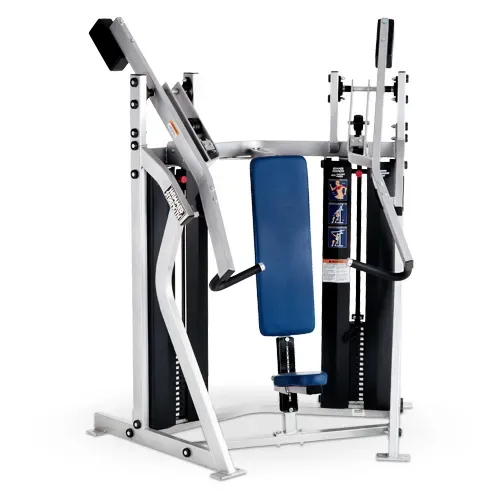
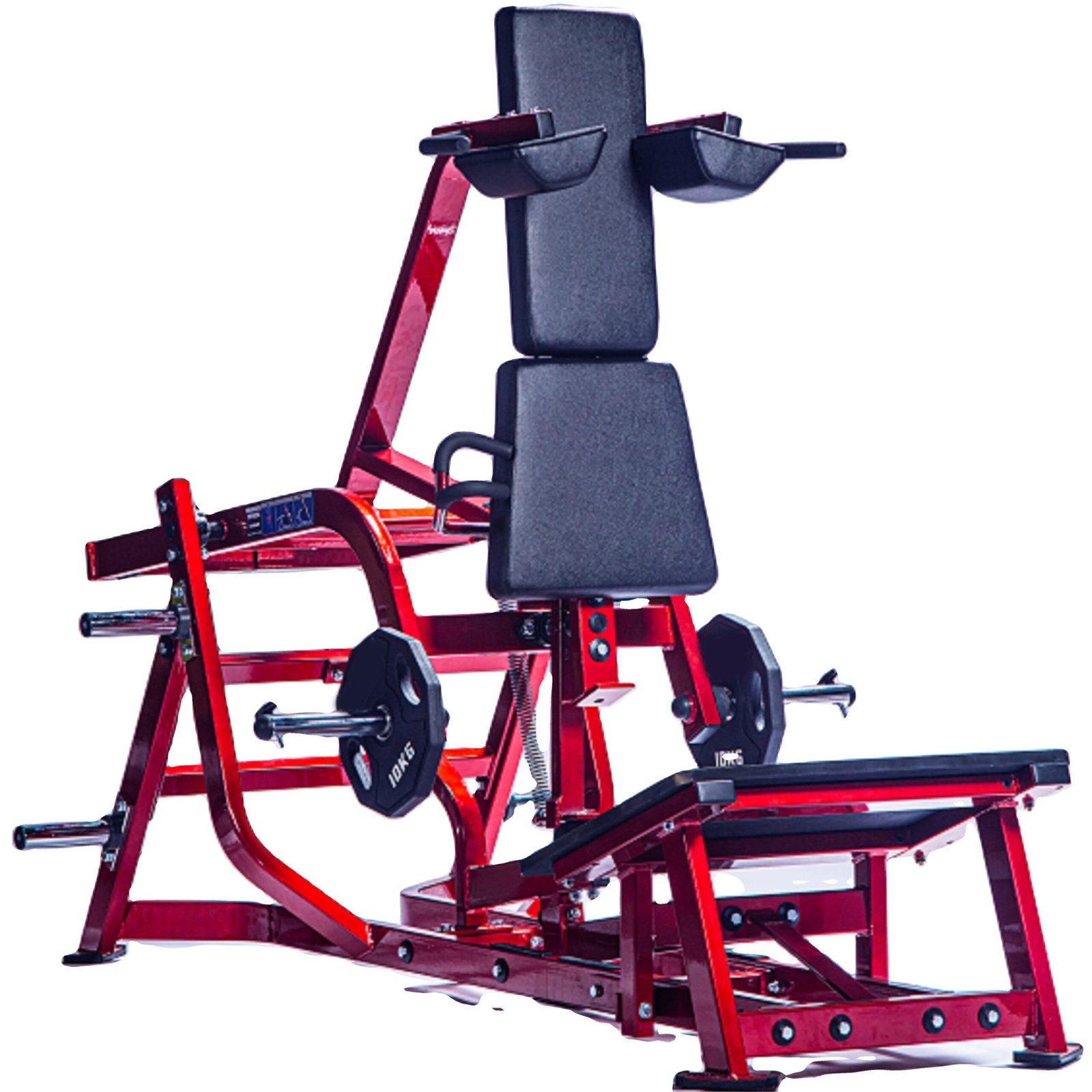
![Factory Price Fitness Gym Equipment Leg Extension Machine for Commercial Gym [WARN] draft identifier mismatch](https://bicksport.com/wp-content/uploads/2026/08/factory-price-fitness-gym-equipment-leg-extension-machine-for-commercial-gym-warn-draft-identifier-mismatch-b9d5b7.webp)
10,000-Hour Endurance Verified — Sealed bearings and reinforced steel frames on the 5030 Leg Extension Machine withstand continuous high-frequency use in commercial gyms without loosening or noise.
Technical Specifications
| Parameter | Value |
|---|---|
| Designation | 5030 |
| Product Type | Leg Extension Machine |
| Construction Material | Heavy-Duty Steel |
| Net Weight | 103 kg |
| Product Dimensions | 1440 × 1695 × 1481 mm |
| Target User Group | Adult / Unisex |
| Exercise Focus | Leg (Quadriceps Isolation) |
| Primary Deployment | Gymnasium / Commercial Gym |
| Production Capacity | 500 PCS / Month |
| Compliance Standards | CE, RoHS, ISO 9001 |
Application Suitability
| Deployment Scenario | Typical Use |
|---|---|
| Chain gym strength zone | High-frequency quadriceps isolation for general membership |
| Hotel fitness center | Durable leg training for transient guests with varying fitness levels |
| Corporate wellness room | Compact lower-body station for employee fitness programs |
| Sports performance training center | Targeted quad development and rehabilitation protocols for athletes |
| High-end residential home gym | Serious leg training for dedicated enthusiasts with space for dedicated stations |
Why Pivot Points Fail Before Frames Do on Strength Equipment
Structural integrity starts at the axle, not the upright.
When a commercial leg extension machine develops play in its pivot mechanism, members notice the wobble long before the frame shows stress. In a busy gym, a single loose bushing creates enough lateral movement to compromise the exercise path and invite joint discomfort. We learned this the hard way after an early production run returned from a Middle East hotel installation—the cushioning layer on the seat pad compressed unevenly within weeks, causing guests to complain about vibration transfer through the floor at night. That failure drove us to over-engineer every contact point [NEED_CITE: EN 957 requirements for commercial strength equipment durability]. The 5030 commercial leg extension machine gymnasium stations now run sealed bearings at every rotational joint, eliminating the micro-movements that turn into maintenance tickets.
Positioning the 5030 Within a Commercial Strength Floor
This unit fills the quadriceps isolation slot in a comprehensive lower-body training zone. It pairs naturally with a leg curl machine and a leg press, giving members a complete thigh development circuit without redundant movement patterns. The 1440 × 1695 mm footprint fits standard commercial spacing grids, allowing adequate clearance for loading plates and member circulation. The commercial leg extension machine gymnasium layout accommodates users across a wide height range thanks to adjustable back pad and roller positions, making it suitable for facilities serving diverse populations from hotel guests to competitive athletes.
Continuous Use and Facility Environment Requirements
Facilities running twelve or more hours daily place cumulative stress on pivot bearings and adjustment pins that home-grade components cannot sustain. The 103 kg net weight anchors the 5030 firmly to the floor, reducing migration and eliminating the need for frequent re-leveling. Deploy this commercial leg extension machine gymnasium station on solid concrete subfloors with rubber matting to dampen plate contact noise and protect floor finishes [NEED_CITE: commercial gym flooring load requirements for static strength equipment]. Adequate ventilation around the unit prevents sweat accumulation on the steel frame, which accelerates corrosion at weld points. Ensure the placement allows members to approach and exit from both sides in high-traffic configurations.
Reading the Pivot and Bearing Specifications
The bearing quality at the main pivot determines whether the movement arc stays smooth under load or develops a gritty, inconsistent feel over time. Sealed bearings prevent dust and chalk ingress, which are the primary causes of premature wear in strength equipment pivot points. The 103 kg frame mass provides inertial stability during heavy sets, meaning the base does not rock or shift when members push through high-resistance extensions. Steel gauge thickness at the main upright and lever arm governs deflection under maximum load—a thicker profile maintains alignment between the pivot axis and the ankle roller, preserving proper biomechanical tracking [NEED_CITE: steel gauge standards for commercial strength equipment frames]. The adjustment mechanism uses positive-lock pins rather than friction-fit sliders, ensuring the selected range of motion stays fixed throughout the set.
The Hidden Cost of Compromised Pivot Hardware
When a facility sources leg extension stations with undersized bearings, the first symptom is a subtle grinding sensation that members attribute to their own form. Within months, that grinding becomes audible play, and the unit gets pulled from rotation for warranty service. Budget adjustment pins deform under repeated loading, eventually failing to hold position and creating a safety hazard mid-set. Lightweight frames under 80 kg tend to lift on the opposing side during heavy extensions, requiring bolted floor anchoring that limits layout flexibility. These failures compound across a strength zone, turning a minor spec compromise into a fleet-wide maintenance burden [NEED_CITE: commercial gym equipment total cost of ownership bearing failure rates].
Why This Product Line Addresses Those Failures
The 5030 commercial leg extension machine gymnasium series applies the same durability engineering our cardio division uses to hit 10,000-hour continuous operation benchmarks. Sealed bearings at every pivot point eliminate chalk and dust ingress that degrades movement quality. The full six-series strength and cardio family lets facilities source every discipline from a single production line, ensuring consistent finish quality and spare parts compatibility. Our OEM capability extends to seat pad color, frame finish, and logo placement at flexible minimum order quantities. Free 3D strength-zone layout planning covers equipment spacing, member flow, and ventilation requirements before the first unit ships. Round-the-clock technical support ensures that any field issue gets a response, not a ticket number.
Documentation & Test Records
- CE declaration of conformity for the 5030 leg extension platform
- EN 957 test report covering structural integrity and safety
- ISO 9001 certificate for manufacturing quality management
- RoHS compliance verification for material safety
- Durability test record for pivot bearings and adjustment mechanisms
- Installation guide with anchor specifications and spare parts list
Installation, Commissioning & Maintenance
- Allow minimum 600 mm clearance on all sides of the 1440 × 1695 mm footprint for safe member access.
- Place on level concrete with rubber matting to dampen plate contact and protect the steel frame base.
- Inspect sealed bearing pivot points quarterly and re-grease per the maintenance schedule.
- Check all adjustment pins monthly for deformation and replace if positive lock engagement weakens.
- Wipe vinyl seat pads daily with non-solvent cleaner to prevent sweat-induced degradation.
- Verify frame bolt torque annually at all structural connection points.
Planning Your Strength Equipment Procurement
Share your strength zone square footage and equipment list to receive a 3D layout with member flow and ventilation analysis. Specify your daily operating hours so we can confirm the pivot bearing duty cycle matches your traffic volume. Identify the deployment floor and adjacent spaces to determine whether acoustic isolation pads are needed beneath the 103 kg frame. Confirm your target market’s electrical standards if integrating any electronic rep-counting accessories. State whether you require custom frame colors or logo embroidery on the seat pads for brand consistency.
Frequently Asked Questions
Q: What structural differences separate commercial leg extension machines from home-grade versions?
A: Commercial units use thicker steel profiles at the main upright and lever arm to prevent deflection under heavy loads. The pivot bearings are sealed industrial-grade components designed for thousands of daily cycles, whereas home models use open bushings that wear quickly under shared use. Frame weight exceeding 100 kg provides inertial stability that eliminates floor anchoring requirements in most installations.
Q: How can I evaluate bearing quality before placing a bulk order?
A: Request a pivot smoothness test under loaded conditions and inspect the bearing seals for dust and chalk resistance. Quality sealed bearings rotate without lateral play or gritty sensation. Ask for the bearing specification sheet showing load rating and expected lifecycle, and cross-reference with the manufacturer’s durability test records for continuous high-frequency operation.
Q: Which components require scheduled maintenance under heavy commercial use?
A: Pivot bearings need periodic inspection and re-greasing to maintain smooth rotation. Adjustment pins should be checked monthly for deformation that compromises positive lock engagement. Seat pad vinyl requires daily cleaning to prevent sweat corrosion on the underlying foam and mounting hardware. All structural bolts should be torque-verified annually to maintain frame alignment.
Q: How should strength zone layout account for ventilation and member circulation?
A: Allow minimum clearance between stations so members can load plates and move freely without congestion. Position high-exertion machines like leg extensions where airflow reaches the user directly, reducing sweat accumulation on equipment surfaces. Consider the approach path from both sides and ensure sightlines across the zone allow staff to monitor form and safety from a single vantage point.
Q: Does OEM customization extend to seat pad materials and frame finishes?
A: Yes, customization covers seat pad color, vinyl grade, frame powder-coat color, and logo embroidery or printing. Console panels on electronic models can receive custom UI branding. Minimum order quantities remain flexible to accommodate both single-facility builds and multi-site chain deployments requiring consistent visual identity across locations.