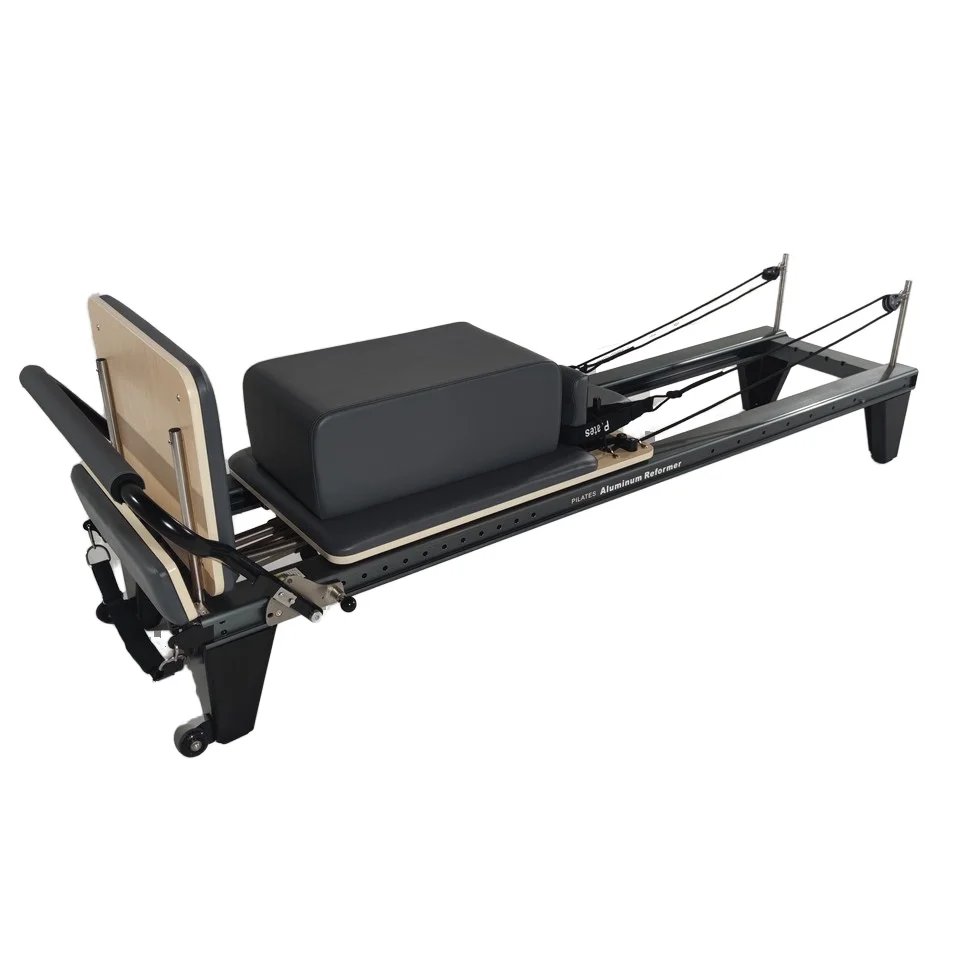
![Factory Pilates Reformer Trapeze Machine for Studio Core Timber Training [WARN] draft identifier mismatch](https://bicksport.com/wp-content/uploads/2026/08/factory-pilates-reformer-trapeze-machine-for-studio-core-timber-training-warn-draft-identifier-mismatch-8c45e6.webp)
Engineered Frame Stability — Reinforced timber construction tested for continuous class-cycle loading in multi-occupancy studio environments.
Technical Specifications
| Parameter | Value |
|---|---|
| Designation | SRY-24 |
| Product Type | Pilates Reformer |
| Product Dimensions | 2460 × 730 × 680 mm |
| Net Weight | 100 kg |
| Accessory Options | Long Box / Jump Board / Platform |
| Color | Solid Color (customizable) |
| Logo | Customized Is Allowed |
| Target User | Adult, Unisex |
| Warranty | 3 Years |
| Transport Package | Standard Wood Case |
| Production Capacity | 80 Pieces/Month |
| HS Code | 9506911900 |
Application Suitability
| Deployment Scenario | Typical Use |
|---|---|
| Commercial Pilates studio | Back-to-back group reformer classes with full accessory rotation |
| Five-star hotel fitness center | Guest-accessible reformer sessions in noise-sensitive upper-floor wellness areas |
| High-end residential home gym | Private Pilates practice with trapeze and jump board versatility |
| Rehabilitation and physical therapy center | Progressive patient programming using long box and platform support |
| Boutique fitness facility | Mixed-format classes combining reformer, cardio jump board and trapeze work |
Why Carriage Noise Undermines Studio Retention Before Anyone Notices
A reformer that rattles during footwork on an upper hotel floor generates complaints long before the maintenance ticket gets filed.
In multi-occupancy facilities, Pilates reformers sit directly above occupied rooms or beside quiet zones. When carriage rails are underspecced or wheel bearings degrade under continuous class schedules, the vibration transmits through floor slabs. Guests and residents hear it as a low-frequency rumble, and front desk staff field the calls [NEED_CITE: noise transmission thresholds for fitness equipment in mixed-use hospitality buildings]. I once pulled an entire batch of equipment back from a Middle East five-star hotel because the cushioning layer on the carriage system had not been properly compressed during assembly — within three months, the glide surface deformed, members reported joint discomfort, and the facility operator was facing attrition across their membership base. That failure drove our current protocol: every carriage rail alignment and timber joint on the SRY-24 is inspected before it leaves the testing bench.
How This Reformer Fits Into a Commercial Studio Layout
The SRY-24 covers the full spectrum of classical and contemporary Pilates programming — from supine footwork and seated arm series through to trapeze-based suspension work and jump board cardio intervals. In a studio cardio zone, it complements mat stations and tower units by providing spring-loaded resistance across a 2460 mm rail length, accommodating users of varying limb proportions without requiring equipment swaps mid-class. It suits facilities running four or more consecutive class blocks per day and deploys effectively on upper floors where acoustic performance matters. The 180 kg user capacity spans the full commercial demographic range, and the included long box, jump board, and platform accessories allow instructors to progress programming without expanding the equipment footprint. This commercial Pilates reformer trapeze machine is built for the density and repetition that studio environments demand.
Continuous Class Schedules and the Environment They Demand
A reformer running six classes a day, six days a week, accumulates thousands of carriage transitions monthly. The timber frame must maintain dimensional stability across seasonal humidity swings, and the rail surface must resist micro-pitting under repeated load cycles [NEED_CITE: timber frame dimensional stability requirements for continuous commercial fitness equipment deployment]. Upper-floor hotel deployments require vibration isolation between the reformer base and the slab — a 5 mm rubber mat beneath the 100 kg unit is standard practice to prevent structure-borne noise from reaching guest rooms below. The 2460 × 730 mm footprint needs at least 600 mm clearance on all sides for safe accessory use, particularly when the jump board or trapeze is engaged. Facilities should confirm ceiling height permits full trapeze extension before finalizing the floor plan.
What the Timber Grade and Rail Mechanics Actually Determine
The frame material on a Pilates reformer dictates three things simultaneously: glide smoothness, acoustic output during carriage transitions, and long-term structural rigidity. Hardwood timber with proper grain orientation resists the lateral forces generated during high-spring-resistance exercises, while softwood or composite alternatives deflect over time, introducing rail misalignment and audible friction. The carriage glide mechanism — whether bearing-based or wheel-on-rail — determines maintenance intervals: sealed bearings require less attention but must be rated for the lateral load of jump board impacts. Accessory attachment points on the SRY-24 are integrated into the frame structure rather than bolted on as afterthoughts, which matters when a jump board is absorbing repetitive impact forces during cardio intervals [NEED_CITE: accessory mounting integrity standards for dynamic loading on commercial Pilates equipment]. The three-year warranty on this unit reflects component confidence across the frame, carriage, and spring assemblies under commercial duty cycles.
The Hidden Cost of Specifying Below Commercial Grade
Facility operators who select reformers with light-commercial frames for studio deployment typically see carriage degradation within the first year. The rail surface develops wear grooves, the carriage begins to track unevenly, and members notice the difference in glide quality before they articulate it as a complaint — they simply stop booking. In hotel environments, the consequence arrives faster: noise complaints from adjacent guest rooms reach management within weeks if the vibration isolation is inadequate. I have seen entire procurement batches returned because the cushioning specification was not validated against actual usage patterns, and the cost of reverse logistics, rework, and reputational damage far exceeded the initial unit-price savings. Non-commercial accessory mounts also fail prematurely under jump board loading, creating a safety liability that no waiver language adequately covers.
Why This Product Line Holds Up Under Scrutiny
Every SRY-24 frame is subjected to continuous load-cycle testing that mirrors the duty demands of back-to-back studio classes. The carriage rail alignment is verified under loaded conditions, not just static measurement, which is where most production inconsistencies surface. The timber selection and joint construction are documented in the durability test records provided with each shipment. OEM customization extends to logo application, frame color, and accessory specification, allowing facility operators to maintain brand consistency across a multi-unit deployment. Our 3D layout service accounts for the 2460 × 730 mm footprint plus the required clearance zones, integrating airflow and sightline planning so the reformer placement supports both class flow and visual appeal. Technical support remains available around the clock for commissioning questions and spare parts coordination.
Documentation & Test Records
- CE declaration of conformity covering the SRY-24 Pilates reformer assembly
- EN 957 test report validating structural and mechanical safety requirements
- ISO 957 test report validating structural and mechanical safety requirements
- ISO 9001 certificate covering manufacturing process controls
- Durability test record documenting frame and carriage load-cycle performance
- Noise level test report measuring acoustic output during carriage transitions
Installation, Commissioning & Maintenance
- Confirm floor leveling across the 2460 × 730 mm footprint before positioning the 100 kg frame
- Place vibration-isolation matting beneath the unit for upper-floor hotel or residential deployments
- Verify ceiling clearance permits full trapeze extension with the 680 mm base height
- Calibrate carriage glide and spring tension during initial commissioning before class programming begins
- Inspect rail surface and accessory mounting hardware at quarterly intervals under continuous class use
- Clean timber frame with pH-neutral solution to prevent sweat residue degradation
Equipment Selection and Deployment Inquiry
Provide your studio floor area and target unit count to receive a 3D layout incorporating equipment spacing, airflow, and member flow patterns. Specify your daily class schedule intensity so we can confirm the frame and carriage specifications match your duty-cycle requirements. Indicate the deployment floor level and adjacent room types so we can verify acoustic isolation needs. State your target market so accessory configuration and customization lead times are confirmed before the proforma invoice is issued.
Frequently Asked Questions
Q: What timber grade and frame construction method is used, and how does it affect durability?
A: The SRY-24 uses hardwood timber selected for grain orientation and dimensional stability under continuous class-cycle loading. Joint construction is reinforced to resist lateral forces generated during high-resistance exercises. This prevents rail misalignment and carriage tracking issues that commonly emerge in light-commercial frames within the first year of studio deployment.
Q: How does the carriage glide system affect noise and maintenance in shared buildings?
A: The carriage mechanism is designed for smooth transitions with minimal structure-borne vibration, which matters when reformers operate on upper hotel floors or beside occupied residential units. Sealed components reduce maintenance frequency compared to exposed wheel systems. Pairing the unit with isolation matting further limits noise transmission to adjacent spaces.
Q: Are the included accessories securely mounted for dynamic exercises like jump board work?
A: The long box, jump board, and platform attach through integrated mounting points built into the frame structure rather than surface-bolted brackets. This ensures stability during repetitive impact loading. Compatibility with third-party accessories should be verified against the attachment mechanism documentation provided with each unit.
Q: What OEM customization is available, and what are the requirements?
A: Logo placement, frame color, and accessory specification can all be customized to match facility branding and interior design requirements. Minimum order quantities and lead times depend on the scope of customization. Operators should confirm these parameters during the quotation stage to align production scheduling with their deployment timeline.
Q: How does the three-year warranty compare to typical commercial reformer coverage?
A: A three-year warranty on frame, carriage, and spring assemblies signals component confidence for high-frequency studio environments. Many light-commercial reformers carry one-year coverage that excludes carriage wear. The warranty scope should be reviewed alongside the durability test records to confirm alignment with your facility’s daily usage intensity.


![Wholesale Pilates Reformers Cadillac with Tower for Home Gym [WARN] draft identifier mismatch](https://bicksport.com/wp-content/uploads/2026/08/wholesale-pilates-reformers-cadillac-with-tower-for-home-gym-warn-draft-identifier-mismatch-ea7bd5.webp)