![Commercial Weight Storage Bench 5049 Gym Equipment Plate Organizer [WARN] draft identifier mismatch](https://bicksport.com/wp-content/uploads/2026/08/commercial-weight-storage-bench-5049-gym-equipment-plate-organizer-warn-draft-identifier-mismatch-272146.webp)
Duty-Cycle Durability — Commercial weight storage bench 5049 is tested to withstand continuous loading cycles in high-traffic gym environments without frame deformation or weld fatigue.
Technical Specifications
| Parameter | Value |
|---|---|
| Product Type | Weight Storage Bench |
| Designation | 5049 |
| Exercise Part | Chest |
| Material | Steel |
| Product Dimensions | 2000 × 1150 × 1150 mm |
| Net Weight | 78 kg |
| Foldable | Unfolded |
| Power Source | Manual |
| Age Group | Adult |
| Gender | Unisex |
| Certification | ISO 9001, CE |
| OEM/ODM | Available |
| Production Capacity | 500 PCS/Month |
Application Suitability
| Deployment Scenario | Typical Use |
|---|---|
| Professional Gym and Club | Centralized weight plate organization in free-weight training zones |
| Community Fitness Center | Shared plate storage reducing floor clutter and trip hazards |
| Commercial Gymnasium | High-frequency plate access during group strength sessions |
Why Weight Plate Storage Defines Gym Floor Safety Before Any Other Equipment Does
A disorganized free-weight zone becomes a liability the moment a member trips over a misplaced 20 kg plate.
In my years running the noise and vibration testing line in Shandong, I learned that floor damage rarely starts with the machine — it starts with what is lying beside it. Weight plates scattered across rubber flooring crack the substrate, create uneven surfaces under treadmills, and produce the kind of metallic clatter that travels through concrete slabs into occupied rooms below. A dedicated commercial weight storage bench gym solution removes that variable entirely. When plates have a defined home, the entire acoustic and safety profile of the floor improves. Facilities that skip this step often find themselves chasing complaints that have nothing to do with the cardio equipment they invested in [NEED_CITE: floor impact damage from unsecured weight plates in commercial facilities].
How This Bench Anchors the Free-Weight Zone Layout
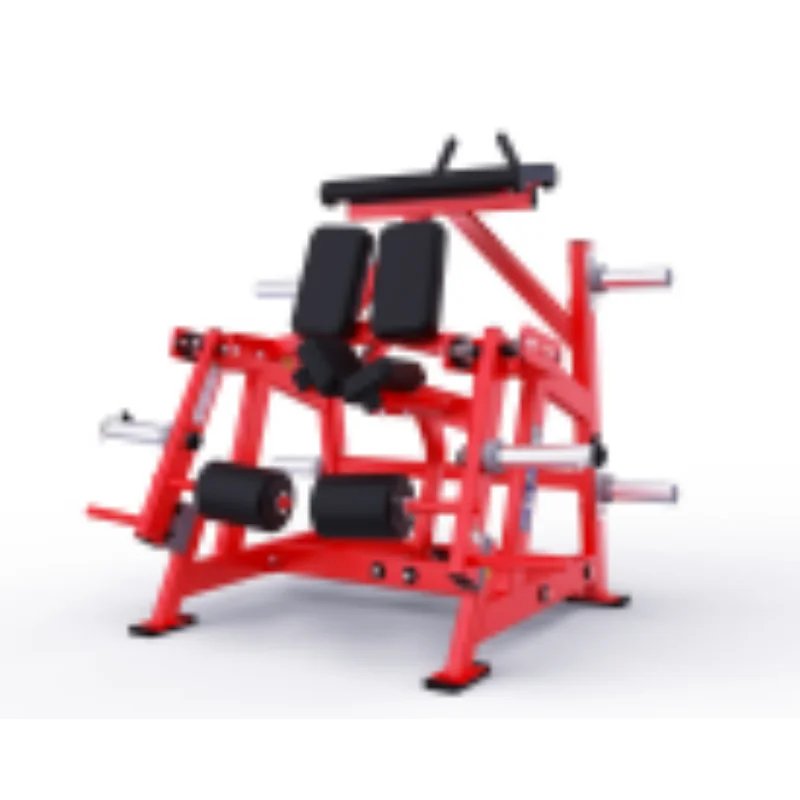
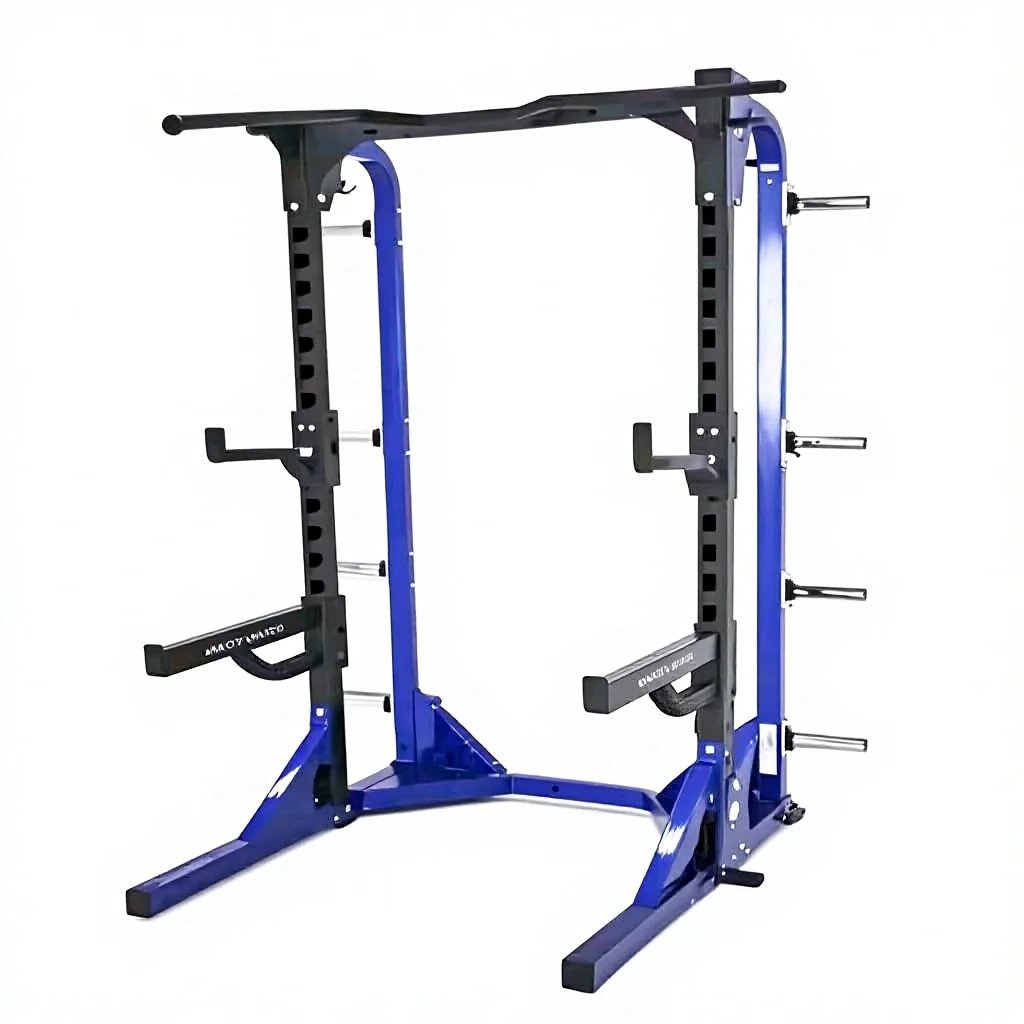
The 5049 weight storage bench serves as the loading and unloading station where members stage plates before moving to barbells or plate-loaded machines. In a typical free-weight zone, it complements squat racks, deadlift platforms, and chest press stations by keeping inventory within arm’s reach without occupying the swing radius of any lifting movement. Its 2000 mm length accommodates multiple plate sizes across the horizontal storage horns, while the 1150 mm height keeps the top tier at a comfortable lift-off point for most adult users. The manual design means no power routing is required, giving facility planners complete freedom to position it wherever traffic flow demands — whether against a wall, at the end of a rack row, or as a divider between zones.
What Continuous Commercial Loading Demands from the Frame
A weight storage bench in a professional gym or club sees hundreds of load-and-pull cycles daily. Each time a member slides a 20 kg or 25 kg plate onto a horn, the impact force travels through the weld points into the floor. The steel frame construction of the 5049 is designed to absorb this repetitive shock without developing micro-fractures at the joints [NEED_CITE: EN 957 requirements for static load testing on storage equipment]. In community fitness centers where operating hours stretch from early morning to late evening, the bench must remain stable on rubber matting or bare concrete without shifting — the 78 kg net weight and wide footprint provide that anchoring effect. Proper floor leveling and a vibration-dampening pad underneath prevent the frame from walking across the surface over months of use.
Reading the Steel Gauge and Weld Pattern
The 5049 uses a heavy-duty steel tube frame finished with a powder-coated surface. The powder coat provides resistance against chipping from metal-on-metal contact when plates are loaded hastily — a constant occurrence during peak hours. The unfolded design means the structural integrity relies entirely on the welded joints rather than folding hinges, which are common failure points in lighter-duty storage solutions. The manual power source classification confirms there are no electronic components to maintain, no firmware to update, and no power cables to route through floor channels. For facilities planning their electrical layout, this eliminates one variable from the floor plan.
What Happens When Storage Benches Are Underspecified for Commercial Traffic
I have seen community gyms deploy residential-grade plate trees that wobble under full load because the base footprint was too narrow and the steel gauge too thin. Within months, the powder coat chips at contact points, exposing raw steel to humidity and sweat residue. The frame develops a lean, and plates slide off horns during busy sessions — creating exactly the floor hazard the storage solution was supposed to prevent. Facilities then face a cycle of patch repairs or wholesale replacement, both of which pull equipment out of service and disrupt the member experience [NEED_CITE: maintenance cost patterns for underspecified storage furniture in commercial gyms].
Why the 5049 Line Exists in This Product Family
This weight storage bench was engineered to match the duty-cycle expectations of the commercial cardio and strength equipment it sits beside. The steel frame undergoes the same load-testing protocols applied to treadmill decks and elliptical cross-arms. The powder-coated finish is selected to withstand the same commercial cleaning agents used across the facility. OEM and ODM options allow facility operators to match the color and branding of their entire equipment fleet. For deployment planning, our 3D zone layout service maps the 2000 × 1150 mm footprint against your rack spacing, member flow corridors, and emergency egress paths to confirm the bench sits where it supports traffic rather than obstructing it. ISO 9001 and CE certifications accompany every unit, and 24/7 technical support covers structural questions post-installation.
Documentation & Test Records
- CE declaration of conformity covering structural load safety for commercial gym furniture
- EN 957 test report validating static and dynamic load performance on steel frame
- ISO 9001 certificate for manufacturing quality management systems
- Powder-coat durability test record for chip and corrosion resistance
- Dimensional inspection report confirming 2000 × 1150 × 1150 mm tolerance
- Spare parts list and assembly guide with torque specifications
Installation, Commissioning & Maintenance
- Position the 2000 × 1150 mm footprint with at least 800 mm clearance on all sides for safe plate loading
- Level the steel base on a flat surface using shims if floor variance exceeds 3 mm across the footprint
- Apply rubber vibration pads under each foot to prevent frame migration on smooth concrete
- Inspect weld joints and horn alignment quarterly under full plate load
- Wipe powder-coated surfaces with pH-neutral cleaner weekly to prevent sweat residue buildup
- Re-torque base bolts every six months per the included torque specification sheet
Equipment Selection Next Steps
Provide your free-weight zone square footage and current plate inventory count so we can confirm how many 5049 units your layout requires and where they fit relative to rack stations and member flow corridors. Specify your facility’s daily operating hours to validate that the frame’s load cycle matches your traffic volume. Indicate whether OEM color matching or logo application is needed to align with your existing equipment fleet.
Frequently Asked Questions
Q: What is the maximum weight capacity of the 5049 storage bench?
A: The steel frame is engineered for continuous commercial loading across all storage horns simultaneously. Exact load ratings depend on plate distribution and should be confirmed against your specific inventory. We provide a load capacity chart with each quotation so facility managers can verify the bench handles their heaviest configuration without frame deflection or base instability.
Q: How does the powder-coated finish hold up under daily commercial use?
A: The powder coat is selected to resist chipping from repeated metal-on-metal plate contact and corrosion from sweat and cleaning agents. It maintains its appearance through standard commercial gym cleaning protocols. If surface damage does occur from impact, the coating can be spot-repaired without requiring a full refinishing cycle, keeping maintenance downtime minimal.
Q: Can the bench be customized with facility branding or color matching?
A: OEM and ODM services include custom powder-coat colors and logo application to match your existing equipment fleet. Console UI customization is available on our cardio lines, and we apply the same color-matching discipline to strength accessories. Minimum order quantities are flexible, and we provide digital proofs before production begins.
Q: What floor preparation is needed before installing the bench?
A: The 78 kg steel frame requires a flat, level surface to prevent rocking under asymmetric plate loads. Rubber flooring or vibration pads beneath each foot improve stability and reduce transmitted vibration to floors below. For facilities on upper levels, confirming the slab’s point-load tolerance with your structural engineer is advisable before positioning multiple loaded units.