
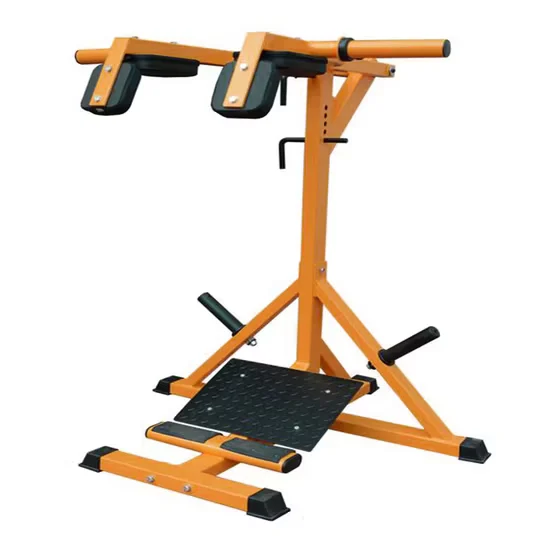
Steel-Frame Rigidity — a 70 kg welded steel structure resists fatigue deformation across thousands of loaded calf raise repetitions in commercial strength zones.
Technical Specifications
| Parameter | Value |
|---|---|
| Designation | 5079 |
| Product Type | Stand Calf Raise |
| Exercise Part | Calf |
| Material | Steel |
| Product Dimensions | 1300 × 1260 × 1495 mm |
| Net Weight | 70 kg |
| Max User Weight | Not specified in source |
| Age Group | Adult |
| Gender | Unisex |
| OEM/ODM | Available |
| Certification | ISO 9001, CE |
| HS Code | 9506911900 |
| Production Capacity | 500 PCS/Month |
| Transport Package | Plywood Case |
Application Suitability
| Deployment Scenario | Typical Use |
|---|---|
| Chain gym strength zone | High-frequency calf isolation work between compound lift sessions |
| Corporate wellness room | Compact lower-leg training supplement for time-limited employees |
| Community fitness center | Durable calf development station for members of all training levels |
| Sports performance training center | Targeted calf strengthening for athletes requiring explosive lower-leg power |
| Professional gymnasium | Supplementary posterior-chain work alongside free-weight and machine circuits |
Why Frame Wobble Reaches Members Before Maintenance Does
A 70 kg all-steel welded chassis keeps the Stand Calf Raise planted under repeated loaded repetitions without progressive loosening.
In commercial strength zones, equipment frames endure cyclical loading thousands of times per week. When joints and welds lack adequate reinforcement, micro-movements accumulate into audible rattling and visible sway — members notice before technicians do, and the machine earns a reputation for feeling unreliable [NEED_CITE: structural fatigue patterns in commercial strength equipment]. The commercial stand calf raise machine gym operators choose must resist this degradation from day one, not just during factory acceptance testing. A frame that shifts under load also compromises exercise geometry, forcing users to compensate with stabilizer muscles instead of isolating the target muscle group effectively.
How This Station Fits Within a Strength Zone Configuration
The Stand Calf Raise occupies a dedicated isolation role in lower-body training circuits, complementing leg press and squat stations that handle compound movement patterns. It serves a single exercise modality — standing calf raises with shoulder-pad load transfer — making it a focused addition rather than a multi-function compromise. In a commercial stand calf raise machine gym layout, position it adjacent to other lower-body machines so members can sequence calf work after heavier compound lifts without crossing the facility. The 1300 × 1260 mm footprint demands moderate floor allocation, and the 1495 mm height clears standard ceiling lines comfortably. Users across a wide range of statures can load the shoulder pads and step onto the platform without adjustment delays.
Operational Demands of Continuous Strength-Zone Deployment
This machine relies entirely on mechanical construction rather than electronic systems, which simplifies maintenance but raises the bar for structural endurance. In a busy facility running 14 or more hours daily, the shoulder-pad contact points and foot-platform surface experience constant abrasion and sweat exposure [NEED_CITE: surface wear standards for commercial gym contact points]. The steel frame handles cyclical loading well, but padding materials and grip surfaces require regular inspection. Deployment on upper floors transmits vibration through the slab during loaded repetitions, so anti-vibration pads beneath the base are recommended when the machine sits above occupied spaces. Voltage considerations do not apply here — the unit is entirely plate-loaded or pin-stack loaded with no electrical dependency — which removes one failure vector that plagues electronic cardio equipment.
Decoding the Structural Specifications That Matter
The 70 kg net weight signals a substantial steel mass distributed across the frame, base plate, and loading mechanism. Heavier frames resist tipping moments when users shift laterally during single-leg calf work, and they dampen harmonic vibration that lighter structures amplify with each repetition. The 1300 × 1260 × 1495 mm envelope defines both the user workspace and the safety perimeter that surrounds it — the height accommodates the full vertical travel of the shoulder mechanism while the width provides lateral stability. Steel construction, when paired with proper surface treatment, resists corrosion from the sweat and humidity that saturate strength-zone air. The mechanical simplicity means there are no motors, belts, or circuit boards to fail; the critical wear points are pivot bearings, padding integrity, and guide-rod surfaces.
What Happens When Commercial Zones Run Residential-Grade Frames
Facilities that install lighter-gauge frames in high-traffic strength zones face predictable consequences: weld cracks appear at stress concentrations, pivot points develop play that creates rattling noise, and the machine develops a reputation among members as unreliable. Purchasing departments then cycle through replacement units, paying for repeat delivery, installation, and floor-space downtime each time [NEED_CITE: total cost of ownership for commercial gym equipment replacement cycles]. The pattern repeats because the original spec prioritized unit price over structural mass. A calf raise station that weighs significantly less than this 70 kg unit likely achieved that savings through thinner steel sections or fewer reinforcement gussets — compromises that only surface after months of loaded use.
Why This Line Meets Commercial Deployment Requirements
Every unit undergoes structural load testing that simulates continuous high-frequency operation before leaving the factory, and the 10,000-hour durability verification applies across the full equipment range. The commercial stand calf raise machine gym buyers specify can be customized through OEM/ODM programs covering frame color, logo placement, and padding materials to match facility branding. The 3D layout and airflow planning service accounts for this machine’s footprint alongside neighboring equipment, ensuring adequate member clearance and ventilation paths in the strength zone. CE and ISO 9001 certifications document compliance with recognized manufacturing and safety standards. Technical support remains available around the clock for commissioning questions and maintenance guidance, and spare parts documentation covers the mechanical wear components specific to this station.
Documentation & Test Records
- CE declaration of conformity covering structural and mechanical safety
- EN 957 test report validating commercial strength equipment compliance
- ISO 9001 certificate for manufacturing quality management systems
- Structural load and durability test records for frame verification
- Surface treatment and corrosion resistance documentation
- Spare parts list with mechanical wear component specifications
Installation, Commissioning & Maintenance
- Allocate 1300 × 1260 mm footprint plus clearance on all sides for safe user access
- Level the base frame on the floor surface and install anti-vibration pads if deployed above occupied rooms
- Inspect all pivot bearings and guide rods during initial commissioning before member use
- Check shoulder pad condition and mounting hardware monthly under high-frequency use
- Wipe steel surfaces and padding after each maintenance cycle to prevent sweat-induced corrosion
- Lubricate guide rods and pivot points according to the schedule in the installation guide
Planning Your Strength-Zone Equipment Inquiry
Provide your facility floor plan and intended unit count to receive a 3D layout showing clearance zones and member flow around this calf raise station. Specify your daily operating hours so we can confirm the mechanical duty cycle matches your traffic volume. Indicate whether the deployment floor sits above occupied spaces so we can advise on vibration isolation. Clarify whether OEM customization — including frame color, logo placement, or padding specification — is required for your project timeline.
Frequently Asked Questions
Q: What structural differences separate commercial calf raise machines from residential versions?
A: Commercial units use thicker steel sections, reinforced weld joints, and heavier base plates to withstand thousands of loaded cycles weekly without developing frame play or noise. Residential versions prioritize lower weight and cost, which works for limited home use but leads to premature loosening and structural fatigue when subjected to continuous gym traffic. The 70 kg mass of this unit reflects the structural investment required for commercial longevity.
Q: How is the steel frame protected against corrosion in humid gym environments?
A: The frame undergoes surface treatment processes including cleaning, primer application, and powder coating to create a barrier against moisture and sweat exposure. Regular wiping of contact surfaces extends coating life, and facilities in high-humidity climates should maintain adequate ventilation around strength equipment to prevent condensation accumulation on steel surfaces during overnight shutdown periods.
Q: How should calf raise stations be positioned within a strength-zone layout?
A: Place them adjacent to compound lower-body machines like leg presses and squat racks so members can sequence isolation work without crossing the facility. Allow full clearance around the 1300 × 1260 mm footprint for safe loading and unloading. Consider sightlines from the entrance — visible, accessible equipment sees higher utilization rates than machines tucked into corners with poor airflow or lighting.
Q: What does the OEM/ODM customization process cover for this equipment?
A: Customization options include frame color, logo placement, padding material and color selection, and specification adjustments to match facility requirements. The process begins with confirming your branding specifications and minimum order quantity, followed by sample approval before full production runs. Lead times depend on customization scope and current production scheduling.
Q: Which components require regular maintenance on a mechanical calf raise station?
A: Pivot bearings, guide rods, shoulder pad mounting hardware, and the foot platform surface are the primary wear points. Guide rods need periodic lubrication, bearings require inspection for play or grinding, and padding should be checked for compression loss or cover tearing. The installation guide provides specific intervals based on usage intensity, and the spare parts list identifies replacement components by part number.


![Hammer Strength ISO-Lateral Super Incline Press Gym Equipment [WARN] draft identifier mismatch](https://bicksport.com/wp-content/uploads/2026/08/hammer-strength-iso-lateral-super-incline-press-gym-equipment-warn-draft-identifier-mismatch-13d23a.webp)
![Commercial Tibia Dorsi Flexion Machine Gym Fitness Equipment [WARN] draft identifier mismatch](https://bicksport.com/wp-content/uploads/2026/08/commercial-tibia-dorsi-flexion-machine-gym-fitness-equipment-warn-draft-identifier-mismatch-f63366.webp)