
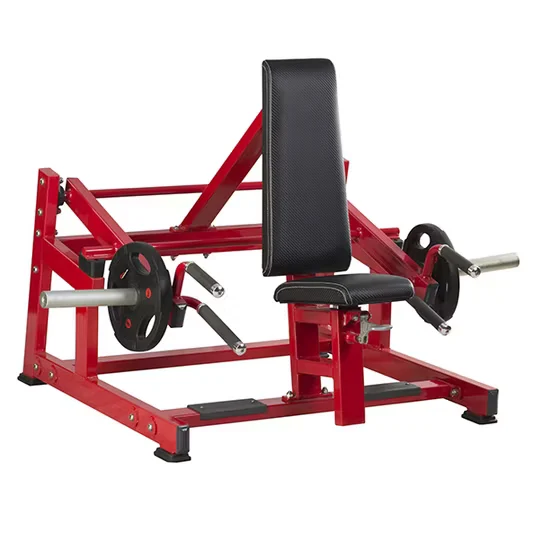
10,000-Hour Durability Verified — Manual plate-loaded resistance eliminates electrical failure points while reinforced steel frames undergo continuous high-frequency testing before leaving the factory floor.
Technical Specifications
| Parameter | Value |
|---|---|
| Product Type | Seated/Standing Shrug Machine |
| Power Source | Manual |
| Resistance Type | Plate-Loaded |
| Exercise Target | Shoulder and Trapezius |
| Frame Material | Steel |
| Product Dimensions | 1060 × 1550 × 1190 mm |
| Net Weight | 86 kg |
| Max User Weight | 180 kg |
| Foldable | No |
| Age Group | Adult |
| Gender | Unisex |
| Certification | ISO 9001, CE |
Application Suitability
| Deployment Scenario | Typical Use |
|---|---|
| Chain gym strength zone | High-frequency shoulder and trap training across peak membership hours |
| Professional sports training center | Athlete-specific trapezius development with controlled plate-loaded resistance |
| Corporate wellness facility | Compact dual-function station serving varied employee fitness levels |
| Community fitness center | Durable plate-loaded option minimizing maintenance demands in shared spaces |
| High-end residential home gym | Space-efficient seated and standing shrug training without electrical requirements |
Why Manual Resistance Eliminates the Burnout Cycle That Haunts Gym Operators
Plate-loaded systems remove the single largest failure category in commercial strength equipment: electrical and motorized components.
I spent years watching motorized strength stations fail in facilities running sixteen-hour days. The pattern repeats: actuators overheat, control boards fry, and the machine sits dead on the floor while members work around it [NEED_CITE: common failure modes in motorized commercial strength equipment]. When we switched hotel fitness deployments to manual plate-loaded systems, the maintenance tickets dropped because there was simply nothing electrical to break. A commercial seated standing shrug machine with plate-loaded resistance runs on physics, not firmware.
The steel frame and pivot bearings still face continuous loading cycles. That is where engineering attention belongs — reinforced welds, sealed bearings, and load paths verified through repeated stress testing rather than hoping a circuit board survives another summer.
Where This Shrug Station Fits in a Commercial Strength Floor
This machine covers both seated and standing shrug movements within a single footprint, targeting the upper trapezius and shoulder girdle through controlled vertical loading. In a professional gym layout, it complements free-weight rack areas by offering guided biomechanical movement for isolation work without requiring spotters. The dual-position design suits moderate-to-high traffic zones where floor space commands a premium and each station must justify its square meterage. Users across a broad body-weight range load their own plates, making the resistance scaling inherently adaptive rather than limited by a fixed weight stack [NEED_CITE: space allocation standards for commercial strength equipment zones].
Continuous Operation Demands and Facility Environment Checks
A plate-loaded commercial seated standing shrug machine carries no motor duty-cycle concerns, but the pivot bearings and guide rods still endure thousands of articulation cycles daily in busy gyms. Facilities running extended hours need sealed bearing specifications rated for continuous high-frequency articulation without scheduled relubrication. Floor leveling matters here more than operators assume — an uneven base transfers asymmetric loads through the frame and accelerates wear on one side of the pivot assembly. Adequate clearance around the plate-loading horns prevents member congestion during peak hours, and rubber flooring beneath the station absorbs plate drops that would otherwise transmit vibration to adjacent spaces [NEED_CITE: vibration transmission thresholds for shared fitness facility floors].
Reading the Load Path: Steel Grade and Bearing Specification
The 86 kg frame mass indicates substantial steel section thickness throughout the load-bearing structure, which directly governs how the frame handles repeated off-center plate loading. Commercial-grade pivot bearings at the articulation points determine whether the movement stays smooth after months of heavy use or develops the lateral play that members notice immediately. Plate-loaded horns sized for standard Olympic plates keep the system compatible with existing gym inventory rather than requiring proprietary weight formats. The manual resistance curve remains linear and predictable — what you load is what you lift — unlike selectorized mechanisms where internal friction can create inconsistent feel between repetitions. Weld quality at the base-to-upright junctions carries the highest structural significance because shrug movements generate vertical impulse loads that concentrate stress at these connection points.
What Spec Compromises Actually Cost When Machines Go Down
Facilities that sourced light-duty shrug stations report frame cracking at weld junctions within the first year of heavy commercial use [NEED_CITE: weld fatigue reporting in commercial strength equipment under continuous loading]. Bearing failures create grinding noises that members hear across the strength floor, generating complaints before maintenance staff even logs the issue. Machines pulled from service for structural repair leave gaps in the training lineup, pushing members toward free-weight alternatives and increasing rack congestion. Operators who replaced entire batches after discovering inadequate steel gauge in the original procurement describe the downtime cost as exceeding the equipment savings many times over.
Why This Product Line Holds Up Under Daily Commercial Load
Every frame in this line undergoes durability testing measured in continuous articulation cycles rather than simple static load checks, ensuring the steel and welds survive real gym conditions. The dual seated and standing configuration means a single station covers two movement patterns, which simplifies floor planning when our team drafts 3D strength-zone layouts accounting for member flow and equipment spacing. OEM customization extends to frame color and branding elements so the machine integrates with facility identity without requiring aftermarket finishing. Documentation packages include material specification sheets and durability test records that procurement teams can verify before committing to volume orders. Technical support availability around the clock addresses commissioning questions that inevitably arise during multi-site rollouts.
Documentation & Test Records
- CE declaration of conformity for European market compliance
- EN 957 test report covering structural integrity and safety requirements
- ISO 9001 certificate confirming quality management system adherence
- Durability test record documenting continuous articulation cycle verification
- Material specification sheet detailing steel grade and surface finish
- Installation and commissioning guide with spare parts reference list
Installation, Commissioning & Maintenance
- Position the 1060 × 1550 mm footprint with clearance on all sides for safe plate loading and member passage
- Verify floor levelness across the base contact points to prevent asymmetric frame loading during shrug repetitions
- Inspect pivot bearings and guide rod surfaces before first use and apply specified lubricant if factory coating appears dry
- Check all fastener torque values after the first week of member use as initial settlement occurs in bolted connections
- Wipe down steel surfaces and plate-loading horns daily to prevent sweat corrosion from degrading the finish
- Schedule bearing inspection quarterly and replace seals showing visible wear before lateral play develops
Requesting a Deployment Assessment
Share your strength-zone square footage and current equipment list to receive a 3D layout that accounts for plate-loading clearance and member circulation around each station. Specify expected daily usage hours so we can confirm bearing specifications match your facility’s traffic volume. Identify whether the deployment floor sits above occupied spaces to determine whether additional vibration damping measures are necessary. Confirm target market destination so plate horn sizing aligns with regional weight plate standards.
Frequently Asked Questions
Q: What is the difference between plate-loaded and selectorized strength equipment?
A: Plate-loaded machines like this shrug station use manually added weight plates for resistance, eliminating internal weight-stack mechanisms and cable systems that require regular adjustment. Selectorized equipment offers pin-selected convenience but introduces pulleys, cables, and guide rods that wear under continuous commercial use. Plate-loaded systems generally require less scheduled maintenance and deliver a more direct resistance feel that experienced lifters prefer for isolation movements.
Q: How does manual resistance compare to motorized alternatives for commercial use?
A: Manual plate-loaded resistance removes all electrical components from the machine, meaning no motors, actuators, or control boards can fail during operating hours. Motorized strength equipment introduces maintenance categories that plate-loaded systems simply do not have. For facilities running extended daily schedules, this translates to fewer service interruptions and lower long-term parts replacement costs across a fleet of stations.
Q: What maintenance is required for commercial strength equipment?
A: Plate-loaded stations need periodic bearing inspection, fastener torque checks, and surface cleaning to prevent sweat corrosion. Pivot points should move freely without lateral play, and any grinding sensation during articulation indicates seal wear requiring attention. Unlike selectorized or motorized alternatives, there are no cables to tension, no weight stacks to align, and no electronic components to recalibrate during routine service intervals.
Q: Can this equipment be customized for branding and color specifications?
A: OEM and ODM services cover frame color, logo placement, and upholstery specifications where applicable. Customization scoping occurs during the quotation phase so production tooling accommodates your branding requirements from the first unit. Minimum order quantities remain flexible to support both single-facility deployments and multi-site chain rollouts with consistent visual identity.
Q: What certifications and testing standards apply to commercial strength machines?
A: This machine carries ISO 9001 quality management certification and CE marking for applicable markets. EN 957 testing covers structural load verification and safety requirements for stationary training equipment. Durability test records document the continuous cycle testing that each frame design undergoes before production release, providing procurement teams with verifiable performance data.


![Commercial ISO-Lateral Plate Loaded Rowing Machine H5003 [WARN] draft identifier mismatch](https://bicksport.com/wp-content/uploads/2026/08/commercial-iso-lateral-plate-loaded-rowing-machine-h5003-warn-draft-identifier-mismatch-07c8f9.webp)