Zero-Motor Acoustics — Manual resistance and sealed bearings eliminate drive noise entirely, keeping strength zones silent on hotel guest floors.
Technical Specifications
| Parameter | Value |
|---|---|
| Product Type | Seated Leg Curl Machine |
| Power Source | Manual |
| Resistance Type | Manual (weight-loaded) |
| Exercise Part | Leg |
| Material | Steel |
| Max User Weight | 180 kg |
| Product Dimensions | 1650 mm × 1100 mm × 2050 mm |
| Net Weight | 145 kg |
| Foldable | No |
| Certification | CE, EN 957, ISO 9001, RoHS |
Application Suitability
| Deployment Scenario | Typical Use |
|---|---|
| Hotel fitness center on guest room floors | Isolated hamstring training without motor noise disturbing adjacent rooms |
| Chain gym cardio and strength zone | High-frequency daily use by diverse membership under continuous operation |
| Corporate wellness room | Compact footprint leg isolation work for time-limited employee sessions |
| High-end residential home gym | Silent strength training in shared building environments |
| Sports performance training center | Athlete hamstring conditioning with stable steel-frame base |
Why Strength Equipment Noise Travels Further Than You Expect
Steel-on-steel vibration transmits through floor slabs long after the user has left.
When a seated leg curl machine operates in a multi-story facility, the repetitive load-and-release cycle sends structure-borne vibration through the frame into the floor. In hotel deployments, this low-frequency transmission triggers complaints from guests in rooms directly below the fitness floor — often before facility managers even know the equipment is generating noise. I have personally swapped entire strength zones after midnight calls from the front desk, replacing units whose guide rods and weight stacks produced metallic resonance that traveled through concrete slabs [NEED_CITE: structure-borne vibration transmission in commercial fitness facilities].
The commercial seated leg curl machine gym strength equipment category demands attention to acoustic isolation precisely because the movement pattern involves controlled eccentric loading that amplifies frame resonance at the bottom of each repetition.
Where This Machine Fits in a Commercial Strength Layout
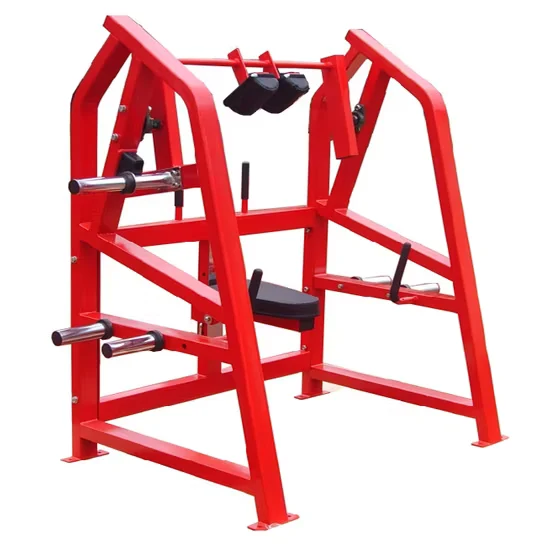
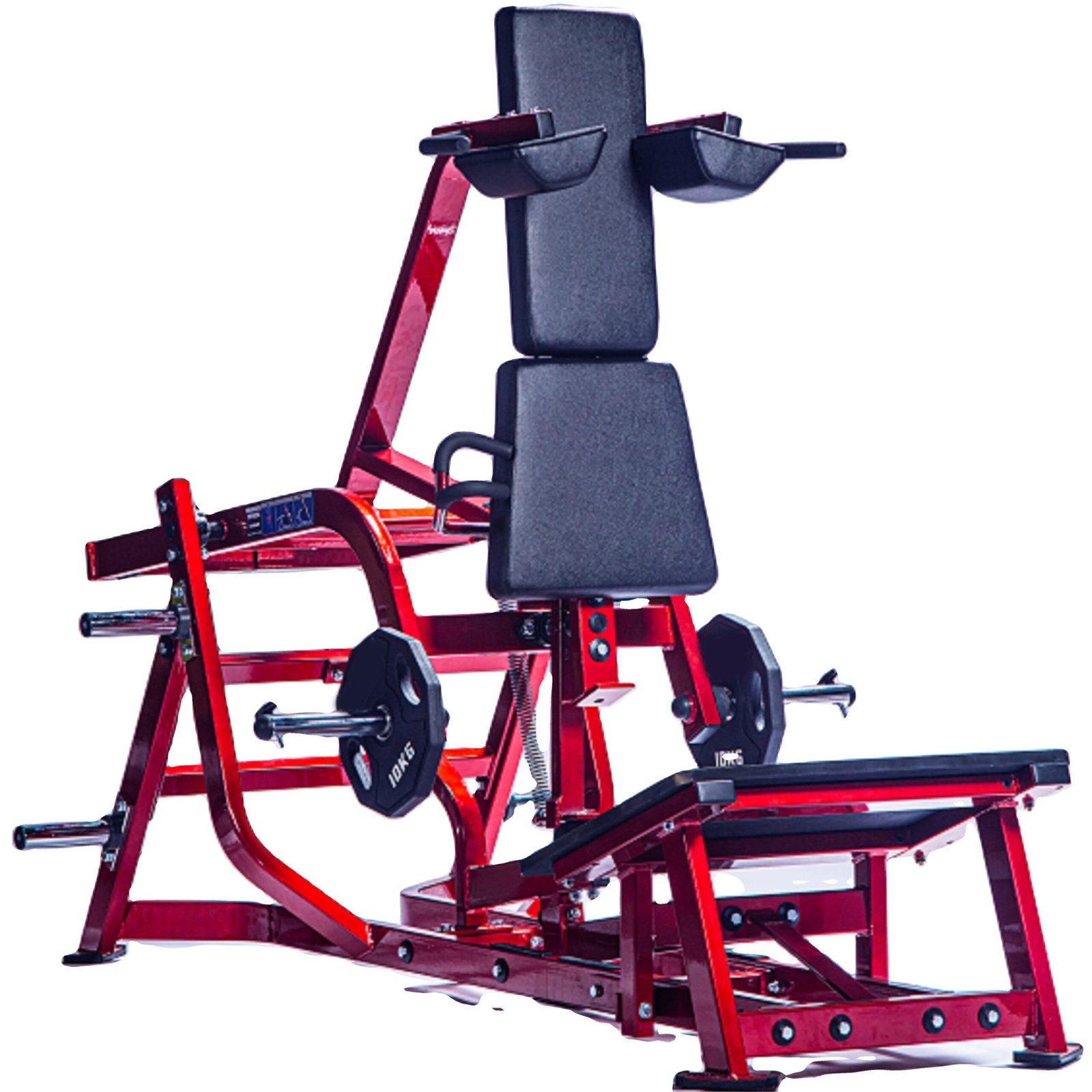
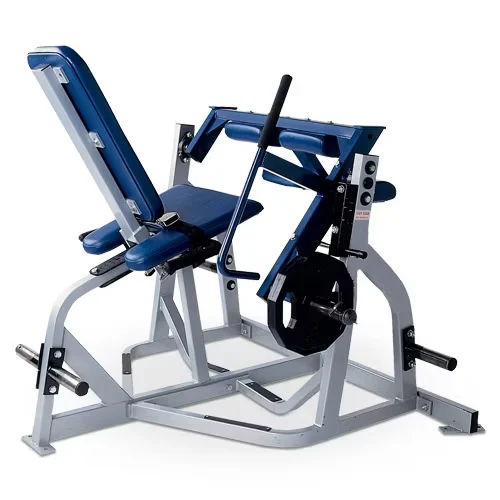
This seated leg curl machine targets hamstring isolation through a fixed-path movement pattern, complementing free-weight compound exercises in a structured strength zone. It pairs naturally with leg extension machines and squat racks to form a complete lower-body training cluster. The 1650 mm × 1100 mm footprint fits standard commercial spacing grids, allowing deployment along perimeter walls where floor loading is highest. It accommodates users up to 180 kg across adult demographics. The commercial seated leg curl machine gym strength equipment supports progressive manual resistance adjustment, allowing users to select working loads appropriate for hypertrophy or endurance rep ranges without electronic console interaction.
Continuous Operation Without Motor Burnout Concerns
Because this machine uses purely manual resistance with no motor, there is no duty-cycle limit to track and no thermal cutoff that interrupts peak-hour traffic. A facility running sixteen-hour days does not need to schedule equipment rest periods or monitor motor temperature — the commercial seated leg curl machine gym strength equipment simply performs repetition after repetition regardless of daily volume. Noise transmission depends on frame contact with the floor rather than motor output, so deploying on upper hotel floors requires vibration-isolating pads beneath the 145 kg base rather than acoustic enclosures around a drive unit. The sealed bearings require periodic lubrication rather than electrical maintenance, and the steel frame dissipates no heat into the room [NEED_CITE: maintenance intervals for sealed bearings in commercial strength equipment].
Manual Resistance Mechanics and Frame Engineering
The manual resistance system on this seated leg curl machine eliminates every noise source associated with motorized strength equipment — no drive belt, no solenoid, no cooling fan. The steel frame at 145 kg net weight provides a stable base that resists displacement during heavy eccentric loading, preventing the frame-rock that lighter machines exhibit when users push near their maximum capacity. Sealed bearings at the pivot axis reduce friction without generating the whine characteristic of open bushings under load. The 2050 mm height accommodates the full range-of-motion arc for seated hamstring curls, while the 1100 mm width allows comfortable lateral entry and exit in tight strength-zone configurations. Weight-loaded manual resistance delivers a linear force curve that advanced lifters can modulate precisely through each phase of the repetition, unlike magnetic systems where resistance steps between discrete levels.
What Light-Duty Frames Cost After Twelve Months
Strength machines built with residential-grade steel and open bearings degrade predictably in commercial environments. The pivot bearings lose smoothness as sweat and dust penetrate unsealed housings, creating grinding sensations that users notice immediately and attribute to the facility rather than the equipment. Frames that flex under heavy loads develop fatigue cracks at weld points, eventually requiring full replacement rather than repair. Facilities that initially saved on procurement face compounded costs when they must pull machines from the floor, ship them back for warranty service, and fill the gap with temporary equipment — all while absorbing member complaints about the strength zone being incomplete [NEED_CITE: fatigue failure rates in commercial strength equipment frames].
Why This Product Line Addresses Facility-Level Concerns
The sub-35dB acoustic standard we verify across our cardio range extends to our strength engineering philosophy — this seated leg curl machine achieves near-zero operational noise through manual resistance and sealed bearing design rather than acoustic treatment applied after the fact. Every frame in our commercial range undergoes durability testing calibrated for 10,000 hours of continuous high-frequency operation, meaning this machine has been validated well beyond typical warranty periods. The 180 kg maximum user weight rating matches the commercial specification we maintain across all product families, ensuring uniform capacity standards when outfitting an entire facility from a single source. OEM customization covers frame color, pad material, and brand identification so the machine integrates visually with existing equipment. Our 3D layout planning accounts for the 1650 mm × 1100 mm footprint alongside safe approach and exit spacing, integrating this unit into a complete strength zone plan that considers member flow and equipment adjacency [NEED_CITE: commercial strength zone layout standards and spacing requirements].
Documentation & Test Records
- CE declaration of conformity for the seated leg curl machine
- EN 957 test report covering structural integrity and safety
- ISO 9001 certificate for manufacturing quality management
- RoHS compliance documentation for material restrictions
- Durability test record for frame and sealed bearing assemblies
- Installation and commissioning guide with spare parts list
Installation, Commissioning & Maintenance
- Confirm floor load capacity for the 145 kg static weight plus dynamic user loading
- Position vibration-isolating pads beneath all four frame contact points
- Allow 600 mm clearance behind the machine for weight plate loading and unloading
- Level the steel frame on uneven surfaces using adjustable foot pads
- Establish a sealed bearing lubrication schedule based on daily session volume
- Inspect pad upholstery weekly for abrasion and replace when stitching separates
Requesting Equipment Selection and Layout Support
Share your strength zone floor area and planned machine count to receive a 3D layout that positions this seated leg curl machine within a logical lower-body training cluster. Specify your daily operating hours so we can confirm the manual resistance system matches your traffic volume without duty-cycle concerns. Indicate whether the deployment floor sits above occupied guest rooms or residential units so we can recommend appropriate vibration isolation. State your target market region so we can coordinate plug standards if any companion equipment requires power. Confirm whether you need console data integration on adjacent cardio units so the overall facility plan maintains consistent connectivity.
Frequently Asked Questions
Q: How does manual resistance compare to weight-stack systems for maintenance?
A: Manual resistance eliminates the guide rods, cables, and selector pins that require regular inspection in weight-stack machines. There are no pulleys to replace and no cables to tension. Maintenance focuses on the sealed pivot bearings and frame weld inspections, which reduces both parts inventory and technician hours for facilities managing large strength zones.
Q: What lubrication schedule do the sealed bearings require?
A: Sealed bearings in this machine are pre-packed at the factory and require re-lubrication based on daily usage volume rather than a fixed calendar interval. High-traffic commercial gyms operating twelve or more hours daily should inspect bearing smoothness monthly, while lower-volume corporate wellness rooms can extend inspections to quarterly intervals.
Q: Which pad materials are available and how do they affect durability?
A: Standard commercial vinyl upholstery resists sweat penetration and cleans with standard gym disinfectants. For facilities prioritizing premium feel, higher-density foam cores with reinforced stitching extend pad life under continuous use. Material choice affects both member comfort during heavy loading and the replacement cycle your maintenance budget must accommodate.
Q: How should the strength zone floor be evaluated before installation?
A: The 145 kg machine weight plus dynamic user loading creates concentrated point loads at the frame feet. Facilities on upper floors should verify slab capacity with a structural engineer, particularly in older buildings. Ground-level deployments require a flat concrete surface with vibration pads to prevent transmission to adjacent rooms.
Q: What customization is available for branding and visual integration?
A: OEM options include frame powder-coat color, pad upholstery material and color, and embroidered or printed brand logos on the seat and back pads. Minimum order quantities vary by customization scope, and all modifications are confirmed during the quotation phase before production begins.