
![Commercial Plate Loaded Squat Rack Power Cage for Gym [WARN] draft identifier mismatch](https://bicksport.com/wp-content/uploads/2026/08/commercial-plate-loaded-squat-rack-power-cage-for-gym-warn-draft-identifier-mismatch-63bc73.webp)
Heavy-Duty Static Frame — 170kg net weight and 50×100×3mm steel tube construction eliminate structural resonance during high-load barbell training.
Technical Specifications
| Parameter | Value |
|---|---|
| Designation | SRH-72 |
| Product Type | Squat Rack / Power Rack |
| Frame Material | Iron |
| Tube Size | 50×100×3mm |
| Machine Weight | 170kg |
| Product Dimensions | 1550×1480×1825mm |
| Power Source | Manual |
| Foldable | No |
| Max User Weight | Not specified |
| Color | Customized |
| Exercise Part | Waist |
| Application | Community, Gymnasium, Home |
| Certification | RoHS, ISO 9001, CE |
| Production Capacity | 200 Pieces/Month |
| Customization | Available |
Application Suitability
| Deployment Scenario | Typical Use |
|---|---|
| Chain gym strength zone | Plate-loaded squats, rack pulls and overhead presses during peak hours |
| Hotel fitness center on guest room floors | Low-noise manual resistance training without motor vibration transfer |
| Corporate wellness room | Compound lifts and functional movements for employee fitness programs |
| Community fitness center | Supervised barbell training for adult members across strength levels |
| High-end residential home gym | Heavy compound training in a compact footprint without floor anchoring |
Why Structural Vibration Reaches the Floor Below Before the Complaint Does
A 170kg manual frame absorbs barbell impulse energy before it transmits through the slab.
When a loaded barbell returns to the J-hooks or the lifter drops weight onto the uprights, the kinetic energy must dissipate somewhere. In lightweight racks, that energy travels straight through the base plate into the floor structure, generating low-frequency vibration that penetrates concrete slabs and steel decking alike. Guests in the room below feel it as a rhythmic thud. Facility operators in multi-story buildings routinely replace underweight racks after noise complaints reach the front desk repeatedly. The SRH-72 commercial plate loaded squat rack power cage addresses this with sheer mass: 170kg of steel creates enough inertial resistance to dampen impulse loads before they couple into the building structure [NEED_CITE: vibration transmission thresholds for strength equipment on elevated floor slabs].
Positioning Within the Strength Training Zone
This commercial plate loaded squat rack power cage anchors the free-weight section, handling the heaviest compound movements — back squats, front squats, rack pulls, and overhead presses. It complements plate-loaded leverage machines and dumbbell stations by covering the barbell-based movement patterns that machines cannot replicate. The 1550×1480mm footprint fits standard strength zones where floor space must accommodate multiple users rotating through stations. It suits adult lifters across a broad range of body sizes, given the 1825mm upright height accommodates tall users performing overhead work. The manual plate-loaded design means resistance scales incrementally with the lifter’s progression, and there are no electronic components to calibrate.
Deployment Environment and Structural Requirements
The SRH-72 operates without electrical power, eliminating motor noise and electromagnetic interference entirely. This makes it suitable for elevated floors where vibration transfer is a primary concern — the 170kg frame mass dampens barbell impact before it reaches the slab. However, the floor must support the combined static load of the rack, loaded barbell, and lifter, which can exceed 400kg concentrated on the base footprint. A level substrate is essential; uneven floors introduce lateral load paths that stress welded joints over time. Rubber flooring of adequate thickness between the rack base and the structural slab further decouples impulse energy [NEED_CITE: floor load ratings for commercial free-weight zones on suspended slabs]. Ventilation and airflow requirements are minimal since there is no motor generating heat, but the surrounding zone should allow sufficient clearance for barbell travel and spotter movement.
Frame Geometry and Load Path Engineering
The 50×100×3mm rectangular tube specification defines the structural character of this rack. Rectangular tubing provides a higher moment of inertia along the 100mm axis compared to square tubing of equivalent wall thickness, meaning the uprights resist bending under asymmetric loads — such as a lifter racking the bar unevenly — more effectively. The 3mm wall thickness sits in the commercial-grade range, offering a balance between weld penetration quality and overall frame mass. The 1550×1480mm base dimension creates a footprint wide enough to resist tipping during heavy rack pulls, while the 1825mm height allows overhead press clearance for most adult users. Since the power source is entirely manual, there are no motor duty-cycle concerns, no electronic sensors to drift, and no firmware to update. Resistance comes exclusively from loaded plates, which means the resistance curve is always linear and predictable.
The Cost of Undersizing the Frame
Racks built with thinner wall tubing or lighter base frames generate problems that compound over months rather than appearing immediately. Uprights deflect under heavy loads, causing J-hooks to shift and creating uneven bar seating that introduces lateral forces. Over hundreds of loading cycles, this deflection fatigues welded connections at the base plate junction. In commercial facilities running high-frequency group sessions, lightweight racks develop play in bolted connections and audible rattling within the first year of deployment. Operators then face the choice of bolting the frame to the floor — which limits zone reconfiguration — or replacing the entire rack. The vibration issue extends beyond the rack itself: lightweight frames transmit impact directly through the base into the building structure, generating noise complaints in adjacent or below-grade occupied spaces [NEED_CITE: long-term fatigue failure modes in commercial squat rack weldments].
Why This Product Line for Your Facility
The SRH-72 benefits from the same engineering discipline applied across our six-series cardio family — vertical integration from CNC machining through final assembly and testing under one roof. The 50×100×3mm tube specification is verified through incoming material inspection before it reaches the frame workshop. Full OEM customization extends to color, logo placement, and accessory hole patterns, allowing the rack to match your facility’s visual identity without requiring a separate fabrication run. Our team provides 3D zone layout planning that accounts for the SRH-72’s 1550×1480mm footprint, barbell clearance radius, and spotter circulation paths alongside cardio equipment placement and airflow corridors. ISO 9001 and CE certifications are maintained across the production line, and the 24/7 technical support team handles commissioning questions and spare parts logistics regardless of deployment location.
Documentation & Test Records
- CE declaration of conformity covering the complete SRH-72 assembly
- ISO 9001 quality management certificate for manufacturing processes
- RoHS compliance declaration for all materials and surface treatments
- EN 957 test report for static and dynamic load verification
- Dimensional inspection record confirming 50×100×3mm tube specification
- Surface treatment adhesion and corrosion resistance test documentation
Installation, Commissioning & Maintenance
- Verify floor levelness across the 1550×1480mm footprint before positioning the 170kg frame
- Place high-density rubber matting under the base to decouple impact loads from the slab
- Confirm 600mm clearance on all sides for barbell travel and spotter positioning
- Inspect all welded joints and bolted connections after the first month of use
- Check upright tube alignment and J-hook seating under loaded conditions quarterly
- Wipe down iron surfaces after use to prevent sweat-induced corrosion on the custom finish
Equipment Selection and Zone Planning
Provide your strength zone dimensions and intended equipment list to receive a 3D layout that positions the SRH-72 with proper barbell clearance and member circulation paths. Specify the expected daily usage intensity and session frequency so we can confirm the frame specification matches your throughput requirements. Indicate the deployment floor level and adjacent occupied spaces to determine whether supplementary vibration decoupling measures are warranted. Confirm the customization scope — color, logo, and accessory configuration — along with your target market requirements.
Frequently Asked Questions
Q: How does the 50×100mm tube size compare to 75×75mm uprights for rack selection?
A: The 50×100mm rectangular section provides higher bending resistance along its long axis, making it effective at resisting the asymmetric loads that occur during barbell racking. The 75×75mm square tube offers uniform resistance in all directions but typically requires thicker walls to match the same bending stiffness. Selection depends on the primary loading patterns and attachment ecosystem your facility requires.
Q: Under what conditions can this 170kg rack be deployed without floor anchoring?
A: The 170kg net weight provides substantial inertial stability for static and controlled dynamic lifts on a level surface. Floor anchoring becomes advisable when the rack is subjected to repeated heavy barbell drops, dynamic kipping movements, or placement on flooring with low friction coefficients. A site-specific assessment of floor levelness and training intensity determines the anchoring requirement.
Q: What maintenance differences exist between plate-loaded and selectorized strength equipment?
A: Plate-loaded designs like the SRH-72 have no cables, pulleys, or weight stack guide rods to inspect and replace. Maintenance focuses on structural integrity — checking welds, bolt torque, and surface condition. Selectorized machines require regular cable tension adjustments, pulley bearing replacement, and selector pin mechanism servicing, resulting in higher ongoing parts costs and scheduled downtime.
Q: What floor preparation is needed before installing a power rack in a commercial space?
A: The substrate must be structurally rated to support the combined static and dynamic load of the rack, lifter, and loaded barbell concentrated on the base footprint. The surface must be level to prevent lateral load introduction into the frame joints. High-density rubber flooring of adequate thickness provides impact decoupling and protects the rack’s base finish from abrasion during repositioning.
Q: What OEM customization options are available and what are the ordering considerations?
A: Color, logo application, and accessory hole pattern configuration can all be customized to match facility branding and equipment ecosystem requirements. Minimum order quantities are flexible and depend on the scope of customization requested. Provide your color specifications and accessory requirements during the inquiry stage so tooling and production scheduling can be confirmed before the proforma invoice.


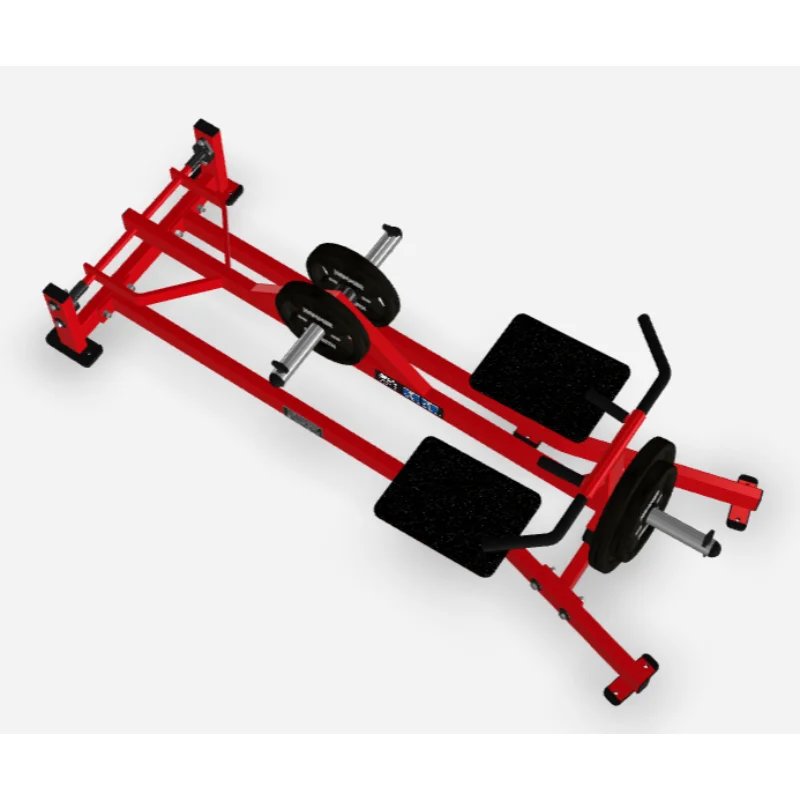
![2019 Hammer Strength ISO-Lateral Low Row Commercial Gym Machine [WARN] draft identifier mismatch](https://bicksport.com/wp-content/uploads/2026/08/2019-hammer-strength-iso-lateral-low-row-commercial-gym-machine-warn-draft-identifier-mismatch-8dd44a.webp)