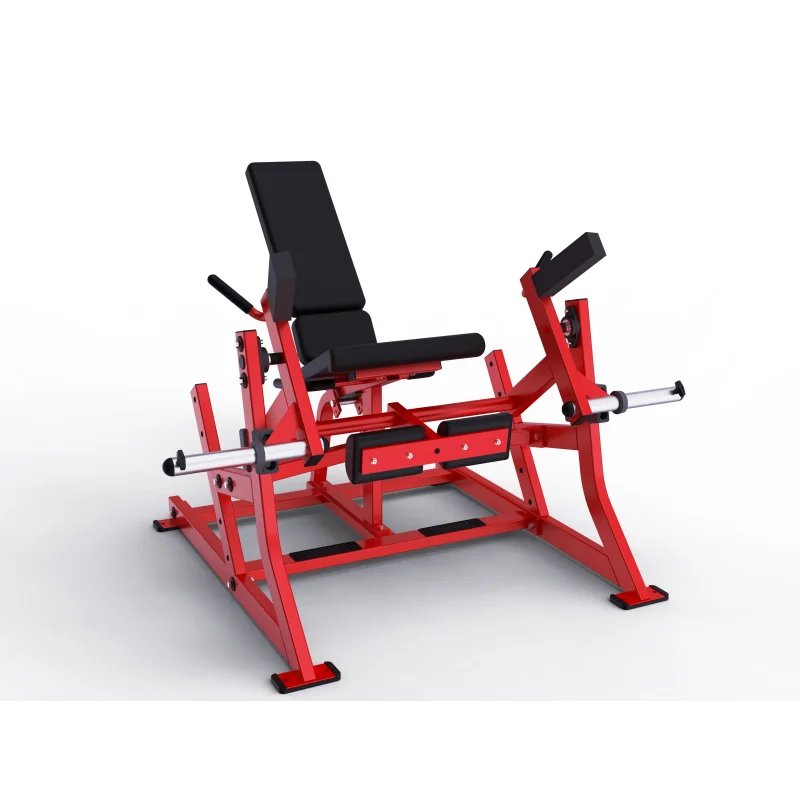
Engineered for High-Frequency Deployment — Frame and pivot bearings validated through 10,000+ hours of continuous cycling load in commercial gym environments.
Technical Specifications
| Parameter | Value |
|---|---|
| Product Type | Plate Loaded Abductor Machine |
| Model NO. | 5026 |
| Exercise Part | Leg |
| Frame Material | Steel |
| Max User Weight | 180 kg |
| Product Dimensions | 1690 × 730 × 750 mm |
| Net Weight | 139 kg |
| Certification | ISO 9001, CE |
Application Suitability
| Deployment Scenario | Typical Use |
|---|---|
| International chain gym strength zone | High-frequency hip abduction training during peak membership hours |
| Corporate wellness center | Targeted glute and outer thigh conditioning for employee fitness programs |
| Community fitness center | Accessible lower-body isolation work for diverse age and fitness demographics |
| Sports performance training center | Athlete-specific hip stabilization and lateral strength development |
| Hotel fitness center | Compact plate loaded option for limited-floor-space cardio and strength layouts |
Why Plate Loaded Abductor Machines Outlast Selectorized Alternatives in 24/7 Gyms
Fewer moving parts under load means fewer failure points when usage never stops.
Selectorized hip abduction units rely on cable routing, pulley stacks, and weight pin mechanisms that degrade under constant member cycling. When a cable snaps at 6 AM in a 24-hour facility, the machine sits dead until a technician arrives — and members notice. A commercial plate loaded abductor machine eliminates the entire cable-and-pulley chain, replacing it with a direct lever arm and pivot bearing system that simply does not have those failure modes [NEED_CITE: failure rate comparison between selectorized and plate loaded strength equipment in commercial facilities].
I remember a batch of selectorized abductors we deployed to a Middle East hotel gym. Within four months, the weight stack guide rods were scoring from sand-laden humidity, and the pulley bearings were grinding. The facility manager pulled the entire line and switched to plate loaded equivalents. The lesson stuck: in environments where maintenance windows are narrow and member tolerance for out-of-order signs is zero, mechanical simplicity is not a compromise — it is the specification.
Where This Abductor Fits in a Commercial Strength Floor Layout
This commercial plate loaded abductor machine occupies the hip isolation station within a broader lower-body training zone. It pairs directly with a plate loaded adductor unit to give members balanced medial and lateral hip work, and it complements free-weight compound movements like squats and lunges by providing isolated gluteus medius activation. The 1690 × 730 mm footprint allows placement along perimeter walls or between rack stations without disrupting traffic flow.
The 180 kg maximum user weight and reinforced steel frame accommodate heavy athletes and general membership alike. Pad positioning supports a range of torso heights, and the plate loading horn accepts standard Olympic plates, so resistance scales from rehabilitation-level light loads to advanced athletic overload without requiring a weight stack upgrade. The machine collects no electronic data and requires no console interface, making it suitable for zones where members train with personal wearables or coach-directed programming.
Continuous Load Demands and Floor Placement Considerations
A plate loaded abductor in a chain gym may see 40 to 60 loading cycles per day across a 16-hour operating window. The pivot bearings and lever arm bushings must sustain that repetition without developing play or generating audible grinding — noise that travels through floor slabs to adjacent occupied spaces [NEED_CITE: bearing lifespan requirements for commercial strength equipment under high-frequency cycling].
Unlike motorized cardio equipment, this unit draws no power and generates no electromagnetic interference, which simplifies deployment in mixed-use floors where sensitive electronic equipment shares the same electrical circuit. The 139 kg net weight and steel base provide inherent stability during heavy plate-loaded sets, but the floor must still be level to prevent frame racking over time. Rubber isolation pads beneath the base feet are recommended in upper-floor installations to dampen vibration transmission from plate loading and unloading.
No dedicated electrical circuit is required. No ventilation clearance is needed. The primary deployment constraint is lateral clearance: members need room to load and unload Olympic plates from the horn without colliding with adjacent equipment or foot traffic lanes.
Lever Arm Geometry and Bearing Specifications That Matter
The pivot mechanism on a plate loaded abductor determines both the resistance curve and the long-term maintenance interval. This unit uses sealed bearings at the primary pivot point, which resist contamination from chalk dust, sweat, and cleaning chemicals that accumulate on gym floors over years of service. Sealed bearings also eliminate the need for periodic grease fitting service — a maintenance task that frequently gets skipped during peak-season staffing shortages.
The steel lever arm connects the user pad carriage to the plate loading horn through a fixed fulcrum. This geometry produces a resistance profile that increases through the mid-range of abduction, matching the natural strength curve of the hip abductor musculature. The frame tubing gauge and weld penetration at the fulcrum joint must withstand repeated eccentric loading as members control the return phase under heavy plate loads [NEED_CITE: structural testing standards for plate loaded strength equipment frames].
Ergonomic pad contours maintain consistent contact with the lateral thigh throughout the range of motion, preventing the pad from slipping toward the knee during heavy sets. Pad upholstery must resist sweat absorption and tolerate daily wiping with disinfectant solutions without cracking or delaminating.
What Spec Sheet Shortcuts Cost After Deployment
Procurement decisions based on unit price alone frequently surface as operational losses within the first year. Frames fabricated from thinner-gauge steel develop flex at the pivot joint under heavy plate loads, causing pad wobble that members interpret as equipment instability. Pivot bushings that substitute for sealed bearings begin to develop radial play within months, producing metallic knocking sounds that migrate across the gym floor and trigger maintenance tickets [NEED_CITE: long-term durability testing protocols for commercial gym strength equipment].
Inadequate base footprint dimensions lead to frame tipping risk when members load plates asymmetrically. Upholstery specified for light commercial use cracks at the seam within a year of exposure to sweat and disinfectant, requiring pad replacement that takes the machine out of service. Each of these failures compounds: a single out-of-order unit in a busy gym floor shifts member traffic to adjacent machines, accelerating their wear cycle and triggering a cascade of maintenance interventions.
Why This Product Line Earns Repeat Orders from Facility Operators
Every unit in this cardio and strength family shares the same frame material sourcing, weld inspection protocols, and bearing specifications, which means a facility sourcing treadmills, ellipticals, and plate loaded machines from this line receives consistent build quality across categories. The 180 kg user weight rating applies uniformly, eliminating the guesswork of cross-referencing capacity limits across a mixed equipment order.
The 10,000-hour durability testing protocol on pivot points and frame joints applies directly to this abductor machine, validating it for the continuous cycling loads typical of 24-hour gym floors. OEM customization extends to frame color, pad upholstery material, and logo placement, allowing branded gym chains to maintain visual identity without sourcing from multiple suppliers. The 3D layout planning service accounts for the 1690 × 730 mm footprint and required lateral plate-loading clearance, ensuring this unit integrates into the floor plan without creating congestion at the hip isolation station. Documentation packages arrive with the shipment, and technical support remains available around the clock for commissioning questions.
Documentation & Test Records
- CE declaration of conformity confirming compliance with European machinery safety directives
- EN 957 test report validating structural integrity and safety for stationary training equipment
- ISO 9001 certificate covering manufacturing quality management systems
- Durability test record documenting pivot bearing and frame joint performance under cyclic loading
- Material specification sheet verifying steel grade and tubing dimensions
- Installation guide with floor leveling and anchor bolt specifications
Installation, Commissioning & Maintenance
- Maintain minimum 600 mm lateral clearance on the plate loading side for safe Olympic plate handling
- Install on level concrete substrate with rubber isolation pads to dampen vibration transmission to adjacent floors
- Inspect sealed pivot bearings for play quarterly and replace if radial movement is detectable by hand
- Wipe pad upholstery daily with pH-neutral disinfectant to prevent sweat-driven material degradation
- Verify frame bolt torque at all structural joints after the first 30 days of operation and biannually thereafter
- Confirm base feet contact evenly on all four points to prevent frame racking under asymmetric plate loads
Request a Layout Assessment Before Finalizing Your Equipment Schedule
Provide your strength zone square footage and current equipment list to receive a 3D floor plan showing optimal placement for this commercial plate loaded abductor machine alongside complementary adductor and lower-body stations. Specify your facility operating hours and expected daily user volume so we can confirm bearing and frame durability alignment. If your gym occupies an upper floor or shares walls with occupied spaces, note adjacent room usage so we can advise on vibration isolation requirements. State your target market plate standard — Olympic or standard — to ensure the loading horn ships with the correct sleeve diameter.
Frequently Asked Questions
Q: What makes plate loaded abductor machines more durable than selectorized equipment in commercial settings?
A: Plate loaded designs eliminate cables, pulleys, and weight stack guide rods — the components that fail most frequently under continuous gym use. The direct lever arm and sealed pivot bearing system has fewer wear points, requires no cable tension adjustments, and avoids weight pin mechanism failures. This mechanical simplicity translates to fewer maintenance interventions and higher equipment uptime in facilities operating extended daily hours.
Q: How should pivot points and bearings be maintained to extend the lifespan of a plate loaded abductor?
A: Sealed bearings in commercial plate loaded equipment are designed to operate without periodic lubrication, but they should be inspected quarterly for radial play or audible grinding during articulation. Keep the pivot area free of chalk dust and debris accumulation using compressed air or dry brushing. If lateral movement becomes detectable when the lever arm is rocked by hand, the bearing cartridge should be replaced before it scores the pivot shaft surface.
Q: What are the space requirements for installing a plate loaded abductor machine on a commercial gym floor?
A: Beyond the machine footprint of 1690 × 730 mm, plan for minimum 600 mm of lateral clearance on the plate loading side so members can safely handle Olympic plates. Front clearance should allow full leg extension without encroaching on adjacent equipment traffic lanes. Upper-floor installations benefit from rubber isolation pads beneath base feet to reduce vibration transfer through the floor slab to occupied spaces below.
Q: How does proper pad positioning affect the effectiveness of hip abduction exercises on this machine?
A: The pad should contact the lateral thigh at a point just above the knee joint, ensuring the resistance force aligns with the hip abduction movement axis. Pads positioned too low on the leg reduce mechanical leverage and shift strain to the knee. Users should adjust the starting pad width so the hip abductors are under slight tension at the beginning of each repetition, maintaining muscular engagement through the full range of motion.
![Commercial Fitness Equipment Decline Bench Machine H-004 for Gym Use [WARN] draft identifier mismatch](https://bicksport.com/wp-content/uploads/2026/08/commercial-fitness-equipment-decline-bench-machine-h-004-for-gym-use-warn-draft-identifier-mismatch-6ebcd5.webp)