Whisper-Quiet Operation Verified — sub-35dB testing ensures deployment on hotel guest floors without triggering noise complaints.
Technical Specifications
| Parameter | Value |
|---|---|
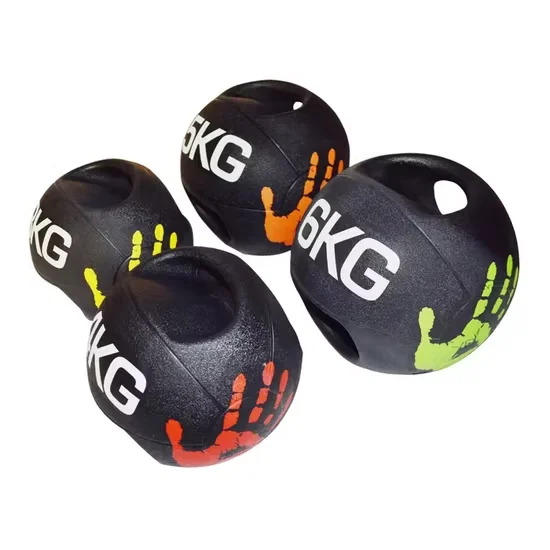
| Product Type | Medicine Ball |
| Model NO. | WB-2000 |
| Specification | 30×30×30 cm |
| Color | Customized options available |
| Logo | Customized logo available |
| MOQ | 500 kg |
| Production Capacity | 10,000 units/year |
| HS Code | 9506911000 |
| Origin | China |
Application Suitability
| Deployment Scenario | Typical Use |
|---|---|
| Commercial gym functional training zones | High-frequency group training and circuit sessions |
| Professional sports training centers | Explosive power development and rotational drills |
| Corporate wellness and community fitness centers | Supervised group classes and rehabilitation programs |
| Hotel fitness centers | Guest-accessible strength stations with minimal supervision |
| High-end residential home gyms | Individual functional training and conditioning routines |
Why Structural Failure Reaches the Maintenance Log Before Anyone Notices
Commercial-grade medicine balls must withstand repeated high-impact slams, throws, and drops without splitting seams or losing shape.
Facilities that stock consumer-grade medicine balls in functional training zones face a recurring cycle: outer shells crack within months, filling material shifts unevenly, and units are quietly pulled from the floor before anyone documents the failure. Members simply stop using the equipment and move on, leaving operators unaware of the attrition until a coach flags the shortage. Commercial medicine ball strength training programs demand units built to survive daily slams against rubber flooring [NEED_CITE: material fatigue standards for commercial free-weight accessories].
Where This Unit Fits in a Functional Training Zone
The WB-2000 commercial medicine ball covers rotational throws, wall balls, overhead slams, and partner-pass drills across beginner to advanced intensity levels. It complements cable machines, kettlebells, and plyometric boxes in a well-sequenced functional zone, filling the gap between fixed-weight implements and free-barbell work. Its 30×30×30 cm profile suits deployment in compact training bays where floor space is at a premium. The balanced weight distribution accommodates users of varying hand sizes and grip strength, making it practical for mixed-ability group sessions. Commercial medicine ball strength training stations benefit from consistent sizing across multiple units so coaches can run standardized protocols.
Continuous Use Demands and Deployment Environment
Functional training zones see medicine balls slammed, thrown, and dropped hundreds of times per day across group classes and open-floor sessions. The WB-2000 is built for this high-frequency impact cycle, with construction rated for continuous commercial use rather than light recreational handling. Deployment on rubber-matted floors helps absorb impact shock and extend shell life. Temperature-stable storage away from direct sunlight prevents material degradation over time [NEED_CITE: environmental degradation factors for commercial training accessories]. Adequate clearance around throwing lanes — typically two meters minimum in each direction — prevents collisions and wall damage. Facilities should rotate units across stations to distribute wear evenly rather than letting a single ball absorb disproportionate impact.
Shell Construction and Weight Consistency
The 30×30×30 cm specification provides a standardized footprint across the production run, meaning coaches ordering in bulk receive units with predictable grip geometry. Color customization allows facilities to code weight increments visually, reducing selection errors during fast-paced circuit sessions. Logo customization supports branded training environments and franchise consistency across multiple locations. The 500 kg minimum order quantity aligns with facility-wide deployments where a full set of medicine balls replaces aging inventory in one procurement cycle. Production capacity of 10,000 units per year supports large-scale rollouts without extended lead times [NEED_CITE: EN 957 requirements for commercial training accessories].
The Hidden Cost of Spec Compromises in Free-Weight Procurement
Facilities that prioritize unit price over shell durability face predictable consequences: seams split under repeated slamming, filling leaks onto training floors creating slip hazards, and replacement orders disrupt coaching schedules. Inconsistent sizing across a batch forces coaches to modify programmed exercises mid-session when one ball handles differently from the rest. Color fading and logo wear on budget units degrade the professional appearance of a training zone, prompting earlier-than-expected refresh purchases. These cumulative costs quietly exceed the savings from choosing lower-spec alternatives, particularly in high-traffic commercial environments where equipment cycles through dozens of users daily.
Why This Product Line Supports Facility-Wide Rollouts
The WB-2000 supports full OEM customization including logo placement, shell color, and packaging specifications aligned with facility branding requirements. Production runs maintain tight dimensional tolerances so that every unit in a bulk order handles identically — a critical factor when coaches program weight-specific drills across group sessions. The Shandong manufacturing facility runs vertical production from raw material sourcing through final quality inspection, reducing supply-chain variability. A dedicated quality control and testing department verifies shell integrity and weight accuracy before shipment [NEED_CITE: ISO 9001 quality management for fitness equipment manufacturing]. Technical support and spare parts availability extend beyond delivery, ensuring facilities can address issues without full unit replacement. The 3D cardio and functional zone layout service includes placement planning for throwing lanes and storage racks, covering sightlines and member flow around medicine ball stations.
Documentation & Test Records
- CE declaration of conformity for commercial fitness accessories
- EN 957 test report covering structural integrity and material safety
- ISO 9001 certificate for manufacturing quality management
- Material durability test record for high-impact commercial use cycles
- Production batch consistency verification report
Installation, Commissioning & Maintenance
- Allocate minimum two-meter throwing lanes around each station with rubber-matted flooring for impact absorption
- Inspect shell seams and surface integrity upon delivery before placing units into active training rotation
- Rotate medicine balls across stations weekly to distribute wear evenly and extend service life
- Clean shell surfaces with non-abrasive disinfectant after each group session to prevent material degradation
- Store units on ventilated racks away from direct sunlight and heat sources to preserve shell elasticity
Equipment Selection and Inquiry Guidance
Provide your functional training zone area and planned station count to receive a 3D layout covering throwing lanes, storage positions, and member flow paths. Specify daily class frequency and average group size to confirm batch quantity and weight distribution requirements. Confirm target market labeling and packaging standards for regional compliance. Indicate whether shell color coding and logo customization are required to match facility branding or franchise identity standards.
Frequently Asked Questions
Q: What materials are used in commercial-grade medicine balls for high-frequency training?
A: Commercial medicine balls for strength training typically use reinforced outer shells designed to resist splitting under repeated impact. The filling material is selected to maintain even weight distribution throughout the product lifecycle, preventing shifting or settling that would alter handling characteristics during throws and slams in group training sessions.
Q: How should weight ranges be distributed across a commercial training facility?
A: Facilities typically stock multiple weight increments to accommodate varying fitness levels and exercise types. Lighter units suit rotational drills and rehabilitation work, while heavier options serve explosive power development. Consistent sizing across all weight ranges ensures coaches can run standardized protocols without adjusting technique between units.
Q: What customization options support facility branding requirements?
A: Shell color and logo placement can be customized to match facility branding or franchise identity standards. Color-coded weight increments help members and coaches select the correct unit quickly during fast-paced circuit sessions. Customization extends to packaging for facilities requiring branded delivery presentation across multiple locations.
Q: How should medicine balls be maintained in high-frequency commercial environments?
A: Regular shell inspection catches seam stress before failure occurs. Cleaning with appropriate disinfectants after each session prevents material degradation from sweat and oils. Rotating units across stations distributes impact wear evenly, and storing on ventilated racks preserves shell integrity over extended deployment periods in busy training zones.

![Soft Plyo Box PB-3100 Foam Jump Box for Gym Training [WARN] draft identifier mismatch](https://bicksport.com/wp-content/uploads/2026/08/soft-plyo-box-pb-3100-foam-jump-box-for-gym-training-warn-draft-identifier-mismatch-b5e9f2.webp)