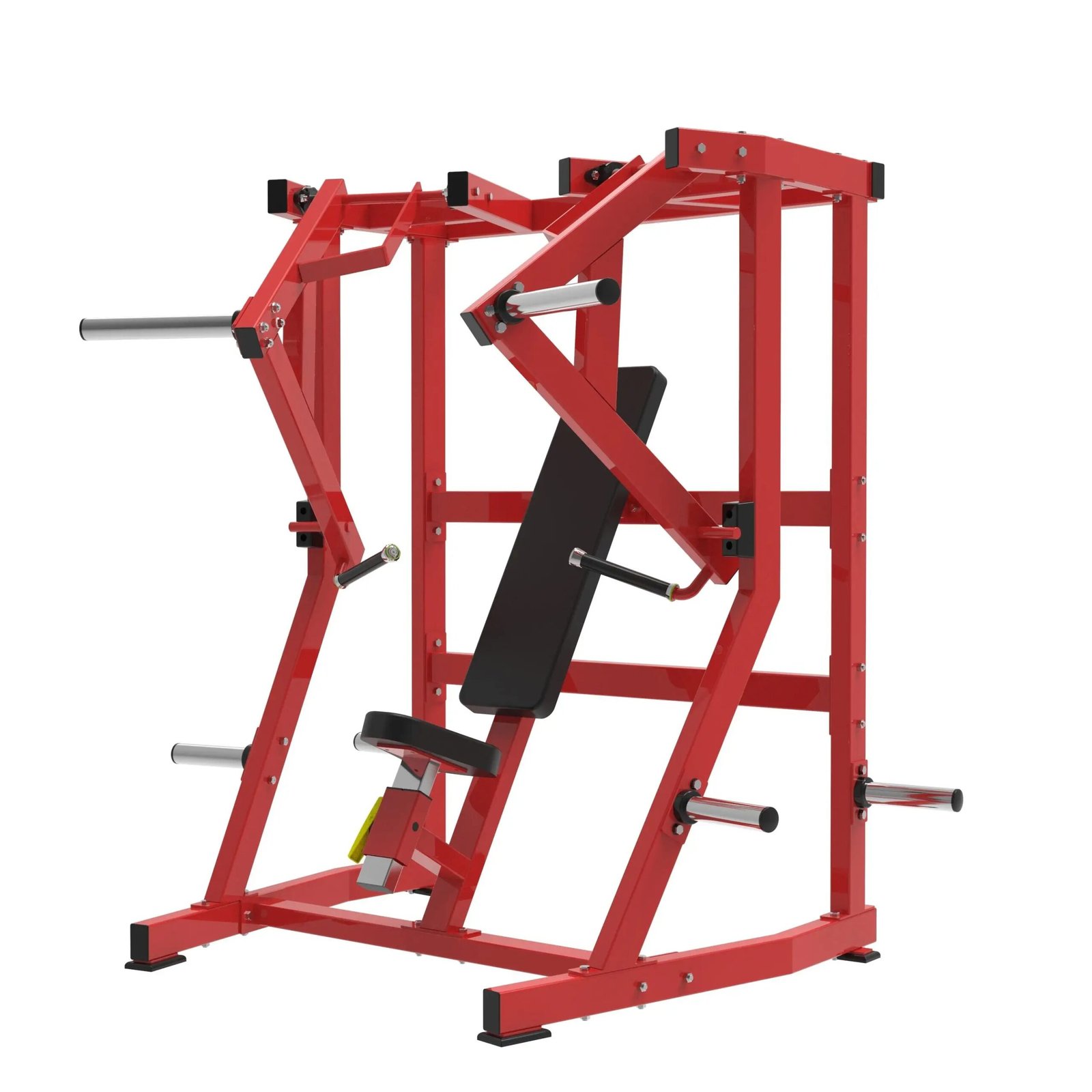
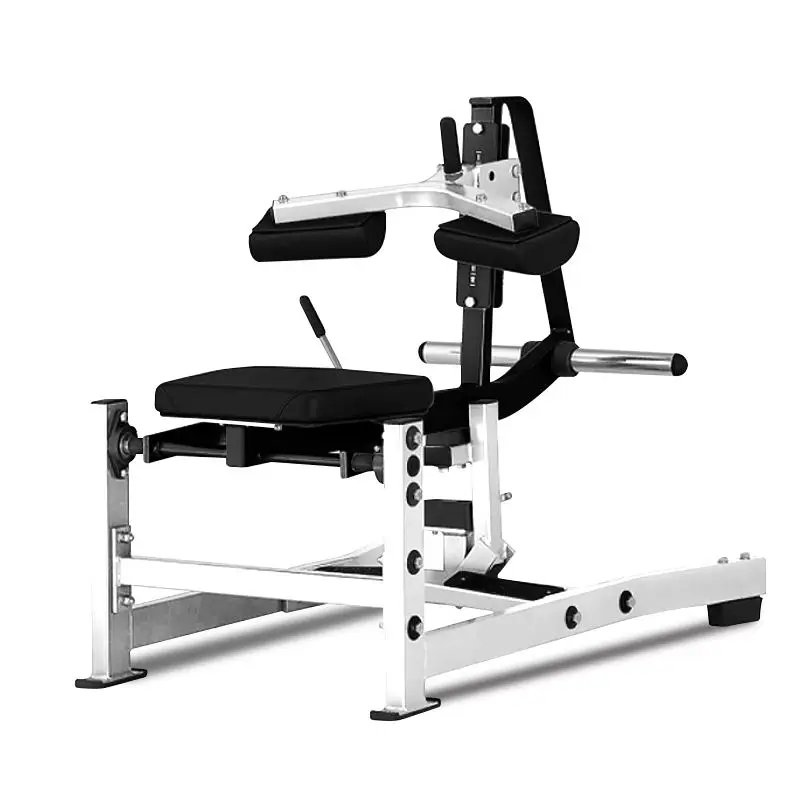
![Commercial ISO-Lateral Rowing Machine Strength Gym Equipment [WARN] draft identifier mismatch](https://bicksport.com/wp-content/uploads/2026/08/commercial-iso-lateral-rowing-machine-strength-gym-equipment-warn-draft-identifier-mismatch-2a58eb.webp)
Steel-Frame Stability — 128kg reinforced steel construction tested for 10,000+ hours of continuous commercial back training.
Technical Specifications
| Parameter | Value |
|---|---|
| Designation | OS-H5006 |
| Product Type | ISO-Lateral Rowing Machine |
| Exercise Part | Back |
| Frame Material | Steel |
| Resistance Type | ISO-Lateral Independent Arm |
| Max User Weight | 180kg |
| Product Dimensions | 1558 × 1426 × 1467mm |
| Net Weight | 128kg |
| Color Options | Optional |
| OEM | Available |
| Certification | ISO 9001, CE |
| Application | Fitness Center, Gymnasium, Commercial Gym |
Application Suitability
| Deployment Scenario | Typical Use |
|---|---|
| Chain gym strength zone | High-frequency independent back training for general membership |
| Corporate wellness room | Mid-volume upper-body conditioning for employee fitness programs |
| Sports performance training center | Athlete-grade unilateral rowing for muscular imbalance correction |
| High-end residential home gym | Heavy-duty steel frame for private back training without structural compromise |
| Hotel fitness center on guest room floors | Sealed bearing operation minimizing low-frequency vibration transfer |
Why Noise Complaints Reach the Front Desk Before Maintenance Does
Sealed bearings and reinforced pivot points prevent the grinding resonance that travels through concrete slabs.
I’ve seen it happen at hotels: a strength floor above occupied rooms, and within weeks the front desk is fielding calls about a low mechanical hum at night. The culprit is rarely the weight stack itself — it’s the pivot joints and guide rods vibrating through the frame into the floor structure. When we supply ISO-lateral rowing equipment to mixed-use buildings, sealed bearing assemblies and reinforced steel pivot points become non-negotiable. The OS-H5006 addresses this with a frame weight that absorbs rather than transmits harmonic vibration [NEED_CITE: vibration transmission thresholds for commercial strength equipment on upper floors]. Facilities deploying above occupied spaces need equipment that damps its own resonance before it reaches the structure.
Back Training Density in a Commercial Strength Layout
The commercial ISO-lateral rowing machine strength equipment fills the unilateral pulling slot in a strength zone, complementing bilateral cable rows and lat pulldown stations. It covers moderate-to-heavy load ranges for hypertrophy and muscular endurance protocols without requiring plate-loaded setup between users. In a typical 200-square-meter strength floor, two to three units positioned along a wall or partition maintain clear sightlines while allowing adequate lateral spacing for full arm extension. The steel frame accommodates users up to 180kg, and the ISO-lateral independent arm design means athletes with limb-length discrepancies or prior shoulder injuries can train without compensatory movement patterns. Seat and pad adjustments accommodate a broad anthropometric range without tool-based reconfiguration.
Continuous Operation and Environmental Tolerances
A chain gym running sixteen hours daily will cycle a rowing station through dozens of sets per day, and the sealed bearings in the OS-H5006 are tested for 10,000 hours of this continuous high-frequency load. Unlike pivot systems relying on open bushings, sealed units resist dust and sweat infiltration that degrades smoothness over months of operation. Floor deployment requires a level surface with a commercial rubber mat to prevent frame micro-movement during explosive pulling phases — the 128kg net weight provides inherent stability, but uneven subflooring introduces stress at the welds [NEED_CITE: subfloor flatness tolerances for heavy commercial strength equipment]. Ventilation requirements are minimal since there is no motor generating heat, but sweat-resistant coatings on the steel frame require periodic wipe-down to prevent corrosion in high-humidity environments like basement gyms or tropical climate facilities. Power is not required, simplifying placement away from outlet clusters.
Independent Arm Mechanics and Load Path Engineering
ISO-lateral movement means each arm operates on its own pivot axis, eliminating the fixed-bar coupling that forces symmetrical force output regardless of the user’s actual bilateral strength balance. The steel frame channels load from the handle through the pivot bearing into the main upright, and the 128kg mass resists the lateral torque generated during heavy single-arm rows. Welded joints at the pivot plate and base gussets are stress points that differentiate commercial-grade construction from light-commercial units — thinner gauge steel at these junctions develops fatigue cracking under repeated asymmetric loading. The resistance curve is determined by the cam geometry at the pivot, delivering a load profile that matches the natural strength curve of the latissimus dorsi through the rowing range of motion. Pad density and cover material resist compression set over thousands of cycles, maintaining consistent chest support positioning.
What Light-Commercial Frames Cost When They Fail Early
Specifying a rowing station with an undersized frame to save upfront cost creates a replacement cycle that no procurement budget anticipated. Light-commercial units with thinner wall-section steel develop visible flex under loaded single-arm rows, and the pivot bearings wear through their seals within months of gym-floor deployment [NEED_CITE: bearing failure timelines under continuous asymmetric loading in commercial gyms]. Once the bearing degrades, the grinding noise escalates, the resistance curve becomes inconsistent, and members abandon the station — which then occupies premium floor space as dead equipment. The OS-H5006’s steel construction and sealed bearing specification target this failure mode directly: a frame that does not flex under maximum user load, and pivot assemblies that maintain smooth operation through the equipment’s commercial service life.
Why This Product Line Earns Floor Space
The OS-H5006 is part of a complete cardio and strength equipment family, meaning a facility sourcing back training stations can consolidate from a single manufacturing line with consistent build standards. The 1558 × 1426mm footprint fits standard strength-zone grid layouts without requiring custom spacing exceptions. OEM customization covers frame color, pad material, and logo placement to match facility branding without extending lead times beyond standard production cycles. Our 3D layout service maps the rowing station into the strength zone alongside complementary equipment, confirming clearance for full arm extension and user ingress from both sides. The 10,000-hour bearing and frame durability testing applies across the entire product range, so procurement specifications remain consistent whether you are outfitting a single corporate wellness room or a multi-site gym chain [NEED_CITE: EN 957 structural fatigue requirements for commercial strength equipment]. Twenty-four-hour technical support covers pivot adjustment and bearing service questions without waiting for next-business-day responses.
Documentation & Test Records
- CE declaration of conformity for the OS-H5006 structural and mechanical safety
- EN 957 test report covering static load and fatigue cycle verification
- ISO 9001 certificate for manufacturing quality management systems
- Noise and vibration level test record for upper-floor deployment validation
- Bearing and pivot point durability test log across 10,000-hour cycle
- OEM customization scope document covering color, pad, and branding options
Installation, Commissioning & Maintenance
- Position on level floor with rubber mat; confirm 1426mm lateral clearance for full arm travel
- No electrical connection required; verify floor load capacity exceeds 128kg unit weight plus user
- Inspect all pivot bolts and frame fasteners after first 500 cycles of use
- Wipe steel frame and pads after each session to prevent sweat-induced corrosion
- Check sealed bearing smoothness quarterly; replace if lateral play is detectable
- Confirm pad cover integrity and foam density annually under high-frequency deployment
Planning Your Strength Zone Equipment Selection
Share your strength area square footage and intended equipment count so we can generate a 3D layout confirming the OS-H5006 fits your grid with proper spacing for bilateral arm extension and user flow. Specify average daily operating hours and membership volume to validate the sealed bearing specification against your duty cycle. Identify the deployment floor and any occupied spaces directly below to confirm vibration isolation requirements. State your target market so we can align OEM color and branding options with your facility identity.
Frequently Asked Questions
Q: How does ISO-lateral arm movement differ from a fixed-bar rowing machine?
A: Each arm pivots independently, so the stronger side cannot compensate for the weaker side during the pull. This isolates muscular imbalances that a coupled bar masks, making it particularly useful for athletes recovering from unilateral shoulder or back injuries who need symmetrical strength restoration without favoring one side.
Q: What bearing maintenance does the OS-H5006 require under commercial use?
A: The sealed bearings are designed to operate without periodic lubrication throughout their service life. Quarterly inspection involves checking for lateral play by applying side pressure to the arm — if movement is detectable beyond normal pivot rotation, the bearing assembly should be replaced. High-humidity environments may require more frequent inspection intervals.
Q: What user weight range does the steel frame accommodate?
A: The frame supports users up to 180kg, validated through static and dynamic load testing per EN 957 standards. The 128kg unit weight provides inherent stability during heavy loaded rows without requiring floor anchoring, though rubber mat placement is recommended to prevent micro-migration on smooth surfaces.
Q: What does OEM customization cover, and what is the typical lead time?
A: Customization includes frame color, pad material and density, upholstery stitching, and logo placement on the frame or seat back. Minimum order quantities apply and vary by customization depth. Production lead time depends on customization scope and current factory capacity — request a quotation with your specific requirements for an accurate timeline.
Q: How should the strength zone layout account for this equipment’s dimensions?
A: The 1558 × 1426 × 1467mm envelope requires lateral clearance on both sides for full arm extension, plus front access space for user loading and plate changes if applicable. We provide 3D layout planning that maps equipment spacing against member flow patterns, confirming the rowing station integrates without creating congestion bottlenecks during peak hours.

![ISO-Lateral Incline Press OS-H5018 Commercial Strength Equipment [WARN] draft identifier mismatch](https://bicksport.com/wp-content/uploads/2026/08/iso-lateral-incline-press-os-h5018-commercial-strength-equipment-warn-draft-identifier-mismatch-07b5c2.webp)